

 Voorvertoning
 Verstuur
 Delen
Delen
 Details bekijken
 Gids
Gids

 Download
 Vergelijkbare items
 Röntgenonderzoek
 Diavoorstelling
 Vraag & antwoord
 Statistieken
The Siphon

- 81.0 x 65.0 cm


 Lees meer
Giclée / Kunstafdrukken
Giclée- of canvasafdruk van museumkwaliteit met een snelle productie en flexibele afwerkingsmogelijkheden. ( Bestel handgeschilderde reproductie Schakel over naar digitale afbeeldingen)




P118B €10

P118H €10

P118W €10

P438Z €10

P508JH €12

P508YH €12

P805H €10

P805Z €10

P919BZ €10

P919G €10

P919XJ €10

P959ZH €10

P968JZ €12

W106C €8

W218G €10

W218JH €8

W218Y €10

W307PJ €10

W316G €10

W316PJ €8

W316Y €10

W398PJ €8

W4111J €10

W500HY €15

W500JH €15

W692G €12

W849H €8

W940BG €15

W953PJ €8




Kies uit onze vooraf ingestelde maten die overeenkomen met de originele verhoudingen van het kunstwerk.

Voer de gewenste breedte en hoogte in, passend bij uw lijst of muur. Een afdruk kan alleen worden ingekort en nooit groter worden gemaakt dan het origineel; een formaat met andere verhoudingen zal daarom een deel van de afbeelding verliezen. Wij sturen u een digitaal mockup ter goedkeuring voordat we tot drukwerk overgaan. De afbeelding op deze pagina toont niet de werkelijke uitsnede — dit is alleen te zien op het mockup.
Wereldwijde levering () binnen 2 weken in plaats van de standaard 4/5 weken. (16 november)

Gratis wereldwijde expressverzending

Hoogwaardig linnen canvas

Volledige verzendverzekering

Garantie op terugbetaling van invoerrechten

Garantie op exacte kleurweergave

Retourbeleid van 100 dagen (alleen bij defecten)

100% Geld-terug-garantie

Korting bij meerdere afnames
 De optie voor glas is alleen beschikbaar bij een formaat kleiner dan 110 cm.

The Siphon
Giclée / Kunstafdrukken
Afmetingen reproductie
-


Eindtotaal
€ 56
The Siphon: A Synthesis of Form and Everyday Life
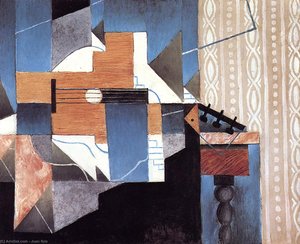
Juan Gris's "The Siphon," created in 1913, stands as a pivotal work within the Synthetic Cubist movement. This oil on canvas (81 x 65 cm), currently residing at the Rose Art Museum, exemplifies Gris’s unique approach to abstraction – one that grounded itself in recognizable objects while dismantling traditional representational techniques. The painting depicts a commonplace kitchen scene—a vase, bottles, cups, and a chair—rendered through a fractured lens of geometric shapes and muted colors.
Composition and Style: Deconstructing Reality
The artwork's power lies in its deliberate fragmentation. Gris doesn’t aim to depict the objects as they appear from a single viewpoint; instead, he presents them simultaneously from multiple perspectives, breaking them down into interlocking planes and geometric forms. This technique, characteristic of Synthetic Cubism, moves beyond the Analytical Cubism that preceded it by incorporating simpler shapes and flatter areas of color. The monochromatic palette—primarily blues, grays, and whites with subtle accents of red and brown—contributes to a sense of harmony and balance despite the apparent chaos of fragmented forms. Overlapping planes create an illusion of depth within the flattened picture plane, while sharply defined lines add dynamism and visual interest.
Historical Context: The Rise of Synthetic Cubism
"The Siphon" emerged during a period of radical artistic experimentation in the early 20th century. Following the pioneering work of Pablo Picasso and Georges Braque in Analytical Cubism, Gris spearheaded the development of Synthetic Cubism. This new phase emphasized simplification, collage elements (though absent here), and a greater emphasis on color. Gris’s approach was notably more structured and mathematically precise than that of his contemporaries, reflecting his engineering background. He sought to create a rational order within abstraction, using geometric forms to construct a coherent visual language.
Symbolism and Emotional Impact: Everyday Objects, Elevated
While seemingly depicting mundane objects—a kitchen still life—"The Siphon" transcends mere representation. The fragmentation of these familiar items invites viewers to reconsider their perception of reality. The geometric abstraction evokes a sense of intellectual engagement rather than purely emotional response. There's a quiet dignity in the way Gris elevates everyday objects to the realm of high art, transforming them into complex visual puzzles. The muted color palette and carefully balanced composition create an atmosphere of contemplative stillness, inviting viewers to pause and appreciate the beauty inherent in deconstructed form.
Juan Gris: A Legacy of Geometric Precision
Juan Gris (1887-1927) was a Spanish painter who became a central figure in the Cubist movement. Born José Victoriano González-Pérez, he adopted the pseudonym Juan Gris and moved to Paris in 1906, where he encountered influential artists like Matisse, Braque, and Picasso. His unique contribution lay in his systematic approach to Cubism, emphasizing geometric precision and a more structured composition than many of his contemporaries. Other notable works by Gris include "Glass of beer and playing cards" and "Newspaper and Fruit Dish," further demonstrating his mastery of Synthetic Cubism and his ability to transform ordinary subjects into extraordinary works of art.
Veelgestelde vragen
Hoe past "The Siphon" binnen de thema's en stijl van Juan Gris?
Binnen het oeuvre van Juan Gris past "The Siphon" binnen de Synthetic Cubism-stijl, samen met de thema's van inspired by cubism & synthetic approach., key example of gris's cubist style., everyday objects, geometric abstraction..
Wie heeft "The Siphon" gemaakt?
"The Siphon" wordt toegeschreven aan Juan Gris.
Wie heeft "The Siphon" gemaakt en in welk jaar?
"The Siphon" werd in 1913 gecreëerd door Juan Gris.
Vergelijkbare kunstwerken




Biografie kunstenaar
Vroege jaren, familie en opleiding
Geboren als José Victoriano González-Pérez op 23 maart 1887 in Madrid, Spanje, groeide de man die later de wereld zou veroveren als Juan Gris op in een groot en levendig huishouden. Als dertiende van veertien kinderen vormde hij deel uit van een bloeiend gezin; zijn vader, Gregorio Gonzalez, was een welgestelde zakenman, waardoor de gezinsomgeving een stabiel fundament bood tijdens zijn vormende jaren in de Spaanse hoofdstad.
Zijn vroege educatie kreeg een technisch karakter aan de Madrid School of Arts and Sciences, waar hij de studie ingenieurswetenschappen volgde. Deze periode van studie plantte een diep besef van structurele logica in hem, een eigenschap die later op een unieke wijze zou doorschemeren in zijn visuele werk. Hoewel zijn focus destijds lag op de mechanica van het ontwerp, was een creatieve impuls al onmiskenbaar aanwezig. Tussen 1904 en 1905 begon hij zijn artistieke vorming te formaliseren door schilderkunst te bestuderen onder de academische kunstenaar José Moreno Carbonero. Deze korte maar cruciale periode van instructie hielp de kloof te overbruggen tussen zijn technische studies en de ontwikkeling van zijn eigen, unieke beeldtaal.
Rond 1905 vond er een fundamentele verschuiving in zijn identiteit plaats toen hij de naam Juan Gris aannam. Deze verandering markeerde een breuk met zijn oorsprong als José Victoriano González-Pérez en gaf het startsein voor een geheel nieuwe koers in zijn leven. Hij bewoog zich weg van de rigide eisen van het ingenieursvak, richting de meer vloeiende, maar des te even gestructureerde wereld van de visuele representatie.
De Parijse Ontwaking en het Cubisme
De verhuizing naar Parijs in 1906 markeerde een cruciaal keerpunt in zijn leven. Tegen 1909 maakte hij deel uit van de levendige gemeenschap in het Bateau-Lavoir aan de Rue Ravignan 13, een plek die bruisde van constante beweging en gedeelde creativiteit. In die jaren werkte hij nog als satirisch cartoonist, maar rond 1911 begon de werkelijke verschuiving naar de schilderkunst. Hij liet de wereld van de illustratie achter zich om zich volledig te wijden aan het canvas, op zoek naar een meer gestructureerde manier om de objecten om hem heen te waarnemen.
Zijn aanwezigheid in de Parijse kunstwereld werd in 1912 officieel toen hij zijn werk voor het eerst exposeerde tijdens de Salon des Indépendants. Dit was een periode van razante ontwikkeling, waarin hij zich losmaakte van de expressieve kwaliteiten van het Fauvisme om de gefragmenteerde logica van het Cubisme te omarmen. Zijn artistieke reikwijdte reikte verder dan de grenzen van Frankrijk; zo was zijn werk te zien op de Exposició d'art cubista in de Galeries Dalmau in Barcelona. Tegen 1912 had hij bovendien een contract getekend bij Daniel-Henry Kahnweiler, een stap die zijn positie binnen de kring van kunstenaars die de picturale ruimte fundamenteel herdefinieerden, definitief zou verankeren.
Techniek en Artistieke Stijl
Er schuilt een zekere wiskundige logica in de manier waarop hij een canvas opbouwt. Zijn achtergrond in de ingenieurswetenschappen is duidelijk zichtbaar in de wijze waarop hij omgaat met geometrische vormen en gefragmenteerde structuren; hij benadert de compositie met een stille, berekende precisie. Hij breekt een object niet simpelweg af, maar reconstrueert het via een serie van elkaar snijdende vlakken. In veel van zijn werken beweegt hij zich weg van de chaotische, uiteenvallende abstractie die we zien in het vroege Cubisme, en kiest hij in plaats daarvan voor een meer georganiseerde en leesbare structuur. Deze helderheid wordt vaak bereikt door een gedisciplineerd palet van grijzen, zwart en wit, wat het oog dwingt zich te concentreren op het gewicht en de plaatsing van elke afzonderlijke vorm.
Zijn handen waren bijzonder bekwust in het werken met de texturen van het dagelijks leven. Hij was een virtuoso in het gebruik van materialen die de meeste mensen zouden negeren, waarbij hij krantenpapier, behang en andere commercieel gedrukte of gevonden objecten rechtstreeks in zijn composities verweefde. Hij hanteerde deze fragmenten op een unieke wijze, waarbij hij zwarte media gebruikte op de snijpunten van verschillende papiersoorten om de naden te verbergen. Deze techniek stelde hem in staat om de illusie van naadloosheid te creëren, waardoor de verschillende lagen verschenen als één enkel, verenigd oppervlak in plaats van een verzameling losse snippers. Hij zorgde er zelfs voor dat patronen in gedrukt papier zorgvuldig op elkaar aansloten, zodat de randen volledig opgingen in het kunstwerk.
Belangrijke Werken en Meesterwerken
In 1914 kwam het werk Bloemen tot stand, samen met The Sunblind, waarbij de focus duidelijk verschoof naar de manier waarop licht en objecten een ruimte innemen. Tegen juni 1915 was de compositie Stilleven voor een open raam, Place Ravignan voltooid. Dit meesterwerk maakt gebruik van overlappende vlakken om een gevoel van diepte te creëren, waardoor de toeschouwer wordt meegezogen in een gestructureerde, verstilde scène. De wijze waarop de vormen over elkaar heen schuiven, creëert een unieke vorm van orde, waarin het raam en de objecten daarbinnen worden gereconstrueerd door een reeks scherpe, geometrische hoeken.
De jaren die volgden brachten een verschuiving teweeg naar meer persoonlijke onderwerpen en complexe texturen. In oktober 1916 werd het Portret van Josette Gris geschilderd, waarbij het onderwerp werd gevangen door een gedisciplineerde, bijna monochrome lens. Deze benadering stript alle overbodige details weg om de essentie te vinden in het ritme van de lijnen. Later, in 1919, bracht Harlequin aan een tafel een geheel andere energie naar het canvas, waarbij de gefragmenteerde taal van de beweging werd ingezet om de scène te ordenen. Tegen het einde van zijn leven, rond 1927, ontstond Gitaar en bladmuziek, een werk dat rust op het samenspel van eenvoudige vormen en de tactiele suggestie van papier.
- Stilleven voor een open raam, Place Ravignan (1915)
- Bloemen (1914)
- The Sunblind (1914)
- Portret van Josette Gris (1916)
- Harlequin aan een tafel (1919)
- Gitaar en bladmuziek (ca. 1927)
Kringen, Rivalen en Invloeden
Juan Gris bewoog zich door de hechte kringen van de Parijse avant-garde, een wereld vol gedeelde ideeën en voortdurend verschuivende perspectieven. Zijn werk vond zijn oorsprong in de fundamenten die waren gelegd door Paul Cézanne, in het bijzonder de wijze waarop de oudere meester de onderliggende structuur van vorm en ruimte verkende. Deze intellectuele benadering stelde Juan Gris in staat om zijn eigen weg te vinden naast de belangrijkste vernieuwers van de beweging. Hij was een van de drie leidende figuren van het kubisme en opereerde in dezelfde baan als Pablo Picasso en Georges Braque. Hoewel hij naar hen keek voor richting, was zijn pad geen eenvoudige imitatie; hij bracht een wiskundige precisie naar het canvas die fundamenteel verschilde van de meer intuïtieve experimenten van zijn tijdgenoten.
De verhoudingen binnen deze artistieke kring waren vaak complex en geladen. Hoewel hij diepgaand door Picasso werd beïnvloed, was er een voelbare spanning tussen hen beiden. Een observant merkte op dat Juan Gris de enige persoon was die Picasso het liefst weg wilde hebben, een detail dat veel zegt over het competitieve en intense karakter van die tijdgeest. Ondanks deze wrijving bleef Juan Gris een onmisbaar onderdeel van de ontwikkeling van het genre. Hij hielp het kubisme te transformeren van de vroege, analytische stadia naar de meer gestructureerde, synthetische composities die de latere jaren zouden definiëren. Hij volgde niet louter het spoor van anderen; hij hielp de beweging juist te sturen naar een meer georganiseerde, leesbare logica.
Nalatenschap en blijvende invloed
Juan Gris deed meer dan slechts de paden volgen die door anderen waren vrijgemaakt. Hoewel hij voortbouwde op de fundamenten van het vroege kubisme, stuurde hij de beweging in nieuwe richtingen en bewoog hij zich weg van de versplinterde abstractie van zijn tijdgenoten. Zijn schilderijen bezitten een gedurfde, grafische uitstraling die hen onmiddellijk onderscheidt van het werk van Picasso en Braque. Er gaat een specifieke, berekende helderheid uit van de manier waarop hij een compositie hanteert, een kwaliteit die rechtstreeks voortvloeit uit zijn eerdere studies in de ingenieurswetenschappen. Hij brak objecten niet simpelweg af; hij reassembleerde ze met een diep besef van orde en structurele logica.
Zijn invloed is voelbaar in de wijze waarop hij de beweging transformeerde van de analytische fase naar een meer synthetische benadering. Door texturen en patronen te integreren, hielp hij een manier van kijken te definiëren die de platheid van het canvas benadrukte, in plaats van de illusie van diepe ruimte. Deze methode veranderde de handeling van het schilderen in een precieze ordening van geometrische vlakken en kleur. Zijn werk blijft een studie in hoe men fragmentatie kan balanceren met een gevoel van samenhangend ontwerp.
- Homage à Pablo Picasso (1912)
- Still Life before an Open Window (1915)
- Guitar with inlays (1925)
Waar u zijn meesterwerken vandaag de dag kunt bewonderen
Het volgen van de fysieke aanwezigheid van zijn werk is een reis langs verschillende vooraanstaande collecties. In Madrid herbergt het Museo Nacional Centro de Arte Reina Sofía dertien van zijn werken, wat een diepgaand inzicht biedt in zijn artistieke ontwikkeling. Ook het Thyssen-Bornemisza Museum in dezelfde stad bewaart twee van zijn werken. Deze Spaanse collecties bieden een venster naar de manier waarop zijn wortels in Madrid uiteindelijk overgingen in de radicale structuren van zijn latere jaren.
Een groot deel van zijn oeuvre bevindt zich in Frankrijk, een stille getuige van de jaren die hij in Parijs doorbracht. Het Centre Pompidou bezit vier werken, terwijl het Kröller-Müller Museum in Otterlo er maar liefst negen in zijn collectie heeft. In deze zalen komen zijn experimenten met textuur en kleur tot leven, waarbij de scherpe randen van zijn geometrische vormen prachtig bewaard zijn gebleven. Hier kunt u de unieke wijze zien waarop hij papier en verf over elkaar heen legde om een suggestie van diepte te creëren.
Aan de andere kant van de Atlantische Oceaan bewaart het Philadelphia Museum of Art drie werken. Het aanschouwen van zijn schilderijen in deze uiteenlopende omgevingen onthult hoe zijn benadering van ruimte en licht veranderde, afhankelijk van de materialen die hij koos. Sommige van deze werken zijn imposant van omvang, terwijl andere juist de verstilde compositie van alledaagse objecten opzoeken.
- Still Life with Flowers (1912)
- The Bottle of Anís del Mono (1914)
- Guitar in front of the sea (1925)
- Portrait of Madame Josette Gris (1916)
- The Checkerboard (1915)

Juan Gris
1887 - 1927 , Spanje
Belangrijkste feiten
- Artistic Movement Or Style: Cubisme, Synthetisch cubisme, Analytisch cubisme
- Artists Or Movements Influenced By This Artist: ['Purisme']
- Artists Who Influenced This Artist:
- Paul Cézanne
- Pablo Picasso
- Georges Braque
- Date Of Birth: 1887
- Date Of Death: 1927
- Full Name: José Victoriano González-Pérez
- Nationality: Spaans
- Notable Artworks:
- Stilleven met bloemen
- Man in het café
- Viool en gitaar
- De fles Anís del Mono
- Stilleven voor een open raam
- Place Of Birth: Madrid, Spanje
Gerelateerde artikelen
Juan Gris: Cubist Deconstruction & Synthesis – A Comprehensive Exploration
Explore the revolutionary art of Juan Gris – a master of Cubism. Discover his unique approach to deconstruction, vibrant Synthetic Cubist works, and lasting influence on modern art. Expert analysis for collectors.

Drie Perspectieven, Één Ziel: De Emotionele Impact van Keuze in Kunstreproducties
Ontdek de emotionele impact van kunst! Lees over de psychologie achter reproducties en hoe kleur onze gevoelens beïnvloedt. Hoogwaardige kunst voor uw interieur – met expert advies.

Uncovering Where Was Juan Gris Born: The Spanish Roots of a Cubist Master
Discover the Madrid origins of Juan Gris and learn how his engineering studies in Spain helped shape the geometric precision of his Cubist works.

Deconstructing Reality: Cubism's Revolutionary Impact on 20th-Century Art
Explore the revolutionary world of Cubism with ArtsDot. Discover Picasso & Braque's groundbreaking techniques, its philosophical roots, and lasting impact on modern art. Expert insights for collectors.
Deconstructing Reality: A Comprehensive Exploration of Cubist Still Life
Explore the revolutionary world of Cubist Still Life with ArtsDot. Discover Picasso & Braque's groundbreaking techniques, its philosophical roots, and lasting impact on modern art. Expert insights for collectors.


