


 Voorvertoning
 Verstuur
 Delen
Delen
 Details bekijken

 Download
 Vergelijkbare items
 Röntgenonderzoek
 Diavoorstelling
 Statistieken
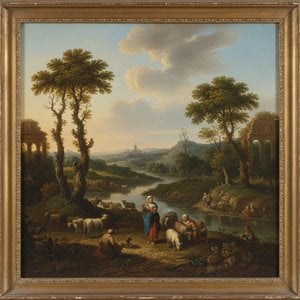
The Ford
 Oil On Canvas
- WallArt
- Romanticism
 1672
1672 71.0 x 59.0 cm
 Szépművészeti Múzeum
 Lees meer
Handgemaakte olieverfreproductie
Met de hand geschilderd in olieverf op canvas in uw gewenste maat en lijst, op bestelling gemaakt door onze kunstenaars. ( Schakel over naar print Schakel over naar digitale afbeelding)




P118B $10

P118H $10

P118W $10

P438Z $10

P508JH $12

P508YH $12

P805H $10

P805Z $10

P919BZ $10

P919G $10

P919XJ $10

P959ZH $10

P968JZ $12

W106C $8

W218G $10

W218JH $8

W218Y $10

W307PJ $10

W316G $10

W316PJ $8

W316Y $10

W398PJ $8

W4111J $10

W500HY $15

W500JH $15

W692G $12

W849H $8

W940BG $15

W953PJ $8




Kies uit onze vooraf ingestelde maten die overeenkomen met de originele verhoudingen van het kunstwerk.

U kunt uw eigen afmetingen invoeren om in een specifieke lijst of ruimte te passen. Als de door u gekozen maat niet overeenkomt met de verhoudingen van het originele beeld, zullen we het kunstwerk bijsnijden of het schilderij uitbreiden met extra handgeschilderde elementen. Een digitale mockup wordt ter goedkeuring naar u verzonden voordat de productie begint.
Houd er rekening mee dat de preview op het scherm niet de werkelijke uitsnede of uitbreiding weergeeft. Alleen de mockup toont de uiteindelijke compositie nauwkeurig.
Hoewel aangepaste afmetingen mogelijk zijn, raden we aan een maat uit de vooraf gedefinieerde lijst te selecteren om de originele verhoudingen te behouden.
Na de bestelling zal het team van ArtsDot.com per e-mail contact opnemen met de klant voor instructies en een mockup-voorbeeld sturen.
Wereldwijde levering () binnen 3 tot 4 weken in plaats van de standaard 5 weken. (11 september). Zonder concessies aan de kwaliteit.

Gratis wereldwijde expressverzending

Hoogwaardig linnen canvas

Volledige verzendverzekering

Garantie op terugbetaling van invoerrechten

Garantie op exacte kleurweergave

Retourbeleid van 100 dagen (alleen bij defecten)

100% Geld-terug-garantie

Korting bij meerdere afnames
 De optie voor glas is alleen beschikbaar bij een formaat kleiner dan 110 cm.

The Ford
Druktechniek
Afmetingen reproductie
-


Eindtotaal
$ 288
Jan Siberechts’ “The Ford”: A Pastoral Vision of Elizabethan England
Jan Siberechts' "The Ford" (1672) stands as a testament to the burgeoning landscape tradition in England during the reign of Charles II, skillfully blending Flemish artistic sensibilities with an idealized depiction of rural tranquility. Painted in Antwerp, Belgium, this oil on canvas masterpiece captures a serene scene of pastoral life—a woman carrying water alongside livestock – cows, horses and a goat – nestled within rolling hills leading to distant mountains under a cloudy sky. The artwork’s enduring appeal lies not only in its exquisite detail but also in its profound symbolic resonance, reflecting the Romantic movement's fascination with nature as a source of spiritual contemplation.- Style & Technique: Siberechts employed a characteristic Flemish style—broad brushstrokes layered to build up rich textures and create an atmospheric haze—a technique that prioritizes capturing the essence of light and shadow rather than precise topographical accuracy. The meticulous rendering of foliage, livestock, and figures demonstrates mastery of chiaroscuro, enhancing the painting’s dramatic effect.
- Historical Context: Commissioned during Charles II's Restoration, “The Ford” embodies the revival of classical ideals following Puritan rule. Landscape painting gained prominence as a genre reflecting humanist values—harmony with nature and contemplation of beauty—a deliberate contrast to the austere moralizing tendencies of earlier Protestant art.
- Composition & Perspective: The horizontal lines dominating the hillside emphasize the expansive landscape, while vertical elements – notably the trees – contribute to depth perception. Siberechts skillfully utilizes atmospheric perspective, subtly diminishing colors and details in the background mountains to convey a sense of distance and grandeur.
- Materials: Traditional oil paints on canvas ensured durability and luminosity, preserving Siberechts’ vision for centuries to come.
Vergelijkbare kunstwerken


Biografie van de kunstenaar
A Flemish Vision in England: The Life and Art of Jan Siberechts
Jan Siberechts, born in Antwerp in 1627, occupies a fascinating position in the history of European art—a bridge between the vibrant traditions of Flemish painting and the burgeoning landscape tradition of England. His story is one of artistic development, fortunate patronage, and ultimately, pioneering influence. The son of a sculptor also named Jan Siberechts, he received his initial training within the family workshop, absorbing the skills and aesthetic sensibilities that would form the foundation of his career. By 1648, he had achieved master status in the prestigious Guild of Saint Luke in Antwerp, signaling his recognition as a skilled craftsman. While concrete evidence remains elusive, art historians speculate about a possible sojourn to Italy during the late 1640s or early 1650s. Though unconfirmed, this potential exposure to Italianate landscape painting—with its emphasis on classical compositions and atmospheric perspective—undoubtedly left an imprint on his evolving style, visible in the early works that showcase a delicate balance between Flemish realism and Italianate ideals.Early Training and Artistic Foundations
Siberechts’ formative years were steeped in the artistic heritage of Antwerp, a city renowned for its sculptural tradition and vibrant guild system. His father instilled in him a deep appreciation for craftsmanship and meticulous observation—skills that would prove invaluable throughout his life’s artistic journey. The Guild of Saint Luke provided him with formal training and established standards of excellence, ensuring he mastered the techniques necessary to excel as a painter. Although biographical details remain sparse, scholarly research suggests Siberechts may have traveled briefly to Italy during this period, immersing himself in the stylistic innovations emerging from Rome. This encounter would undoubtedly broaden his artistic horizons and introduce him to influential figures like Nicolaes Berchem and Karel Dujardin—masters of pastoral landscapes who skillfully blended Flemish realism with Italianate ideals. Their works served as a crucial springboard for Siberechts’ own developing style, shaping his approach to composition, color palette, and atmospheric rendering.The Influence of Dutch Masters
Siberechts' artistic sensibilities were profoundly shaped by the prevailing artistic currents of the Netherlands during his early career. Nicolaes Berchem and Karel Dujardin—artists who had achieved considerable renown in Rome—were particularly admired for their depictions of idyllic rural scenes bathed in soft, diffused light. Siberechts meticulously studied their techniques, absorbing their mastery of chiaroscuro (the interplay of light and shadow) and their ability to convey a sense of tranquility and beauty. These Dutch masters championed the use of atmospheric perspective—a technique that simulates the effects of distance by blurring colors and reducing detail—creating depth and realism within their canvases. Siberechts adopted this approach, elevating his landscapes beyond mere topographical representations into immersive experiences for the viewer.From Flemish Countryside to English Estates
The 1660s marked a pivotal moment in Siberechts’ artistic trajectory. He decisively turned his gaze towards the landscapes of Flanders—a region characterized by rolling hills, fertile farmland, and picturesque villages—capturing their essence with remarkable precision. However, Siberechts didn't merely reproduce what he saw; he imbued his paintings with an emotional resonance that transcended mere visual accuracy. He populated his canvases with robust figures—often women engaged in everyday tasks—dressed in brilliantly colored clothing that punctuated the verdant scenes. These figures weren’t simply decorative elements; they served as conduits for conveying human emotion and embodying the rhythms of rural life. Siberechts skillfully manipulated water reflections, creating visual echoes and adding depth to his compositions. This technique mirrored the stylistic innovations championed by Berchem and Dujardin—artists who had mastered the art of capturing atmospheric effects with breathtaking subtlety.A Pioneer in English Landscape Painting
Siberechts’ artistic journey took an unexpected turn when he accepted an invitation from George Villiers, the Second Duke of Buckingham, to decorate Cliveden House—a lavish estate nestled on the banks of the Thames River. This commission presented him with a unique opportunity to experiment with new approaches to landscape painting and establish himself as a leader in this burgeoning genre. He skillfully employed a technique known as “aerial perspective,” simulating the effects of distance by blurring colors and reducing detail—a method that distinguished his work from earlier Dutch landscapes. Siberechts’ meticulous attention to detail—combined with his masterful use of color and light—created canvases that captured not only the physical appearance of Cliveden but also its spirit and grandeur. His subsequent commissions for aristocratic patrons solidified his reputation as a visionary artist who understood how to convey emotion and elevate landscape painting beyond mere topographical representation. He became recognized as the “father of British landscape,” profoundly influencing generations of artists who followed. ## Legacy and Artistic Significance Jan Siberechts’ contribution to art history is undeniable. His pioneering exploration of aerial perspective—a technique that would become synonymous with English landscape painting—transformed artistic conventions and elevated visual storytelling. Approximately one hundred works attributed to Siberechts have survived, offering invaluable insight into his stylistic evolution and artistic vision. He skillfully blended Flemish realism with Italianate ideals—a synthesis that reflected the broader cultural currents shaping Europe during the Baroque period. His landscapes continue to inspire admiration for their beauty and technical brilliance, serving as enduring reminders of a pivotal moment in artistic history. Siberechts’ legacy extends beyond his individual paintings; he established a precedent for documenting English estates with sensitivity and artistry—a tradition that continues to resonate with viewers today.
Jan Siberechts
1627 - 1703 , België
Belangrijkste feiten
- Artistic Movement Or Style: Landschapsschilderkunst
- Artists Or Movements Influenced By This Artist: ['David Teniers de Jeune']
- Artists Who Influenced This Artist:
- Nicolaes Berchem
- Karel Dujardin
- Date Of Birth: 1627
- Date Of Death: 1703
- Full Name: Jan Siberechts
- Nationality: Nederlands
- Notable Artworks:
- Het Ford
- PAYSAGE AVEC FIGURES
- Belsize Estate
- Place Of Birth: Antwerpen, België
Gerelateerde artikelen
Nicolaes Berchem: Dutch Golden Age Pastoralism & the Evolution of Landscape Painting
Explore the captivating world of Nicolaes Berchem, a leading Dutch Golden Age painter. Discover his idyllic landscapes, masterful technique & lasting influence on art history. Learn more at ArtsDot.

Golden Light & Dutch Skies: Bringing the Magic of Dutch Golden Age Landscapes into Your Home
Transform your home with the breathtaking light of Dutch Golden Age landscapes. Discover how hand-painted oil reproductions of masterworks like Ruisdael and Vermeer bring timeless elegance, atmosphere, and soulful texture to modern interiors. Elevate your space with museum-quality art.

Jacob van Ruisdael: Master of Dutch Landscape & the Evocation of National Identity
Explore the life & work of Jacob van Ruisdael, the preeminent Dutch landscape painter. Discover his technical brilliance, symbolic depth, and lasting influence on art history. Learn about collecting Ruisdael's masterpieces.

Jan van Goyen: Master of Dutch Landscape & Atmospheric Perspective
Discover Jan van Goyen, the master of Dutch landscape painting. Explore his subtle technique, atmospheric realism & lasting influence on art history. Learn about this 17th-century pioneer at ArtsDot.

John Constable's Top 25 Meesterwerken: Landschappen die de Ziel Raaken | ArtsDot
Ontdek de 25 mooiste schilderijen van John Constable, meester van de Engelse Romantiek. Van idyllische landschappen tot iconische Hay Wain – bewonder zijn techniek en emotie. Museumkwaliteit reproducties & decoratie op ArtsDot.com.