


 Bekijk op ware grootte
 Verstuur
 Delen
Delen
 Details bekijken
 Gids voor studentenkunstwerken

 Download
 Vergelijkbare items
 Röntgenonderzoek
 Diavoorstelling
 Statistieken
Stańczyk
 Oil On Canvas
- WallArt
- Romanticism
 1862
1862- 19th Century
 88.0 x 120.0 cm
 Nationaal Museum
 Lees meer
Giclée / Kunstafdrukken
Giclée- of canvasafdruk van museumkwaliteit met een snelle productie en flexibele afwerkingsmogelijkheden. ( Koop handgeschilderd kunstwerk Schakel over naar digitale afbeeldingen)




P118B €10

P118H €10

P118W €10

P438Z €10

P508JH €12

P508YH €12

P805H €10

P805Z €10

P919BZ €10

P919G €10

P919XJ €10

P959ZH €10

P968JZ €12

W106C €8

W218G €10

W218JH €8

W218Y €10

W307PJ €10

W316G €10

W316PJ €8

W316Y €10

W398PJ €8

W4111J €10

W500HY €15

W500JH €15

W692G €12

W849H €8

W940BG €15

W953PJ €8




Kies uit onze vooraf ingestelde maten die overeenkomen met de originele verhoudingen van het kunstwerk.

Voer de breedte en de hoogte in die u nodig heeft, passend bij uw lijst of uw muur. Een afdruk kan alleen worden ingekort, nooit groter worden gemaakt dan het origineel, waardoor een formaat met een andere verhouding een deel van de afbeelding verliest. Wij sturen u een digitaal mockup ter goedkeuring voordat we iets drukken. De afbeelding op deze pagina toont niet de werkelijke uitsnede — dit is alleen te zien op het mockup.
Wereldwijde levering () binnen 2 weken in plaats van de standaard 4/5 weken. (21 oktober)

Gratis wereldwijde expressverzending

Hoogwaardig linnen canvas

Volledige verzendverzekering

Garantie op terugbetaling van invoerrechten

Garantie op exacte kleurweergave

Retourbeleid van 100 dagen (alleen bij defecten)

100% Geld-terug-garantie

Korting bij meerdere afnames
 De optie voor glas is alleen beschikbaar bij een formaat kleiner dan 110 cm.

Stańczyk
Giclée / Kunstafdrukken
Formaat reproductie
-


Totaalprijs
€ 55
A Portrait of Solitude and National Soul
In the quiet, heavy atmosphere of Jan Matejko’s 1862 masterpiece, Stańczyk, one does not merely encounter a portrait, but a profound psychological landscape. The painting presents us with the legendary court jester, not in the midst of a comedic performance or a moment of levity, but captured in a state of deep, melancholic introspection. Seated alone amidst the opulence of a grand interior, his hands are tightly clasped, and his gaze wanders toward an unseen horizon, heavy with the weight of foreknowledge. This is not the face of a fool, but that of a visionary—a man who perceives the gathering shadows of political decline while those around him remain lost in the festivities of the moment.
The composition is a masterclass in Romantic Grandeur, where every element serves to heighten the emotional tension. Matejko utilizes a striking color palette dominated by the vibrant, commanding crimson of Stańczyk’s robe. This deep red acts as the visual heartbeat of the canvas, symbolizing both the resilience of the Polish spirit and the simmering passion of a man burdened by duty. The brilliance of this hue is set against a backdrop of somber, shadowy drapery and muted tones, creating a chiaroscuro effect that pulls the viewer’s eye directly into the sitter's contemplative expression. Through his expert use of impasto, Matejko breathes life into the fabric; the thick, textured layers of paint give the heavy velvet of the cloak a palpable weight, making the physical presence of the figure feel almost overwhelming.
Historical Echoes and Symbolic Depth
To understand Stańczyk is to understand the heartbeat of 19th-century Poland. Painted during a period of profound national mourning following the territorial losses of the Austro-Prussian War, the work serves as a silent, powerful protest. The setting—a scholarly and courtly environment suggested by the presence of manuscripts and fine furniture—contrasts sharply with the internal turmoil of the protagonist. While figures in the distant background appear engaged in the trivialities of social life, Stańczyk remains isolated by his wisdom. He embodies the "intellectual's burden," representing a nation that possesses the dignity and history to endure, yet faces an uncertain, fragmented future.
For the discerning collector or interior designer, this painting offers more than mere decoration; it provides a focal point of intellectual and emotional gravity. The meticulous attention to detail—from the intricate patterns on the floor to the subtle light reflecting off the scholarly documents—makes it an ideal centerpiece for spaces that demand character and narrative depth. Whether placed in a private library or a sophisticated contemporary salon, a high-quality reproduction of this work brings with it an aura of historical importance and a timeless conversation about resilience, wisdom, and the enduring strength of the human spirit.
Vragen & Antwoorden
Hoe brengt "Stańczyk" licht en donker in evenwicht?
De helderheid van "Stańczyk" door Jan Matejko is vastgelegd op deep_shadow, met een luminantie van Dark.
Naar welke tint neigt "Stańczyk"?
De dominante kleur van "Stańczyk" door Jan Matejko is Warm Sunset Tones. Deze kleur vormt de onderliggende toon van het palet.
Wat voegt "Stańczyk" door Jan Matejko toe aan een interieur?
De Romantic sfeer van "Stańczyk" door Jan Matejko past perfect bij de aanbevolen ruimte: een Living Room.
Gerelateerde kunstwerken


Biografie van de kunstenaar
Early Life and Education
Jan Alojzy Matejko, a name synonymous with Polish historical painting, was born on June 24th, 1838, in the heart of Kraków, Poland – a city steeped in history and brimming with artistic fervor. His father, Franciszek Ksawery Matejko, a Czech-born tutor and musician, provided an early exposure to music and education, while his mother, Joanna Karolina Rossberg, instilled in him a deep appreciation for culture and the arts. Jan’s childhood was profoundly shaped by two pivotal events: the Kraków Revolution of 1846 and the subsequent Austrian siege of Kraków in 1848. These experiences, witnessing firsthand the struggles for Polish independence and enduring the hardships of occupation, would become recurring themes and powerful motivators throughout his artistic career. Despite facing challenges with traditional academic subjects, young Jan displayed an extraordinary talent for art from a remarkably early age. He enrolled at St. Ann’s High School, but unfortunately, his grades were consistently poor, leading to his premature departure in 1851. However, this didn't deter him; instead, he immediately pursued his passion by entering the School of Fine Arts in Kraków, where he honed his skills under the tutelage of esteemed artists such as Wojciech Korneli Stattler and Władysław Łuszczkiewicz, specializing in the dramatic and evocative realm of historical painting.Artistic Career: A Chronicle of Polish History
Matejko’s artistic journey truly began to blossom with the completion of *Tsars Shuyski before Zygmunt III* in 1853 – a monumental work that immediately established his reputation for capturing pivotal moments in Polish history with remarkable detail and dramatic flair. From this initial success, he steadily gained recognition within the Kraków Society of Friends of Fine Arts, exhibiting his historical paintings to enthusiastic audiences. His oeuvre quickly expanded to encompass a vast range of subjects, each imbued with a potent sense of national pride and a deep understanding of Polish identity. Among his most celebrated works are *Rejtan* (1866), depicting a courageous act of defiance against the Russian authorities; *Union of Lublin* (1869), a meticulously rendered portrayal of this crucial political event that shaped Poland’s future; and, perhaps most famously, *Battle of Grunwald* (1878). This colossal canvas – nearly 10 meters long – is considered his magnum opus, a breathtaking spectacle of color, movement, and emotion that vividly recreates the epic clash between Polish and Lithuanian forces against the Teutonic Knights. Matejko’s ability to convey the intensity of battle, the heroism of individual soldiers, and the overwhelming scale of the event cemented his place as one of Poland's greatest historical painters.Museological Contributions and a Lasting Legacy
Beyond his artistic achievements, Jan Matejko played a significant role in shaping the cultural landscape of Kraków. He eventually assumed the position of director at the Jan Matejko Academy of Fine Arts (formerly known as the Kraków Academy of Fine Arts), an institution he profoundly influenced and nurtured. During his tenure, he attracted a remarkable cohort of talented students – including Maurycy Gottlieb, Jacek Malczewski, Józef Mehoffer, and Stanisław Wyspiański – many of whom went on to become prominent figures in Polish art and culture. Matejko’s influence extended far beyond the walls of his academy; he was deeply involved in the preservation and promotion of Polish heritage. His paintings served not only as artistic masterpieces but also as powerful symbols of national identity, reminding Poles of their rich history and inspiring a sense of pride and patriotism. He understood that art could be more than mere decoration; it could serve as a vital tool for shaping public opinion and fostering a shared cultural consciousness.A National Painter Remembered
Jan Matejko passed away on November 1st, 1893, in Kraków, leaving behind an unparalleled legacy as Poland’s most celebrated painter – often referred to as the “National Painter.” His works continue to be revered and studied today, serving as enduring testaments to his artistic skill, historical knowledge, and unwavering dedication to portraying the story of Poland. His paintings are displayed prominently in museums throughout Poland and beyond, ensuring that his vision of Polish history and identity will continue to inspire generations to come.
Jan Matejko
1838 - 1893 , Polen
Snelle feiten
- Artistic Movement Or Style: Romanticisme
- Artists Or Movements Influenced By This Artist: ['Maurycy Gottlieb']
- Artists Who Influenced This Artist:
- Wojciech Korneli Stattler
- Władysław Łuszczkiewicz
- Date Of Birth: 24 juni 1838
- Date Of Death: 1 november 1893
- Full Name: Jan Alojzy Matejko
- Nationality: Pools
- Notable Artworks:
- Slag bij Grunwald
- Unie van Lublin
- Place Of Birth: Kraków, Polen
Gerelateerde artikelen

Jan Matejko: Historical Narrative & National Identity in 19th-Century Polish Painting
Explore the powerful historical paintings of Jan Matejko, Poland's national artist. Discover his iconic works & learn how he shaped Polish identity in the 19th century. High-quality reproductions available.

Oil on Canvas: A Historical & Technical Exploration of a Timeless Artistic Medium
Explore the rich history & enduring techniques of oil painting on canvas. Discover the science behind its longevity, conservation practices, and contemporary relevance. Expert insights for art enthusiasts.
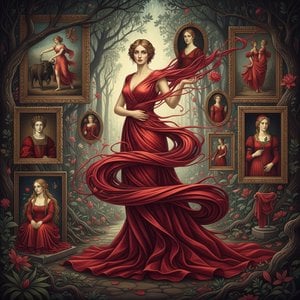
Crimson Threads of Narrative: Exploring Symbolism & Representation in Artworks Featuring the Red Dress
Explore the rich symbolism of the red dress in art history! From ancient power displays to iconic portraits like Cézanne’s 'Madame Cezanne', discover the cultural and artistic significance behind this captivating color. Expert analysis & insights.

The Enduring Power of Painting: A Historical & Contemporary Exploration of Form and Emotion
Explore the rich history & enduring techniques of oil painting with ArtsDot. Discover masterpieces, learn about art collecting, and find authentic handmade reproductions crafted by skilled artists.

The Enduring Legacy of Oil on Canvas: Technique, History & Aesthetic Impact
Explore the rich history & techniques of oil painting – from Renaissance masters to Impressionism. Discover pigments, layering methods, and why this timeless medium endures. Expert insights for artists & art enthusiasts.

