

Het werk volgt uw keuzes: , .
Beschrijving verzamelobject
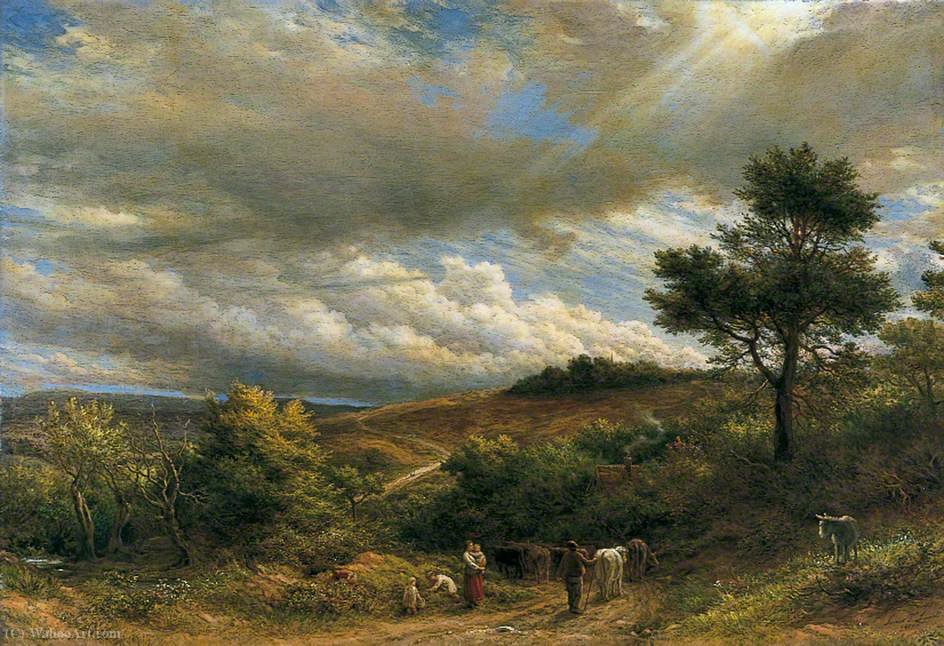
James Thomas Linnell’s "Passing Gleams" captures a romantic Welsh landscape. Oil on canvas showcases atmospheric perspective & rural life. Explore this idyllic pastoral scene.
Biografie kunstenaar
James Thomas Linnell (1820-1905) was a British artist renowned for his idyllic landscapes of Wales & England. Explore pastoral scenes, sheepfolds, & evocative light in his paintings.
 Lees meer
Handgemaakte olieverfreproductie
Met de hand geschilderd in olieverf op canvas in uw gewenste maat en lijst, op bestelling gemaakt door onze kunstenaars. ( Schakel over naar print Schakel over naar digitale afbeeldingen)
Meer over dit schilderij
 Voorvertoning
 Verstuur
 Delen
Delen
 Details bekijken
 Gids
Gids

 Download
 Vergelijkbare items
 Röntgenonderzoek
 Diavoorstelling
 Vraag & antwoord
 Statistieken
Bestel uw schilderij in vier eenvoudige stappen
Neem de tijd. U kunt elk antwoord nog wijzigen; de prijs in uw besteloverzicht wordt direct aangepast aan elke keuze.
1 Stap één van de vier
Welke maat wilt u kiezen?
Deze formaten behouden de proporties van het originele schilderij. De tekening laat uw keuze zien op een muur, boven een bank van twee meter.
Of geef uw eigen afmetingen op
Kies uit onze vooraf ingestelde maten die overeenkomen met de originele verhoudingen van het kunstwerk.

Voer de breedte en hoogte in die u nodig heeft, passend bij uw lijst of uw muur. Omdat dit handgeschilderd is, kan de kunstenaar bij een afmeting met een andere beeldverhouding iets meer rondom het schilderij schilderen of juist iets meer weglaten — u kiest zelf. Wij sturen u een digitaal mockup ter goedkeuring voordat het schilderwerk begint. De afbeelding die op deze pagina wordt getoond, is niet het uiteindelijke resultaat — alleen de mockup geeft dit weer.
2 Stap twee van vier
Hoe moet het worden geleverd: gerold, opgespannen of ingelijst?
De onderstaande prijzen zijn voor de maat die u in stap één heeft gekozen.
Kies de randen van het canvas
Kies uw lijst

Wit €1

Vervagende randen €1

Doorlopende rand €1

P118B €10

P118H €10

P118W €10

P438Z €10

P508JH €12

P508YH €12

P805H €10

P805Z €10

P919BZ €10

P919G €10

P919XJ €10

P959ZH €10

P968JZ €12

W106C €8

W218G €10

W218JH €8

W218Y €10

W307PJ €10

W316G €10

W316PJ €8

W316Y €10

W398PJ €8

W4111J €10

W500HY €15

W500JH €15

W692G €12

W849H €8

W940BG €15

W953PJ €8

H24-GOLD €30

H24-SILVER €30

H36-GOLD €45

H36-SILVER €45
Ingelijst
Lijstrand: . Totale afmetingen inclusief lijst: .
3 Stap drie van vier
Wilt u dat er iets aan het schilderij wordt aangepast?
De meeste mensen antwoorden nee. Omdat elk schilderij met de hand wordt gemaakt, kan onze kunstenaar het ook voor u aanpassen.
Na de bestelling zal het team van ArtsDot.com per e-mail contact opnemen met de klant voor instructies en een mockup-voorbeeld verstrekken
4 Stap vier van vier
Enkele afwerkingsopties
Ze zijn allemaal optioneel. De reeds geselecteerde antwoorden brengen geen extra kosten met zich mee.
Wie is de kunstenaar?
Wereldwijde levering () binnen 3 tot 4 weken in plaats van de standaard 5 weken. (4 november). Zonder concessies aan de kwaliteit.
Een naambordje, zoals in een museum?
Details van de gegraveerde bronzen plaat
This elegant plaque features the artist's name and the title of the artwork, finely engraved for a timeless presentation.
It is made from bronze with a refined, elegant finish. The text is precisely laser-engraved for a sharp and permanent result. Measuring 9x2 cm, the plaque is compact yet easy to read. It's built to be durable and scratch-resistant, offering a professional, museum-quality look. Mounting is simple thanks to the included adhesive backing.
Details transparante acrylplaat
The plaque includes essential engraved details such as the artist's name, the title of the artwork, the date it was created, the type of media used-like oil on canvas or watercolor-a brief description of the piece, and a QR code that links to the complete artwork information.
It is crafted from clear acrylic, offering a sleek, modern appearance. The text is UV-engraved in black to ensure strong visual contrast. With a size of 10x15 cm, it ensures optimal readability. It comes equipped with two metal hooks for secure wall mounting. The plaque is designed to be weather-resistant, making it suitable for various environments, and it includes interactive features that work seamlessly with smartphone scanning.
Details zwarte acrylplaat
This elegant plaque includes engraved information such as the artist's name, the title of the artwork, the date it was created, the type of media used (like oil on canvas or watercolor), a short description of the artwork, and a QR code for quick access to more information.
The plaque itself is made from refined black acrylic with a premium finish. The text is laser-engraved in white for high contrast and readability. Its size is 10x15 cm, designed to be easy to read. It comes with two metal hooks for professional mounting. The design is sleek and fits any interior style. It is also weather-resistant and durable, with built-in digital integration for mobile compatibility.
Een beschermende vernis?
Wanneer heeft u het nodig?
✓ Controleren en bestellen
Uw schilderij, zoals u het heeft besteld

Passing gleams
Druktechniek
Afmetingen reproductie
-

Geselecteerde topkunstenaars
Meer detail, verfijning en extra productietijd
-

Lijst voor reproductie
-
-
Voor kunstwerken of reproducties die aan één zijde groter zijn dan 105 cm (ongeveer 41 inch), wordt de lijst als een losse set verzonden. Deze methode garandeert een veilige levering en voorkomt schade tijdens het transport.
Professionele montage vereist - dit is geen doe-het-zelfproduct.
De set moet worden gemonteerd en het canvas moet worden gespannen door een ervaren professionele lijstenmaker, met gebruik van houtlijm (niet inbegrepen), een doekspanter en klemmen om de sponningen recht te houden terwijl de lijm droogt. Onjuiste montage of een ongelijkmatige spanning op het canvas kan het kunstwerk permanent beschadigen en wordt niet gedekt door onze garantie.
 Voor kunstwerken of reproducties die aan één zijde groter zijn dan 105 cm (ongeveer 41 inch), wordt de lijst als een losse set verzonden. Deze methode garandeert een veilige levering en voorkomt schade tijdens het transport.
Alle massief houten onderdelen zijn inbegrepen, nauwkeurig op maat gesneden voor montage.
Te monteren met de meegeleverde schroeven, plus houtlijm voor de hoekverbindingen, die niet wordt meegeleverd en door uw lijstenmaker moet worden aangeschaft.
Professioneel gereedschap is vereist en niet inbegrepen: een spanner voor canvas en klemmen om de latten recht te houden terwijl de lijm droogt.
Belangrijk:
De hoekverbindingen vereisen houtlijm, de latten moeten met lijmklemmen worden vastgehouden tot de lijm volledig is opgedroogd, en het spannen van het canvas op het samengestelde frame vereist een doekspanter. Geen van deze artikelen is inbegrepen in de set. Wij adviseren u om een ervaren professionele lijstenmaker te raadplegen voordat u deze maat bestelt.

Naamplaatje
-
-

Beschermende vernislaag
Glanzende vernis (versterkt de kleuren en biedt bescherming tegen licht en vocht)
-

Mijn kunstwerk aanpassen
Voorbeelden van aanpassingen: vervang het gezicht door een eigen foto; voeg een huisdier toe (bijv. vervang de kat door een hond); verwerk een verborgen boodschap in de achtergrond; wijzig het landschap of andere elementen op de achtergrond.
-

Spoedlevering
Wereldwijde levering () binnen 3 tot 4 weken in plaats van de standaard 5 weken. (4 november). Geen concessies aan de kwaliteit.
-
Spoedlevering
Wereldwijde levering naar binnen 5 weken. (11 november).
Inbegrepen
Eindtotaal
€ 278
De optie voor glas is alleen beschikbaar bij een formaat kleiner dan 110 cm.
Inbegrepen bij elke bestelling
- Gratis wereldwijde expressverzending
- Hoogwaardig linnen canvas
- Volledige verzendverzekering
- Garantie op terugbetaling van invoerrechten
- Garantie op exacte kleurweergave
- Retourbeleid van 100 dagen (alleen bij defecten)
- 100% Geld-terug-garantie
- Korting bij meerdere afnames


Vergelijkbare kunstwerken


James Thomas Linnell
1820 - 1905, United Kingdom
Biografie kunstenaar
James Thomas Linnell: A Victorian Painter of Rural Life and Luminous Landscapes
James Thomas Linnell (1820–1905) stands as a quietly significant figure within the vibrant tapestry of 19th-century British art. Often overshadowed by his more flamboyant contemporaries, he carved out a distinctive niche for himself through his evocative depictions of English rural life – scenes brimming with gentle observation, luminous light, and an underlying sense of poetic tranquility. His work, deeply rooted in the legacy of his father, John Linnell, yet possessing a unique sensibility, offers a poignant glimpse into the Victorian appreciation for both naturalism and sentimentality.
Born in London amidst a family already steeped in artistic tradition, James Thomas’s early life was profoundly shaped by his father's career. John Linnell, a versatile artist known for his portraits, religious subjects, and increasingly, his powerful landscapes, provided an unparalleled environment for the young James. The Linnell household at Redstone Wood, near Redhill, Surrey, was a hub of creative activity, fostering a deep immersion in art from the earliest years. His father’s influence was paramount; John Linnell's meticulous attention to detail, his skill in rendering atmospheric effects, and his engagement with the English landscape served as an enduring model. However, James Thomas wasn’t merely a mimic. He absorbed these foundational elements while simultaneously cultivating a style uniquely his own – one characterized by brighter palettes, softer light, and a gentle, almost ethereal quality.
The formative years were further enriched by exposure to the work of William Blake, John Linnell's patron and a figure whose visionary spirit profoundly impacted the artistic landscape. Furthermore, James Thomas’s association with Samuel Palmer, his father-in-law, proved particularly influential. Palmer’s Shoreham period paintings – intensely spiritual and poetic visions of the Kent countryside – instilled in James Thomas a sensitivity to light, color, and atmosphere that would become hallmarks of his own work. The influence of these artistic giants, combined with the rigorous training received at the Royal Academy Schools, laid the groundwork for Linnell's distinctive approach.
Linnell’s subject matter frequently focused on idyllic rural scenes – children playing in sun-dappled woodlands, harvesters resting at noon, and tranquil pastoral vistas. He eschewed the dramatic intensity often associated with his father’s work, instead finding his expressive power in the quiet poetry of everyday life. His paintings are not overtly narrative; rather, they capture fleeting moments of beauty and serenity, inviting the viewer to contemplate the simple pleasures of rural existence. His compositions are carefully constructed, utilizing a restrained palette and subtle tonal shifts to create a sense of depth and atmosphere. The use of light is particularly noteworthy – Linnell masterfully employs diffused sunlight and soft shadows to evoke a feeling of warmth and tranquility.
Despite his relative obscurity during his lifetime, James Thomas Linnell’s work has gained increasing recognition in recent decades. His paintings offer a valuable insight into the Victorian sensibility—a desire for beauty, a reverence for nature, and a longing for simpler times. His legacy rests not on grand pronouncements or revolutionary techniques, but rather on the quiet elegance of his landscapes – luminous depictions of rural England that continue to resonate with viewers today. The Forbes Magazine Collection at Princeton University Art Museum holds a significant body of his work, providing a crucial resource for scholars and art enthusiasts alike.
The Linnell Family Legacy and Artistic Environment
James Thomas Linnell’s artistic journey was inextricably linked to the broader context of the Linnell family—a lineage deeply rooted in both artistic talent and religious conviction. John Linnell (1792–1882), his father, was not only a successful painter but also a significant patron, most famously supporting the visionary artist William Blake during Blake’s final years. This familial commitment to art extended beyond mere financial support; it fostered an environment of intellectual and creative exchange within the household.
The Linnell family resided at Redstone Wood, near Redhill, Surrey, a location that profoundly influenced their artistic sensibilities. The surrounding countryside—rolling hills, verdant pastures, and picturesque villages—provided a constant source of inspiration. Furthermore, the family’s religious background – John Linnell Senior was a non-conformist – instilled in them a deep appreciation for nature's beauty as a reflection of God's creation. This spiritual dimension is subtly woven into many of Linnell’s paintings, imbuing them with a sense of peace and reverence.
The household at Redstone Wood was a vibrant hub of artistic activity, populated by a cohort of talented siblings—John Linnell Jr., William Linnell, and Mary Elizabeth Linnell. Each sibling received art instruction from their father, absorbing his techniques and stylistic preferences. The family’s close-knit environment fostered a spirit of collaboration and mutual support, encouraging each member to pursue their artistic passions. The presence of other influential artists—such as Samuel Palmer, John Linnell's son-in-law—further enriched the artistic milieu, exposing the young Linnells to diverse perspectives and techniques.
The family’s relocation to Redhill in the 1850s marked a significant shift in their lives. They built two residences nearby – Redstone Wood South (later demolished) and Hillsbrow (also demolished) – providing them with dedicated spaces for artistic practice and studio work. This move allowed James Thomas to establish his own independent career, while remaining connected to the family’s established artistic network.
Technique and Artistic Style
James Thomas Linnell's distinctive style is characterized by a harmonious blend of observation, sensitivity, and technical skill. He inherited from his father a meticulous attention to detail and a mastery of rendering atmospheric effects—qualities that are evident in many of his landscapes.
However, Linnell’s work transcends mere imitation; he developed a unique palette and approach that set him apart from his father and other contemporary artists. His colors are notably brighter and more luminous than those typically employed by John Linnell, creating a sense of warmth and vitality. He skillfully utilizes light—often employing diffused sunlight and soft shadows—to evoke a feeling of tranquility and serenity.
Linnell’s compositions are carefully constructed, utilizing subtle tonal shifts and atmospheric perspective to create depth and realism. His brushwork is generally smooth and understated, allowing the colors and light to speak for themselves. He avoided dramatic contrasts or overtly expressive gestures, instead focusing on capturing fleeting moments of beauty and quiet contemplation.
A key element of Linnell’s style is his ability to imbue his landscapes with a sense of poetry—a suggestion of something beyond the purely visual. His paintings invite the viewer to engage in a dialogue with nature, prompting reflection on themes of beauty, simplicity, and the passage of time. His work demonstrates a remarkable sensitivity to the nuances of light and color, as well as an intuitive understanding of how to capture the essence of rural England.
Historical Significance and Legacy
James Thomas Linnell’s contribution to 19th-century British art is often understated, overshadowed by more prominent figures. However, his work holds significant historical value, offering a valuable insight into the artistic sensibilities of the Victorian era.
Linnell's paintings reflect the broader trends of the time—a growing interest in nature, a desire for beauty and tranquility, and a yearning for simpler times. His landscapes capture the essence of rural England—its rolling hills, verdant pastures, and picturesque villages—providing a nostalgic vision of a bygone era.
His association with influential artists such as William Blake and Samuel Palmer highlights his place within a vibrant artistic network. Linnell’s work demonstrates the influence of these figures on his own style and approach, while also showcasing his unique contribution to the Norwich School of painters.
Despite his relative obscurity during his lifetime, Linnell's paintings have gained increasing recognition in recent decades. The Forbes Magazine Collection at Princeton University Art Museum holds a significant body of his work, providing scholars and art enthusiasts with access to his oeuvre. His legacy rests not on grand pronouncements or revolutionary techniques, but rather on the quiet elegance of his landscapes—luminous depictions of rural England that continue to resonate with viewers today.
Gerelateerde artikelen

Cultivating Visions: A Historical Journey Through Rural Landscapes in Art
Explore the rich history of rural landscape painting with ArtsDot. Discover Impressionist masterpieces, key artists & movements. Find your perfect serene artwork and bring nature's beauty home.

Romantische Landschappen: Top 10 Meesterwerken voor een Sfeervol Interieur | ArtsDot.nl
Ontdek de 10 meest iconische meesterwerken van de Romantiek! Reis door de tijd met Caspar David Friedrich, Turner & Delacroix. Laat je inspireren en vind museumkwaliteit kunst reproducties voor een sfeervol interieur op ArtsDot.com.

Sir Alfred James Munnings: Top 25 Meesterwerken voor Kunstliefhebbers | ArtsDot.nl
Ontdek de top 25 schilderijen van Sir Alfred James Munnings, meester van paardenkunst & Engelse impressionisme. Leer over zijn leven, techniek en iconische werken. Museumkwaliteit reproducties op ArtsDot.com! Ontdek alle meesterwerken online.