


 Voorvertoning
 Verstuur
 Delen
Delen
 Details bekijken

 Download
 Vergelijkbare items
 Röntgenonderzoek
 Diavoorstelling
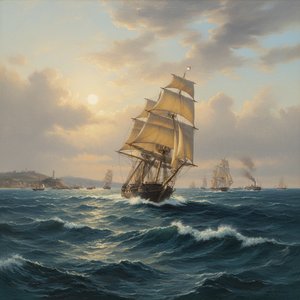
Sunset on a Rough Sea

 Lees meer
Handgemaakte olieverfreproductie
Met de hand geschilderd in olieverf op canvas in uw gewenste maat en lijst, op bestelling gemaakt door onze kunstenaars. ( Bestel print Koop afbeelding)




P118B $10

P118H $10

P118W $10

P438Z $10

P508JH $12

P508YH $12

P805H $10

P805Z $10

P919BZ $10

P919G $10

P919XJ $10

P959ZH $10

P968JZ $12

W106C $8

W218G $10

W218JH $8

W218Y $10

W307PJ $10

W316G $10

W316PJ $8

W316Y $10

W398PJ $8

W4111J $10

W500HY $15

W500JH $15

W692G $12

W849H $8

W940BG $15

W953PJ $8




Kies uit onze vooraf ingestelde maten die overeenkomen met de originele verhoudingen van het kunstwerk.

U kunt uw eigen afmetingen invoeren om in een specifieke lijst of ruimte te passen. Als de door u gekozen maat niet overeenkomt met de verhoudingen van het originele beeld, zullen we het kunstwerk bijsnijden of het schilderij uitbreiden met extra handgeschilderde elementen. Een digitale mockup wordt ter goedkeuring naar u verzonden voordat de productie begint.
Houd er rekening mee dat de preview op het scherm niet de werkelijke uitsnede of uitbreiding weergeeft. Alleen de mockup toont de uiteindelijke compositie nauwkeurig.
Hoewel aangepaste afmetingen mogelijk zijn, raden we aan een maat uit de vooraf gedefinieerde lijst te selecteren om de originele verhoudingen te behouden.
Na de bestelling zal het team van ArtsDot.com per e-mail contact opnemen met de klant voor instructies en een mockup-voorbeeld sturen.
Wereldwijde levering () binnen 3 tot 4 weken in plaats van de standaard 5 weken. (7 september). Zonder concessies aan de kwaliteit.

Gratis wereldwijde expressverzending

Hoogwaardig linnen canvas

Volledige verzendverzekering

Garantie op terugbetaling van invoerrechten

Garantie op exacte kleurweergave

Retourbeleid van 100 dagen (alleen bij defecten)

100% Geld-terug-garantie

Korting bij meerdere afnames
 De optie voor glas is alleen beschikbaar bij een formaat kleiner dan 110 cm.

Sunset on a Rough Sea
Druktechniek
Afmetingen reproductie
-


Eindtotaal
$ 263
Vergelijkbare kunstwerken


Biografie van de kunstenaar
Gustave Courbet: A Revolutionary Vision of Reality
Jean Désiré Gustave Courbet, born in Ornans, eastern France, on June 10, 1819, and tragically dying in La Tour-de-Peilz, Switzerland, on December 31, 1877, stands as a pivotal figure in the history of art. More than simply a painter, Courbet was a revolutionary—a man who deliberately challenged the established norms of his time, rejecting academic conventions and embracing a brutally honest depiction of everyday life. His work, characterized by its monumental scale, earthy palette, and unflinching portrayal of the working class, laid the foundation for Realism and profoundly influenced generations of artists to come. His story is one of unwavering conviction, artistic struggle, and ultimately, a lasting legacy that continues to resonate today.
Courbet’s early life was steeped in rural tradition. His father, Eléonor-Régis Courbet, was a prosperous farmer, and the family’s values emphasized hard work and connection to the land. This environment profoundly shaped his artistic sensibility. Despite his father's initial reservations about a career as an artist, he recognized Gustave’s innate talent and provided him with the financial support necessary to pursue his passion. Courbet’s early training was somewhat haphazard—he attended both the Collège Royal and the college of fine arts at Besançon before ultimately moving to Paris in 1841, ostensibly to study law but primarily to immerse himself in the world of art.
Paris proved a challenging environment for the young Courbet. He initially attempted to emulate the established masters in the Louvre, diligently copying works by Velázquez and Ribera, seeking technical proficiency. However, he quickly grew disillusioned with the idealized beauty and historical subjects favored by the Salon—the official art exhibition of the Académie des Beaux-Arts. Frustrated by repeated rejections from the Salon jury due to his unconventional style and depictions of ordinary people, Courbet refused to compromise, choosing instead to submit his work independently. This act of defiance marked a crucial turning point in his career and signaled his commitment to forging a new path for art.
The Birth of Realism: Subject Matter and Technique
Courbet’s artistic breakthrough came with *Courbet with a Black Dog* (1842-44), which was finally accepted by the Salon in 1849. This painting, depicting himself with his faithful dog, marked a departure from traditional portraiture—it was unidealized, intimate, and imbued with a sense of melancholy. It established Courbet’s signature style: large-scale canvases featuring ordinary subjects – peasants, laborers, landscapes – rendered in a direct, almost photographic manner. He deliberately avoided the romanticism and historical grandeur that dominated academic painting, opting instead to focus on the realities of contemporary life.
Courbet's technique was equally revolutionary. He employed a bold, earthy palette—ochres, browns, grays, and greens—to capture the textures and colors of the natural world. His brushstrokes were often loose and expressive, conveying movement and emotion rather than meticulous detail. He frequently worked *en plein air* (outdoors), directly observing his subjects and translating them onto canvas with remarkable immediacy. This commitment to direct observation was a radical departure from the studio-bound practices of traditional artists.
Major Works and Controversies
Courbet’s most famous works—*A Burial at Ornans* (1849–50) and *The Stone Breakers* (1849–50)—are monumental in scale and profoundly impactful. *A Burial at Ornans*, a vast depiction of a local funeral procession, challenged the conventions of history painting by presenting a commonplace event with solemn dignity. Similarly, *The Stone Breakers* depicted two elderly laborers engaged in their arduous task—a stark reminder of the poverty and hardship faced by many rural workers. These paintings sparked considerable controversy when they were exhibited at the Salon, with critics condemning them for their lack of idealization and their unflinching portrayal of social inequality.
Despite the criticism, Courbet remained steadfast in his artistic vision. He continued to produce a prolific body of work—landscapes, seascapes, hunting scenes, nudes, and still lifes—each imbued with his distinctive style and commitment to realism. His later works, such as *The Artist’s Studio* (1855) and *Property at La Grotte* (1867), further explored themes of social class, labor, and the role of the artist in society.
Legacy and Influence
Gustave Courbet's impact on the course of art history is undeniable. He rejected the established conventions of academic painting and paved the way for Realism, Impressionism, and subsequent movements that sought to depict the world as it truly was. His emphasis on direct observation, social commentary, and the celebration of everyday life continues to inspire artists today.
Courbet’s legacy extends beyond his individual paintings. He established a studio where he trained a succession of young artists—including Jean-Baptiste-Camille Corot, Paul Cézanne, and Gustave Moreau—who went on to become influential figures in the art world. His unwavering commitment to artistic integrity and his willingness to challenge convention serve as a powerful reminder of the transformative potential of art.
Courbet died in La Tour-de-Peilz, Switzerland, on December 31, 1877, leaving behind a body of work that continues to captivate and provoke debate. His paintings remain among the most important and influential works of the 19th century—testaments to his revolutionary vision and enduring legacy.

james hamilton
1819 - 1878 , Ireland
Belangrijkste feiten
- Artistic Movement Or Style: Realism
- Artists Or Movements Influenced By This Artist:
- Impressionists
- Cubists
- Artists Who Influenced This Artist:
- Velázquez
- Ribera
- Date Of Birth: June 10, 1819
- Date Of Death: December 31, 1877
- Full Name: Jean Désiré Gustave Courbet
- Nationality: French
- Notable Artworks:
- A Burial at Ornans
- The Stone Breakers
- Olympia
- Place Of Birth: Ornans, France
Gerelateerde artikelen

Verzending en retourneren
APS levert wereldwijd kunsttransport met zorg op museumniveau, volledige tracking en een geld-teruggarantie van 100 dagen. Van douaneondersteuning tot Priority Production, vertrouw op een transparante service, veilige verpakking en betrouwbare levering voor verzamelaars, ontwerpers en galerijen.

The Allure of the Horizon: A Comprehensive Exploration of Seascape Art Through History & Emotion
Explore the captivating world of seascape art! Discover its history, key artists & movements – from Dutch Masters to Impressionism. Expert insights for collectors and enthusiasts at ArtsDot.

Navigating the Depths of Representation: A Historical Exploration of Marine Painting
Explore the rich history of marine painting with ArtsDot. Discover Dutch Masters, Romantic seascapes & renowned artists like Wyllie and Harris. Expert guidance for collectors & custom reproductions.
James E. Buttersworth: Navigating the Seas of Victorian Marine Painting
Explore the captivating world of James Edward Buttersworth, a foremost Victorian marine painter. Discover his meticulous ship portraits, America's Cup chronicles & enduring legacy in museums worldwide. Learn about his technique and style.

The Azure Depths: Exploring Representations of the Ocean in Art History
Explore the rich history of ocean art! Discover Romantic seascapes, renowned artists like Aivazovsky & Harris, and expert guidance for collectors at ArtsDot.com.