

 Verstuur
 Delen
Delen
 Details bekijken
 Gids
Gids

 Download
 Vergelijkbare items
 Diavoorstelling
 Vraag & antwoord
 Statistieken
Figure


 Lees meer
Ontvang een bestand dat klaar is voor drukwerk en de kwaliteit van het online voorbeeld ver overstijgt. Elke digitale afbeelding die wij verkopen, is afkomstig van een high-resolution master uit onze database — meestal tussen de 5.000 en 15.000 pixels breed — zodat u met vertrouwen groot kunt afdrukken, nauwkeurig kunt bijsnijden of fijne details kunt reproduceren.
Geen enkel bestand verlaat ons atelier onbewerkt. Een digitaal expert controleert de kleuren aan de hand van het originele schilderij en corrigeert deze indien nodig, om vervolgens de helderheid en details te verbeteren met professionele retoucheertechnieken — waarbij de penseelstreek en stijl van de kunstenaar altijd strikt worden gerespecteerd. Het resultaat is een afbeelding die oogt als het schilderij zelf, en niet als een gescande foto met een filter.
U keurt de afbeelding goed voordat de bestelling wordt afgerond: onze expert stuurt u binnen 72 uur een e-mail ter beoordeling. Niet tevreden? Vraag om aanpassingen of correcties, of vraag een terugbetaling aan als de kwaliteit niet aan de verwachtingen voldoet.
Dit is de kwaliteit waarop uitgevers, designstudio's, galeries en drukkerijen vertrouwen.
Digitale afbeeldingen
Download een bestand met hoge resolutie voor persoonlijke weergave, afdrukken en creatieve projecten. ( Schakel over naar print Bestel handgeschilderde reproductie)
Inbegrepen bij elke bestelling van een digitale afbeelding
Professionele digitale levering, gegarandeerd
Wanneer u kiest voor ArtsDot.com, ontvangt u niet alleen een afbeelding – u krijgt een professioneel verbeterd digitaal kunstwerk, met precisie vervaardigd en voorzien van een tevredenheidsgarantie. Dit is alles wat automatisch bij uw bestelling is inbegrepen:

Snelle levering per e-mail
Uw hoogwaardige digitale afbeeldingsbestand wordt binnen 72 uur na bestelling naar u gemaild – klaar voor direct gebruik.

AI-verbeterd digitaal bestand
Uw kunstwerk wordt professioneel geoptimaliseerd met behulp van geavanceerde AI-tools en handmatige bewerkingen, waardoor maximale details, helderheid en kleurnauwkeurigheid worden gegarandeerd.

Gratis levenslange herlevering van digitale bestanden
Je bestand per ongeluk verwijderd of kwijtgeraakt? Geen zorgen – we sturen het u op elk gewenst moment gratis opnieuw toe.

Geen invoerkosten – nooit
Geniet direct van uw kunstwerk zonder invoerrechten, belastingen of verzendkosten – digitale downloads zijn altijd belastingvrij.

Garantie op kleurgetrouwheid
Met behulp van professionele hulpmiddelen en kleurbeheer zorgen wij ervoor dat uw digitale afbeelding de originele kleuren zo nauwkeurig mogelijk weergeeft.

100 dagen tevredenheidsgarantie
Mocht u niet tevreden zijn met uw digitale afbeelding, dan passen wij deze aan of storten wij 100% terug binnen 100 dagen – zonder vragen te stellen.

100% Geld-terug-garantie
Niet tevreden? Ontvang een volledige terugbetaling binnen 100 dagen na ontvangst van uw digitale bestand – zonder vragen te stellen.

Korting bij grote bestellingen
Koop 3 afbeeldingen, bespaar 10% - Koop 5, bespaar 15% - Koop 10+, bespaar 20%. Ideaal voor creatieve projecten, galerieën en bureaus.
A Fragmented Vision of Humanity
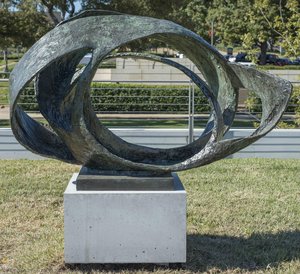
Jacques Lipchitz's "Figure," sculpted in 1930, stands as a profound testament to the transformative power of Cubism and its enduring fascination with exploring the fundamental concepts of form and perception. This bronze masterpiece transcends mere representation; it invites a deep, meditative contemplation on the very essence of human existence through a deliberately abstracted aesthetic. In an era defined by rapid societal shifts, Lipchitz utilized a fragmented language to capture the complexity of the modern soul. The sculpture presents a captivating interplay of geometric precision and organic fluidity, where the human form is not merely depicted but reconstructed through a lens of intellectual rigor and emotional depth.
The composition is a masterclass in the Cubist approach, pioneered by luminaries such as Picasso and Braque. Rather than striving for a realistic or anatomical depiction, Lipchitz dismantles the human figure into interlocking planes, presenting multiple viewpoints simultaneously. The head is rendered with striking simplicity—two oval eyes positioned above a small, triangular nose—which disrupts traditional notions of facial harmony to create a sense of enigmatic presence. Below this stylized visage, undulating vertical forms intersect with curved openings, creating a rhythmic tension between movement and stillness. This structural complexity ensures that the viewer's eye is constantly traveling across the surface, discovering new contours and depths within the bronze.
The Alchemy of Bronze and Form
The materiality of the piece is essential to its enduring impact. The choice of bronze allows for an exquisite level of detail and a rich, tactile quality that stone or wood could not achieve. Through the intricate process of bronze casting, Lipchitz was able to capture subtle variations in surface texture, from the sharp, clean edges of his geometric planes to the softer, more rounded contours of the figure's limbs. The rough, uneven patina resulting from natural oxidation lends the sculpture an ancient, weathered character, suggesting a sense of permanence and historical weight. This textured surface catches the light in a way that emphasizes the sculpture's three-dimensionality, making it a dynamic object that changes appearance depending on the surrounding illumination.
For the discerning collector or interior designer, "Figure" offers an unparalleled opportunity to introduce a piece of art history into a contemporary space. The sculpture’s neutral, earthy tones and sophisticated silhouette allow it to integrate seamlessly into various high-end environments, from minimalist modern galleries to richly textured classical studies. It serves as a powerful focal point, commanding attention through its structural integrity and the quiet strength of its presence. Owning a high-quality reproduction of this work is not merely about acquiring an object; it is about bringing a piece of the avant-garde revolution into one's personal sanctuary, fostering an atmosphere of intellectual curiosity and timeless elegance.
Veelgestelde vragen
Hoe licht is "Figure" in zijn geheel?
Over het algemeen wordt "Figure" geregistreerd als brilliant. De waargenomen helderheid beschrijft hoe licht of donker het werk oogt.
Zijn de kleuren van "Figure" door Jacques Lipchitz verzadigd of gedempt?
"Figure" door Jacques Lipchitz heeft een Muted verzadiging.
Welke emotie straalt "Figure" door Jacques Lipchitz uit?
De emotionele toon die is vastgelegd voor "Figure" door Jacques Lipchitz is Reflective. Het vat het gevoel samen dat het werk uitdrukt.
Vergelijkbare kunstwerken




Kunstenaarsbiografie
Een leven gevormd door verandering: De reis van Jacques Lipchitz
Geboren als Chaim Jacob Lipschitz in 1891 in het Litouwse stadje Druskininkai, werd het artistieke pad van Jacques Lipchitz dramatisch getekend door ontheemding en innovatie. Zijn vroege jaren, geworteld in een Litouwse Joodse familie waarin zijn vader werkzaam was als aannemer, stuurden hem aanvankelijk richting de ingenieurswetenschappen. Echter, een ontwakende creatieve geest, gevoed door de steun van zijn moeder, dreef hem in 1909 naar Parijs – een stad die destijds pulseerde van de artistieke revolutie. Hij schreef zich in bij de École des Beaux-Arts en de Académie Julian, waar hij zichzelf onderdompelde in de levendige gemeenschappen van Montmartre en Montparnasse. Binnen deze kringen smeedde hij vriendschappen met grootheden als Juan Gris, Pablo Picasso en Amedeo Modigliani – die laatste legde Lipchitz en zijn vrouw Berthe beroemd vast in een ontroerend dubbelportret. Deze vroege connecties waren cruciaal en legden de basis voor Lipchitz' omarming van het kubisme, hoewel een stijl die duidelijk werd getemperd door zijn eigen gevoeligheid.De kristallisatie van vorm: Lipchitz en de kubistische sculptuur
Lipchitz vertaalde het kubisme niet simpelweg van schilderkunst naar drie dimensies; hij beeldhouwde het kubisme. Hoewel diep beïloed door de gefragmenteerde perspectieven van Picasso en Braque, behield Lipchitz tot ongeveer 1915-16 een opmerkelijke mate van figuratie in zijn werk. Zijn sculpturen waren niet volledig abstract; ze suggereerden herkenbare vormen, doordrenkt met een gevoel van emotionele zwaarte. Dit evolueerde naar wat bekend kwam te staan als het "Kristal-kubisme", een stijl gekenmerkt door facettering en transparantie – een poging om meerdere gezichtspunten tegelijkertijd binnen één enkele vorm te vangen. Hij experimenteerde met het breken van de ruimte, waardoor dynamische composities ontstonden die leken te schitteren met een innerlijk licht. Zijn solotentoonstelling in 1920 in de Galerie L'Effort Moderne van Léonce Rosenberg in Parijs bevestigde zijn positie als een vooraanstaand figuur van de School van Parijs en toonde deze unieke beeldhouwtaal aan. Werken zoals "Harlekijn met klarinet" zijn exemplarisch voor deze periode, waarbij gefragmenteerde vormen er nog steeds in slagen een gevoel van speelse energie en menselijke aanwezigheid over te brengen. Hij was niet louter bezig met het deconstrueren van vorm; hij was het aan het heropbouwen volgens een nieuwe visuele logica.Exil en heruitvinding: Een nieuwe wereld, een vernieuwde visie
De dreigende schaduw van de Tweede Wereldoorlog dwong tot een diepgaande omwenteling in het leven van Lipchitz. Terwijl het naziregime zijn greep op Frankrijk verstevigde en de vervolging van Joden intensiveerde, werd hij gedwongen zijn vertrouwde vaderland te ontvluchten. Met de onschatbare hulp van de Amerikaanse journalist Varian Fry in Marseille, wist hij naar de Verenigde Staten te ontsnappen, waar hij zich uiteindelijk vestigde in New York en later in Hastings-on-Hudson. Deze verplaatsing was niet louter een geografische verschuiving; het markeerde een keerpunt in zijn artistieke traject. Hoewel hij de kubistische principes bleef verkennen, kregen de werken van Lipchitz nieuwe dimensies, waarin het trauma van het ballingschap en een groeiende betrokkenheid bij existentiële thema's weerspiegeld werden. Hij creëerde monumentale sculpturen zoals "Geboorte van de Muzen" (1944-1950), in opdracht gemaakt ter nagedachtenis aan Jerome Wiesner, die zijn meesterschap over brons en zijn vermogen om diepe emotie via abstracte vormen over te brengen, bewezen.Late reflecties: Geloof, nalatenschap en een toevluchtsoord in Toscane
In zijn latere jaren ervoer Lipchitz een verdiepende verbinding met zijn Joodse geloof en omarmde hij religieuze observantie met hernieuwde vurigheid – hij bestudeerde zelfs dagelijks en droeg tefillin op aandringen van de Lubavitcher Rebbe, Rabbi Menachem Schneerson. Deze spirituele ontwaking injecteerde zijn werk met een nieuwe laag van betekenis. Hij keerde regelmatig terug naar Europa, waar hij troost en inspiratie vond in Pietrasanta, Italië, waar hij een hechte vriendschap sloot met de medebeeldhouwer Fiore de Henriquez. Zijn autobiografie, die hij samen met H. Harvard Arnason schreef en die in 1972 werd gepubliceerd naast een tentoonstelling in het Metropolitan Museum of Art, bood een ontroerende reflectie op zijn leven en artistieke reis. Jacques Lipchitz overleed in 1973 in Capri, Italië, maar zijn lichaam werd naar Jeruzalem gebracht voor de begrafenis – een getuigenis van zijn diepe verbondenheid met zijn erfgoed. Zijn Toscaanse villa, Bozio, dient nu als een Joods zomerkamp, wat ervoor zorgt dat zijn nalatenschap toekomstige generaties blijft inspireren. Hij liet niet alleen een opmerkelijk oeuvre aan sculpturen na, maar ook een krachtig voorbeeld van artistieke veerkracht en de onverwoestbare menselijke geest.
Jacques Lipchitz
1891 - 1973 , Litouwen
Belangrijkste feiten
- Artistic Movement Or Style: Cubisme, Kristalcubisme
- Artists Who Influenced This Artist:
- Pablo Picasso
- Juan Gris
- Date Of Birth: 1891
- Date Of Death: 1973
- Full Name: Jacques Lipchitz
- Nationality: Litouws-Frans-Amerikaans
- Notable Artworks:
- Acrobaat te paard
- Instruments de musique
- Le guitariste
- Pierrot
- Harlekijn met klarinet
- Man met gitaar
- Geboorte van de musen
- Place Of Birth: Druskininkai, Litouwen