

 Voorvertoning
 Verstuur
 Delen
Delen
 Details bekijken
 Gids
Gids

 Download
 Vergelijkbare items
 Röntgenonderzoek
 Diavoorstelling
 Vraag & antwoord
 Statistieken
Self Portrait


 Lees meer
Giclée / Kunstafdrukken
Giclée- of canvasafdruk van museumkwaliteit met een snelle productie en flexibele afwerkingsmogelijkheden. ( Bestel handgeschilderde reproductie Schakel over naar digitale afbeeldingen)




P118B €10

P118H €10

P118W €10

P438Z €10

P508JH €12

P508YH €12

P805H €10

P805Z €10

P919BZ €10

P919G €10

P919XJ €10

P959ZH €10

P968JZ €12

W106C €8

W218G €10

W218JH €8

W218Y €10

W307PJ €10

W316G €10

W316PJ €8

W316Y €10

W398PJ €8

W4111J €10

W500HY €15

W500JH €15

W692G €12

W849H €8

W940BG €15

W953PJ €8




Kies uit onze vooraf ingestelde maten die overeenkomen met de originele verhoudingen van het kunstwerk.

Voer de gewenste breedte en hoogte in, passend bij uw lijst of muur. Een afdruk kan alleen worden ingekort en nooit groter worden gemaakt dan het origineel; een formaat met andere verhoudingen zal daarom een deel van de afbeelding verliezen. Wij sturen u een digitaal mockup ter goedkeuring voordat we tot drukwerk overgaan. De afbeelding op deze pagina toont niet de werkelijke uitsnede — dit is alleen te zien op het mockup.
Wereldwijde levering () binnen 2 weken in plaats van de standaard 4/5 weken. (3 november)

Gratis wereldwijde expressverzending

Hoogwaardig linnen canvas

Volledige verzendverzekering

Garantie op terugbetaling van invoerrechten

Garantie op exacte kleurweergave

Retourbeleid van 100 dagen (alleen bij defecten)

100% Geld-terug-garantie

Korting bij meerdere afnames
 De optie voor glas is alleen beschikbaar bij een formaat kleiner dan 110 cm.

Self Portrait
Giclée / Kunstafdrukken
Afmetingen reproductie
-


Eindtotaal
€ 56
A Window into the Soul: James Tissot’s “Self Portrait”
James Jacques Joseph Tissot's "Self Portrait," painted in 1865, isn’t merely a likeness; it’s a carefully constructed invitation into the artist’s world. Emerging from a period of intense artistic exploration and marked by influences ranging from Ingres to the burgeoning Impressionism of Paris, this work offers a poignant glimpse at Tissot's evolving style and his deep engagement with the social currents of his time. The painting immediately draws the eye with its intimate scale – a relatively small canvas that fosters an immediate sense of connection, as if the artist is sharing a private moment. He sits before an easel, bathed in soft light, a contemplative expression gracing his face. His gaze, direct and slightly melancholic, seems to hold both awareness of himself and a subtle invitation for the viewer to share in his thoughts. The muted palette – predominantly browns, greys, and ochres – contributes to the painting’s subdued elegance, reflecting Tissot's deliberate choice to move away from the bright, theatrical colors favored by earlier academic styles.Technique and Style: A Synthesis of Realism and Impressionistic Hints
Tissot’s technique is a fascinating blend of meticulous realism and subtle Impressionistic touches. He employs a highly detailed approach, rendering the textures of his clothing – the velvet jacket, the worn fabric of his trousers – with remarkable accuracy. Yet, he doesn't simply replicate reality; instead, he uses light and shadow to create an atmosphere, suggesting depth and volume. Notice how the folds of the fabric seem to ripple and shift, not through a rigid adherence to form, but through a skillful manipulation of color and value. This is particularly evident in the way the light catches on the velvet, creating a subtle shimmer that adds to the painting’s overall luminosity. Furthermore, Tissot's use of brushstrokes—often short and broken—hints at an Impressionistic sensibility, anticipating the later developments of Monet and Renoir. He captures fleeting moments of light and shadow, imbuing the scene with a sense of movement and immediacy. The composition itself is carefully balanced, drawing the eye to the artist’s face while simultaneously establishing a harmonious relationship between his figure and the surrounding space.Social Context and Symbolism: A Parisian Artist in His Prime
Painted during a pivotal period in Tissot's career, “Self Portrait” reflects his growing success as a genre painter of contemporary society. He had established himself as a keen observer of Parisian life, capturing the elegance and sophistication of the Belle Époque with remarkable skill. The painting speaks to this ambition – it’s not just a portrait of an artist; it's a statement about his position within the vibrant artistic milieu of Paris. The easel itself becomes a symbol of his profession, while the quiet studio setting suggests a dedication to his craft. The slightly worn appearance of the room and the artist’s attire hint at a life dedicated to art, perhaps tinged with a touch of melancholy – a common theme in Tissot's work. Interestingly, the inclusion of a partially visible mirror behind him subtly reinforces the idea of self-reflection and artistic identity, echoing the Renaissance tradition of artists portraying themselves within their works.Emotional Resonance: Intimacy and Quiet Contemplation
Beyond its technical merits and historical context, “Self Portrait” possesses a profound emotional resonance. The artist’s expression is not one of grand pronouncements or theatrical display; rather, it conveys a sense of quiet contemplation—a moment of introspection amidst the bustle of Parisian life. There's an underlying vulnerability in his gaze, inviting the viewer to share in his thoughts and feelings. It’s a remarkably intimate portrait, offering a rare glimpse into the inner world of a talented artist. The painting speaks to the universal human experience of self-awareness, reminding us that even amidst artistic ambition and social engagement, there is always room for quiet reflection and personal connection. Reproductions of this work offer a beautiful opportunity to bring this moment of serene contemplation into any space, serving as a reminder of the power of art to connect us with both ourselves and the world around us.Veelgestelde vragen
Aan welke kunstenaar wordt "Self Portrait" toegeschreven?
De kunstenaar achter "Self Portrait" is Jacques Tissot. Het werk is gecatalogiseerd onder de naam van Jacques Tissot.
Behoort "Self Portrait" van Jacques Tissot tot het publiek domein, en zo ja, waarom?
"Self Portrait" van Jacques Tissot is bevindt zich in het publiek domein - de auteursrechten zijn verlopen. De auteursrechten worden berekend vanaf het jaar van overlijden van de kunstenaar; Jacques Tissot is overleden in 1902.
Wat is de aanbevolen afdrukmaat voor "Self Portrait"?
Voor "Self Portrait" wordt een afdrukformaat van Large aanbevolen. Andere formaten zijn beschikbaar met dezelfde verhoudingen.
Vergelijkbare kunstwerken


Biografie kunstenaar
Early Life and Artistic Beginnings
Jacques Joseph Tissot, geboren op 15 oktober 1836 in Nantes, Frankrijk, was al vroeg bestemd voor een leven doordrenkt van artistieke passie. Zijn vader, een draperijhandelaar, instilledde in hem een waardering voor vakmanschap en detail – kwaliteiten die zijn artistieke visie diepgaand zouden vormen. Tegelijkertijd voedde zijn moeder, een milliner, zijn gevoeligheid voor schoonheid en mode, waardoor hij werd blootgesteld aan de levendige wereld van Parijse maatschappij. Ondanks familiale verantwoordelijkheden, achtervolgde Tissot onvermoeid zijn artistieke ambities, waarbij hij zich inschreef op de École des Beaux-Arts in Parijs waar hij onder toezicht stond van leraren zoals Ingres, Flandrin en Lamothe. Deze vormende periode versterkte zijn toewijding aan schilderen als een beroep en vestigde hem stevig binnen het invloedrijke Parijse kunstmilieu.The Salon Years and Recognition
Tissot’s debuut op de Paris Salon in 1861 markeerde een keerpunt – de onthulling van “De Ontmoeting van Faust en Margaretha”, een dramatisch tableau dat het publiek veroverde en aanzienlijke lof kreeg van critici. Deze ambitieuze onderneming werd door de staat gekocht om opgenomen te worden in de Luxembourg Gallery, wat Tissot’s groeiende reputatie als schilder wees die in staat was complexe narratieven vast te leggen en diepe emoties over te brengen. Volgende Salon-tentoonstellingen versterkten zijn positie binnen de artistieke gevestigde orde, waarbij hij zijn evoluerende stijl liet zien en opdrachten ontving van prominente patrons. Zijn vroege successen voedden vertrouwen en stuitten hem aan om nieuwe onderwerpen en technieken te verkennen – een traject dat uiteindelijk zijn illustere carrière zou definiëren.Genre Painting and Parisian Society
Tissot’s artistieke doorbraak kwam met zijn serie “La Femme à Paris”, een nauwkeurig geobserveerde weergave van de demi-mondaine wereld van late Victoriaanse Londen. Deze schilderijen, gekenmerkt door hun levendige kleurenpaletten en meesterlijke weergave van texturen – vooral stoffen – werden synoniem met het vastleggen van de aantrekkingskracht en dynamiek van Parijse hogere kringen. Tissot’s aandacht voor detail strekte zich verder uit dan alleen visuele representatie; hij streefde ernaar niet alleen uiterlijkheden, maar ook psychologische nuances weer te geven, die de angsten en aspiraties van zijn onderwerpen weerspiegelden. Zijn werk is een getuigenis van Impressionistische invloeden gecombineerd met realisme, waardoor een ongeëvenaard inzicht wordt geboden in de sociale gebruiken en artistieke smaak van de Belle Époque.Biblical Themes and Japonisme
Gedurende zijn productieve output omarmde Tissot diverse artistieke inspiraties – variërend van middeleeuwse verhalen tot biblieke scènes – wat aantoont dat hij buitengewoon veelzijdig was. Zijn weergaven van religieuze onderwerpen, doordrenkt van spirituele diepte en emotionele resonans, toonden zijn vermogen om visuele storytelling op te tillen tot diepe contemplatie. Tegelijkertijd werd hij gefascineerd door Japonisme – de fascinatie met Japanse kunst en esthetiek die in de Victoriaanse tijd door Europa woedde – wat zich liet zien in composities die doordrenkt zijn van asymmetrische arrangementen en subtiele kleurenharmonieën, vergelijkbaar met Japanse prints. Deze stijlinvloed weerspiegelde Tissot’s intellectuele nieuwsgierigheid en zijn bereidheid om te experimenteren met innovatieve artistieke benaderingen.Later Years and Legacy
Tissot’s leven nam een dramatisch wending toen hij zich inschreef in de Franco-Duitse Oorlog, waarbij hij diende aan de Franse kant – een ervaring die ongetwijfeld zijn wereldbeeld heeft gevormd. Na afloop van de oorlog verplaatste hij zich naar Londen waar hij etsen nastreeft onder Seymour Haden en zijn artistieke vaardigheden verder ontwikkelde door portretten te maken en karikaturen te tekenen voor Vanity Fair. Zijn relatie met Kathleen Newton bloeide uit tot een passievolle vriendschap, die hem inspiratie bood voor vele schilderijen. Tragisch genoeg overleed Kathleen in 1882 – een diepe teleurstelling die Tissot’s creatieve output beïnvloedde. Ondanks deze verdrietige periode bleef hij uitzonderlijk kunstwerken produceren tot zijn dood in 1902. Vandaag de dag is Jacques Joseph Tissot's nalatenschap te vinden in musea in heel Europa en Noord-Amerika – met name het Musée National Jean-Jacques Henner in Parijs – waar zijn beroemde schilderijen blijven inspireren tot bewondering voor hun artistieke briljantie en evocatieve weergave van Victoriaanse levenswijze en geloof. Zijn blijvende invloed op genre schilderkunst en Impressionisme garandeert hem een plaats onder de meest uitstekende kunstenaars van Frankrijk van de 19e eeuw.
Jacques Tissot
1836 - 1902 , Frankrijk
Belangrijkste feiten
- Artistic Movement Or Style: Genre schilderkunst
- Artists Or Movements Influenced By This Artist: ['Impressionisme']
- Artists Who Influenced This Artist:
- Ingres
- Courbet
- Date Of Birth: 15 okt 1836
- Date Of Death: 8 aug 1902
- Full Name: Jacques Joseph Tissot
- Nationality: Frans
- Notable Artworks:
- Faust en Margaretha
- La Femme à Paris
- Place Of Birth: Nantes, Frankrijk
Gerelateerde artikelen

Sir Alfred James Munnings: Top 25 Meesterwerken voor Kunstliefhebbers | ArtsDot.nl
Ontdek de top 25 schilderijen van Sir Alfred James Munnings, meester van paardenkunst & Engelse impressionisme. Leer over zijn leven, techniek en iconische werken. Museumkwaliteit reproducties op ArtsDot.com! Ontdek alle meesterwerken online.

James Sant: Capturing Victorian Childhood & the Evolving Landscape of British Genre Painting
Explore the life & art of James Sant (1820-1916), renowned Victorian portraitist to Queen Victoria. Discover his captivating depictions of childhood, landscapes, and aristocratic society. Learn about his legacy & find fine art reproductions.

James Abbott McNeill Whistler: Top 25 Meesterwerken voor Kunstliefhebbers | ArtsDot
Ontdek de 25 meest iconische meesterwerken van James Abbott McNeill Whistler, pionier van het esthetisme en impressionisme. Van zijn betoverende Nocturnes tot portretten vol harmonie. Vind museumkwaliteit reproducties & decoratie-inspiratie op ArtsDot.com

Reflecting the Self: A History of Portraiture & Psychological Insight
Explore the fascinating history of self-portraiture from Renaissance masters like Dürer & Rembrandt to modern interpretations. Discover the psychological insights and artistic techniques behind these iconic works. Expert analysis for art enthusiasts.
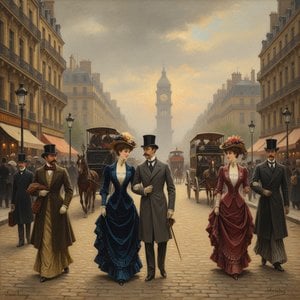
Jacques Joseph Tissot: A Chronicle of Parisian Life & Narrative Evolution
Explore the captivating world of Jacques Joseph Tissot, a master painter of Belle Époque society. Discover his realism, Impressionistic style, and lasting influence on art history. Learn more at ArtsDot.