


 Voorvertoning
 Verstuur
 Delen
Delen
 Details bekijken

 Download
 Vergelijkbare items
 Röntgenonderzoek
 Diavoorstelling
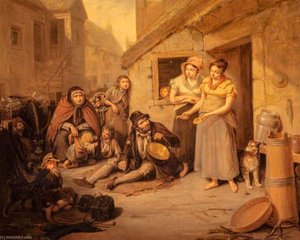
Kermisgasten

 Lees meer
Giclée / Kunstafdrukken
Giclée- of canvasafdruk van museumkwaliteit met een snelle productie en flexibele afwerkingsmogelijkheden. ( Bestel handgeschilderde reproductie Koop afbeelding)




































Kies uit onze vooraf ingestelde maten die overeenkomen met de originele verhoudingen van het kunstwerk.

U kunt uw eigen afmetingen opgeven om in een specifieke lijst of ruimte te passen. Als de door u gekozen maat niet overeenkomt met de proporties van het originele kunstwerk, zullen wij de afbeelding bijsnijden of uitbreiden met een gespiegelde of effen rand. Een digitaal mockup wordt ter goedkeuring naar u verzonden voordat de productie begint.
Houd er rekening mee dat de preview op het scherm de werkelijke bijsneding of uitbreiding niet weergeeft. Alleen de mockup toont de uiteindelijke compositie nauwkeurig.
Hoewel aangepaste maten beschikbaar zijn, raden wij aan een afmeting uit de vooraf bepaalde lijst te kiezen om de originele proporties te behouden.
Wereldwijde levering () binnen 2 weken in plaats van de standaard 4/5 weken. (7 september)

Gratis wereldwijde expressverzending

Hoogwaardig linnen canvas

Volledige verzendverzekering

Garantie op terugbetaling van invoerrechten

Garantie op exacte kleurweergave

Retourbeleid van 100 dagen (alleen bij defecten)

100% Geld-terug-garantie

Korting bij meerdere afnames
 De optie voor glas is alleen beschikbaar bij een formaat kleiner dan 110 cm.

Kermisgasten
Giclée / Kunstafdrukken
Afmetingen reproductie
-


Eindtotaal
$ 63
Vergelijkbare kunstwerken



Biografie van de kunstenaar
Hendrik Jacobus Scholten: A Quiet Observer of Dutch Golden Age Life
Hendrik Jacobus Scholten (1824 Amsterdam – 1907 Haarlem), was a Dutch painter whose oeuvre primarily focused on interiors and landscapes imbued with a serene stillness characteristic of the Dutch Golden Age. Unlike many of his contemporaries who embraced grand historical narratives or dramatic portraits, Scholten cultivated a contemplative artistic vision, meticulously capturing fleeting moments of domestic life and tranquil natural vistas—often illuminated by soft light—that resonate with an understated elegance. His work stands as testament to the influence of Pieter de Hooch, whose masterful depiction of urban scenes and atmospheric perspective profoundly shaped Scholten’s stylistic approach.Early Life and Artistic Training
Born in Amsterdam in 1824, Scholten received his formative artistic education under the tutelage of Petrus Franciscus Greive and Lambertus Johannes Hansen, both prominent figures within the Amsterdam art scene. These instructors instilled in him a disciplined technique rooted in academic realism—a cornerstone of Dutch painting during the period—emphasizing careful observation and meticulous rendering of detail. This grounding in classical principles would prove invaluable as Scholten embarked on his independent artistic journey.The Influence of Pieter de Hooch
Scholten’s artistic sensibilities were decisively molded by Pieter de Hooch, a celebrated painter known for his atmospheric interiors populated with figures engaged in quiet activities. De Hooch's ability to convey emotion through subtle tonal variations and masterful use of light—particularly diffused sunlight—inspired Scholten to prioritize capturing the essence of mood and atmosphere within his canvases. This stylistic kinship is evident throughout Scholten’s paintings, where he strives to recreate a sense of contemplative serenity akin to that found in De Hooch's celebrated works.Notable Works and Artistic Style
Scholten’s artistic output spanned several decades, producing a substantial body of paintings that explore both interior spaces and landscapes with remarkable sensitivity. Among his most notable achievements is “Sunday Morning,” depicting a domestic scene bathed in soft light—a quintessential example of Scholten's stylistic hallmark. Similarly, "Levensavond" portrays a tranquil evening gathering within a richly decorated room, capturing the subtle nuances of human interaction against a backdrop of muted colors and diffused illumination. His landscapes frequently depict pastoral scenes—often featuring flowers—executed with meticulous detail and imbued with an ethereal quality reminiscent of De Hooch’s atmospheric landscapes. Furthermore, Scholten contributed illustrations for Jacob van Lennep's monumental history book “De Voornaamste Geschiedenissen van Noord-Nederland,” demonstrating his versatility as a visual storyteller.Career and Legacy
Scholten served as Art Conservator of the Teylers Stichting from 1872 until his death in Haarlem in 1907, overseeing the stewardship of the museum’s extensive art collection—a role that afforded him considerable insight into artistic trends and scholarly discourse. He authored a comprehensive catalog of the museum's holdings, published in 1904, cementing his reputation as a respected connoisseur and contributing significantly to the dissemination of knowledge about Dutch art history. Scholten’s legacy resides not merely in his individual paintings but also in his unwavering dedication to preserving artistic heritage—a testament to his enduring contribution to the cultural landscape of the Netherlands. His influence can be seen in the training of Jacobus van Looy, furthering the transmission of artistic principles and techniques across generations.
Belangrijkste feiten
- Artistic Movement Or Style: Dutch Golden Age
- Artists Or Movements Influenced By This Artist: ['Jacobus van Looy']
- Artists Who Influenced This Artist: ['Pieter de Hooch']
- Date Of Birth: 1824 Amsterdam
- Date Of Death: 1907 Heemstede
- Full Name: Hendrik Jacobus Scholten
- Nationality: Dutch
- Notable Artworks:
- The Princess of Orange Visiting the Work-shop of Bartholomeus van der Helst
- Sunday Morning
- Levensavond
- Place Of Birth: Amsterdam Netherlands