

 Bekijk op ware grootte
 Verstuur
 Delen
Delen
 Details bekijken

 Download
 Vergelijkbare werken
 Röntgenonderzoek
 Diavoorstelling
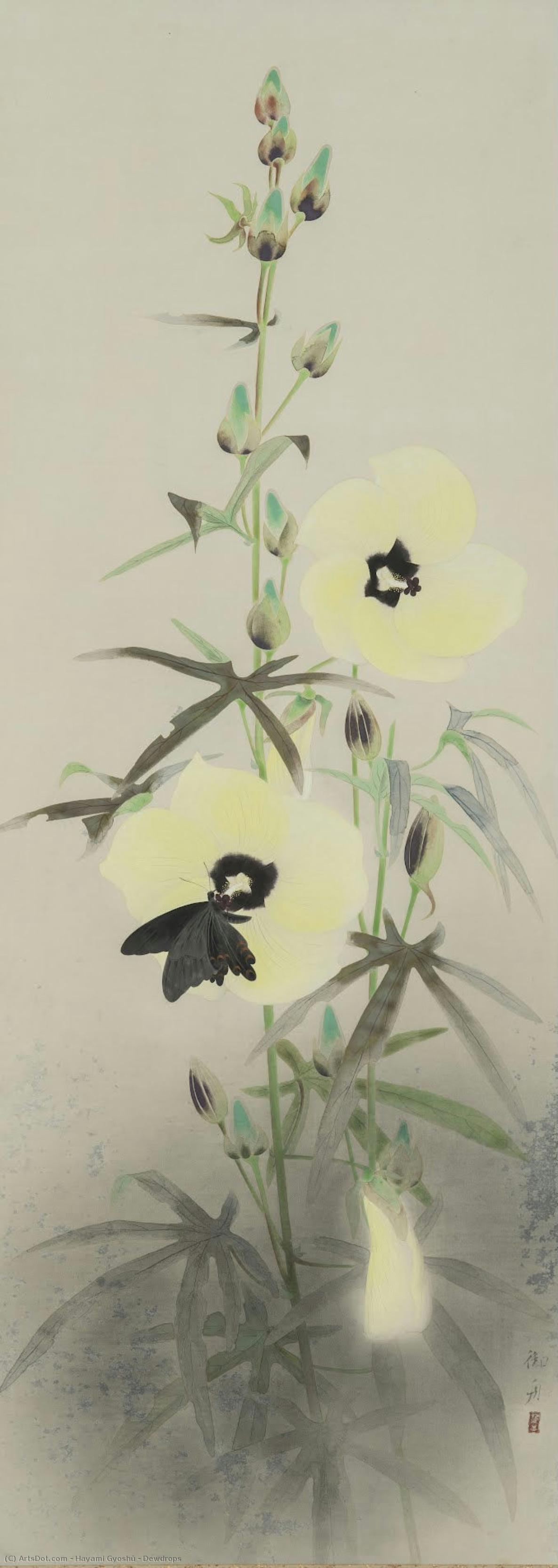
Dewdrops


 Lees meer
Handgemaakte olieverfreproductie
Met de hand geschilderd in olieverf op canvas in uw gewenste maat en lijst, op bestelling gemaakt door onze kunstenaars. ( Print kopen Afbeelding kopen)




































Kies uit onze vooraf ingestelde maten die overeenkomen met de originele verhoudingen van het kunstwerk.

U kunt uw eigen afmetingen invoeren om in een specifieke lijst of ruimte te passen. Als de door u gekozen maat niet overeenkomt met de verhoudingen van het originele beeld, zullen we het kunstwerk bijsnijden of het schilderij uitbreiden met extra handgeschilderde elementen. Een digitale mockup wordt ter goedkeuring naar u verzonden voordat de productie begint.
Houd er rekening mee dat de preview op het scherm niet de werkelijke uitsnede of uitbreiding weergeeft. Alleen de mockup toont de uiteindelijke compositie nauwkeurig.
Hoewel aangepaste afmetingen mogelijk zijn, raden we aan een maat uit de vooraf gedefinieerde lijst te selecteren om de originele verhoudingen te behouden.
Na de bestelling zal het team van ArtsDot.com per e-mail contact opnemen met de klant voor instructies en een mockup-voorbeeld sturen.
Wereldwijde levering () binnen 3 tot 4 weken in plaats van de standaard 5 weken. (12 augustus). Zonder concessies aan de kwaliteit.

Gratis wereldwijde expressverzending

Hoogwaardig linnen canvas

Volledige verzendverzekering

Garantie op terugbetaling van invoerrechten

Garantie op exacte kleurweergave

60 dagen retourbeleid (alleen bij defecten)

100% Geld-terug-garantie

Korting bij meerdere afnames
 De optie voor glas is alleen beschikbaar bij een formaat kleiner dan 110 cm.

Dewdrops
Medium reproductie
Formaat reproductie
-


Totaalprijs
$ 263
Beschrijving kunstwerk
Gerelateerde kunstwerken


Biografie van de kunstenaar
The Ethereal Vision of Hayami Gyoshū
In the delicate intersection of reality and dream, the works of Hayami Gyoshū reside, offering a window into a world where nature is both meticulously observed and profoundly spiritual. Born as Eiichi Maita in the vibrant, bustling district of Asakusa, Tokyo, in 1894, the artist would eventually transcend his humble beginnings to become one of the most luminous figures of the Taishō and Shōwa eras. His journey was not merely one of personal growth but a profound evolution of the Nihonga tradition, a style of Japanese painting that seeks to harmonize traditional materials with a modern, sensitive perception of the natural world.
The foundation of Gyoshū’s mastery was laid through rigorous discipline and an almost monastic devotion to the art of seeing. Beginning his studies at the age of fifteen under the tutelage of Matsumoto Fuko, he immersed himself in the painstaking techniques of traditional painting and even explored the intricate world of maki-e lacquerwork. This early training instilled in him a reverence for detail that would define his later achievements. As he matured, his talent caught the eye of influential mentors like Shikō Imamura, who integrated him into the prestigious Kojikai circle. This period of his life was marked by an intense absorption of various classical schools, including Yamato-e and Rinpa, creating a rich, multi-layered artistic vocabulary that allowed him to bridge the gap between ancient heritage and contemporary expression.
A Symphony of Realism and Symbolism
What distinguishes Gyoshū from his contemporaries was his ability to infuse hyper-realistic detail with an unmistakable sense of Symbolism. His brushwork did not merely replicate the physical world; it sought to capture its very soul. Influenced by the profound aesthetics of Chinese paintings from the Song and Yuan dynasties, as well as the spiritual depth of Bunjinga, his compositions often feature elements that serve as metaphors for the fleeting nature of existence. A single dewdrop clinging to a petal or the subtle texture of a mountain mist becomes a meditation on impermanence—a core tenet of Zen Buddhist thought.
His technical prowess was most evident in his use of light and atmosphere. By layering thin, translucent washes of pigment, Gyoshū achieved a luminous quality that seemed to radiate from within the silk or paper itself. This technique allowed him to render the most delicate transitions of color, making his landscapes feel alive with breath and movement. His later works moved toward an even more profound abstraction of feeling, where the boundaries between the subject and its environment began to blur into a singular, evocative experience of beauty.
Legacy and the Eternal Flame
Though his life was tragically brief—concluding in 1935 at the age of only forty—the impact of Hayami Gyoshū remains undiminished. He was a founding member of the revived Japan Fine Arts Academy, a role that cemented his importance in the institutional history of Japanese art. His ability to synthesize the precision of realism with the evocative power of symbolism provided a blueprint for future generations of Nihonga painters navigating the complexities of a modernizing Japan.
Today, when we look upon his most celebrated works, such as the mesmerizing Enbu (Dancing in the Flames), we do not merely see a historical artifact. We encounter a living dialogue between the artist and the universe. His legacy is found in every carefully rendered leaf and every shimmering light effect that continues to haunt and inspire the modern viewer, reminding us of the profound beauty that exists in the quietest corners of the natural world.

hayami gyoshū
1894 - 1935 , Japan
Snelle feiten
- Artistic Movement Or Style: Nihonga
- Artists Or Movements Influenced By This Artist: ['Taisho Art']
- Artists Who Influenced This Artist: ['Angado Gajuku']
- Date Of Birth: August 2, 1894
- Date Of Death: March 20, 1935
- Full Name: Eiichi Maita
- Nationality: Japanese
- Notable Artworks:
- Dancing in Flames
- Mountain Peak Green and Clear
- Place Of Birth: Tokyo, Japan

