


 Bekijk op ware grootte
 Verstuur
 Delen
Delen
 Details bekijken
 Gids
Gids

 Download
 Vergelijkbare items
 Röntgenonderzoek
 Diavoorstelling
 Statistieken
Minuet


 Lees meer
Giclée / Kunstafdrukken
Giclée- of canvasafdruk van museumkwaliteit met een snelle productie en flexibele afwerkingsmogelijkheden. ( Koop handgeschilderd kunstwerk Schakel over naar digitale afbeeldingen)




P118B $10

P118H $10

P118W $10

P438Z $10

P508JH $12

P508YH $12

P805H $10

P805Z $10

P919BZ $10

P919G $10

P919XJ $10

P959ZH $10

P968JZ $12

W106C $8

W218G $10

W218JH $8

W218Y $10

W307PJ $10

W316G $10

W316PJ $8

W316Y $10

W398PJ $8

W4111J $10

W500HY $15

W500JH $15

W692G $12

W849H $8

W940BG $15

W953PJ $8




Kies uit onze vooraf ingestelde maten die overeenkomen met de originele verhoudingen van het kunstwerk.

U kunt uw eigen afmetingen opgeven om in een specifieke lijst of ruimte te passen. Als de door u gekozen maat niet overeenkomt met de proporties van het originele kunstwerk, zullen wij de afbeelding bijsnijden of uitbreiden met een gespiegelde of effen rand. Een digitaal mockup wordt ter goedkeuring naar u verzonden voordat de productie begint.
Houd er rekening mee dat de preview op het scherm de werkelijke bijsneding of uitbreiding niet weergeeft. Alleen de mockup toont de uiteindelijke compositie nauwkeurig.
Hoewel aangepaste maten beschikbaar zijn, raden wij aan een afmeting uit de vooraf bepaalde lijst te kiezen om de originele proporties te behouden.
Wereldwijde levering () binnen 2 weken in plaats van de standaard 4/5 weken. (23 september)

Gratis wereldwijde expressverzending

Hoogwaardig linnen canvas

Volledige verzendverzekering

Garantie op terugbetaling van invoerrechten

Garantie op exacte kleurweergave

Retourbeleid van 100 dagen (alleen bij defecten)

100% Geld-terug-garantie

Korting bij meerdere afnames
 De optie voor glas is alleen beschikbaar bij een formaat kleiner dan 110 cm.

Minuet
Giclée / Kunstafdrukken
Formaat reproductie
-


Totaalprijs
$ 63
A Symphony of Grace: The Rococo Splendor of Tiepolo’s Minuet
In the delicate dance of light and shadow, Giovanni Domenico Tiepolo’s 1756 masterpiece, "Minuet," invites the viewer into a world where the boundaries between the earthly and the divine dissolve. As a quintessential emblem of the Rococo movement, this work captures the very essence of eighteenth-century aristocratic elegance—a period defined by a thirst for frivolity, idealized beauty, and theatrical grandeur. To gaze upon this canvas is to step into the opulent social spheres of the Habsburg court, where every gesture is choreographed with refinement and every hue whispers of luxury. The painting does not merely depict a dance; it orchestrates an immersive experience, pulling the observer into a rhythmic celebration of life itself.
The composition is a masterclass in the Rococo aesthetic, characterized by its rejection of Baroque solemnity in favor of playful asymmetry and a luminous, pastel-driven palette. Tiepolo employs a breathtaking array of delicate creams, blush pinks, and shimmering golds that seem to glow from within, mirroring the sumptuous silks and intricate ornamentation found in the grandest European interiors. Through the expert use of trompe l'oeil techniques, the artist subtly blurs the lines between the painted surface and architectural reality, creating an illusionistic depth that makes the grand classical structures feel as though they are expanding into the viewer's own space. The light does not simply illuminate the figures; it dances across them, lending a palpable sense of atmosphere and movement to the entire scene.
Mythological Echoes and Symbolic Grandeur
Beyond its surface-level charm, "Minuet" is deeply interwoven with the mythological narratives that provided the intellectual backbone of the era. At the heart of this graceful ballet stands a statue of Diana, the goddess of hunting and chastity. This inclusion serves as a profound symbol of virtue and nobility, acting as a silent, watchful guardian over the festivities. The dancers and musicians, arranged in a rhythmic semi-circle, are positioned within an architectural setting reminiscent of ancient Roman temples, a deliberate choice by Tiepolo to ground the ephemeral joy of the dance in the eternal ideals of classical harmony and proportion. This juxtaposition suggests that even the most fleeting moments of human pleasure can be imbued with divine significance.
For the discerning collector or interior designer, "Minuet" offers more than just visual beauty; it provides a profound emotional resonance. The painting captures a sense of exuberant optimism and the effortless poise of a bygone era. Whether placed in a sun-drenched gallery or as a focal point in a sophisticated living space, a high-quality reproduction of this work brings with it an air of historical prestige and timeless sophistication. It is a piece that invites conversation, evoking the spirit of an age where art was a celebration of light, movement, and the enduring pursuit of grace.
Gerelateerde kunstwerken


Biografie van de kunstenaar
Giovanni Domenico Tiepolo: Een Meester van Rococo Frescoes
Giovanni Domenico Tiepolo (August 30, 1727 – March 3, 1804) was een prominente Italiaanse kunstenaar en houtsnijder uit de Republiek Venetië. Hij wordt erkend als een belangrijke figuur in de Rococo stijl, waarbij hij het erfgoed van zijn beroemde vader, Giovanni Battista Tiepolo, voortzet en uitbreidt. Zijn carrière omvatte verschillende decennia en liet een rijke productie achter gekenmerkt door levendige kleuren, dynamische composities en elegante afbeeldingen van mythologische scènes, portretten en landschappen.Oudheid en Opleiding
Giovanni Domenico’s jeugd werd diep verbonden met de wereld van kunst. Zijn vader, Giovanni Battista Tiepolo, een beroemde schilder bekend om zijn monumentale fresco's, diende als zijn primaire mentor. Giovanni Domenico ontving strenge opleiding onder zijn vader’s begeleiding, waarbij hij de technieken en stijlvoorschriften leerde die zijn eigen artistieke ontwikkeling vormden. Hij profiteerde ook van blootstelling aan andere bekende kunstenaars van het tijdperk, waaronder Sebastiano Ricci en Federico Bencovich, waardoor zijn artistische horizonen werden uitgebreid. Als jongeman assisteerde hij vaak zijn vader bij grote projecten, waarbij hij waardevolle praktische ervaring opbouwde in fresco schilderen.Artistieke Carrière en Stijl
Giovanni Domenico’s carrière bloeide door het hele 18e eeuw uit. Hij vestigde zich als een bekwaam kunstenaar die zowel zelfstandige werken kon produceren als bijdragen aan samenwerkingsprojecten. Hoewel hij aanvankelijk nauw werkte met zijn vader, ontwikkelde hij geleidelijk zijn eigen stijl, terwijl hij elementen van de Rococo esthetiek behield die heersten in Venetiaanse kunst op dat moment. Zijn artistieke productie omvatte fresco's, schilderijen op doek en houtsnijwerk. Hij was bijzonder bekend om zijn fresco’s, waarbij hij verschillende locaties door Italië versierde met uitgebreide scènes. Een belangrijk voorbeeld hiervan zijn de fresco’s aan Ca’ Dolfin op het Grand Canal in Venetië en het plafond van de Gesuati (Santa Maria del Rosario) kerk, ook in Venetië. Daarnaast creëerde hij een belangrijke reeks schilderijen op doek, vaak afgebeeld mythological subjects of portraits. Voorbeelden hiervan zijn "Perseus en Andromeda" (view here), “De Raap van Europa” (view here) en "Jager met Hert" (view here). Zijn houtsnijwerk demonstreerde zijn bekwaamheid in het maken van gedetailleerde en expressieve prints, zoals "Die heiligen Augustinus, Ludwig von Frankreich, Johannes Evangelist und Magnus" (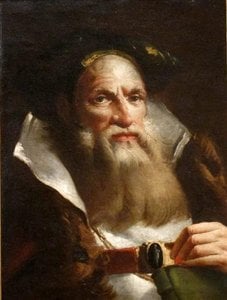
Giovanni Domenico Tiepolo
2007 - 1770 , Italië
Snelle feiten
- Artistic Movement Or Style: Rococo
- Artists Who Influenced This Artist: ['Giovanni Battista Tiepolo']
- Date Of Birth: August 30, 1727
- Full Name: Giovanni Domenico Tiepolo
- Nationality: Italian
- Notable Artworks:
- Perseus and Andromeda
- The Rape of Europa
- Hunter with Deer
- Place Of Birth: Venice, Italy
Gerelateerde artikelen

Francesco Guardi: Venetian Light, Atmospheric Perspective & the Rococo to Neoclassical Transition
Explore the captivating world of Francesco Guardi, master of Venetian light and atmosphere. Discover his transition from Rococo to Neoclassicism, influence on Impressionism & investment potential with ArtsDot.

Top 10 Rococo Meesterwerken: Kunstgeschiedenis voor uw Interieur | ArtsDot.com
Ontdek de 10 meest iconische Rococo meesterwerken! Duik in de wereld van Fragonard, Boucher & Watteau. Leer over lieflijkheid, pastelkleuren en aristocratie. Museumkwaliteit kunst reproducties op ArtsDot.com.
Giambattista Tiepolo: A Rococo Master's Legacy of Light & Illusion
Explore the captivating world of Giambattista Tiepolo, master of Rococo art. Discover his innovative techniques, iconic frescoes, and lasting influence on Italian painting. A guide for discerning collectors.

The Rococo Aesthetic: Opulence, Rebellion & the Pursuit of Pleasure in 18th-Century Art
Explore the opulent world of Rococo art! Discover its origins, key artists like Watteau & Boucher, and lasting influence on design. Expert insights for collectors & enthusiasts.

Pietro Longhi's Venetian Scenes: A Study of Rococo Society & Domestic Life
Explore the captivating world of Pietro Longhi's Venetian scenes! Discover insightful analysis of his Rococo masterpieces & social commentary on 18th-century life. Learn about this 'Venetian Hogarth' and his lasting artistic legacy.
