


 Bekijk op ware grootte
 Verstuur
 Delen
Delen
 Details bekijken
 Gids voor studentenkunstwerken

 Download
 Vergelijkbare items
 Röntgenonderzoek
 Diavoorstelling
 Statistieken
Dead Christ Supported by Two Angels
 Acrylic On Canvas
- WallArt
- Early Renaissance
 1480
1480 83.0 x 68.0 cm
 Staatliche Museen zu Berlin
 Lees meer
Giclée / Kunstafdrukken
Giclée- of canvasafdruk van museumkwaliteit met een snelle productie en flexibele afwerkingsmogelijkheden. ( Koop handgeschilderd kunstwerk Schakel over naar digitale afbeeldingen)




P118B $10

P118H $10

P118W $10

P438Z $10

P508JH $12

P508YH $12

P805H $10

P805Z $10

P919BZ $10

P919G $10

P919XJ $10

P959ZH $10

P968JZ $12

W106C $8

W218G $10

W218JH $8

W218Y $10

W307PJ $10

W316G $10

W316PJ $8

W316Y $10

W398PJ $8

W4111J $10

W500HY $15

W500JH $15

W692G $12

W849H $8

W940BG $15

W953PJ $8




Kies uit onze vooraf ingestelde maten die overeenkomen met de originele verhoudingen van het kunstwerk.

U kunt uw eigen afmetingen opgeven om in een specifieke lijst of ruimte te passen. Als de door u gekozen maat niet overeenkomt met de proporties van het originele kunstwerk, zullen wij de afbeelding bijsnijden of uitbreiden met een gespiegelde of effen rand. Een digitaal mockup wordt ter goedkeuring naar u verzonden voordat de productie begint.
Houd er rekening mee dat de preview op het scherm de werkelijke bijsneding of uitbreiding niet weergeeft. Alleen de mockup toont de uiteindelijke compositie nauwkeurig.
Hoewel aangepaste maten beschikbaar zijn, raden wij aan een afmeting uit de vooraf bepaalde lijst te kiezen om de originele proporties te behouden.
Wereldwijde levering () binnen 2 weken in plaats van de standaard 4/5 weken. (26 september)

Gratis wereldwijde expressverzending

Hoogwaardig linnen canvas

Volledige verzendverzekering

Garantie op terugbetaling van invoerrechten

Garantie op exacte kleurweergave

Retourbeleid van 100 dagen (alleen bij defecten)

100% Geld-terug-garantie

Korting bij meerdere afnames
 De optie voor glas is alleen beschikbaar bij een formaat kleiner dan 110 cm.

Dead Christ Supported by Two Angels
Giclée / Kunstafdrukken
Formaat reproductie
-


Totaalprijs
$ 63
A Moment of Profound Sorrow and Divine Comfort
Giovanni Bellini’s “Dead Christ Supported by Two Angels,” painted around 1480, is more than just a religious depiction; it's a poignant meditation on loss, faith, and the enduring power of compassion. This tempera-on-wood panel, now residing in the Gemäldegalerie in Berlin, offers a deeply moving glimpse into the burgeoning humanism of the Venetian Renaissance while retaining echoes of its Byzantine roots. The scene is starkly simple yet profoundly resonant: Christ lies supine on the ground, his limbs outstretched in a gesture both vulnerable and accepting, supported by two serene angels who cradle his head with gentle hands.
Bellini’s genius lies not merely in his technical skill – though that is undeniably masterful – but in his ability to imbue this familiar subject matter with an unprecedented emotional depth. The muted palette of blues, browns, and ochres creates a sense of somber stillness, drawing the viewer into the scene's quiet grief. Notice how Bellini masterfully employs light; it’s diffused and soft, bathing the Christ’s body in a gentle glow that suggests both mortality and an ethereal presence. The angels, rendered with a delicate grace, are not merely passive supporters but active participants in a shared sorrow – their faces convey empathy and a profound sense of responsibility for the fallen King.
The Venetian Renaissance and Bellini's Innovation
Giovanni Bellini stands as a pivotal figure bridging the gap between the rigid formality of Byzantine art and the burgeoning naturalism of the Italian Renaissance. Born in Venice around 1430, he inherited a rich artistic legacy from his father, Jacopo Bellini, a pioneer in the use of oil paint. However, Bellini quickly surpassed his predecessor, developing a unique style characterized by luminous colors, atmospheric perspective, and a heightened sensitivity to human emotion. Unlike many of his contemporaries who embraced the bold innovations of artists like Donatello, Bellini’s approach was more measured, building upon established traditions while subtly introducing new elements.
The influence of Andrea Mantegna is particularly evident in this work. Both artists shared a fascination with classical sculpture and a desire to convey emotion through simplified forms and dramatic lighting. The composition itself – the Christ's elongated body, the angels’ supportive gestures – echoes Donatello’s depictions of the Dead Christ, demonstrating Bellini’s deep understanding of his predecessors’ techniques. Yet, Bellini transcends mere imitation; he infuses the scene with a distinctly Venetian sensibility, prioritizing color and atmosphere over rigid anatomical detail.
Symbolism and Spiritual Resonance
The image is rich in symbolic meaning. The pose of Christ – arms outstretched, body limp – immediately evokes the traditional iconography of death and resurrection. However, Bellini’s depiction goes beyond a simple representation of mortality. The angels' presence signifies divine comfort and support, highlighting the promise of salvation offered through faith. The placement of the third figure in the upper left corner remains somewhat enigmatic, possibly representing an observer or perhaps a symbolic element related to the broader narrative of Christ’s sacrifice.
Furthermore, Bellini's use of tempera on wood – a technique that allowed for slow-drying colors and subtle gradations of tone – contributes significantly to the painting’s ethereal quality. The smooth surfaces and luminous hues create an illusion of depth and volume, drawing the viewer into the scene’s intimate space. The work speaks powerfully to themes of grief, hope, and the enduring nature of faith—elements that continue to resonate with audiences centuries after its creation.
A Timeless Masterpiece – Available as a High-Quality Reproduction
ArtsDot offers meticulously crafted reproductions of Giovanni Bellini’s “Dead Christ Supported by Two Angels,” allowing you to bring this iconic masterpiece into your home or office. Our hand-painted reproductions capture the essence of Bellini's artistry, faithfully recreating his luminous colors, delicate details, and profound emotional impact. Choose from a range of sizes and framing options to perfectly complement your space. Experience the beauty and spiritual depth of this Venetian treasure – a timeless testament to the power of art.
Gerelateerde kunstwerken


Biografie van de kunstenaar
A Venetian Master: The Life and Legacy of Giovanni Bellini
Giovanni Bellini, a name inextricably linked to the heart of Venice, stands as a pivotal figure bridging the twilight of the Byzantine era and the dawn of the High Renaissance. Born around 1430 – though some sources suggest 1433 – into a family deeply rooted in the artistic traditions of the city, his life was a continuous evolution, marked by an unparalleled sensitivity to color, light, and the burgeoning humanism that would define the 16th century. The precise details of his familial relationships have long been debated; for years, Jacopo Bellini was considered his father, but modern scholarship increasingly points towards Jacopo being Giovanni’s elder half-brother, with Gentile Bellini as his nephew rather than sibling. Regardless of these intricate family dynamics, young Giovanni grew up immersed in a vibrant workshop, absorbing the foundational techniques and artistic principles from an early age. His initial training likely involved mastering the traditional tempera methods prevalent at the time, but it was his innate talent for observation, coupled with a profound emotional intelligence, that would ultimately distinguish him as a truly exceptional artist.Early Influences and Artistic Foundations
The artistic landscape of 15th-century Venice presented a fascinating confluence of influences – a unique blend of Byzantine grandeur, the emerging styles of Florence, and the distinctive Venetian tradition. The city’s position as a major trading hub exposed its artists to diverse cultural currents and ideas from across Europe and beyond. Simultaneously, the enduring legacy of Byzantium continued to exert a powerful pull on Venetian art, particularly in its use of rich colors, elaborate ornamentation, and spiritual themes. Bellini's early works reflect this complex interplay of influences. Initially, his style bore the unmistakable mark of his father, Jacopo, and his brother, Gentile, characterized by meticulous detail, a restrained emotional palette, and a focus on formal precision. However, even within these early pieces, subtle hints of his future brilliance began to emerge – a delicate handling of light, an increasing interest in naturalistic settings, and a remarkable ability to imbue religious figures with a palpable sense of human pathos and vulnerability. The influence of Andrea Mantegna, his brother-in-law, is also readily apparent during this period, particularly in the clarity of line, the monumental scale of figures, and the use of perspective – elements that would profoundly shape Bellini’s own artistic development. Bellini's early commissions often involved collaborative projects, allowing him to hone his skills alongside some of Venice’s most accomplished painters.The Revolution of Oil Paint: A New Language for Color
Giovanni Bellini’s true breakthrough came with the adoption and masterful exploitation of oil paint. While not the inventor of this technique – it had been introduced to Italy from the East earlier in the century – Bellini was among the first Venetian artists to fully embrace its potential, transforming the very language of painting. Unlike tempera, which demanded a swift, linear approach and often resulted in brittle colors, oil paint allowed for unprecedented blending, richer hues, subtle gradations of tone, and a remarkable degree of luminosity. This newfound freedom fundamentally altered Bellini’s artistic process, enabling him to create paintings that possessed an astonishing depth and vibrancy. His use of color became increasingly sophisticated, moving away from the often-harsh, overly bright palette favored by earlier Venetian painters towards a more nuanced, harmonious, and emotionally resonant range of tones. He masterfully captured the effects of light and atmosphere, imbuing his landscapes with a sense of serenity, mystery, and profound realism – a departure from the stylized representations common in previous generations. This revolutionary approach to oil paint not only transformed Bellini’s own work but also laid the foundation for the distinctive style that would come to define the Venetian school—a style celebrated throughout Europe for its sensuousness, coloristic richness, and atmospheric perspective.Major Works and Artistic Evolution
As Giovanni Bellini matured, his artistic vision continued to evolve with remarkable sophistication. His altarpieces, such as those created for the churches of San Zaccaria and Santa Corona, demonstrate his ability to construct complex compositions filled with symbolic meaning, intricate detail, and profound emotional resonance. The *Transfiguration*, now housed in the Capodimonte Museum in Naples, stands as a prime example of this artistic evolution – a serene depiction of Christ’s transformation combined with a masterful use of light, color, and perspective. He also served as conservator of the paintings within Doge's Palace, further solidifying his position as Venice’s leading artist and cultural figure. Throughout his career, Bellini explored a wide range of subjects – from religious scenes to portraits, landscapes, and mythological narratives—each imbued with his unique artistic sensibility. His later works are characterized by a heightened sense of spirituality, a greater emphasis on the emotional expression of figures, and an increasingly lyrical use of color.A Lasting Legacy: Influence and Remembrance
Giovanni Bellini’s impact extended far beyond his own lifetime. He became a mentor to a generation of younger painters, including Giorgione and Titian, who would inherit his techniques, aesthetic principles, and artistic vision—adapting them to their own individual styles and contributing to the golden age of Venetian painting. His influence can be seen in countless works created by artists throughout Europe, solidifying his place as one of the most important figures in Western art history. Bellini’s legacy is not simply one of technical brilliance; it is a testament to the power of art to transcend time and connect us to the enduring values of human experience. From the serene beauty of his Madonnas to the dramatic intensity of his religious scenes, Bellini's work continues to inspire awe and admiration centuries after its creation—a vibrant reminder of Venice’s artistic heritage and a profound exploration of the mysteries of faith, beauty, and the human spirit.
Giovanni Bellini
1433 - 1516 , Italië
Snelle feiten
- Artistic Movement Or Style: Venetiaanse School
- Artists Or Movements Influenced By This Artist:
- Giorgione
- Titian
- Artists Who Influenced This Artist:
- Jacopo Bellini
- Gentile Bellini
- Mantegna
- Date Of Birth: c. 1430
- Date Of Death: 1516
- Full Name: Giovanni Bellini
- Nationality: Italiaans
- Notable Artworks:
- St. Jerome
- Transfiguratie
- Place Of Birth: Venetië, Italië
Gerelateerde artikelen

Celestial Messengers: A Comprehensive Exploration of Angelic Representation in Art History
Explore the captivating history of angels in art! Discover symbolism, iconic Renaissance masterpieces & renowned artists. Expert insights for art lovers & collectors at ArtsDot.

Fra Angelico's Top 25 Meesterwerken: Renaissance Kunst voor uw Interieur | ArtsDot.com
Ontdek de 25 mooiste meesterwerken van Fra Angelico! Verlies u in de spirituele schoonheid van Renaissance fresco's & panel schilderijen. Koop museumkwaliteit reproducties en breng Italiaanse kunst naar uw interieur op ArtsDot.com.
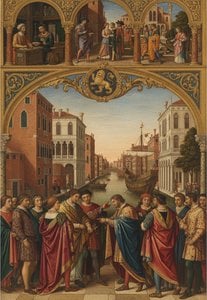
Vittore Carpaccio: Venetian Renaissance Narrative & the Poetics of Detail
Explore the captivating world of Vittore Carpaccio, a master storyteller of the Venetian Renaissance. Discover his intricate details, narrative cycles like 'The Legend of St. Ursula,' and unique artistic style.

Celestial Messengers: Angels in Painting – A Historical & Artistic Exploration
Explore the captivating history of angels in painting! Discover symbolism, iconic Renaissance & Byzantine masterpieces, and renowned artists. Expert insights for art lovers & collectors at ArtsDot.

Jacopo Tintoretto's Meesterwerken: 25 Schilderijen die de Renaissance Definieerden | ArtsDot
Ontdek de 25 meest indrukwekkende schilderijen van Jacopo Tintoretto, de meester van het Venetiaanse Renaissance. Duik in zijn dramatische stijl, religieuze thema's & techniek. Vind museumkwaliteit reproducties en decoratie-inspiratie op ArtsDot.com.


