

 Voorvertoning
 Verstuur
 Delen
Delen
 Details bekijken
 Gids
Gids

 Download
 Vergelijkbare items
 Röntgenonderzoek
 Diavoorstelling
 Vraag & antwoord
 Statistieken
Two Trees


 Lees meer
Giclée / Kunstafdrukken
Giclée- of canvasafdruk van museumkwaliteit met een snelle productie en flexibele afwerkingsmogelijkheden. ( Bestel handgeschilderde reproductie Schakel over naar digitale afbeeldingen)




































Kies uit onze vooraf ingestelde maten die overeenkomen met de originele verhoudingen van het kunstwerk.

Voer de gewenste breedte en hoogte in, passend bij uw lijst of muur. Een afdruk kan alleen worden ingekort en nooit groter worden gemaakt dan het origineel; een formaat met andere verhoudingen zal daarom een deel van de afbeelding verliezen. Wij sturen u een digitaal mockup ter goedkeuring voordat we tot drukwerk overgaan. De afbeelding op deze pagina toont niet de werkelijke uitsnede — dit is alleen te zien op het mockup.
Wereldwijde levering () binnen 2 weken in plaats van de standaard 4/5 weken. (8 november)

Gratis wereldwijde expressverzending

Hoogwaardig linnen canvas

Volledige verzendverzekering

Garantie op terugbetaling van invoerrechten

Garantie op exacte kleurweergave

Retourbeleid van 100 dagen (alleen bij defecten)

100% Geld-terug-garantie

Korting bij meerdere afnames
 De optie voor glas is alleen beschikbaar bij een formaat kleiner dan 110 cm.

Two Trees
Giclée / Kunstafdrukken
Afmetingen reproductie
-


Eindtotaal
€ 56
Artistic Style and Technique
Gilbert Munger's style is characterized by his use of soft brushstrokes and vivid colors, which bring the natural world to life. In Two Trees, the artist's technique is evident in the way the light filters through the leaves of the trees, casting dappled shadows on the ground. The people in the scene are also noteworthy, as they add a sense of scale and humanity to the painting.- The use of oil on canvas allows for a depth and richness of color that is not easily achievable with other mediums.
- The composition of the painting, with the two trees prominently featured, creates a sense of balance and harmony.
- The inclusion of people in the scene adds a sense of movement and energy to the painting.
Veelgestelde vragen
Onder welke andere namen is Gilbert Munger bekend?
Gilbert Munger staat ook bekend onder de namen Gilbert Davis Munger.
Is de afbeelding van "Two Trees" door Gilbert Munger vrij van auteursrecht?
De auteursrechtelijke status van "Two Trees" door Gilbert Munger: het werk is bevindt zich in het publiek domein - de auteursrechten zijn verlopen. Dit bepaalt of reproducties van de afbeelding vrijelijk mogen worden gemaakt.
Is "Two Trees" door Gilbert Munger een portret, landschap of vierkante compositie?
"Two Trees" door Gilbert Munger heeft een Portrait-formaat. Het formaat beschrijft de verhoudingen van de compositie.
Vergelijkbare kunstwerken


Biografie kunstenaar
Early Life and Artistic Training
Gilbert Davis Munger (April 14, 1837 – January 27, 1903) emerged from Connecticut’s Madison County as a child captivated by artistic pursuits. Born to Sherman and Lucretia Benton Munger—the last of five children—his family recognized his innate talent and fostered it through an apprenticeship with William H. Dougal, senior engraver at the Smithsonian Institution at just thirteen years old. This formative experience instilled in him not only technical proficiency but also a profound appreciation for meticulous observation—skills that would define his artistic vision throughout his life. Notably, Munger’s distant cousin was George Munger, another artist who explored similar themes of landscape and scientific inquiry. Early influences included the luminism championed by John Ruskin and the pioneering painters of the Hudson River School, whose emphasis on atmospheric light and tonal gradation profoundly shaped Munger's artistic sensibilities. His family—Sherman Munger, a farmer—recognized Gilbert’s passion for nature and instilled in him a dedication to craftsmanship. Lucretia Benton Munger provided unwavering encouragement for his artistic ambitions. William H. Dougal, senior engraver at the Smithsonian Institution, offered invaluable training in engraving and fostered an appreciation for detailed rendering—a skill that would serve as the bedrock of Munger’s artistic approach.Engraving Commissions and Scientific Observation
Munger's initial professional endeavors centered on engraving, primarily for government reports documenting geological expeditions led by Clarence King. These commissions demanded precision and accuracy—skills honed during his apprenticeship—and exposed him to the burgeoning field of geology. He meticulously reproduced illustrations of animals, plants, and rock formations, reflecting the scientific fervor of the era and demonstrating a commitment to representing nature with unwavering fidelity. His work for the Smithsonian Institution showcased his engraving prowess and deepened his understanding of geological concepts. Collaborations with Clarence King’s Geologic Survey fostered an appreciation for geological observation and artistic representation. He produced plates for reports documenting expeditions into Utah, Nevada, Wyoming, Colorado and California—capturing stunning vistas and accurately portraying geologic formations.The Hudson River School Influence and Early Landscapes
Gilbert Munger's artistic style was decisively shaped by the Hudson River School, a movement characterized by its romantic idealism and masterful depiction of American landscapes bathed in luminous light. Artists like John Ruskin served as inspiration for Munger who studied their techniques—particularly their use of tonal gradation to convey mood and atmosphere. Ruskin’s advocacy for tonal harmony influenced Munger's approach to color and composition. The Hudson River School painters established a precedent for capturing the grandeur of American wilderness with emotional resonance.Service in the Civil War and Artistic Development
During the tumultuous years of the Civil War, Munger served as a military engineer assisting in the defense of Washington D.C., demonstrating courage and dedication alongside his fellow soldiers. His involvement in the Union Army provided him with firsthand experience of American society during wartime—a formative period that honed his observational skills and spurred artistic innovation.Western Landscapes and Recognition
Gilbert Munger’s most celebrated achievements lie in his breathtaking landscapes of the American West—particularly those created during Clarence King's Fortieth Parallel Survey. Collaborating closely with photographer Timothy H. O’Sullivan, he captured iconic vistas such as Yosemite Valley and Donner Pass, meticulously documenting geological formations and conveying their sublime beauty. His partnership with O’Sullivan resulted in groundbreaking photographic landscapes that cemented Munger’s reputation as a pioneer of Western art. Ten chromolithographs produced from his survey paintings gained widespread acclaim and established him as one of the foremost landscape painters of his generation. He painted in Utah, Nevada, Wyoming, Colorado and California—paying particular attention to these areas' unique geological formations. His landscapes are characterized by their realistic depiction of geologic features combined with an expressive tonal palette that conveys mood and atmosphere. Munger’s work remains celebrated for its accuracy and emotional depth.
Gilbert Munger
1837 - 1903 , Verenigde Staten van Amerika
Belangrijkste feiten
- Artistic Movement Or Style: Hudson River School
- Artists Or Movements Influenced By This Artist: ['Albert Bierstadt']
- Artists Who Influenced This Artist:
- John Ruskin
- William H. Dougal
- Date Of Birth: April 14, 1837
- Date Of Death: January 27, 1903
- Full Name: Gilbert Davis Munger
- Nationality: Amerikaans
- Notable Artworks:
- Niagara Horseshoe Falls with Rainbow
- Niagara Falls
- Place Of Birth: Madison, Connecticut
Gerelateerde artikelen

Top 10 Impressionistische Landschappen: Meesterwerken voor uw Interieur
Ontdek de 10 meest iconische impressionistische landschappen van Monet, Renoir & meer. Leer over hun technieken en betekenis. Vind museumkwaliteit kunst reproducties voor uw interieur op ArtsDot.com!

Paul Cézanne's Top 25 Meesterwerken: Kleur, Vorm & De Basis van Modern Art | ArtsDot
Ontdek de 25 meest iconische schilderijen van Paul Cézanne! Duik in zijn kleurrijke wereld, leer over impressionisme & post-impressionisme en bewonder meesterwerken als 'De Baders'. Vind museumkwaliteit reproducties & interieurinspiratie op ArtsDot.com.

Evocations of Place: A Historical Journey Through Landscape Art
Explore the rich history of landscape art with ArtsDot. Discover renowned artists, movements like Impressionism & Romanticism, and expert guidance for collecting timeless pieces. Find your perfect serene escape today!

Arboreal Echoes: A Historical & Artistic Exploration of Trees in Painting
Explore the rich history of trees in painting! Discover symbolism, Romantic masterpieces by Caspar David Friedrich & beyond. A curated journey for art enthusiasts.
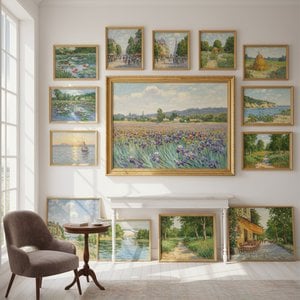
Top 10 Impressionistische Landschappen: Meesterwerken voor uw Interieur
Ontdek de 10 meest iconische impressionistische landschappen! Leer over Monet, Renoir & andere meesters. Prachtige schilderijen voor uw interieur. Museumkwaliteit reproducties op ArtsDot.com.