


 Bekijk op ware grootte
 Verstuur
 Delen
Delen
 Details bekijken
 Gids voor studentenkunstwerken

 Download
 Vergelijkbare items
 Röntgenonderzoek
 Diavoorstelling
 Statistieken
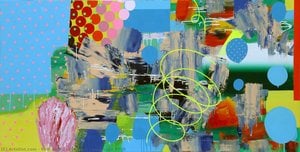
Wolken
 Olieverf op canvas
- Wanddecoratie
- Abstract Expressionism
 1982
1982- Hedendaags
 200.0 x 206.0 cm
 Lees meer
Koop een digitale afbeelding in hoge resolutie met verbeterde kwaliteit, die veel superieur is aan de online voorvertoning.
Elk bestand wordt met uiterste precisie voorbereid door onze interne specialisten, met behulp van geavanceerde tools en deskundige handmatige retouche. Wij garanderen dat elke afbeelding een uitzonderlijke helderheid, nauwkeurige kleurweergave en verfijnde details bezit.
Het uiteindelijke bestand wordt binnen 72 uur per e-mail geleverd, geoptimaliseerd voor direct gebruik in professionele, redactionele en printomgevingen. Dit is dezelfde kwaliteit waarop vooraanstaande designstudio's, uitgevers en galerieën vertrouwen.
Digitale afbeeldingen
Download een bestand met hoge resolutie voor persoonlijke weergave, afdrukken en creatieve projecten. ( Schakel over naar print Koop handgeschilderd kunstwerk)
Inbegrepen bij elke bestelling van een digitale afbeelding
Professionele digitale levering, gegarandeerd
Wanneer u kiest voor ArtsDot.com, ontvangt u niet alleen een afbeelding – u krijgt een professioneel verbeterd digitaal kunstwerk, met precisie vervaardigd en voorzien van een tevredenheidsgarantie. Dit is alles wat automatisch bij uw bestelling is inbegrepen:

Directe levering per e-mail
Uw hoogwaardige digitale afbeeldingsbestand wordt binnen 72 uur na bestelling naar u gemaild – klaar voor direct gebruik.

AI-geoptimaliseerd digitaal bestand
Uw kunstwerk wordt professioneel geoptimaliseerd met behulp van geavanceerde AI-tools en handmatige bewerkingen, waardoor maximale details, helderheid en kleurnauwkeurigheid worden gegarandeerd.

Gratis levenslange herlevering
Je bestand per ongeluk verwijderd of kwijtgeraakt? Geen zorgen – we sturen het u op elk gewenst moment gratis opnieuw toe.

Geen invoerkosten – nooit
Geniet direct van uw kunstwerk zonder invoerrechten, belastingen of verzendkosten – digitale downloads zijn altijd belastingvrij.

Garantie op kleurgetrouwheid
Met behulp van professionele hulpmiddelen en kleurbeheer zorgen wij ervoor dat uw digitale afbeelding de originele kleuren zo nauwkeurig mogelijk weergeeft.

100 dagen tevredenheidsgarantie
Als u niet tevreden bent met uw digitale afbeelding, passen wij deze aan of storten wij 100% terug binnen 100 dagen - zonder vragen te stellen.

100% Geld-terug-garantie
Niet tevreden? Ontvang een volledige terugbetaling binnen 100 dagen na ontvangst van uw digitale bestand – zonder vragen te stellen.

Korting bij grote bestellingen
Koop 3 afbeeldingen, bespaar 10% - Koop 5, bespaar 15% - Koop 10+, bespaar 20%. Ideaal voor creatieve projecten, galerieën en bureaus.
A Symphony of Abstraction: Exploring Gerhard Richter’s “Clouds”
Gerhard Richter's 1982 masterpiece, "Clouds," is a pivotal work in contemporary art, embodying his lifelong exploration of the boundaries between representation and abstraction. This large-scale painting isn't merely an image *of* clouds; it’s an investigation into perception, the act of seeing, and the very nature of painting itself. It invites us to question what we expect from a landscape and revel in the pure visual experience.Deconstructing Reality: Style & Technique
“Clouds” exemplifies Richter's unique approach – a masterful blend of abstract expressionism with subtle realism. Measuring 200 x 206 cm, the canvas is awash in layered oil paint, applied with bold strokes, scrapes, and smudges. This isn’t precise rendering; it’s an *evocation* of atmosphere. The technique – often described as a form of blurred photorealism pushed to its abstract limits – creates a sense of depth and movement.- Impasto & Layering: Richter's generous application of paint, visible through the impasto texture, adds physicality and dynamism.
- Color Palette: A vibrant interplay of blues, greens, yellows, reds, and oranges suggests a dynamic sky, perhaps stormy or illuminated by shifting light.
- Gestural Abstraction: The sweeping brushstrokes and blurred forms are not random; they’re carefully constructed to create an immersive visual experience.
Richter's Artistic Journey & Context
Gerhard Richter (born 1932) is a German artist whose career has been defined by stylistic shifts and conceptual rigor. Emerging in the post-war era, he grappled with questions of history, memory, and representation. His work often oscillates between photorealistic paintings – based on photographs – and abstract compositions like “Clouds.” This duality reflects his skepticism towards fixed meanings and a desire to challenge artistic conventions. "Clouds" sits comfortably within this oscillation, playfully disrupting our expectations of what a landscape painting should be. It’s part of a series of cloud paintings Richter created, exploring the ephemeral nature of these atmospheric formations.Symbolism & Emotional Resonance
While seemingly devoid of explicit symbolism, “Clouds” resonates with deeper meanings. The ambiguity inherent in the abstract forms invites individual interpretation. The swirling shapes can evoke feelings of turbulence, vastness, or even a dreamlike state. Richter’s intention wasn't to *tell* us what to feel but to create an experience that allows for personal connection and emotional response. The painting subtly questions our desire to find concrete meaning in art, suggesting instead that we might simply appreciate the beauty of visual pleasure.Legacy & Accessibility
“Clouds” is a significant work within Richter’s oeuvre and modern art history. It has been exhibited at prestigious institutions like the Tate Modern in London and currently resides in the collection of the Museum of Modern Art (MoMA) in New York City, solidifying its importance.- For Collectors: Owning a piece that embodies Richter’s innovative spirit is an investment in art history.
- For Interior Designers: The dynamic composition and vibrant colors of “Clouds” can serve as a striking focal point in any contemporary space, adding depth and sophistication.
- Reproductions Available: Experience the essence of Richter’s genius with high-quality, handmade oil painting reproductions available at ArtsDot.com.
Further Exploration
Delve deeper into the world of Gerhard Richter and the history of painting with resources like Wikipedia’s History of Painting page. “Clouds” is more than just a painting; it's an invitation to contemplate the power of abstraction, the complexities of perception, and the enduring legacy of one of contemporary art’s most influential figures. Photo Description: --Overall Impression-- The artwork is a large-scale abstract painting divided into two distinct sections. It presents a dynamic and energetic composition characterized by bold brushstrokes, layered colors, and a sense of movement. The style leans towards expressionism with elements of gestural abstraction. The subject matter appears to be an atmospheric depiction of clouds or perhaps a stormy sky, though it’s highly stylized and not representational in a literal sense. The use of lines is prominent – thick, sweeping brushstrokes create diagonal pathways across the canvas, intersecting and overlapping to generate visual complexity. Shapes are largely amorphous and undefined, contributing to the abstract nature of the piece. Textures are heavily emphasized through visible impasto techniques; the paint application is thick and uneven, creating a tactile quality. The lighting appears diffused, suggesting an overcast or atmospheric setting. Perspective is deliberately flattened, lacking traditional depth cues. The color palette is vibrant and layered, with a strong emphasis on blues, greens, yellows, reds, and oranges. Symbolic elements are subtle – the swirling forms could evoke turbulence, energy, or perhaps a dreamlike state. The technique involves wet-on-wet painting, allowing colors to blend and bleed into one another, further enhancing the sense of movement and atmosphere. Materials used appear to be oil paints on canvas.Vragen & Antwoorden
Hoe verhoudt de stijl van "Wolken" zich tot het tijdperk van de maker?
In "Wolken" door Gerhard Richter ontmoet de Abstract Expressionism-stroming de Moderne tijd-periode.
Waarvan is "Wolken" gemaakt en in welke stijl?
"Wolken" door Gerhard Richter combineert de Olieverf op canvas-techniek met de Abstract Expressionism-stijl. Techniek en stroming beschrijven de vervaardiging en de stijl van het werk.
Waar kan ik een voorproefje van "Wolken" bekijken?
Een voorproefje van "Wolken" door Gerhard Richter is beschikbaar op de Voorvertoning-pagina van het kunstwerk.
Gerelateerde kunstwerken



Biografie van de kunstenaar
A Life Shaped by Division: The Early Years and Artistic Formation of Gerhard Richter
Gerhard Richter’s story is inextricably linked to the fractured history of 20th-century Germany. Born in Dresden in 1932, his childhood unfolded under the shadow of a rising National Socialist regime. This formative period, marked by displacement – his family moved several times during the war years – instilled within him a profound sense of uncertainty and a questioning spirit that would permeate his artistic practice for decades to come. The idyllic landscapes of his early upbringing in Reichenau and Waltersdorf were soon disrupted by conflict, leaving an indelible mark on his psyche. His father, though not a fervent supporter of the Nazi party, navigated the complexities of life under authoritarian rule as a schoolteacher, while his mother fostered a love for literature and music within the family. This duality – a pragmatic acceptance of circumstance alongside a yearning for cultural expression – became a defining characteristic of Richter’s own artistic approach. He began formal training at the Dresden Academy of Fine Arts in 1951, initially immersed in the tradition of socialist realism demanded by the East German state. However, even within this constrained environment, a desire for artistic freedom simmered beneath the surface, fueled by a growing dissatisfaction with ideological constraints and a longing to explore more expansive creative possibilities.Escaping Constraints: Düsseldorf and the Exploration of Style
The year 1961 proved pivotal. Richter, along with his wife Marianne Eufinger, made the daring decision to flee East Germany, seeking refuge in the burgeoning art scene of Düsseldorf. This move marked a radical shift in his artistic trajectory. The West German landscape offered a liberating environment where experimentation and innovation were not only permitted but actively encouraged. In Düsseldorf, he encountered a vibrant community of artists grappling with questions of identity, representation, and the legacy of history. He quickly began to dismantle the rigid stylistic conventions of socialist realism, embarking on a period of intense exploration that would define his early mature work. This era saw him oscillate between seemingly disparate approaches – from photorealism, meticulously recreating photographic images with astonishing precision, to abstract compositions characterized by bold colors and dynamic brushstrokes. His collaboration with Sigmar Polke led to the coining of the term ‘Capitalist Realism,’ a deliberately ambiguous label that reflected their shared skepticism towards established artistic norms and their appropriation of imagery from advertising and mass media. This period wasn’t about finding *a* style, but rather questioning the very notion of stylistic coherence, embracing contradiction as a fundamental principle.Blurring Boundaries: Photorealism, Abstraction, and the Power of Chance
Richter's artistic vocabulary expanded throughout the 1960s and beyond, encompassing a remarkable range of techniques and themes. His photorealistic paintings, often based on family photographs or newspaper images, are not merely copies of reality but rather investigations into the nature of perception and representation. By meticulously rendering these images with an almost clinical detachment, he forces viewers to confront the inherent ambiguity of photographic truth. Simultaneously, Richter delved deeper into abstraction, creating canvases layered with vibrant colors and gestural marks. These abstract works are often created using a unique technique involving squeegees – tools typically used for cleaning windows – which he drags across the surface of the canvas, manipulating the paint in unpredictable ways. This embrace of chance and spontaneity is central to his artistic philosophy, allowing him to relinquish control and invite unexpected outcomes. His ‘Color Charts,’ systematic arrangements of colored squares, further challenge traditional notions of artistic expression, questioning the very definition of painting itself. These works are not about individual aesthetic preferences but rather about exploring the inherent properties of color and its organizational possibilities.The Weight of History: From Dresden to Recognition
Richter’s early years in Dresden were profoundly shaped by the devastation of World War II and the subsequent division of Germany. The city, heavily bombed during the war, was a landscape of rubble and reconstruction – a constant reminder of loss and trauma. This experience deeply influenced his artistic sensibility, fostering a sense of fragility and impermanence that would permeate much of his work. His early training at the Dresden Academy of Fine Arts provided him with a solid foundation in traditional techniques, but it also exposed him to the constraints of socialist realism – an ideology he increasingly resisted. The decision to leave East Germany in 1961 was not simply a matter of artistic freedom; it was a desperate attempt to escape the stifling atmosphere of political control and ideological conformity. Düsseldorf offered him a new beginning, a space where he could experiment without fear of censorship or reprisal. Despite initial struggles, Richter gradually gained recognition for his innovative approach, establishing himself as one of the leading figures in contemporary German art.A Legacy of Ambiguity: Gerhard Richter Today
Gerhard Richter’s work continues to be exhibited and studied worldwide, cementing his place as one of the most important artists of our time. His paintings are characterized by their technical mastery, their emotional depth, and their profound engagement with complex social and historical themes. He has consistently resisted easy categorization, refusing to be defined by any single style or movement. This deliberate ambiguity is a key element of his artistic practice, inviting viewers to engage in critical dialogue and to interpret his work on their own terms. Richter’s influence can be seen in the work of countless artists who have followed in his footsteps, drawn to his innovative techniques and his unwavering commitment to artistic exploration. He remains a vital force in contemporary art, continuing to challenge conventions and to provoke audiences with his thought-provoking and deeply resonant work. His paintings are not simply beautiful objects; they are windows into the complexities of human experience – reflections on memory, identity, and the search for meaning in a world marked by uncertainty and change.
Gerhard Richter
1932 - , Duitsland
Kerngegevens
- Artistic Movement Or Style:
- Fotorealism
- Abstractie
- Kapitalistisch Realisme
- Artists Or Movements Influenced By This Artist: ['Hedendaagse schilders']
- Artists Who Influenced This Artist:
- Pablo Picasso
- Jean Arp
- Date Of Birth: 9 februari 1932
- Full Name: Gerhard Richter
- Nationality: Duits
- Notable Artworks:
- Abstract Painting 610-1
- Gilbert
- S. with Child
- Oktober 18, 1977
- Place Of Birth: Dresden, Duitsland