


 Bekijk op ware grootte
 Verstuur
 Delen
Delen
 Details bekijken
 Gids voor studentenkunstwerken

 Download
 Vergelijkbare items
 Röntgenonderzoek
 Diavoorstelling
 Statistieken
Ema
 Acrylic On Canvas
- WallArt
- Contemporary Realism
 1992
1992- Contemporary
 153.0 x 227.0 cm
 Lees meer
De kunstwerken die op deze pagina worden weergegeven, zijn beschermd door de auteursrechtwetgeving, wat betekent dat het ons wettelijk niet is toegestaan om identieke reproducties te maken of te verkopen. Deze bescherming wordt gehandhaafd onder internationale overeenkomsten zoals de Conventie van Bern en door nationale wetgeving, waaronder de bepalingen van de Amerikaanse auteurswet - Titel 17. Alle rechten voorbehouden. Reproduceren of distribueren van afbeeldingen is niet toegestaan zonder uitdrukkelijke schriftelijke toestemming van WahooArt.com en de rechthebbenden.
Deze methode voldoet volledig aan de auteursrechtwetgeving, omdat het niet gaat om het kopiëren of dupliceren van het beschermde kunstwerk. In plaats daarvan is er sprake van een creatieve herinterpretatie — een nieuw schilderij dat door het origineel wordt geïnspireerd, maar er niet identiek aan is.
Giclée / Kunstafdrukken
Giclée- of canvasafdruk van museumkwaliteit met een snelle productie en flexibele afwerkingsmogelijkheden. ( Koop handgeschilderd kunstwerk Schakel over naar digitale afbeeldingen)




P118B €10

P118H €10

P118W €10

P438Z €10

P508JH €12

P508YH €12

P805H €10

P805Z €10

P919BZ €10

P919G €10

P919XJ €10

P959ZH €10

P968JZ €12

W106C €8

W218G €10

W218JH €8

W218Y €10

W307PJ €10

W316G €10

W316PJ €8

W316Y €10

W398PJ €8

W4111J €10

W500HY €15

W500JH €15

W692G €12

W849H €8

W940BG €15

W953PJ €8




Kies uit onze vooraf ingestelde maten die overeenkomen met de originele verhoudingen van het kunstwerk.

Voer de breedte en de hoogte in die u nodig heeft, passend bij uw lijst of uw muur. Een afdruk kan alleen worden ingekort, nooit groter worden gemaakt dan het origineel, waardoor een formaat met een andere verhouding een deel van de afbeelding verliest. Wij sturen u een digitaal mockup ter goedkeuring voordat we iets drukken. De afbeelding op deze pagina toont niet de werkelijke uitsnede — dit is alleen te zien op het mockup.
Wereldwijde levering () binnen 2 weken in plaats van de standaard 4/5 weken. (23 oktober)

Gratis wereldwijde expressverzending

Hoogwaardig linnen canvas

Volledige verzendverzekering

Garantie op terugbetaling van invoerrechten

Garantie op exacte kleurweergave

Retourbeleid van 100 dagen (alleen bij defecten)

100% Geld-terug-garantie

Korting bij meerdere afnames
 De optie voor glas is alleen beschikbaar bij een formaat kleiner dan 110 cm.

Ema
Giclée / Kunstafdrukken
Formaat reproductie
-


Totaalprijs
€ 55
A Reflection on Movement and Memory: Exploring Gerhard Richter’s Ema
Gerhard Richter's *Ema*, painted in 1992, stands as a masterful distillation of photographic influence combined with Richter’s signature artistic exploration. More than just an image captured on canvas; it’s a meditation on perception itself—a dialogue between stillness and the fleeting impression of motion, mirroring the anxieties and uncertainties that characterized Richter's formative years amidst the turbulent backdrop of post-war Germany. The painting’s genesis lies in a photograph taken by Richter himself of his first wife descending a staircase – an act of deliberate repetition designed to interrogate the very nature of representation. This conceptual underpinning is powerfully reinforced by its connection to Marcel Duchamp’s groundbreaking *Nude Descending a Staircase*, a work rejected by Cubists but subsequently recognized as a pivotal cubo-futurist masterpiece. Richter's response wasn’t merely stylistic imitation; it was an acknowledgement of artistic lineage while forging his own distinctive path, firmly rooted in European Pop Art sensibilities.- Style and Technique: Richter employs a technique known as ‘photogram,’ where he lays the photographic print directly onto canvas and exposes it to ultraviolet light. This process creates a hazy, ethereal image—a ghost of the original photograph—that simultaneously captures and obscures its subject matter. The resulting surface possesses an almost velvety texture, achieved through multiple layers of paint applied with a squeegee, further blurring the boundaries between painting and photography.
- Compositional Analysis: The central figure – a woman – occupies the staircase’s upper section, her back turned to the viewer. This deliberate positioning invites contemplation on vulnerability and unspoken emotion. The steps themselves serve as compositional anchors, guiding the eye upwards while simultaneously emphasizing the woman's solitary journey. Richter skillfully utilizes tonal variations to create depth and atmosphere, subtly conveying a sense of quiet dignity.
- Emotional Impact: *Ema* evokes a profound sense of melancholy and introspection. The painting's muted palette contributes to its contemplative mood, inviting viewers to consider themes of solitude, vulnerability, and the elusive nature of experience. It’s a piece that lingers in the mind long after viewing, prompting reflection on the complexities of human emotion and the enduring power of memory.
Vragen & Antwoorden
Hoe is de kleurcompositie van "Ema" door Gerhard Richter opgebouwd?
In "Ema" wordt een Bold contrast gecombineerd met een Strong Color Unity harmonie.
Wat zijn de werkelijke afmetingen van "Ema" door Gerhard Richter?
"Ema" heeft in zijn originele vorm de afmetingen 153 x 227 cm. De originele afmetingen zijn een nuttig referentiepunt bij het kiezen van een reproductiegrootte.
Waarvoor wordt een reproductie van "Ema" door Gerhard Richter aanbevolen?
Het voorgestelde gebruik voor "Ema" door Gerhard Richter is Accent. Het kan ook voor andere doeleinden dienen.
Gerelateerde kunstwerken


Biografie van de kunstenaar
A Life Shaped by Division: The Early Years and Artistic Formation of Gerhard Richter
Gerhard Richter’s story is inextricably linked to the fractured history of 20th-century Germany. Born in Dresden in 1932, his childhood unfolded under the shadow of a rising National Socialist regime. This formative period, marked by displacement – his family moved several times during the war years – instilled within him a profound sense of uncertainty and a questioning spirit that would permeate his artistic practice for decades to come. The idyllic landscapes of his early upbringing in Reichenau and Waltersdorf were soon disrupted by conflict, leaving an indelible mark on his psyche. His father, though not a fervent supporter of the Nazi party, navigated the complexities of life under authoritarian rule as a schoolteacher, while his mother fostered a love for literature and music within the family. This duality – a pragmatic acceptance of circumstance alongside a yearning for cultural expression – became a defining characteristic of Richter’s own artistic approach. He began formal training at the Dresden Academy of Fine Arts in 1951, initially immersed in the tradition of socialist realism demanded by the East German state. However, even within this constrained environment, a desire for artistic freedom simmered beneath the surface, fueled by a growing dissatisfaction with ideological constraints and a longing to explore more expansive creative possibilities.Escaping Constraints: Düsseldorf and the Exploration of Style
The year 1961 proved pivotal. Richter, along with his wife Marianne Eufinger, made the daring decision to flee East Germany, seeking refuge in the burgeoning art scene of Düsseldorf. This move marked a radical shift in his artistic trajectory. The West German landscape offered a liberating environment where experimentation and innovation were not only permitted but actively encouraged. In Düsseldorf, he encountered a vibrant community of artists grappling with questions of identity, representation, and the legacy of history. He quickly began to dismantle the rigid stylistic conventions of socialist realism, embarking on a period of intense exploration that would define his early mature work. This era saw him oscillate between seemingly disparate approaches – from photorealism, meticulously recreating photographic images with astonishing precision, to abstract compositions characterized by bold colors and dynamic brushstrokes. His collaboration with Sigmar Polke led to the coining of the term ‘Capitalist Realism,’ a deliberately ambiguous label that reflected their shared skepticism towards established artistic norms and their appropriation of imagery from advertising and mass media. This period wasn’t about finding *a* style, but rather questioning the very notion of stylistic coherence, embracing contradiction as a fundamental principle.Blurring Boundaries: Photorealism, Abstraction, and the Power of Chance
Richter's artistic vocabulary expanded throughout the 1960s and beyond, encompassing a remarkable range of techniques and themes. His photorealistic paintings, often based on family photographs or newspaper images, are not merely copies of reality but rather investigations into the nature of perception and representation. By meticulously rendering these images with an almost clinical detachment, he forces viewers to confront the inherent ambiguity of photographic truth. Simultaneously, Richter delved deeper into abstraction, creating canvases layered with vibrant colors and gestural marks. These abstract works are often created using a unique technique involving squeegees – tools typically used for cleaning windows – which he drags across the surface of the canvas, manipulating the paint in unpredictable ways. This embrace of chance and spontaneity is central to his artistic philosophy, allowing him to relinquish control and invite unexpected outcomes. His ‘Color Charts,’ systematic arrangements of colored squares, further challenge traditional notions of artistic expression, questioning the very definition of painting itself. These works are not about individual aesthetic preferences but rather about exploring the inherent properties of color and its organizational possibilities.The Weight of History: From Dresden to Recognition
Richter’s early years in Dresden were profoundly shaped by the devastation of World War II and the subsequent division of Germany. The city, heavily bombed during the war, was a landscape of rubble and reconstruction – a constant reminder of loss and trauma. This experience deeply influenced his artistic sensibility, fostering a sense of fragility and impermanence that would permeate much of his work. His early training at the Dresden Academy of Fine Arts provided him with a solid foundation in traditional techniques, but it also exposed him to the constraints of socialist realism – an ideology he increasingly resisted. The decision to leave East Germany in 1961 was not simply a matter of artistic freedom; it was a desperate attempt to escape the stifling atmosphere of political control and ideological conformity. Düsseldorf offered him a new beginning, a space where he could experiment without fear of censorship or reprisal. Despite initial struggles, Richter gradually gained recognition for his innovative approach, establishing himself as one of the leading figures in contemporary German art.A Legacy of Ambiguity: Gerhard Richter Today
Gerhard Richter’s work continues to be exhibited and studied worldwide, cementing his place as one of the most important artists of our time. His paintings are characterized by their technical mastery, their emotional depth, and their profound engagement with complex social and historical themes. He has consistently resisted easy categorization, refusing to be defined by any single style or movement. This deliberate ambiguity is a key element of his artistic practice, inviting viewers to engage in critical dialogue and to interpret his work on their own terms. Richter’s influence can be seen in the work of countless artists who have followed in his footsteps, drawn to his innovative techniques and his unwavering commitment to artistic exploration. He remains a vital force in contemporary art, continuing to challenge conventions and to provoke audiences with his thought-provoking and deeply resonant work. His paintings are not simply beautiful objects; they are windows into the complexities of human experience – reflections on memory, identity, and the search for meaning in a world marked by uncertainty and change.
Gerhard Richter
1932 - , Duitsland
Snelle feiten
- Artistic Movement Or Style:
- Fotorealism
- Abstractie
- Kapitalistisch Realisme
- Artists Or Movements Influenced By This Artist: ['Hedendaagse schilders']
- Artists Who Influenced This Artist:
- Pablo Picasso
- Jean Arp
- Date Of Birth: 9 februari 1932
- Full Name: Gerhard Richter
- Nationality: Duits
- Notable Artworks:
- Abstract Painting 610-1
- Gilbert
- S. with Child
- Oktober 18, 1977
- Place Of Birth: Dresden, Duitsland
Gerelateerde artikelen
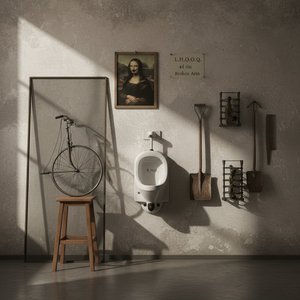
Marcel Duchamp: Challenging Conventions & Redefining Art in the 20th Century
Explore the revolutionary art of Marcel Duchamp! Discover how his Dadaist readymades challenged artistic conventions & redefined modern art. A deep dive into 'Fountain', conceptual shifts, and his lasting impact.

Marcel Dyf: A Study in Belgian Surrealist Landscape and the Poetics of Memory
Explore the captivating landscapes of Marcel Dyf (1899-1985). Discover his Impressionist roots, subtle Surrealism, and enduring legacy. Learn about his life, art, and value with ArtsDot.

The Enduring Allure of the Nude: A Historical & Artistic Exploration of the Human Form
Explore the captivating history of nude art! Discover iconic paintings & artists from classical to modern eras. Uncover symbolism, techniques & find museum-quality reproductions at ArtsDot.

The Eloquent Form: A Historical & Aesthetic Exploration of the Nude in Art
Explore the captivating history of the nude in art! From ancient Greece to modern masters, discover its evolving symbolism, techniques & enduring beauty. Expert insights for collectors and enthusiasts.

Gerhard Richter: A Retrospective on Abstraction, Memory & the Photographic Source
Explore the profound world of Gerhard Richter's abstract paintings. Discover his techniques, influences, and lasting impact on contemporary art – a guide for discerning collectors.


