

 Voorvertoning
 Verstuur
 Delen
Delen
 Details bekijken
 Gids
Gids

 Download
 Vergelijkbare items
 Röntgenonderzoek
 Diavoorstelling
 Q&A
Q&A Statistieken
untitled

 Lees meer
Giclée / Kunstafdrukken
Giclée- of canvasafdruk van museumkwaliteit met een snelle productie en flexibele afwerkingsmogelijkheden. ( Bestel handgeschilderde reproductie Schakel over naar digitale afbeeldingen)




P118B €10

P118H €10

P118W €10

P438Z €10

P508JH €12

P508YH €12

P805H €10

P805Z €10

P919BZ €10

P919G €10

P919XJ €10

P959ZH €10

P968JZ €12

W106C €8

W218G €10

W218JH €8

W218Y €10

W307PJ €10

W316G €10

W316PJ €8

W316Y €10

W398PJ €8

W4111J €10

W500HY €15

W500JH €15

W692G €12

W849H €8

W940BG €15

W953PJ €8




Kies uit onze vooraf ingestelde maten die overeenkomen met de originele verhoudingen van het kunstwerk.

Voer de gewenste breedte en hoogte in, passend bij uw lijst of muur. Een afdruk kan alleen worden ingekort en nooit groter worden gemaakt dan het origineel; een formaat met andere verhoudingen zal daarom een deel van de afbeelding verliezen. Wij sturen u een digitaal mockup ter goedkeuring voordat we tot drukwerk overgaan. De afbeelding op deze pagina toont niet de werkelijke uitsnede — dit is alleen te zien op het mockup.
Wereldwijde levering () binnen 2 weken in plaats van de standaard 4/5 weken. (2 november)

Gratis wereldwijde expressverzending

Hoogwaardig linnen canvas

Volledige verzendverzekering

Garantie op terugbetaling van invoerrechten

Garantie op exacte kleurweergave

Retourbeleid van 100 dagen (alleen bij defecten)

100% Geld-terug-garantie

Korting bij meerdere afnames
 De optie voor glas is alleen beschikbaar bij een formaat kleiner dan 110 cm.

untitled
Giclée / Kunstafdrukken
Afmetingen reproductie
-


Eindtotaal
€ 56
A Revolutionary Vision of Impressionism: Examining Georges Seurat’s “Untitled”
Georges Pierre Seurat, born in Paris on December 2, 1859, stands as a monumental figure in the artistic landscape of late nineteenth-century France—a pioneer who irrevocably altered the course of painting and cemented his place among the titans of modern art. His tragically brief life yielded an astonishing output of work, primarily focused on exploring the groundbreaking technique known as Pointillism, which he championed alongside Paul Signac. This method wasn’t merely a stylistic preference; it represented a profound intellectual commitment to reconciling scientific observation with artistic expression—a daring endeavor that continues to fascinate scholars and inspire artists alike. Seurat's formative years instilled in him an unwavering dedication to meticulous detail and a deep appreciation for the subtleties of light and color, qualities that would become hallmarks of his distinctive oeuvre. His father, Antoine Chrysostome Seurat, possessed considerable influence on young Georges’ upbringing, providing him with financial stability and fostering an environment conducive to artistic pursuits. Recognizing the importance of formal education, Seurat enrolled at the École Supérieure des Beaux-Arts in Paris, where he honed his skills alongside fellow artists destined for greatness—a cohort that included Henri Matisse and Maurice Denis. It was here that he encountered Impressionism firsthand, absorbing its vibrant palette and fleeting effects of light, though simultaneously recognizing its limitations in conveying depth and texture.The Birth of Pointillism: Scientific Precision Meets Artistic Beauty
Driven by a fascination with optical theory—particularly the work of Eugène Chevreuil on color perception—Seurat embarked upon an ambitious project to revolutionize painting technique. Rejecting the blending methods favored by Impressionists, he proposed a radical approach: applying tiny dots of pure pigment onto canvas, allowing the viewer’s eye to synthesize these dots into perceived color and form. This method, dubbed Pointillism (or Neo-Impressionism), wasn't simply about replicating visual experience; it was about harnessing scientific principles to achieve an unprecedented level of luminosity and vibrancy—a deliberate departure from Impressionistic subjectivity. Seurat meticulously documented his experiments in color science, demonstrating a remarkable understanding of how human vision operates.“Untitled” – A Landscape Transformed
The painting “Untitled,” likely created around 1890-91, exemplifies Seurat’s masterful application of Pointillism to depict an outdoor scene—a tranquil meadow dotted with trees bathed in dappled sunlight. The composition is deceptively simple: three figures stand amidst the greenery, their postures conveying a sense of quiet contemplation. However, beneath this serene surface lies a complex interplay of color and texture achieved through Seurat’s painstaking technique. Each dot of pigment is carefully positioned to maximize its contribution to the overall chromatic harmony—a process that demands immense patience and precision. The hazy atmosphere contributes to an ethereal quality, mirroring the Impressionists' preoccupation with capturing fleeting moments of beauty.Symbolism and Emotional Resonance
Beyond its technical brilliance, “Untitled” possesses a subtle symbolic dimension reflecting Seurat’s broader artistic concerns. The figures represent humanity’s connection to nature—a recurring motif in his work—and invite contemplation on themes of harmony and stillness. Furthermore, the deliberate use of color—particularly warm yellows and oranges—evokes feelings of optimism and vitality, underscoring Seurat's belief that art could elevate the human spirit. Like many Impressionist paintings of its time, “Untitled” captures a snapshot of bourgeois leisure, reflecting the social milieu of Parisian life during the Belle Époque.A Legacy Enduring Through Reproduction
Today, reproductions of “Untitled” continue to inspire admiration for Seurat’s visionary approach and his unwavering commitment to artistic innovation. ArtsDot offers exceptional quality prints that allow collectors and interior designers alike to experience the beauty and intellectual depth of this iconic masterpiece—a testament to Georges Pierre Seurat's enduring influence on the history of art.Veelgestelde vragen
Kan ik augmented reality gebruiken om "untitled" door Georges Pierre Seurat in mijn eigen ruimte te bekijken?
"untitled" heeft een augmented reality-preview: de AR-weergave-pagina van het kunstwerk toont het in uw eigen ruimte op een compatibel apparaat.
Wat is de dominante kleur in "untitled" door Georges Pierre Seurat?
Een Green to Violet Spectrum tint loopt door "untitled" door Georges Pierre Seurat.
Waar komen de bezoekers van "untitled" door Georges Pierre Seurat vandaan?
Er bestaat een Statistieken-pagina voor "untitled". Deze brengt de maandelijkse bezoeken aan het kunstwerk en andere werken van de kunstenaar in kaart, met uitsplitsingen naar land en taal.
Vergelijkbare kunstwerken


Biografie kunstenaar
Georges Seurat: De Wetenschap van Licht en de Poëzie van het Moderne Leven
Georges Pierre Seurat, geboren in Parijs op 2 december 1859, was meer dan een schilder; hij was een wetenschapper, een denker en een revolutionair die de kunstwereld voorgoed veranderde. Zijn leven, hoewel tragisch kort – hij stierf slechts 31 jaar oud – was intensief gericht op het ontrafelen van de mysteries van licht en kleur, resulterend in een unieke visuele taal die bekend staat als Pointillisme en Neo-Impressionisme. Seurat’s jeugd, gekenmerkt door een comfortabele burgerlijke omgeving, legde de basis voor zijn latere artistieke ambities. Na een solide opleiding aan de École Municipale de Sculpture et Dessin en later de prestigieuze École des Beaux-Arts, waar hij studeerde onder Henri Lehmann, begon Seurat zich af te keren van de traditionele academische normen. Hij zocht naar een manier om de werkelijkheid weer te geven die verder ging dan het louter observeren; hij wilde de wetenschap achter de waarneming begrijpen en deze kennis in zijn kunst integreren.Van Academisme naar Chromoluminarisme: Een Wetenschappelijke Revolutie
Seurat’s artistieke ontwikkeling was geen plotselinge sprong, maar een geleidelijke evolutie, aangedreven door onverzadigbare nieuwsgierigheid en rigoureuze experimenten. Zijn vroege werk vertoonde nog invloeden van de academische traditie, met tekenvaardigheid en respect voor gevestigde compositiewetten. Maar al snel begon hij deze conventies in twijfel te trekken, op zoek naar een meer systematische benadering van het schilderen. Hij verdiepte zich in de kleurenleer, bestudeerde de werken van wetenschappers zoals Michel Eugène Chevreul en Ogden Rood, die de optische effecten van naast elkaar geplaatste kleuren onderzochten. Deze studies vormden de basis voor zijn baanbrekende techniek: chromoluminarisme – de wetenschap van kleur – en de praktische toepassing ervan, Pointillisme. Het idee was simpel maar revolutionair: kleine, afzonderlijke puntjes van pure kleur op het doek aanbrengen, in de hoop dat het oog van de toeschouwer deze optisch zou vermengen en zo een levendig, stralend effect zou creëren. Dit ging verder dan alleen helderdere kleuren; het was een poging om te begrijpen hoe het menselijk visuele systeem licht en kleur waarneemt en die kennis te benutten om een dynamischer en boeiender schilderij te creëren. Seurat’s voorbereiding op zijn grootschalige composities was even indrukwekkend: met Conté krijt maakte hij gedetailleerde tekeningen op ruw papier, waarbij hij de plaatsing van elke punt zorgvuldig plande – een bijna wiskundig precisie in zijn artistieke proces.Iconische Werken en Artistieke Visie: Een Blik op La Grande Jatte
Het hoogtepunt van Seurat’s onderzoek en experimenten is wellicht het best te zien in A Sunday Afternoon on the Island of La Grande Jatte (1884-1886), een monumentaal werk dat het begin markeerde van het Neo-Impressionisme. Dit iconische schilderij, waarop Parijzenaars genieten van een ontspannen middag aan de Seine, toont zijn pointillistische techniek in al haar glorie. De figuren, weergegeven als zorgvuldig geplaatste puntjes kleur, lijken te fonkelen en te vibreren met licht, waardoor een sfeer van serene stilte ontstaat. Alfalfa, Saint-Denis (1886-1887) toont zijn toepassing van de kleurenleer op een landschap, terwijl eerdere werken zoals Landscape at Saint-Ouen (1882-1883) zijn evoluerende stijl en groeiende interesse in het vastleggen van licht en sfeer onthullen. Zelfs afbeeldingen van het moderne Parijse leven, zoals The Eiffel Tower (1889), werden getransformeerd door zijn unieke techniek, waarbij een harmonieuze combinatie van industriële moderniteit en artistieke innovatie werd bereikt. Bathers at Asnières (1884), een ander belangrijk werk, verkende thema's als ontspanning en modern leven met zijn kenmerkende stijl, en voorspelde de meer verfijnde aanpak die te zien is in *La Grande Jatte*. Deze schilderijen waren niet zomaar representaties van scènes; ze waren zorgvuldig opgebouwde visuele experimenten, ontworpen om de mogelijkheden van kleur en waarneming te verkennen.Een Duurzaam Erfgoed: Invloed en Historische Betekenis
Ondanks een tragisch kort leven – Seurat stierf op slechts 31-jarige leeftijd in 1891 – was zijn impact op de kunstwereld diepgaand en verreikend. Zijn werk daagde traditionele artistieke conventies uit, waardoor de weg werd geopend voor talloze daaropvolgende bewegingen. De nadruk op subjectieve expressie en de verkenning van nieuwe technieken resoneerde met kunstenaars die wilden breken met beperkingen. Seurat’s invloed is te zien in het werk van de Fauvisten, die felle kleuren en expressieve penseelstreken omarmden; de Cubisten, die vormen ontleed in geometrische vormen; en de Abstract Expressionisten, die emotionele intensiteit en spontane gebaren prioriteerden. Seurat’s wetenschappelijke benadering van het schilderen, hoewel aanvankelijk controversieel, verbredde uiteindelijk de definitie van artistieke mogelijkheden. Hij toonde aan dat kunst zowel intellectueel rigoureus als emotioneel ontroerend kon zijn – een synthese die kunstenaars tot op de dag van vandaag inspireert. Seurat’s nalatenschap strekt zich uit voorbij zijn technische innovaties; hij heeft een oeuvre achtergelaten dat de essentie van het moderne leven vastlegt met ongeëvenaarde precisie en schoonheid, waardoor hij zijn plaats als een ware pionier van de moderne kunst heeft verworven. Zijn schilderijen blijven getuigenissen van de kracht van observatie, experimenten en de onvermoeibare menselijke wens om de wereld om ons heen te begrijpen door de lens van artistieke expressie.
Georges Pierre Seurat
1859 - 1891 , Frankrijk
Belangrijkste feiten
- Artistic Movement Or Style: Neo-Impressionisme, Puntillisme
- Artists Or Movements Influenced By This Artist:
- Fauvisme
- Kubisme
- Abstract Expressionisme
- Artists Who Influenced This Artist:
- Michel Eugène Chevreul
- Ogden Rood
- Date Of Birth: 2 december 1859
- Date Of Death: 29 maart 1891
- Full Name: Georges Pierre Seurat
- Nationality: Frans
- Notable Artworks:
- A Sunday on La Grande Jatte
- Bathers at Asnières
- Alfalfa, Saint-Denis
- De Eiffeltoren
- Place Of Birth: Parijs, Frankrijk
Gerelateerde artikelen

Georges Seurat: Pointillism, Perception & the Scientific Foundations of Modern Art
Explore the revolutionary art of Georges Seurat and the science behind Pointillism. Discover chromoluminarism, optical mixing, and the lasting impact of Neo-Impressionism on modern art history.

Georges Braque's Top 25 Meesterwerken: Cubisme & Kunst voor uw Interieur
Ontdek de 25 meest iconische meesterwerken van Georges Braque, pionier van het Cubisme. Lees over zijn techniek, inspiratie & de impact op moderne kunst. Vind museumkwaliteit reproducties en verrijk uw interieur met ArtsDot.com!

Georges Seurat's Meesterwerken: 25 Iconische Schilderijen voor Kunstliefhebbers | ArtsDot
Ontdek de 25 meesterwerken van Georges Seurat! Duik in Pointillisme, Impressionisme & chromoluminarism. Bewonder 'A Sunday on La Grande Jatte' en meer. Museumkwaliteit kunst reproducties op ArtsDot.com.

Top 10 Impressionistische Landschappen: Meesterwerken voor uw Interieur
Ontdek de 10 meest iconische impressionistische landschappen van Monet, Renoir & meer. Leer over hun technieken en betekenis. Vind museumkwaliteit kunst reproducties voor uw interieur op ArtsDot.com!
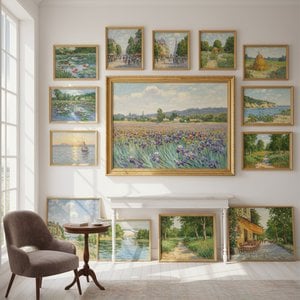
Top 10 Impressionistische Landschappen: Meesterwerken voor uw Interieur
Ontdek de 10 meest iconische impressionistische landschappen! Leer over Monet, Renoir & andere meesters. Prachtige schilderijen voor uw interieur. Museumkwaliteit reproducties op ArtsDot.com.


