


 Bekijk op ware grootte
 Verstuur
 Delen
Delen
 Details bekijken
 Gids voor studentenkunstwerken

 Download
 Vergelijkbare items
 Röntgenonderzoek
 Diavoorstelling
 Statistieken
Ornithe, werk van Geneleos


 Lees meer
Handgemaakte olieverfreproductie
Met de hand geschilderd in olieverf op canvas in uw gewenste maat en lijst, op bestelling gemaakt door onze kunstenaars. ( Schakel over naar print Schakel over naar digitale afbeeldingen)




P118B $10

P118H $10

P118W $10

P438Z $10

P508JH $12

P508YH $12

P805H $10

P805Z $10

P919BZ $10

P919G $10

P919XJ $10

P959ZH $10

P968JZ $12

W106C $8

W218G $10

W218JH $8

W218Y $10

W307PJ $10

W316G $10

W316PJ $8

W316Y $10

W398PJ $8

W4111J $10

W500HY $15

W500JH $15

W692G $12

W849H $8

W940BG $15

W953PJ $8




Kies uit onze vooraf ingestelde maten die overeenkomen met de originele verhoudingen van het kunstwerk.

U kunt uw eigen afmetingen invoeren om in een specifieke lijst of ruimte te passen. Als de door u gekozen maat niet overeenkomt met de verhoudingen van het originele beeld, zullen we het kunstwerk bijsnijden of het schilderij uitbreiden met extra handgeschilderde elementen. Een digitale mockup wordt ter goedkeuring naar u verzonden voordat de productie begint.
Houd er rekening mee dat de preview op het scherm niet de werkelijke uitsnede of uitbreiding weergeeft. Alleen de mockup toont de uiteindelijke compositie nauwkeurig.
Hoewel aangepaste afmetingen mogelijk zijn, raden we aan een maat uit de vooraf gedefinieerde lijst te selecteren om de originele verhoudingen te behouden.
Na de bestelling zal het team van ArtsDot.com per e-mail contact opnemen met de klant voor instructies en een mockup-voorbeeld sturen.
Wereldwijde levering () binnen 3 tot 4 weken in plaats van de standaard 5 weken. (25 september). Zonder concessies aan de kwaliteit.

Gratis wereldwijde expressverzending

Hoogwaardig linnen canvas

Volledige verzendverzekering

Garantie op terugbetaling van invoerrechten

Garantie op exacte kleurweergave

Retourbeleid van 100 dagen (alleen bij defecten)

100% Geld-terug-garantie

Korting bij meerdere afnames
 De optie voor glas is alleen beschikbaar bij een formaat kleiner dan 110 cm.

Ornithe, werk van Geneleos
Reproductiemethode
Formaat reproductie
-


Totaalprijs
$ 263
Orinthe, Werk van Geneleos: Een Symbool van Archaïsche Elegantie en Familiegeschiedenis
De Heraion op het eiland Samos was een van de meest bekende heilige plaatsen van de Griekse godin Hera in het oude Griekenland. Het stond aan het begin van de tweede millennium BC voor religieuze praktijken en bereikte zijn hoogtepunt tijdens de Archaïsche periode – vooral tussen 650 en 550 v.Chr. Door zijn lange en geroemde geschiedenis bevatte het tempel een rijke schatkamer aan archeologische vondsten zoals votive offeringen en resten van gebouwen. Bezoekers kwamen binnen bij de Heraion via de “Sacrale Weg”, de straat die het temenos (Grieks voor “heilige plaats”) verbond met de oude stad Samos. Beide zijden van de weg boden een ideale plek om votieve offeringen op te rijzen die zowel de goden als de devoot aanbooden. De natuursteenbasis waarop deze offeringen werden geplaatst, zijn nog steeds zichtbaar tegenwoordig. Een van deze resten was de zes meter lange basis voor deze prachtige sculptuur van een jonge vrouw, Ornithe – een naam die Grieks betekent “kleine vogeltje”. Deze base werd toegewijd aan Hera door een familie en staat centraal in het kunsthistorisch onderzoek naar de ontwikkeling van beeldhouwkunst tijdens het Archaïsche tijdperk. De sculptuur zelf is een voorbeeld van een groep monumenten, waarbij vier statuen werden geplaatst op een rechthoekige basis die de ouders en kinderen vertegenwoordigde. Een belangrijke rol speelde hierbij Geneleos van Chios, een kunstenaar geboren rond 560-550 v.Chr., wiens werk een essentieel onderdeel vormt van de ontwikkeling van Atense beeldhouwkunst tijdens het einde van het Archaïsche tijdperk. Zijn sculptuur staat bekend om zijn stijlvolle vormen en eenvoudige beweging, wat een directe reactie was op de kunsttradities van Italië en Etrurië. Een bijzonder belangrijk aspect is de aandacht voor detail, zoals blijkt uit de zorgvuldige behandeling van de drapery – het gewaad waarin Ornithe gekleed staat. De natuurlijke kleur van het marmer werd gebruikt om een gevoel van lichtheid en elegantie te creëren, terwijl subtiele schaduwen en hoogtes de contouren van het beeldhouwwerk accentueerden. Een belangrijke bron voor informatie over Geneleos zijn de vier statuen die bij deze sculptuur werden geplaatst op dezelfde base: vier vrouwen en twee mannen. De kunstenaar gebruikte een innovatieve techniek waarbij hij een enkele blok marmer gebruikte om de sculptuur te vormen, wat een teken was van het gebruik van nieuwe materialen en methoden binnen de kunstpraktijk van zijn tijd. Een bijzonder interessante observatie is dat Geneleos een kleine variatie aanbracht in het uiterlijk van de drie dochters, waardoor elk beeldhouwwerk een unieke persoonlijkheid kreeg. Ondanks hun overeenkomstige houding en kleding waren de dochters niet identiek; ze hadden verschillende proporties, drapery en haar, wat een prachtige illustratie vormde van de aandacht voor natuurlijke vormen en beweging die kenmerkend zijn voor het Archaïsche Griekse beeldhouwkunst. Een bijzonder belangrijk kunsthistorisch feit is dat Geneleos’ werk werd beschouwd als een voorbeeld van familievotivie – een praktijk waarbij kunstenaars monumenten creëerden om hun geloof te tonen en de bescherming van de goden te vragen. De sculptuur Ornithe staat symbool voor deze tijdperiode, waarin Griekse kunstenaars zich inspannen om schoonheid en elegantie te combineren met religieuze ernst. Een prachtige manier om het kunstwerk te bekijken is vanuit een afstand, waarbij je kunt genieten van de eenvoudige vormen en kleuren die Geneleos heeft gebruikt om een gevoel van harmonie en lichtheid te creëren. De sculptuur Ornithe blijft een fascinerende bron van inspiratie voor kunstenaars en liefhebbers wereldwijd.Gerelateerde kunstwerken


Biografie van de kunstenaar
Geneleos of Chios: Echoes of the Ionian Sea
The name Geneleos, a sculptor hailing from the island of Chios in ancient Greece, resonates through the corridors of art history primarily due to his indelible mark on the evolution of Athenian sculpture during the late 6th century BC. While details of his life remain shrouded in the mists of antiquity – he was born and died in Chios, Greece – his legacy is inextricably linked to the monumental korai discovered within the Perserschutt (debris) of the Acropolis of Athens. These remarkable statues, unearthed in the latter half of the 19th century, offer a profound glimpse into a pivotal period of artistic transformation, revealing Geneleos’s crucial role in shaping the aesthetic landscape of classical Greece.
The korai themselves are not individual masterpieces in isolation; rather, they represent a carefully orchestrated group, each sharing a distinct typology and a clear votive function – meaning they were offerings to the gods. Their discovery provided scholars with an invaluable chronological record, allowing them to trace the stylistic development of archaic Attic sculpture over nearly a century, spanning from 570 BC to 480 BC. Geneleos’s contribution is particularly significant in illuminating the burgeoning influence of Ionian art on Athenian aesthetics during this period. The Ionians, originating from islands like Chios and Lesbos, brought with them a more relaxed, naturalistic approach to sculpture compared to the earlier Doric style, characterized by its rigid formality.
The Dawn of Ionian Influence
Geneleos’s work stands as a testament to this shift. He masterfully captured the essence of the emerging “second-wave” Attic art, demonstrating a growing emphasis on drapery and the depiction of the human form with greater fluidity and grace. The korai he sculpted exhibit a subtle yet deliberate departure from the earlier, more stylized figures, incorporating elements of Ionian elegance – softer contours, looser folds in the garments, and a heightened sense of movement. This wasn’t simply imitation; Geneleos synthesized these influences, adapting them to his own artistic vision and contributing to a uniquely Athenian style.
Furthermore, Geneleos's work is considered a key development towards the “severe” style that would dominate Attic sculpture in the late 6th century BC. This stylistic shift, characterized by its austerity and emphasis on muscularity and idealized proportions, represented a reaction against the perceived excesses of the previous era. Geneleos’s earlier works can be seen as a bridge between these two distinct approaches, showcasing the gradual transition within Athenian artistic sensibilities.
Technique and Materials
While specific details regarding Geneleos's techniques are limited by the passage of time, it is generally believed that he worked primarily with Parian marble – renowned for its purity and translucence. This choice of material would have allowed him to achieve a remarkable level of detail and luminosity in his sculptures. The korai demonstrate a sophisticated understanding of carving techniques, including the careful manipulation of light and shadow to create a sense of volume and depth. The subtle variations in texture achieved through precise toolwork are evidence of Geneleos’s meticulous attention to craftsmanship.
Historical Significance and Legacy
Geneleos of Chios's contribution extends far beyond the individual statues he created. His work played a crucial role in documenting and understanding the complex evolution of Athenian sculpture during a period of immense political and cultural change – specifically, the decline of the tyranny and the rise of democracy. The korai, as votive offerings, provide valuable insights into religious practices and social customs of the time. Moreover, Geneleos’s influence can be seen in the subsequent works of other Athenian sculptors, solidifying his position as a pivotal figure in the development of Greek art. His legacy endures through these remarkable figures, whispering tales of the Ionian Sea and the artistic ferment that shaped one of the world's greatest civilizations.

geneleos of chios
Greece
Snelle feiten
- Artistic Movement Or Style: Archaic Attic sculpture, Ionian influence, Severe style
- Date Of Birth: Late 6th century BC
- Date Of Death: 480 BC
- Full Name: Geneleos of Chios
- Nationality: Greek
- Notable Artworks: ['Korai of the Acropolis']
- Place Of Birth: Chios, Greece
Gerelateerde artikelen

The Enduring Form: Sculpture Across History, Technique & Emotional Resonance
Explore the rich history of sculpture with ArtsDot. Discover key techniques, influential artists & investment potential for discerning collectors. Expert insights into valuing and collecting timeless masterpieces.

Top 10 Bronzen Beeldhouwwerken die de Kunst Voorgoed Veranderden | ArtsDot
Ontdek de 10 meest legendarische bronzen beeldhouwwerken die kunstgeschiedenis schreven! Van Rodin tot Michelangelo, leer over hun meesterwerken & technieken. Vind museumkwaliteit reproducties en inspiratie voor uw interieur op ArtsDot.com.
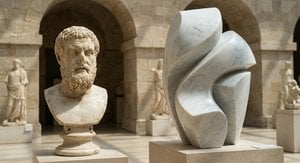
The Enduring Allure of Marble in Art History: From Classical Sculpture to Modern Abstraction
Explore the captivating history of marble sculpture from ancient Greece to modern art. Discover renowned artists like Canova & Michelangelo, carving techniques, and investment insights at ArtsDot.

The Enduring Form: Exploring Themes & Techniques in Sculpture Across Historical Periods
Explore the rich history of sculpture from ancient masterpieces to contemporary innovations. Discover key techniques, influential artists & investment potential for discerning art collectors.

Top 10 Legendarische Bronzen Meesterwerken die de Kunst Veranderden | ArtsDot
Ontdek de 10 meest legendarische bronzen meesterwerken die de kunstgeschiedenis veranderden! Van Rodin tot Michelangelo, leer over techniek & betekenis. Museumkwaliteit reproducties voor uw interieur op ArtsDot.com. Exploreer de collectie online!
