

 Bekijk op ware grootte
 Verstuur
 Delen
Delen
 Details bekijken

 Download
 Vergelijkbare werken
 Röntgenonderzoek
 Diavoorstelling
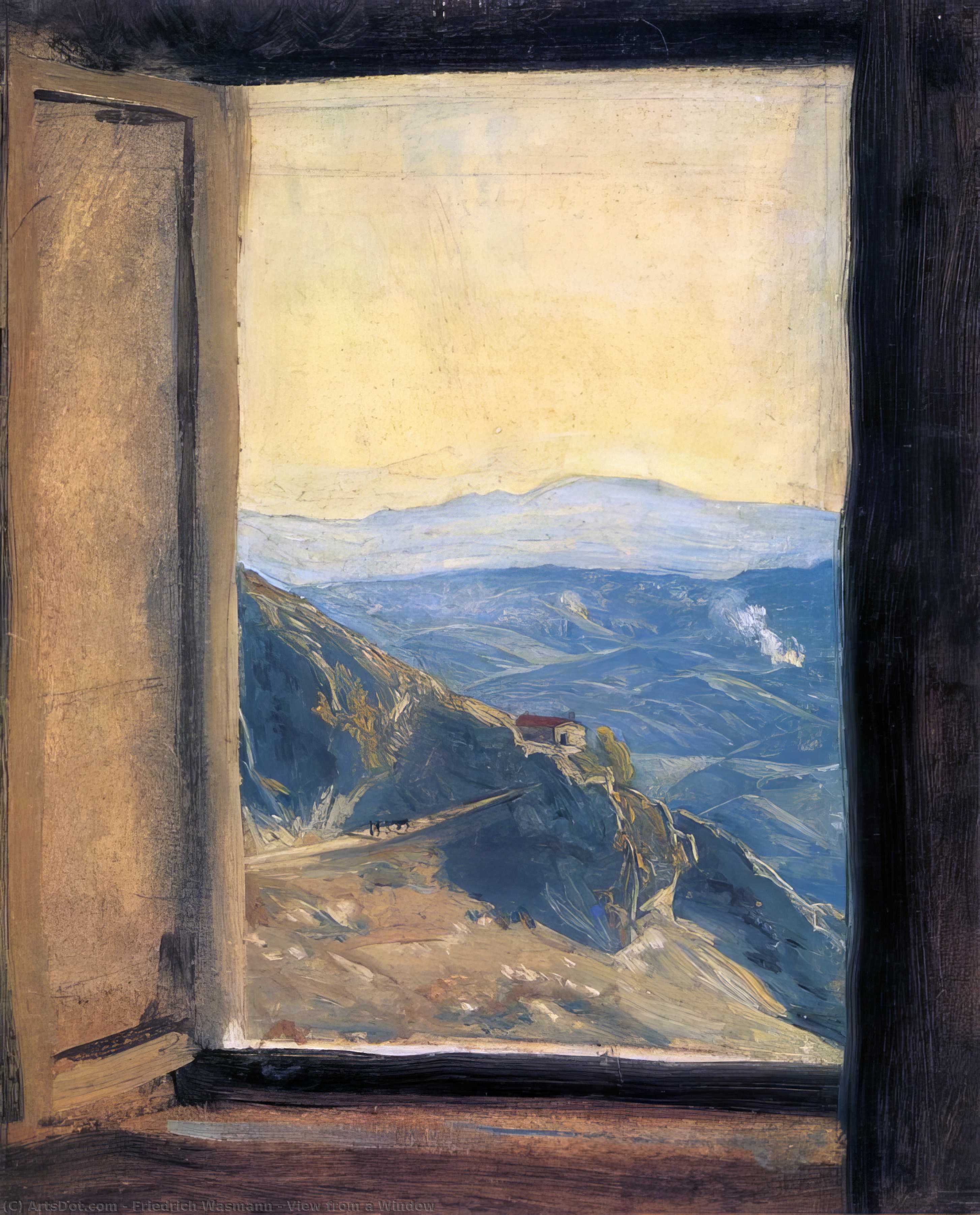
View from a Window


 Lees meer
Koop een digitale afbeelding in hoge resolutie met verbeterde kwaliteit, die veel superieur is aan de online voorvertoning.
Elk bestand wordt met uiterste precisie voorbereid door onze interne specialisten, met behulp van geavanceerde tools en deskundige handmatige retouche. Wij garanderen dat elke afbeelding een uitzonderlijke helderheid, nauwkeurige kleurweergave en verfijnde details bezit.
Het uiteindelijke bestand wordt binnen 72 uur per e-mail geleverd, geoptimaliseerd voor direct gebruik in professionele, redactionele en printomgevingen. Dit is dezelfde kwaliteit waarop topontwerpstudio's, uitgevers en galerieën vertrouwen.
Digitale afbeeldingen
Download een bestand met hoge resolutie voor persoonlijke weergave, afdrukken en creatieve projecten. ( Bestel een print Bestel een handgeschilderde reproductie van dit verzamelobject)
Inbegrepen bij elke bestelling van een digitale afbeelding
Professionele digitale levering, gegarandeerd
Wanneer u kiest voor ArtsDot.com, ontvangt u niet alleen een afbeelding – u krijgt een professioneel verbeterd digitaal kunstwerk, met precisie vervaardigd en voorzien van een tevredenheidsgarantie. Dit is alles wat automatisch bij uw bestelling is inbegrepen:

Direct per e-mail ontvangen
Uw hoogwaardige digitale afbeeldingsbestand wordt binnen 72 uur na bestelling naar u gemaild – klaar voor direct gebruik.

Met AI verbeterd digitaal bestand
Uw kunstwerk wordt professioneel geoptimaliseerd met behulp van geavanceerde AI-tools en handmatige bewerkingen, waardoor maximale details, helderheid en kleurnauwkeurigheid worden gegarandeerd.

Gratis levenslange herlevering
Je bestand per ongeluk verwijderd of kwijtgeraakt? Geen zorgen – we sturen het u op elk gewenst moment gratis opnieuw toe.

Geen invoerkosten – nooit
Geniet direct van uw kunstwerk zonder invoerrechten, belastingen of verzendkosten – digitale downloads zijn altijd belastingvrij.

Garantie op kleurgetrouwheid
Met behulp van professionele hulpmiddelen en kleurbeheer zorgen wij ervoor dat uw digitale afbeelding de originele kleuren zo nauwkeurig mogelijk weergeeft.

60 dagen tevredenheidsgarantie
Als u niet tevreden bent met uw digitale afbeelding, passen wij deze aan of storten wij 100% terug binnen 60 dagen – zonder vragen gesteld.

100% Geld-terug-garantie
Niet tevreden? Ontvang binnen 60 dagen na ontvangst van uw digitale bestand uw volledige aankoopbedrag terug – zonder vragen te stellen.

Korting bij grote bestellingen
Koop 3 afbeeldingen, bespaar 10% - Koop 5, bespaar 15% - Koop 10+, bespaar 20%. Ideaal voor creatieve projecten, galerieën en bureaus.
Gerelateerde kunstwerken


Biografie van de kunstenaar
The Quiet Observer: The Life and Art of Friedrich Wasmann
Rudolph Friedrich Wasmann (1805–1886) remains one of the most poignant voices of the Biedermeier era, a period defined by its retreat into domestic intimacy and the serene observation of the natural world. Born in the bustling port city of Hamburg, Germany, Wasmann’s artistic soul was shaped early on through a rigorous apprenticeship under the painter Christoffer Suerr. This foundational training instilled in him a lifelong devotion to meticulous detail and a technical precision that would become his hallmark. His journey took him from the influential artistic circles of Hamburg to the prestigious halls of the Dresden Academy of Fine Arts and the Munich Academy of Fine Arts, where he refined his ability to capture the subtle interplay of light, texture, and atmosphere. As his career unfolded, Wasmann’s gaze drifted southward toward the breathtaking landscapes of the Tyrol, a region that would become the spiritual and creative heart of his life. Settling in Merano—now part of Italy—he found himself immersed in an environment that offered both topographical grandeur and a sense of profound tranquility. It was here that his style began to coalesce into a unique synthesis of Biedermeier realism and the spiritual depth of the Nazarene movement.A Synthesis of Spirit and Realism
The period between 1832 and 1835 marked a transformative chapter in Wasmann’s development as he lived in Rome. During these years, he encountered the luminaries of the Nazarene movement, including Friedrich Overbeck and Joseph Anton Koch. This exposure to a community dedicated to religious iconography and spiritual contemplation left an indelible mark on his psyche. His conversion to Catholicism during this time was not merely a personal milestone but a profound artistic pivot; it infused his work with a sense of quiet dignity and moral gravity. Unlike the more theatrical or melodramatic tendencies found in some Romantic contemporaries, Wasmann utilized these influences to pursue a more restrained, meditative beauty. His oeuvre reflects this delicate balance between the earthly and the divine. In his landscapes, one can observe the atmospheric weight of the Alpine scenery, rendered with a clarity that honors the physical world while hinting at a deeper, more contemplative stillness. His portraits, too, embody the Biedermeier ideal of domestic peace. Works such as “Paul, Maria, and Filomena von Putzer” serve as exquisite windows into the private lives of the era, capturing childhood innocence and familial warmth through a palette of muted earth tones and soft, luminous blues.Legacy and Historical Significance
Beyond his canvases, Wasmann’s life was characterized by a deep connection to the regions he inhabited. After years spent working as a portrait painter in Merano and Bolzano, he eventually returned to Hamburg, where he married Emilie Krämer. His legacy is preserved not only in the galleries of the Kunsthalle Hamburg but also through his literary contributions, most notably his popular autobiography, which provides a rare, firsthand glimpse into the life of a nineteenth-century German master. The historical significance of Friedrich Wasmann lies in his ability to navigate the shifting tides of nineteenth-century art—moving from the precision of his early training to the spiritualized realism of his maturity. He remains a vital figure for understanding how the Biedermeier style functioned as a sanctuary of calm amidst the larger, more turbulent movements of European history. His work continues to resonate with those who find beauty in the understated, the intimate, and the eternally serene.- Artistic Movements: Biedermeier Realism, Nazarene Movement
- Key Influences: Christoffer Suhr, Friedrich Overbeck, Joseph Anton Koch
- Notable Locations: Hamburg, Dresden, Munich, Rome, Merano
- Major Themes: Alpine landscapes, religious iconography, domestic portraiture

Friedrich Wasmann
1805 - 1886 , Germany
Kerngegevens
- Artistic Movement Or Style: Biedermeier Painting
- Artists Or Movements Influenced By This Artist: ['Nazarene Movement']
- Artists Who Influenced This Artist: ['Christoffer Suhr']
- Date Of Birth: Hamburg, Germany (1805)
- Date Of Death: 1886
- Full Name: Rudolph Friedrich Wasmann
- Nationality: German
- Notable Artworks:
- Portrait of Mrs Pastor Hiibbe
- Bildnis Der Frau Pastor Hübbe, Geborener Wasmann
- View from a Window
- Place Of Birth: Hamburg

