


The picture follows your choices: , .
Beschrijving verzamelobject
Franz Marc's "Untitled (6538)" is an Expressionist masterpiece bursting with vibrant blue and red horses, symbolizing strength & innocence. Explore its dynamic composition & spiritual themes through a stunning reproduction.
 Lees meer
Biografie kunstenaar
Franz Marc (1880-1916): Een Duitse expressionist die met kleur en spiritualiteit de essentie van het dierenrijk vastlegde. Ontdek zijn iconische werken & de 'Blue Rider' beweging!
Handgemaakte olieverfreproductie
Met de hand geschilderd in olieverf op canvas in uw gewenste maat en lijst, op bestelling gemaakt door onze kunstenaars. ( Schakel over naar print Schakel over naar digitale afbeeldingen)
More about this painting
 Voorvertoning
 Verstuur
 Delen
Delen
 Details bekijken
 Gids
Gids

 Download
 Vergelijkbare items
 Röntgenonderzoek
 Diavoorstelling
 Q&A
Q&A Statistieken
Order your painting in four simple steps
Take your time. You can change any answer; the price in your order card follows each choice.
1 Step one of four
Which size would you like?
These sizes keep the proportions of the original painting. The drawing shows your choice on a wall, above a two-metre sofa.
Or give your own measurements
Kies uit onze vooraf ingestelde maten die overeenkomen met de originele verhoudingen van het kunstwerk.

Voer de breedte en hoogte in die u nodig heeft, passend bij uw lijst of uw muur. Omdat dit handgeschilderd is, kan de kunstenaar bij een afmeting met een andere beeldverhouding iets meer rondom het schilderij schilderen of juist iets meer weglaten — u kiest zelf. Wij sturen u een digitaal mockup ter goedkeuring voordat het schilderwerk begint. De afbeelding die op deze pagina wordt getoond, is niet het uiteindelijke resultaat — alleen de mockup geeft dit weer.
2 Step two of four
How should it be prepared: rolled, stretched or framed?
The prices below are for the size you chose in step one.
Choose the edges of the stretched canvas
Choose your frame

White €1

Blurside €1

Extended €1

P118B €10

P118H €10

P118W €10

P438Z €10

P508JH €12

P508YH €12

P805H €10

P805Z €10

P919BZ €10

P919G €10

P919XJ €10

P959ZH €10

P968JZ €12

W106C €8

W218G €10

W218JH €8

W218Y €10

W307PJ €10

W316G €10

W316PJ €8

W316Y €10

W398PJ €8

W4111J €10

W500HY €15

W500JH €15

W692G €12

W849H €8

W940BG €15

W953PJ €8

H24-GOLD €30

H24-SILVER €30

H36-GOLD €45

H36-SILVER €45
Ingelijst
Moulding: . Overall size with the frame: .
3 Step three of four
Would you like anything changed in the painting?
Most people answer no. Because each painting is made by hand, our artist can also adapt it for you.
After order, ArtsDot.com team will email client for instructions and provide a mockup preview
4 Step four of four
A few finishing options
All of them are optional. The answers already selected cost nothing extra.
Who paints it?
Wereldwijde levering () binnen 3 tot 4 weken in plaats van de standaard 5 weken. (29 oktober). Zonder concessies aan de kwaliteit.
A nameplate, as in a museum?
Details van de gegraveerde bronzen plaat
This elegant plaque features the artist's name and the title of the artwork, finely engraved for a timeless presentation.
It is made from bronze with a refined, elegant finish. The text is precisely laser-engraved for a sharp and permanent result. Measuring 9x2 cm, the plaque is compact yet easy to read. It's built to be durable and scratch-resistant, offering a professional, museum-quality look. Mounting is simple thanks to the included adhesive backing.
Details transparante acrylplaat
The plaque includes essential engraved details such as the artist's name, the title of the artwork, the date it was created, the type of media used-like oil on canvas or watercolor-a brief description of the piece, and a QR code that links to the complete artwork information.
It is crafted from clear acrylic, offering a sleek, modern appearance. The text is UV-engraved in black to ensure strong visual contrast. With a size of 10x15 cm, it ensures optimal readability. It comes equipped with two metal hooks for secure wall mounting. The plaque is designed to be weather-resistant, making it suitable for various environments, and it includes interactive features that work seamlessly with smartphone scanning.
Details zwarte acrylplaat
This elegant plaque includes engraved information such as the artist's name, the title of the artwork, the date it was created, the type of media used (like oil on canvas or watercolor), a short description of the artwork, and a QR code for quick access to more information.
The plaque itself is made from refined black acrylic with a premium finish. The text is laser-engraved in white for high contrast and readability. Its size is 10x15 cm, designed to be easy to read. It comes with two metal hooks for professional mounting. The design is sleek and fits any interior style. It is also weather-resistant and durable, with built-in digital integration for mobile compatibility.
A protective varnish?
When do you need it?
✓ Check and order
Your painting, as you ordered it

untitled (6538)
Druktechniek
Afmetingen reproductie
-

Geselecteerde topkunstenaars
Meer detail, verfijning en extra productietijd
-

Lijst voor reproductie
-
-
Voor kunstwerken of reproducties die aan één zijde groter zijn dan 105 cm (ongeveer 41 inch), wordt de lijst als een losse set verzonden. Deze methode garandeert een veilige levering en voorkomt schade tijdens het transport.
Professionele montage vereist - dit is geen doe-het-zelfproduct.
De set moet worden gemonteerd en het canvas moet worden gespannen door een ervaren professionele lijstenmaker, met gebruik van houtlijm (niet inbegrepen), een doekspanter en klemmen om de sponningen recht te houden terwijl de lijm droogt. Onjuiste montage of een ongelijkmatige spanning op het canvas kan het kunstwerk permanent beschadigen en wordt niet gedekt door onze garantie.
 Voor kunstwerken of reproducties die aan één zijde groter zijn dan 105 cm (ongeveer 41 inch), wordt de lijst als een losse set verzonden. Deze methode garandeert een veilige levering en voorkomt schade tijdens het transport.
Alle massief houten onderdelen zijn inbegrepen, nauwkeurig op maat gesneden voor montage.
Te monteren met de meegeleverde schroeven, plus houtlijm voor de hoekverbindingen, die niet wordt meegeleverd en door uw lijstenmaker moet worden aangeschaft.
Professioneel gereedschap is vereist en niet inbegrepen: een spanner voor canvas en klemmen om de latten recht te houden terwijl de lijm droogt.
Belangrijk:
De hoekverbindingen vereisen houtlijm, de latten moeten met lijmklemmen worden vastgehouden tot de lijm volledig is opgedroogd, en het spannen van het canvas op het samengestelde frame vereist een doekspanter. Geen van deze artikelen is inbegrepen in de set. Wij adviseren u om een ervaren professionele lijstenmaker te raadplegen voordat u deze maat bestelt.

Naamplaatje
-
-

Beschermende vernislaag
Glanzende vernis (versterkt de kleuren en biedt bescherming tegen licht en vocht)
-

Mijn kunstwerk aanpassen
Voorbeelden van aanpassingen: vervang het gezicht door een eigen foto; voeg een huisdier toe (bijv. vervang de kat door een hond); verwerk een verborgen boodschap in de achtergrond; wijzig het landschap of andere elementen op de achtergrond.
-

Spoedlevering
Wereldwijde levering () binnen 3 tot 4 weken in plaats van de standaard 5 weken. (29 oktober). Geen concessies aan de kwaliteit.
-
Spoedlevering
Wereldwijde levering naar binnen 5 weken. (5 november).
Inbegrepen
Eindtotaal
€ 232
De optie voor glas is alleen beschikbaar bij een formaat kleiner dan 110 cm.
Included with every order
- Gratis wereldwijde expressverzending
- Hoogwaardig linnen canvas
- Volledige verzendverzekering
- Garantie op terugbetaling van invoerrechten
- Garantie op exacte kleurweergave
- Retourbeleid van 100 dagen (alleen bij defecten)
- 100% Geld-terug-garantie
- Korting bij meerdere afnames


The Genesis of a Vision: Franz Marc’s “Untitled” (6538)
Franz Marc’s “Untitled” (6538), painted in 1911, isn't merely a depiction of two horses; it’s an immersive experience into the heart of Expressionism and a profound meditation on life, innocence, and the spiritual. Born from a confluence of influences – his father’s landscape painting, early theological explorations, and a pivotal encounter with Vincent van Gogh’s intensely colored brushwork – Marc sought to transcend representational art and communicate directly through emotion. This particular canvas embodies that ambition brilliantly, radiating an almost palpable energy born from the artist's deep connection to the natural world, particularly the animal kingdom which he considered sacred.

A Symphony of Color and Distortion
The painting’s immediate impact lies in its audacious use of color – a vibrant, almost hallucinatory blend of cobalt blue and fiery red. These aren't colors used to simply describe; they are employed as emotional conduits. Marc deliberately distorted the forms of the horses, pushing them beyond realistic representation into a realm where their essence—strength, vulnerability, and perhaps even a touch of primal instinct—takes precedence. The elongated limbs, simplified features, and flattened perspective contribute to an atmosphere of heightened tension and immediacy. This stylistic choice is quintessential Expressionism: prioritizing subjective feeling over objective observation.
Technically, Marc employed loose, gestural brushstrokes, layering color upon color to create a sense of movement and depth. The paint itself seems to vibrate with energy, mirroring the emotional intensity of the scene. The apples scattered amongst the horses offer a grounding element, a fleeting reminder of the tangible world, yet they too are rendered in a simplified, almost dreamlike manner.
Symbolism and Spiritual Resonance
Beyond its purely visual qualities, “Untitled” (6538) is rich with symbolic meaning. The blue horse, often interpreted as representing innocence and purity, stands proudly on its hind legs – a gesture of strength and defiance. The red horse, conversely, embodies passion, vitality, and perhaps even danger. Their juxtaposition creates a dynamic tension, suggesting a fundamental duality within the natural world. The presence of the donkey, a symbol of humility and service, alongside the birds, emblems of freedom and spirituality, further enriches the painting’s layered symbolism.
Marc's early religious explorations profoundly shaped his artistic vision. He believed that art could be a pathway to spiritual experience, a means of accessing a deeper understanding of life’s mysteries. This belief is powerfully evident in “Untitled” (6538), where the horses transcend their animal form and become embodiments of universal qualities – strength, vulnerability, and the eternal dance between opposing forces.
Bringing Marc's Vision Home: High-Quality Reproductions
ArtsDot.com offers meticulously crafted oil painting reproductions of Franz Marc’s “Untitled” (6538), ensuring that the artist’s original vision is faithfully preserved. Utilizing only the finest materials and employing traditional techniques, our artisans recreate every nuance of color, texture, and brushstroke. Whether adorning a gallery wall or gracing a living room, this reproduction captures the painting's captivating energy and profound emotional depth. Explore the world of Expressionist art at ArtsDot.com to discover more remarkable works by Franz Marc and elevate your interior space with a piece that speaks directly to the soul.
For further insights into Marc’s life, artistic style, and the broader context of Der Blaue Reiter, we encourage you to visit WikiArt.org and explore the Franz Marc Museum in Kochel am See, Germany – a treasure trove dedicated to preserving and celebrating his legacy.
Veelgestelde vragen
Wat wordt er afgebeeld in "untitled (6538)" door Franz Marc?
De thema's die aanwezig zijn in "untitled (6538)" door Franz Marc omvatten horses, color, animals, spirituality, blue, red, harmony, innocence. Samen vatten zij de onderwerpen van het kunstwerk samen.
Hoe verbindt "untitled (6538)" door Franz Marc Expressionism met het geboorteland van de kunstenaar?
Het Expressionism-werk "untitled (6538)" is vervaardigd door een kunstenaar uit Duitsland.
Behoort "untitled (6538)" door Franz Marc tot de meest gezochte Expressionism kunstwerken?
Binnen de Expressionism-stroming heeft "untitled (6538)" een Iconic populariteitsniveau.
Vergelijkbare kunstwerken


Franz Marc
1880 - 1916, Duitsland
Biografie kunstenaar
A Life Immersed in Color and Spirit
Franz Moritz Wilhelm Marc, geboren in München im Jahr 1880, war ein Maler, dessen kurzer, aber intensiv fokussierter Werdegang die Entwicklung der deutschen Expressionismus grundlegend veränderte. Seine Geschichte ist eine von tiefem spirituellem Streben, das sich in einer lebendigen visuellen Sprache manifestierte – eine Suche nach dem Wesen des Lebens durch die Reinheit, die er in der Natur fand, insbesondere im Reich der Tiere. Zunächst beeinflusst von seinem Vater, Wilhelm Marc, einem Landschaftsmaler, war Franz’ künstlerischer Weg zunächst unsicher. Er erwog kurz Theologie und grübelte über Glaubensfragen und Existenz, bevor er sich schließlich dem Kunststudium an der Akademie der Bildenden Künste in München widmete. Diese frühen religiösen Erkundungen blieben tief in seinem Werk verankert und prägten seine Überzeugung, dass Kunst ein Mittel zur spirituellen Erfahrung sein könne. Seine akademische Ausbildung vermittelte ihm technische Grundlagen, aber Begegnungen mit den Werken von Vincent van Gogh während Besuchen in Paris entfachten seine künstlerische Vision wirklich. Van Goghs emotionale Verwendung von Farbe und rohe Ausdruckskraft berührten Marc tief, befreiten ihn von konventionellen Techniken und legten den Grundstein für einen subjektiveren und emotional aufgeladenen Stil.Der Blaue Reiter und Eine Neue Künstlerische Vision
Marcs künstlerische Entwicklung war nicht isoliert; sie blühte im dynamischen Kontext des frühen 20. Jahrhunderts in München auf. Er experimentierte mit verschiedenen Künstlergruppen, darunter die Neue Künstlervereinigung München, bevor er 1911 zusammen mit Wassily Kandinsky die *Blaue Reiter* (Der Blaue Reiter) gründete. Dies war nicht nur eine Gruppe oder eine Ausstellungsserie; es war eine philosophische und künstlerische Revolution. Der *Blaue Reiter* strebte danach, über bloße Repräsentation hinauszugehen und stattdessen innere spirituelle Wahrheiten durch Abstraktion und symbolische Farbe auszudrücken. Das gleichnamige Journal diente als Plattform zur Verbreitung dieser Ideen und präsentierte nicht nur ihre eigenen Werke, sondern auch die von anderen zukunftsweisenden Künstlern und erforschte vielfältige kulturelle Einflüsse aus Volkskunst bis hin zu primitiver Skulptur. Marcs Beiträge in dieser Zeit waren entscheidend. Er ging über die Darstellung von Landschaften als statische Szenen hinaus und konzentrierte sich stattdessen auf Tiere – Pferde, Rehe, Füchse – als Träger spiritueller Energie. Diese waren nicht nur Tierporträts; sie waren symbolische Darstellungen von Unschuld, Harmonie und einer Verbindung zur Natur, die die Menschheit durch gesellschaftliche Zwänge und intellektuelle Beschäftigung verloren hatte. Der Einfluss von Robert Delaunay’s Erforschung abstrakter Formen und lebhafter Farben trieb Marc weiter in die Vereinfachung und verstärkte emotionale Ausdruckskraft in seinem Werk voran. Gemälde wie *Der Tiger* (1912) und *Rotfuchs* (1912) veranschaulichen diese Verschiebung und zeigen mutige Farbwahl und einen zunehmenden Fokus auf die inhärenten Qualitäten seiner Sujets, anstatt auf realistische Darstellung.Symbolik, Farbe und das Wesen des Seins
Marcs künstlerischer Stil ist sofort erkennbar durch seine charakteristische Verwendung von Farbe und Form. Er setzte Farbe nicht deskriptiv ein; stattdessen erfüllte er sie mit symbolischer Bedeutung. Blau stand für Spiritualität und Männlichkeit, Gelb für Freude und Weiblichkeit, und Rot für Gewalt und Materie. Diese Entscheidungen waren nicht willkürlich, sondern ein sorgfältig konstruiertes System, das darauf abzielte, spezifische emotionale und philosophische Ideen zu vermitteln. Seine Tiere sind nicht nur Sujets; sie sind Verkörperungen dieser Konzepte. Die Vereinfachung von Formen – Figuren auf ihre wesentlichen Formen reduziert – betonte die zugrunde liegende spirituelle Essenz, die er einfangen wollte. *Der Turm der blauen Pferde* (1913), das Gemälde wurde während des Ersten Weltkriegs verloren, ist vielleicht das ikonischste Beispiel für diesen Ansatz und eine kraftvolle und eindringliche Komposition, die seine künstlerische Vision verkörpert. Er glaubte, dass Tiere eine inhärente Reinheit und Verbindung zur Natur besaßen, die die Menschheit durch gesellschaftliche Zwänge und intellektuelle Beschäftigung verloren hatte. Indem er sie mit so großer Ehrfurcht und symbolischer Bedeutung darstellte, versuchte Marc die Betrachter daran zu erinnern und inspirierte sie, eine tiefere Wertschätzung für die natürliche Welt zu entwickeln. Sein Werk war nicht darauf ausgerichtet, *was* er sah, sondern vielmehr *wie* er sich fühlte – eine tief persönliche und spirituelle Reaktion auf seine Umgebung.Ein Tragischer Tod und Ein Bleibendes Erbe
Der Ausbruch des Ersten Weltkriegs im Jahr 1914 veränderte Marcs Leben und seinen künstlerischen Laufbahn dramatisch. Trotz seines Versuchs, aufgrund seiner Künstlerstellung von der Pflicht freigekommen zu werden, wurde er in die deutsche Armee eingezogen und diente als Kavallerieoffizier. Die Schrecken des Krieges trafen ihn tief, doch selbst inmitten des Chaos setzte er seine Kunst fort und fand Trost und Bedeutung darin. Tragischerweise starb Franz Marc am 4. März 1916 im Verlauf der Schlacht von Verdun, ein verhängnisvoller Verlust für die Kunstwelt. Sein frühzeitiger Tod riss eine vielversprechende Karriere ab, festigte aber gleichzeitig seinen Platz in der Geschichte der modernen Kunst. Seine Werke werden bis heute ausgestellt und inspirieren Generationen von Künstlern und fesseln das Publikum mit ihrer emotionalen Tiefe und spirituellen Resonanz. Marcs Gemälde werden in wichtigen Museen auf der ganzen Welt gezeigt, darunter das Lenbachhaus in München, das eine umfangreiche Sammlung seiner Werke beherbergt. Er wird nicht nur als Pionier des deutschen Expressionismus, sondern auch als visionärer Künstler erinnert, der gewagt hat, die tiefe Verbindung zwischen Kunst, Spiritualität und der Natur zu erforschen – ein Vermächtnis, das weiterhin Ehrfurcht und Kontemplation hervorruft.


Gerelateerde artikelen

Franz Marc: Expressionism, Spirituality & the Animal Symbolism of a Modern Master
Explore the profound world of Franz Marc's Expressionist paintings. Discover his spiritual connection to animals, innovative use of color, and lasting impact on modern art history. Learn more at ArtsDot.
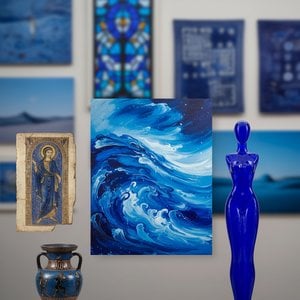
The Allure of Azure: Exploring the Symbolic & Aesthetic Depths of Blue in Art History
Explore the rich history of blue in art! Discover its symbolism, from ancient pigments to modern masterpieces by Kandinsky & Seurat. Uncover the psychological impact and cultural meanings behind this captivating hue.

Top 10 Expressionistische Meesterwerken: Kunst die de Ziel Raakt | ArtsDot
Ontdek de 10 meest iconische Expressionistische meesterwerken! Duik in de emotionele wereld van Kirchner, Kandinsky & Nolde. Museumkwaliteit kunst reproducties voor uw interieur. Exploreer de collectie op ArtsDot.com.