


 Bekijk op ware grootte
 Verstuur
 Delen
Delen
 Details bekijken
 Gids voor studentenkunstwerken

 Download
 Vergelijkbare items
 Röntgenonderzoek
 Diavoorstelling
 Statistieken
Fighting Forms (Kampfende Formen)


 Lees meer
Handgemaakte olieverfreproductie
Met de hand geschilderd in olieverf op canvas in uw gewenste maat en lijst, op bestelling gemaakt door onze kunstenaars. ( Schakel over naar print Schakel over naar digitale afbeeldingen)




P118B €10

P118H €10

P118W €10

P438Z €10

P508JH €12

P508YH €12

P805H €10

P805Z €10

P919BZ €10

P919G €10

P919XJ €10

P959ZH €10

P968JZ €12

W106C €8

W218G €10

W218JH €8

W218Y €10

W307PJ €10

W316G €10

W316PJ €8

W316Y €10

W398PJ €8

W4111J €10

W500HY €15

W500JH €15

W692G €12

W849H €8

W940BG €15

W953PJ €8




Kies uit onze vooraf ingestelde maten die overeenkomen met de originele verhoudingen van het kunstwerk.

Voer de breedte en de hoogte in die u nodig heeft, passend bij uw lijst of uw muur. Dit is handgeschilderd, dus bij een afmeting met een andere vormverhouding kan de kunstenaar iets meer rondom het schilderij schilderen of juist iets meer weglaten — u kiest zelf. Wij sturen u een digitaal mockup ter goedkeuring voordat het schilderwerk begint. De afbeelding die op deze pagina wordt getoond, is niet het uiteindelijke resultaat — alleen de mockup geeft dit weer.
Na de bestelling zal het team van ArtsDot.com per e-mail contact opnemen met de klant voor instructies en een mockup-voorbeeld sturen.
Wereldwijde levering () binnen 3 tot 4 weken in plaats van de standaard 5 weken. (24 oktober). Zonder concessies aan de kwaliteit.

Gratis wereldwijde expressverzending

Hoogwaardig linnen canvas

Volledige verzendverzekering

Garantie op terugbetaling van invoerrechten

Garantie op exacte kleurweergave

Retourbeleid van 100 dagen (alleen bij defecten)

100% Geld-terug-garantie

Korting bij meerdere afnames
 De optie voor glas is alleen beschikbaar bij een formaat kleiner dan 110 cm.

Fighting Forms (Kampfende Formen)
Reproductiemethode
Formaat reproductie
-


Totaalprijs
€ 231
A Symphony of Color and Spirit: The Primal Energy of Franz Marc
In the realm of German Expressionism, few works capture the raw, pulsating essence of existence quite like Franz Marc’s Fighting Forms (Kampfende Formen). This masterpiece is not merely a painting but a visual crescendo, a rhythmic dance of color that transcends the boundaries of the physical world to touch the spiritual. At first glance, the viewer is swept into a whirlwind of crimson reds and radiant oranges, where abstract shapes collide and coalesce in a state of perpetual motion. Unlike the traditionalists of his era who sought to mirror the external landscape, Marc turned his gaze inward, utilizing a language of pure abstraction to depict the unseen tensions and spiritual energies that govern the natural world.
The composition is anchored by a commanding central red form, a powerful presence that seems to vibrate against a textured, multi-layered backdrop. This primary force is encircled by smaller, dancing shapes infused with brilliant yellows and cool, contrasting turquoises. This deliberate interplay of complementary colors creates a sense of both harmony and turbulence, much like the natural cycles of life and struggle. For the discerning collector or interior designer, this piece offers a profound focal point; its vibrant palette and dynamic movement possess the unique ability to breathe life into a room, transforming a static space into an environment of deep emotional resonance and intellectual intrigue.
Technique and the Texture of Emotion
To stand before a reproduction of Fighting Forms is to witness the tactile power of the Expressionist movement. Marc’s technique is defined by a heavy, deliberate application of paint known as impasto. This thick, sculptural layering of pigment creates a palpable surface where every brushstroke tells a story of urgency and passion. The visible textures catch the light, adding a three-dimensional quality that lends the artwork an incredible sense of immediacy. It is as if the artist’s very hand—his movements, his struggles, and his triumphs—is permanently etched into the canvas.
This physical intensity serves a higher purpose: to convey what Marc called the "inner vision." By rejecting the smooth, polished finishes of academic realism, he embraced a rugged aesthetic that mirrors the untamed spirit of nature. The way the colors bleed into one another and the way the edges of shapes seem to fray and explode suggests a world in a constant state of becoming. For those seeking to decorate with art that possesses "soul," this piece provides an unparalleled depth, offering a sensory experience that evolves the more closely one observes its intricate, layered details.
Historical Resonance and Symbolic Depth
Created during the transformative years leading up to 1914, Fighting Forms emerged from a period of profound societal upheaval in Europe. As the shadows of impending war loomed over Germany, artists like Marc sought refuge in the purity of nature and the symbolic power of animals. The title itself serves as a poignant metaphor; the "fighting forms" represent the eternal struggle between opposing forces—light and dark, creation and destruction, peace and chaos. While the painting avoids literal depictions of conflict, the aggressive energy of the shapes evokes the very anxieties and spiritual searching that defined the early 20th century.
Marc’s fascination with animal symbolism—often seeing in creatures like the lion or the horse a sense of primordial strength and innocence—is distilled here into pure, elemental form. He believed that through color, one could communicate directly with the soul, bypassing the limitations of language. Owning a piece inspired by this era is an invitation to engage with history’s most profound philosophical questions. Whether placed in a modern gallery setting or a sophisticated residential study, Fighting Forms remains a timeless testament to the enduring power of the human spirit to find beauty within the struggle.
Vragen & Antwoorden
Bij welke kunststroming behoort "Fighting Forms (Kampfende Formen)" door Franz Marc?
"Fighting Forms (Kampfende Formen)" door Franz Marc behoort tot de German Expressionism-stroming. Deze stroming biedt de stilistische context van het werk.
Welke onderliggende kleur loopt er door "Fighting Forms (Kampfende Formen)" door Franz Marc?
"Fighting Forms (Kampfende Formen)" neigt naar een Amber to Saffron tint.
Wat voor soort kunstwerk is "Fighting Forms (Kampfende Formen)"?
"Fighting Forms (Kampfende Formen)" is een WallArt-werk.
Gerelateerde kunstwerken


Biografie van de kunstenaar
A Life Immersed in Color and Spirit
Franz Moritz Wilhelm Marc, geboren in München im Jahr 1880, war ein Maler, dessen kurzer, aber intensiv fokussierter Werdegang die Entwicklung der deutschen Expressionismus grundlegend veränderte. Seine Geschichte ist eine von tiefem spirituellem Streben, das sich in einer lebendigen visuellen Sprache manifestierte – eine Suche nach dem Wesen des Lebens durch die Reinheit, die er in der Natur fand, insbesondere im Reich der Tiere. Zunächst beeinflusst von seinem Vater, Wilhelm Marc, einem Landschaftsmaler, war Franz’ künstlerischer Weg zunächst unsicher. Er erwog kurz Theologie und grübelte über Glaubensfragen und Existenz, bevor er sich schließlich dem Kunststudium an der Akademie der Bildenden Künste in München widmete. Diese frühen religiösen Erkundungen blieben tief in seinem Werk verankert und prägten seine Überzeugung, dass Kunst ein Mittel zur spirituellen Erfahrung sein könne. Seine akademische Ausbildung vermittelte ihm technische Grundlagen, aber Begegnungen mit den Werken von Vincent van Gogh während Besuchen in Paris entfachten seine künstlerische Vision wirklich. Van Goghs emotionale Verwendung von Farbe und rohe Ausdruckskraft berührten Marc tief, befreiten ihn von konventionellen Techniken und legten den Grundstein für einen subjektiveren und emotional aufgeladenen Stil.Der Blaue Reiter und Eine Neue Künstlerische Vision
Marcs künstlerische Entwicklung war nicht isoliert; sie blühte im dynamischen Kontext des frühen 20. Jahrhunderts in München auf. Er experimentierte mit verschiedenen Künstlergruppen, darunter die Neue Künstlervereinigung München, bevor er 1911 zusammen mit Wassily Kandinsky die *Blaue Reiter* (Der Blaue Reiter) gründete. Dies war nicht nur eine Gruppe oder eine Ausstellungsserie; es war eine philosophische und künstlerische Revolution. Der *Blaue Reiter* strebte danach, über bloße Repräsentation hinauszugehen und stattdessen innere spirituelle Wahrheiten durch Abstraktion und symbolische Farbe auszudrücken. Das gleichnamige Journal diente als Plattform zur Verbreitung dieser Ideen und präsentierte nicht nur ihre eigenen Werke, sondern auch die von anderen zukunftsweisenden Künstlern und erforschte vielfältige kulturelle Einflüsse aus Volkskunst bis hin zu primitiver Skulptur. Marcs Beiträge in dieser Zeit waren entscheidend. Er ging über die Darstellung von Landschaften als statische Szenen hinaus und konzentrierte sich stattdessen auf Tiere – Pferde, Rehe, Füchse – als Träger spiritueller Energie. Diese waren nicht nur Tierporträts; sie waren symbolische Darstellungen von Unschuld, Harmonie und einer Verbindung zur Natur, die die Menschheit durch gesellschaftliche Zwänge und intellektuelle Beschäftigung verloren hatte. Der Einfluss von Robert Delaunay’s Erforschung abstrakter Formen und lebhafter Farben trieb Marc weiter in die Vereinfachung und verstärkte emotionale Ausdruckskraft in seinem Werk voran. Gemälde wie *Der Tiger* (1912) und *Rotfuchs* (1912) veranschaulichen diese Verschiebung und zeigen mutige Farbwahl und einen zunehmenden Fokus auf die inhärenten Qualitäten seiner Sujets, anstatt auf realistische Darstellung.Symbolik, Farbe und das Wesen des Seins
Marcs künstlerischer Stil ist sofort erkennbar durch seine charakteristische Verwendung von Farbe und Form. Er setzte Farbe nicht deskriptiv ein; stattdessen erfüllte er sie mit symbolischer Bedeutung. Blau stand für Spiritualität und Männlichkeit, Gelb für Freude und Weiblichkeit, und Rot für Gewalt und Materie. Diese Entscheidungen waren nicht willkürlich, sondern ein sorgfältig konstruiertes System, das darauf abzielte, spezifische emotionale und philosophische Ideen zu vermitteln. Seine Tiere sind nicht nur Sujets; sie sind Verkörperungen dieser Konzepte. Die Vereinfachung von Formen – Figuren auf ihre wesentlichen Formen reduziert – betonte die zugrunde liegende spirituelle Essenz, die er einfangen wollte. *Der Turm der blauen Pferde* (1913), das Gemälde wurde während des Ersten Weltkriegs verloren, ist vielleicht das ikonischste Beispiel für diesen Ansatz und eine kraftvolle und eindringliche Komposition, die seine künstlerische Vision verkörpert. Er glaubte, dass Tiere eine inhärente Reinheit und Verbindung zur Natur besaßen, die die Menschheit durch gesellschaftliche Zwänge und intellektuelle Beschäftigung verloren hatte. Indem er sie mit so großer Ehrfurcht und symbolischer Bedeutung darstellte, versuchte Marc die Betrachter daran zu erinnern und inspirierte sie, eine tiefere Wertschätzung für die natürliche Welt zu entwickeln. Sein Werk war nicht darauf ausgerichtet, *was* er sah, sondern vielmehr *wie* er sich fühlte – eine tief persönliche und spirituelle Reaktion auf seine Umgebung.Ein Tragischer Tod und Ein Bleibendes Erbe
Der Ausbruch des Ersten Weltkriegs im Jahr 1914 veränderte Marcs Leben und seinen künstlerischen Laufbahn dramatisch. Trotz seines Versuchs, aufgrund seiner Künstlerstellung von der Pflicht freigekommen zu werden, wurde er in die deutsche Armee eingezogen und diente als Kavallerieoffizier. Die Schrecken des Krieges trafen ihn tief, doch selbst inmitten des Chaos setzte er seine Kunst fort und fand Trost und Bedeutung darin. Tragischerweise starb Franz Marc am 4. März 1916 im Verlauf der Schlacht von Verdun, ein verhängnisvoller Verlust für die Kunstwelt. Sein frühzeitiger Tod riss eine vielversprechende Karriere ab, festigte aber gleichzeitig seinen Platz in der Geschichte der modernen Kunst. Seine Werke werden bis heute ausgestellt und inspirieren Generationen von Künstlern und fesseln das Publikum mit ihrer emotionalen Tiefe und spirituellen Resonanz. Marcs Gemälde werden in wichtigen Museen auf der ganzen Welt gezeigt, darunter das Lenbachhaus in München, das eine umfangreiche Sammlung seiner Werke beherbergt. Er wird nicht nur als Pionier des deutschen Expressionismus, sondern auch als visionärer Künstler erinnert, der gewagt hat, die tiefe Verbindung zwischen Kunst, Spiritualität und der Natur zu erforschen – ein Vermächtnis, das weiterhin Ehrfurcht und Kontemplation hervorruft.
Franz Marc
1880 - 1916 , Duitsland
Snelle feiten
- Artistic Movement Or Style: Expressionisme
- Artists Or Movements Influenced By This Artist:
- Abstract kunst
- Der Blaue Reiter
- Artists Who Influenced This Artist:
- Van Gogh
- Delaunay
- Date Of Birth: 8 februari 1880
- Date Of Death: 4 maart 1916
- Full Name: Franz Moritz Wilhelm Marc
- Nationality: Duits
- Notable Artworks:
- De Tigervalk
- Roodbok
- Toren van blauwe paarden
- Place Of Birth: München, Duitsland
Gerelateerde artikelen

Franz Marc: Expressionism, Spirituality & the Animal Symbolism of a Modern Master
Explore the profound world of Franz Marc's Expressionist paintings. Discover his spiritual connection to animals, innovative use of color, and lasting impact on modern art history. Learn more at ArtsDot.

Kandinsky's Meesterwerken: 25 Abstracte Kunstparels voor uw Interieur | ArtsDot
Ontdek de 25 meest iconische werken van Wassily Kandinsky! Duik in zijn abstracte wereld vol kleur, expressionisme & spirituele diepgang. Vind museumkwaliteit reproducties en interieurinspiratie op ArtsDot.com.
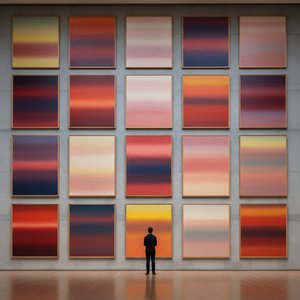
Mark Rothko's Top 25 Meesterwerken: Kleur, Emotie & Abstracte Kunst voor uw Interieur
Ontdek de top 25 meesterwerken van Mark Rothko! Duik diep in zijn emotionele kleurveldschilderijen en abstract expressionisme. Vind museumkwaliteit Rothko reproducties & interieurinspiratie op ArtsDot.com.

Top 10 Abstract Expressionisme Meesterwerken: Kunst voor uw Interieur | ArtsDot.com
Ontdek de 10 meest invloedrijke werken van Abstract Expressionisme! Leer over Jackson Pollock, Mark Rothko & meer. Museumkwaliteit kunst reproducties voor uw interieur. Bekijk de collectie op ArtsDot.com.

Top 10 Expressionistische Meesterwerken: Kunst die de Ziel Raakt | ArtsDot
Ontdek de 10 meest iconische Expressionistische meesterwerken! Duik in de emotionele wereld van Kirchner, Kandinsky & Nolde. Museumkwaliteit kunst reproducties voor uw interieur. Exploreer de collectie op ArtsDot.com.


