

 Voorvertoning
 Verstuur
 Delen
Delen
 Details bekijken
 Gids
Gids

 Download
 Vergelijkbare items
 Röntgenonderzoek
 Diavoorstelling
 Vraag & antwoord
 Statistieken
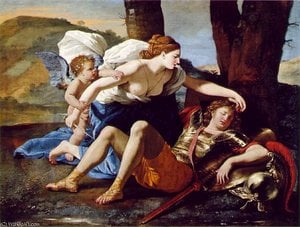
Rinaldo and Armida

- 135.0 x 170.0 cm


 Lees meer
Giclée / Kunstafdrukken
Giclée- of canvasafdruk van museumkwaliteit met een snelle productie en flexibele afwerkingsmogelijkheden. ( Bestel handgeschilderde reproductie Schakel over naar digitale afbeeldingen)




P118B €10

P118H €10

P118W €10

P438Z €10

P508JH €12

P508YH €12

P805H €10

P805Z €10

P919BZ €10

P919G €10

P919XJ €10

P959ZH €10

P968JZ €12

W106C €8

W218G €10

W218JH €8

W218Y €10

W307PJ €10

W316G €10

W316PJ €8

W316Y €10

W398PJ €8

W4111J €10

W500HY €15

W500JH €15

W692G €12

W849H €8

W940BG €15

W953PJ €8




Kies uit onze vooraf ingestelde maten die overeenkomen met de originele verhoudingen van het kunstwerk.

Voer de gewenste breedte en hoogte in, passend bij uw lijst of muur. Een afdruk kan alleen worden ingekort en nooit groter worden gemaakt dan het origineel; een formaat met andere verhoudingen zal daarom een deel van de afbeelding verliezen. Wij sturen u een digitaal mockup ter goedkeuring voordat we tot drukwerk overgaan. De afbeelding op deze pagina toont niet de werkelijke uitsnede — dit is alleen te zien op het mockup.
Wereldwijde levering () binnen 2 weken in plaats van de standaard 4/5 weken. (10 november)

Gratis wereldwijde expressverzending

Hoogwaardig linnen canvas

Volledige verzendverzekering

Garantie op terugbetaling van invoerrechten

Garantie op exacte kleurweergave

Retourbeleid van 100 dagen (alleen bij defecten)

100% Geld-terug-garantie

Korting bij meerdere afnames
 De optie voor glas is alleen beschikbaar bij een formaat kleiner dan 110 cm.

Rinaldo and Armida
Giclée / Kunstafdrukken
Afmetingen reproductie
-


Eindtotaal
€ 56
A Symphony of Sensuality: The Enchantment of Rinaldo and Armida
In the grand tapestry of the Rococo era, few works capture the delicate tension between passion and duty as exquisitely as François Boucher’s 1734 masterpiece, Rinaldo and Armida. This monumental canvas serves as a breathtaking window into the heart of 1-8th century French elegance, where the boundaries between myth and reality dissolve into a dreamscape of soft light and romantic longing. The painting draws its profound narrative power from Torquato Tasso’s epic poem, Jerusalem Delivered, presenting a moment of suspended animation where the chaos of crusade and conflict is momentarily silenced by the overwhelming force of desire.
At the center of this visual poem lies the intimate encounter between the valiant Christian knight, Rinaldo, and the enchanting sorceress, Armida. Boucher masterfully captures a scene of profound tenderness; as Rinaldo rests in a state of vulnerable repose, Armida leans over him, her fingers gently entwined in his hair. This simple, evocative gesture symbolizes more than mere affection—it represents the subtle triumph of enchantment over heroism, and the irresistible pull of the senses over the dictates of war. The surrounding landscape, an idealized pastoral Arcadia, reinforces this sense of escapism, offering a sanctuary of lush greenery and classical ruins that feels both timeless and otherworldly.
The Mastery of Rococo Technique and Light
To behold this work is to witness the pinnacle of Boucher’s technical virtuosity. The artist employs the hallmark characteristics of the Rococo style with unparalleled grace, utilizing a delicate layering of translucent glazes to achieve a luminous, pearlescent skin tone that seems to glow from within. His use of chiaroscuro—the sophisticated interplay between light and shadow—does not merely define form but imbues the entire composition with an atmospheric depth, as if a soft mist were clinging to the edges of the forest. The color palette is a triumph of pastel harmonies, where silken draperies in muted blues and rosy pinks dance against the verdant, sun-dappled backdrop.
Every brushstroke serves the larger purpose of decorative elegance. Notice the fluid movement of the fabrics and the meticulous attention to the textures of the surrounding elements—the weathered stone of an abandoned temple, the soft plumage of nearby figures, and the intricate strings of a harp held by playful putti. These details create a sensory experience that transcends the flat surface of the canvas, inviting the viewer to step into a world where beauty is the highest law. For the discerning collector or interior designer, such a piece offers more than mere decoration; it provides a focal point of profound sophistication, capable of anchoring a room with its historical weight and aesthetic splendor.
A Timeless Legacy for the Modern Collector
Beyond its technical brilliance, Rinaldo and Armida resonates emotionally through its exploration of universal themes: the vulnerability of the human heart and the transformative power of love. The presence of angelic messengers and pagan deities in the periphery serves as a poignant reminder of the era's intellectual fascination with the clash between divine piety and earthly temptation. It is a painting that breathes with life, offering a sense of movement and emotional complexity that remains strikingly modern.
For those seeking to infuse their living spaces with the opulence of the French court, a high-quality reproduction of this work offers an unparalleled opportunity. Whether placed in a sunlit gallery or a stately study, the painting’s soft light and romantic narrative act as a source of constant inspiration. It is an investment in atmosphere, bringing the legendary charm of Boucher’s Paris into the contemporary home, and ensuring that the exquisite spirit of the Rococo continues to enchant generations to come.
Veelgestelde vragen
Welke afmeting en oriëntatie worden aanbevolen voor een print van "Rinaldo and Armida" door François Boucher?
Voor een afdruk van "Rinaldo and Armida" door François Boucher wordt een formaat van Large aanbevolen in Landscape oriëntatie.
Hoe harmonieus is het kleurgebruik in "Rinaldo and Armida" door François Boucher?
De kleuren van "Rinaldo and Armida" door François Boucher vertonen een Strong Color Unity harmonie. Harmonie beschrijft de onderlinge relatie tussen de kleuren.
Hoe verzadigd is het kleurenpalet van "Rinaldo and Armida"?
De kleuren van "Rinaldo and Armida" door François Boucher hebben een Subtle Color verzadiging. Verzadiging beschrijft hoe levendig of gedempt de kleuren zijn.
Vergelijkbare kunstwerken




Biografie kunstenaar
François Boucher: De Verfijnde Meester van de Rococo
François Boucher (1703-1770) was een figuur van onschatbare waarde in de Franse kunstgeschiedenis, erkend als een van de meest briljante schilders van het Rococo-tijdperk. Zijn werk straalt de elegantie, sensualiteit en speelse geest uit die deze invloedrijke stijl kenmerken. Boucher was meer dan alleen een kunstenaar; hij was een architect van dromen, een meester in het creëren van een wereld van verfijnde schoonheid en idyllische harmonie.
Een Jeugd Geometeerd door de Vader
Boucher’s leven begon in Parijs, op 29 september 1703. Zijn vader, Nicolas Boucher, was zelf een getalenteerde decoratiewerende, en het was aan hem dat François zijn eerste artistieke stappen zette. Al vroeg toonde de jonge François een uitzonderlijk talent, en al snel werd hij ondergebracht bij François Lemoyne, een gerenommeerd schilder die hem in zijn atelier nam. Deze vroege training legde de basis voor Boucher’s latere stijl, gekenmerkt door precisie, verfijning en een diepe kennis van compositie.
De Grand Prix de Rome: Een Cruciaal Moment
Een mijlpaal in Boucher’s carrière was zijn overwinning in 1720 bij de prestigieuze Grand Prix de Rome. Deze wedstrijd, georganiseerd door de Franse staat, bood jonge kunstenaars de kans om te studeren in Italië, het centrum van artistieke innovatie en inspiratie. Boucher’s overwinning gaf hem toegang tot de Académie Royale de Peinture et de Sculpture in Parijs, waar hij zijn vaardigheden verder kon ontwikkelen en zijn artistieke visie kon vormgeven.
De Gouden Eeuw van een Kunstenaar
In Italië, tussen 1720 en 1723, werd Boucher diep beïnvloed door de Renaissance-meesters. Hij bestudeerde de werken van Caravaggio, Bernini en andere grootheden, en leerde hun technieken en composities in meesterhand te hanteren. Na zijn terugkeer naar Frankrijk in 1723, werd hij onmiddellijk geaccepteerd in de Academie en snel een beroemdheid. Zijn eerste werk, “Rinaldo en Armida” (1734), toonde al zijn talent voor het creëren van levendige, dramatische scènes met een verfijnde esthetiek.
Een Portret van de Aristocratie
Boucher’s carrière bereikte haar hoogtepunt tijdens het bewind van Lodewijk XV. Hij werd steeds vaker ingehuurd door de koninklijke familie en de elite, en schilderde portretten van Madame de Pompadour, de invloedrijke minnares van de koning, die zijn reputatie verder versterkte. Zijn vermogen om de schoonheid en elegantie van zijn onderwerpen vast te leggen, maakte hem tot een favoriete kunstenaar van de Franse aristocratie.
Thema’s van Verlangen en Idylle
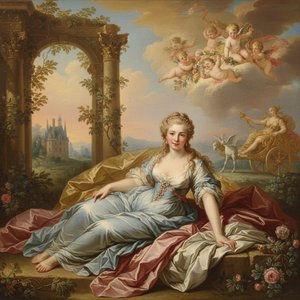
Boucher’s oeuvre is rijk aan thema's. Hij schilderde vaak mythische scènes, zoals “De Overwinning van Venus” (1740-1751), waarin hij de godin van de liefde in een omgeving van idyllische schoonheid en verfijnde decoraties presenteert. Ook genrebeelden, landschappen en kostuumontwerpen voor het theater waren onder zijn aandacht. Zijn werken straalden vaak een subtiele sensualiteit uit, maar behielden altijd een gevoel van elegantie en verfijning.
Een Erfgoed van Verfijning
François Boucher’s invloed strekte zich verder uit dan de schilderkunst. Hij was ook betrokken bij het ontwerpen van tapijten, behangsels en kostuums voor het theater. Zijn werk had een grote impact op de ontwikkeling van Neoclassicisme, en zijn studenten, waaronder Jean-Honoré Fragonard, namen zijn stijl over en droegen bij aan de verspreiding ervan. Boucher’s nalatenschap leeft voort in de prachtige schilderijen die hij heeft nagelaten, die nog steeds bewonderd worden door kunstliefhebbers en critici wereldwijd. Hij blijft een symbool van de verfijnde smaak en artistieke meesterschap van het 18e-eeuwse Frankrijk.

François Boucher
1703 - 1770 , Frankrijk
Belangrijkste feiten
- Artistic Movement Or Style: Rocococo
- Artists Or Movements Influenced By This Artist: ['Jean-Honoré Fragonard']
- Artists Who Influenced This Artist:
- François Lemoyne
- Jean-François Cars
- Date Of Birth: 29 september 1703
- Date Of Death: 30 mei 1770
- Full Name: François Boucher
- Nationality: Frans
- Notable Artworks:
- Rinaldo en Armida
- Het ontbijt
- Madame Boucher
- De zonsondergang
- Place Of Birth: Parijs, Frankrijk
Gerelateerde artikelen

The Rococo Reverie of Fragonard: Love, Leisure & Pleasure in 18th-Century France
Explore the captivating world of Jean-Honoré Fragonard! Discover his Rococo masterpieces, intimate portraits & the allure of 18th-century French art. Learn about 'The Progress of Love' and more at ArtsDot.
François Boucher: Rococo Master of Myth, Sensuality, and the French Court
Explore the captivating world of François Boucher, master of Rococo painting! Discover his iconic works, aristocratic patronage, and lasting influence on French art history. Learn more at ArtsDot.

Top 10 Rococo Meesterwerken: Kunstgeschiedenis voor uw Interieur | ArtsDot.com
Ontdek de 10 meest iconische Rococo meesterwerken! Duik in de wereld van Fragonard, Boucher & Watteau. Leer over lieflijkheid, pastelkleuren en aristocratie. Museumkwaliteit kunst reproducties op ArtsDot.com.

The Rococo Aesthetic: Opulence, Rebellion & the Pursuit of Pleasure in 18th-Century Art
Explore the opulent world of Rococo art! Discover its origins, key artists like Watteau & Boucher, and lasting influence on design. Expert insights for collectors & enthusiasts.

The Rococo Style: Aristocratic Leisure & the Pursuit of Delight in 18th-Century Art
Explore the opulent world of Rococo art! Discover Watteau, Boucher & Nattier's masterpieces. Expert insights for collectors seeking museum-quality reproductions and custom portraits at ArtsDot.

