


The picture follows your choices: , .
Beschrijving verzamelobject
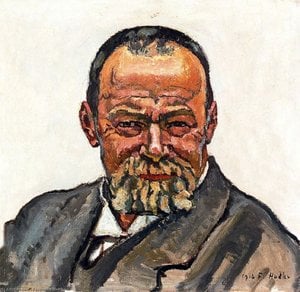
Ferdinand Hodler’s "Orator" (1912) is a striking black-and-white portrait embodying Symbolism’s exploration of emotion and form. Witness the artist’s masterful brushstrokes and textural richness in this iconic piece.
 Lees meer
Biografie kunstenaar
Ontdek Ferdinand Hodler, de Zwitserse kunstenaar van symboliek en 'parallelisme'. Bewonder zijn iconische landschappen & emotionele portretten. Handgeschilderde reproducties beschikbaar!
Handgemaakte olieverfreproductie
Met de hand geschilderd in olieverf op canvas in uw gewenste maat en lijst, op bestelling gemaakt door onze kunstenaars. ( Schakel over naar print Schakel over naar digitale afbeeldingen)
More about this painting
 Voorvertoning
 Verstuur
 Delen
Delen
 Details bekijken
 Gids
Gids

 Download
 Vergelijkbare items
 Röntgenonderzoek
 Diavoorstelling
 Q&A
Q&A Statistieken
Order your painting in four simple steps
Take your time. You can change any answer; the price in your order card follows each choice.
1 Step one of four
Which size would you like?
These sizes keep the proportions of the original painting. The drawing shows your choice on a wall, above a two-metre sofa.
Or give your own measurements
Kies uit onze vooraf ingestelde maten die overeenkomen met de originele verhoudingen van het kunstwerk.

Voer de breedte en hoogte in die u nodig heeft, passend bij uw lijst of uw muur. Omdat dit handgeschilderd is, kan de kunstenaar bij een afmeting met een andere beeldverhouding iets meer rondom het schilderij schilderen of juist iets meer weglaten — u kiest zelf. Wij sturen u een digitaal mockup ter goedkeuring voordat het schilderwerk begint. De afbeelding die op deze pagina wordt getoond, is niet het uiteindelijke resultaat — alleen de mockup geeft dit weer.
2 Step two of four
How should it be prepared: rolled, stretched or framed?
The prices below are for the size you chose in step one.
Choose the edges of the stretched canvas
Choose your frame

White €1

Blurside €1

Extended €1

P118B €10

P118H €10

P118W €10

P438Z €10

P508JH €12

P508YH €12

P805H €10

P805Z €10

P919BZ €10

P919G €10

P919XJ €10

P959ZH €10

P968JZ €12

W106C €8

W218G €10

W218JH €8

W218Y €10

W307PJ €10

W316G €10

W316PJ €8

W316Y €10

W398PJ €8

W4111J €10

W500HY €15

W500JH €15

W692G €12

W849H €8

W940BG €15

W953PJ €8

H24-GOLD €30

H24-SILVER €30

H36-GOLD €45

H36-SILVER €45
Ingelijst
Moulding: . Overall size with the frame: .
3 Step three of four
Would you like anything changed in the painting?
Most people answer no. Because each painting is made by hand, our artist can also adapt it for you.
After order, ArtsDot.com team will email client for instructions and provide a mockup preview
4 Step four of four
A few finishing options
All of them are optional. The answers already selected cost nothing extra.
Who paints it?
Wereldwijde levering () binnen 3 tot 4 weken in plaats van de standaard 5 weken. (30 oktober). Zonder concessies aan de kwaliteit.
A nameplate, as in a museum?
Details van de gegraveerde bronzen plaat
This elegant plaque features the artist's name and the title of the artwork, finely engraved for a timeless presentation.
It is made from bronze with a refined, elegant finish. The text is precisely laser-engraved for a sharp and permanent result. Measuring 9x2 cm, the plaque is compact yet easy to read. It's built to be durable and scratch-resistant, offering a professional, museum-quality look. Mounting is simple thanks to the included adhesive backing.
Details transparante acrylplaat
The plaque includes essential engraved details such as the artist's name, the title of the artwork, the date it was created, the type of media used-like oil on canvas or watercolor-a brief description of the piece, and a QR code that links to the complete artwork information.
It is crafted from clear acrylic, offering a sleek, modern appearance. The text is UV-engraved in black to ensure strong visual contrast. With a size of 10x15 cm, it ensures optimal readability. It comes equipped with two metal hooks for secure wall mounting. The plaque is designed to be weather-resistant, making it suitable for various environments, and it includes interactive features that work seamlessly with smartphone scanning.
Details zwarte acrylplaat
This elegant plaque includes engraved information such as the artist's name, the title of the artwork, the date it was created, the type of media used (like oil on canvas or watercolor), a short description of the artwork, and a QR code for quick access to more information.
The plaque itself is made from refined black acrylic with a premium finish. The text is laser-engraved in white for high contrast and readability. Its size is 10x15 cm, designed to be easy to read. It comes with two metal hooks for professional mounting. The design is sleek and fits any interior style. It is also weather-resistant and durable, with built-in digital integration for mobile compatibility.
A protective varnish?
When do you need it?
✓ Check and order
Your painting, as you ordered it

Orator
Druktechniek
Afmetingen reproductie
-

Geselecteerde topkunstenaars
Meer detail, verfijning en extra productietijd
-

Lijst voor reproductie
-
-
Voor kunstwerken of reproducties die aan één zijde groter zijn dan 105 cm (ongeveer 41 inch), wordt de lijst als een losse set verzonden. Deze methode garandeert een veilige levering en voorkomt schade tijdens het transport.
Professionele montage vereist - dit is geen doe-het-zelfproduct.
De set moet worden gemonteerd en het canvas moet worden gespannen door een ervaren professionele lijstenmaker, met gebruik van houtlijm (niet inbegrepen), een doekspanter en klemmen om de sponningen recht te houden terwijl de lijm droogt. Onjuiste montage of een ongelijkmatige spanning op het canvas kan het kunstwerk permanent beschadigen en wordt niet gedekt door onze garantie.
 Voor kunstwerken of reproducties die aan één zijde groter zijn dan 105 cm (ongeveer 41 inch), wordt de lijst als een losse set verzonden. Deze methode garandeert een veilige levering en voorkomt schade tijdens het transport.
Alle massief houten onderdelen zijn inbegrepen, nauwkeurig op maat gesneden voor montage.
Te monteren met de meegeleverde schroeven, plus houtlijm voor de hoekverbindingen, die niet wordt meegeleverd en door uw lijstenmaker moet worden aangeschaft.
Professioneel gereedschap is vereist en niet inbegrepen: een spanner voor canvas en klemmen om de latten recht te houden terwijl de lijm droogt.
Belangrijk:
De hoekverbindingen vereisen houtlijm, de latten moeten met lijmklemmen worden vastgehouden tot de lijm volledig is opgedroogd, en het spannen van het canvas op het samengestelde frame vereist een doekspanter. Geen van deze artikelen is inbegrepen in de set. Wij adviseren u om een ervaren professionele lijstenmaker te raadplegen voordat u deze maat bestelt.

Naamplaatje
-
-

Beschermende vernislaag
Glanzende vernis (versterkt de kleuren en biedt bescherming tegen licht en vocht)
-

Mijn kunstwerk aanpassen
Voorbeelden van aanpassingen: vervang het gezicht door een eigen foto; voeg een huisdier toe (bijv. vervang de kat door een hond); verwerk een verborgen boodschap in de achtergrond; wijzig het landschap of andere elementen op de achtergrond.
-

Spoedlevering
Wereldwijde levering () binnen 3 tot 4 weken in plaats van de standaard 5 weken. (30 oktober). Geen concessies aan de kwaliteit.
-
Spoedlevering
Wereldwijde levering naar binnen 5 weken. (6 november).
Inbegrepen
Eindtotaal
€ 233
De optie voor glas is alleen beschikbaar bij een formaat kleiner dan 110 cm.
Included with every order
- Gratis wereldwijde expressverzending
- Hoogwaardig linnen canvas
- Volledige verzendverzekering
- Garantie op terugbetaling van invoerrechten
- Garantie op exacte kleurweergave
- Retourbeleid van 100 dagen (alleen bij defecten)
- 100% Geld-terug-garantie
- Korting bij meerdere afnames


Orator – A Symphony of Color and Emotion
Ferdinand Hodler’s “Orator,” completed in 1912, stands as a cornerstone of Swiss Symbolism—a movement that sought to transcend mere representation and delve into the realm of psychological truth. More than just a portrait, it's an exploration of inner turmoil juxtaposed with serene contemplation, rendered with Hodler’s signature technique of “parallelism,” which employs layered brushstrokes to create an illusion of depth and luminosity.
The Artist’s Vision: Loss and Remembrance
Hodler’s personal life was marked by profound grief—the untimely deaths of his father and two younger brothers fueled a preoccupation with mortality that permeated his artistic sensibility. This melancholic awareness isn't overtly expressed in “Orator,” but it subtly informs the composition itself. The solitary figure, positioned on one leg, embodies vulnerability yet exudes an unwavering gaze – suggesting resilience amidst sorrow.
Technique and Style: Hodler’s Parallelism
Hodler revolutionized painting with his innovative approach known as “parallelism.” Unlike traditional methods that aim for realistic depiction, he applied multiple layers of paint—often translucent washes—to achieve a shimmering effect. This technique captures the ethereal quality of light and shadow, creating an atmosphere that feels both tangible and dreamlike. Observe closely how Hodler’s brushstrokes intertwine to convey not just form but also emotion – capturing the essence of the subject's inner state.
Symbolism: The Weight of Silence
"Orator" is laden with symbolic resonance. The red clothing worn by the man represents passion and vitality, yet it’s contrasted against the muted tones of the background—a deliberate choice that underscores the importance of stillness and introspection. The upward gaze of the figure speaks to aspiration and a yearning for transcendence, hinting at an attempt to confront existential questions.
Emotional Impact: A Portrait of Inner Strength
Hodler’s masterful execution transcends mere visual beauty; it evokes a powerful emotional response. “Orator” compels viewers to contemplate themes of loss, remembrance, and the human condition—themes that resonate deeply with audiences even today. Its quiet dignity and contemplative gaze invite reflection on the complexities of life and the enduring power of inner resilience. A hand-painted reproduction captures this profound artistic legacy.
- Artist: Ferdinand Hodler
- Year Created: 1912
- Style: Symbolism
- Medium: Oil on Paper
- Size: 59 x 35 cm
Discover the captivating beauty of “Orator” and elevate your interior space with a stunning hand-painted reproduction at ArtsDot.
Veelgestelde vragen
In welk jaar en binnen welke stroming werd "Orator" gemaakt?
"Orator" werd in 1912 gecreëerd als een werk uit de Symbolist Painting-stroming. De datum en de stroming verankeren het kunstwerk in de kunstgeschiedenis.
Hoe verhoudt "Orator" zich tot het oeuvre van Ferdinand Hodler?
"Orator" behoort tot het Symbolist Painting-werk van Ferdinand Hodler, waarvan de bekende thema's onder meer swiss symbolism, human form, emotional depth, landscape harmony, artist vision omvatten.
Hoe kan ik een digitale afbeelding van "Orator" door Ferdinand Hodler verkrijgen?
Om een digitale afbeelding van "Orator" door Ferdinand Hodler te verkrijgen, kunt u een digitale afbeelding in hoge resolutie om te downloaden bestellen op de Digitale afbeelding pagina.
Vergelijkbare kunstwerken


Ferdinand Hodler
1853 - 1918, Zwitserland
Biografie kunstenaar
A Life Etched in Symbolism: The World of Ferdinand Hodler
Ferdinand Hodler, a name inextricably linked to the landscape of Swiss painting and the evocative language of symbolism, emerged from modest beginnings to become one of the most significant artists of the late 19th and early 20th centuries. Born in Bern, Switzerland, in 1853, his life was profoundly shaped by early loss – a recurring motif that would deeply inform his artistic vision. The untimely deaths of his father and two younger brothers before he reached adolescence cast a long shadow, instilling within him a contemplative awareness of mortality and the transient nature of existence. These experiences, interwoven with an acute sensitivity to the beauty and power of the natural world, became foundational elements of his evolving oeuvre. Initially apprenticed to decorative painters, Hodler’s innate talent quickly transcended mere craftsmanship; he harbored a fervent desire for formal artistic training and exploration beyond the constraints of commercial work. This ambition led him to Geneva in 1871, where he immersed himself in study, attending science lectures alongside diligently copying masterpieces at the city's museum – a rigorous education that laid the groundwork for his subsequent innovations.From Realism to ‘Parallelism’: Forging a Unique Vision
Hodler’s artistic journey was characterized by constant evolution and an unwavering pursuit of expressive power. His early works reflected the prevailing realist style prevalent during the time—portraits, landscapes, and genre scenes executed with meticulous detail. However, he soon found himself constrained by these conventions, seeking a means to convey deeper emotional truths and philosophical ideas. This quest led him towards Symbolism, a movement that deliberately rejected naturalistic representation in favor of subjective experience and evocative imagery. Yet Hodler didn’t simply adopt the tenets of Symbolism; instead, he meticulously crafted his own distinctive path, developing what he termed “parallelism.” This unique style involved arranging figures and forms in rhythmic, almost geometric patterns—a visual manifestation of interconnectedness. It was an attempt to depict not merely *what* he observed, but *how* he felt – the underlying emotional currents that connected all things. The Night, completed in 1890, stands as a pivotal work, marking his decisive shift towards symbolist imagery and sparking considerable debate amongst critics. Despite initial skepticism, the painting garnered attention in Paris, establishing Hodler’s reputation beyond Switzerland's borders and signaling the arrival of a truly original voice.Landmarks in Paint: Key Works and Their Significance
Throughout his prolific career, Hodler produced a remarkable body of work that continues to captivate audiences today. The Day, completed in 1893, stands as one of his most ambitious and celebrated achievements—a monumental historical painting showcasing his mastery of composition and symbolism. Housed at the Kunsthaus Zürich, this artwork is a powerful meditation on life, death, and renewal, rendered with an arresting blend of realism and visionary intensity. The sheer scale and emotional weight of The Day solidified Hodler’s position as a leading figure in European art. Other notable works include numerous depictions of the Swiss Alps, imbued with a sense of awe-inspiring grandeur, and portraits that reveal his profound understanding of human psychology. He frequently revisited themes of loss and mourning, perhaps reflecting his own childhood traumas, but always infused them with a dignified resilience. His paintings weren’t merely representations; they were emotional landscapes, inviting viewers to contemplate the fundamental questions of existence. Works like Truth II (1897) demonstrate Hodler's ability to seamlessly blend classical forms with modern sensibilities, creating images that are both timeless and strikingly contemporary—a testament to his innovative spirit.Influences and Historical Context
Ferdinand Hodler’s artistic development was shaped by a confluence of influences. Early exposure to the works of Gustave Moreau and the Symbolist movement in Paris undoubtedly played a crucial role. However, he also drew inspiration from Japanese prints, particularly their use of flattened perspective and symbolic imagery. Furthermore, his Swiss heritage—the rugged beauty of the Alps and the traditions of rural life—permeated his work, lending it a distinctly regional character. Hodler’s art emerged during a period of profound social and intellectual change – the late 19th and early 20th centuries were marked by rapid industrialization, urbanization, and growing anxieties about modernity. His paintings offered a visual language for grappling with these complex issues, providing solace and insight in an increasingly uncertain world. The rise of psychology, particularly Freud’s theories on the unconscious, also influenced his exploration of inner states and emotional landscapes.A Lasting Legacy: Influence and Historical Significance
Ferdinand Hodler's influence extended far beyond the borders of Switzerland. His innovative use of symbolism and his development of “parallelism” paved the way for Expressionism, with its emphasis on subjective emotion and distorted forms. Artists who followed in his footsteps recognized him as a precursor to their own explorations of inner experience. Hodler’s work also resonated with broader cultural currents – a period marked by rapid social change, scientific advancements, and a growing sense of existential anxiety. His paintings offered a visual language for grappling with these complex issues, providing solace and insight in an increasingly uncertain world. Today, Hodler’s works are held in major museums across Europe and beyond, ensuring that his artistic vision continues to inspire and challenge generations of viewers. He remains a towering figure in Swiss art history, celebrated not only for his technical skill but also for his profound emotional depth and unwavering commitment to exploring the mysteries of the human condition.Exploring Hodler Further
- For an in-depth look at his life and work: Wikipedia - Ferdinand Hodler
- Discover more of his paintings at: ArtsDot - Ferdinand Hodler Collection
- View *The Day* (1893) here: ArtsDot - The Day




Gerelateerde artikelen

Top 10 Witte Meesterwerken: Kunstgeschiedenis & Interieurinspiratie
Ontdek de top 10 witte meesterwerken uit de kunstgeschiedenis! Van Monet tot Mondriaan, bewonder abstracte vormen & serene kleuren. Vind museumkwaliteit reproducties en interieurinspiratie op ArtsDot.com.

Meesterwerken in Zwart: Top 10 Schilderijen Gedreven door Donkere Tinten | ArtsDot.nl
Ontdek de kracht van donker! Verlies jezelf in onze top 10 zwarte schilderijen, van Caravaggio tot Manet. Leer over meesterwerken, technieken & emotie. Museumkwaliteit reproducties op ArtsDot.com – Kunst voor uw interieur.

Ferdinand Hodler: Symbolism, Parallelism & the Quest for Universal Harmony
Explore the captivating world of Ferdinand Hodler, Swiss Symbolist painter renowned for his evocative landscapes & pioneering 'parallelism'. Discover his life, key works, and lasting influence on art history. Own a hand-painted reproduction today!