


 Bekijk op ware grootte
 Verstuur
 Delen
Delen
 Details bekijken
 Gids voor studentenkunstwerken

 Download
 Vergelijkbare items
 Röntgenonderzoek
 Diavoorstelling
 Statistieken
Sarah Bernhardt
 Acrylic On Canvas
- WallArt
- 19th-century photography
 1864
1864 21.0 x 16.0 cm
 J. Paul Getty Museum
 Lees meer
Giclée / Kunstafdrukken
Giclée- of canvasafdruk van museumkwaliteit met een snelle productie en flexibele afwerkingsmogelijkheden. ( Koop handgeschilderd kunstwerk Schakel over naar digitale afbeeldingen)




P118B €10

P118H €10

P118W €10

P438Z €10

P508JH €12

P508YH €12

P805H €10

P805Z €10

P919BZ €10

P919G €10

P919XJ €10

P959ZH €10

P968JZ €12

W106C €8

W218G €10

W218JH €8

W218Y €10

W307PJ €10

W316G €10

W316PJ €8

W316Y €10

W398PJ €8

W4111J €10

W500HY €15

W500JH €15

W692G €12

W849H €8

W940BG €15

W953PJ €8




Kies uit onze vooraf ingestelde maten die overeenkomen met de originele verhoudingen van het kunstwerk.

Voer de breedte en de hoogte in die u nodig heeft, passend bij uw lijst of uw muur. Een afdruk kan alleen worden ingekort, nooit groter worden gemaakt dan het origineel, waardoor een formaat met een andere verhouding een deel van de afbeelding verliest. Wij sturen u een digitaal mockup ter goedkeuring voordat we iets drukken. De afbeelding op deze pagina toont niet de werkelijke uitsnede — dit is alleen te zien op het mockup.
Wereldwijde levering () binnen 2 weken in plaats van de standaard 4/5 weken. (24 oktober)

Gratis wereldwijde expressverzending

Hoogwaardig linnen canvas

Volledige verzendverzekering

Garantie op terugbetaling van invoerrechten

Garantie op exacte kleurweergave

Retourbeleid van 100 dagen (alleen bij defecten)

100% Geld-terug-garantie

Korting bij meerdere afnames
 De optie voor glas is alleen beschikbaar bij een formaat kleiner dan 110 cm.

Sarah Bernhardt
Giclée / Kunstafdrukken
Formaat reproductie
-


Totaalprijs
€ 55
A Portrait of Timeless Grace: Sarah Bernhardt by Félix Nadar
Félix Nadar’s “Sarah Bernhardt,” captured in 1864, transcends the conventional portrait and becomes a profound study of presence—a frozen moment of theatrical intensity. More than simply a likeness, it's an intimate revelation of the legendary actress herself, radiating both vulnerability and formidable strength. The photograph, executed with the meticulous precision characteristic of Nadar’s work, offers a rare glimpse into Bernhardt’s carefully constructed stage persona, yet simultaneously hints at the woman beneath the glittering facade.
The image is dominated by a striking monochrome palette—a symphony of grays ranging from deep charcoal to delicate silver. This deliberate absence of color forces the viewer to focus entirely on form and texture, highlighting the intricate details of Bernhardt’s face, the luxurious drape of her shawl, and the subtle play of light and shadow across her features. Nadar masterfully employs chiaroscuro—the dramatic contrast between light and dark—to sculpt Bernhardt's figure, emphasizing her cheekbones, the delicate curve of her lips, and the downward tilt of her head, a gesture that simultaneously conveys melancholy and quiet contemplation.
The Language of Photography: Technique and Process
Nadar’s choice of wet collodion process is crucial to understanding the photograph's unique character. This demanding technique required immediate development—the plate had to be prepared, exposed, and processed within minutes, creating a remarkable immediacy in the image. The slight imperfections inherent in this method – subtle shifts in tone, minute variations in sharpness – contribute to the photograph’s authentic feel, imbuing it with a sense of captured time rather than a polished, idealized representation.
The composition itself is remarkably restrained. Nadar eschews elaborate backgrounds or distracting props, focusing entirely on Bernhardt and her immediate surroundings. The shallow depth of field further isolates the subject, drawing the viewer’s attention to her face and creating an intimate sense of connection. Note the subtle vignette effect around the edges – a darkening that frames the subject and directs the eye inward, mirroring the theatrical spotlight she commanded on stage.
A Star is Born: Context and Symbolism
“Sarah Bernhardt” was taken at a pivotal moment in the actress’s career. Just twenty years old, she was already establishing herself as one of France's most celebrated performers, captivating audiences with her dramatic range and magnetic stage presence. The photograph captures this burgeoning fame—the poised confidence, the hint of vulnerability—and foreshadows the legendary status she would eventually achieve.
The shawl draped around Bernhardt’s shoulders is more than just a garment; it's a symbol of both protection and concealment. It frames her face, drawing attention to her expressive eyes and carefully controlled expression, while simultaneously hinting at the layers beneath—the private emotions and personal struggles that fueled her performances. The downward gaze, often interpreted as sadness or introspection, adds a layer of complexity to the portrait, suggesting a depth beyond mere theatricality.
A Legacy in Silver: Nadar’s Vision
Félix Nadar's “Sarah Bernhardt” stands as a testament to his pioneering spirit and artistic vision. He wasn’t simply documenting a celebrity; he was attempting to capture the essence of a personality, revealing the inner life behind the public persona. This photograph exemplifies Nadar’s approach to portraiture—a willingness to challenge conventions, embrace imperfection, and delve into the psychological complexities of his subjects. It remains a powerful and enduring image, offering a captivating glimpse into the world of 19th-century theater and the remarkable woman who dominated it.
Vragen & Antwoorden
Is "Sarah Bernhardt" vrij van auteursrecht?
Wat betreft het auteursrecht valt "Sarah Bernhardt" onder bevindt zich in het publiek domein - de auteursrechten zijn verlopen.
Welke kleurverzadiging heeft "Sarah Bernhardt" door Félix Nadar?
Het kleurenpalet van "Sarah Bernhardt" heeft een verzadiging van Muted.
Is "Sarah Bernhardt" door Félix Nadar een portret, landschap of vierkante compositie?
"Sarah Bernhardt" door Félix Nadar heeft een Portrait-formaat. Het formaat beschrijft de verhoudingen van de compositie.
Gerelateerde kunstwerken


Biografie van de kunstenaar
Félix Nadar: Een Pionier van de Fotografie
Vroege Leven en Begin
- Geboren: Gaspard-Félix Tournachon op 5 april 1820 in Parijs (hoewel sommige bronnen Lyon suggereren).
- Zijn vader, Victor Tournachon, was een drukker en boekhandelaar.
- Hij studeerde aanvankelijk medicijnen, maar moest deze studie opgeven vanwege financiële moeilijkheden na de dood van zijn vader.
- Nadar, zoals hij later bekend zou worden, begon zijn carrière als karikaturist en romanschrijver, waarbij hij bijdroeg aan diverse kranten.
Van Karikatuur naar Fotografie
- Rond 1853 begon hij te experimenteren met de fotografie.
- Hij opende zijn eerste fotostudio in 1854 aan de 113 rue St. Lazare, en verhuisde later in 1860 naar het 35 Boulevard des Capucines.
- Hij verwierf snel erkenning voor zijn indrukwekkende en psychologisch diepgravende portretten.
- Afwijzing van Conventie: Nadar vermeed de weelderige decors die destijds gebruikelijk waren in de portretkunst; hij gaf de voorkeur aan natuurlijk licht en een focus op de persoonlijkheid van de geportretteerde.
Pionier van de Luchtfotografie
- In 1858 werd Nadar de eerste persoon die luchtfoto's maakte met behulp van luchtballonnen.
- Hij overwon technische uitdagingen met betrekking tot het ontwikkelen van fotografische platen op grote hoogte door een gasbestendige katoenen afdekking voor zijn manden te ontwerpen.
- Daarnaast was hij een pionier in het gebruik van kunstlicht in de fotografie, met name in de Catacomben van Parijs.
- Le Géant: In 1863 gaf hij opdracht tot de bouw van een enorme ballon genaamd “Le Géant” (De Reus), wat direct inspiratie vormde voor Jules Vernes *Vijf weken in een ballon*.
Grote Prestaties en Invloeden
- Portretkunst: Hij fotografeerde talloze prominente figuren, waaronder Victor Hugo, Charles Baudeloet, Sarah Bernhardt en Gustave Courbet.
- Hij richtte de eerste luchtpostdienst ter wereld op tijdens het Beleg van Parijs (1870-71) door gebruik te maken van ballonvluchten.
- In 1874 bood hij in zijn studio een podium aan de eerste impressionistische tentoonstelling, wat cruciaal was voor opkomende kunstenaars.
- In 1886 publiceerde hij wat wordt beschouwd als het eerste foto-interview, met de chemicus Michel Eugène Chevreul.
Latere Leven en Nalatenschap
- Van 1895 tot 1909 verplaatste hij zijn studio naar Marseille.
- Hij overleed op 20 maart 1910 in Parijs en ligt begraven op de begraafplaats Père Lachaise.
- Zijn zoon, Paul Nadar, zette de werkzaamheden van de studio voort na zijn dood.
- Quand j’étais photographe: Hij publiceerde een memoires waarin hij terugblikte op zijn leven en werk, wat waardevolle inzichten biedt in de 19e-eeuwse fotografie.
- Historische Betekenis: De innovatieve technieken en artistieke visie van Nadar hebben de ontwikkeling van de fotografie als kunstvorm diepgaand beïnvloed. Zijn portretten blijven iconische representaties van de Parijsese intellectuele en artistieke kringen.
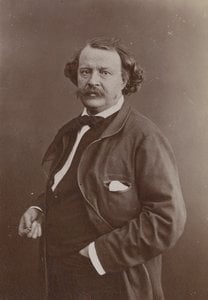
Félix Nadar
1820 - 1910 , Frankrijk
Snelle feiten
- Birth Date: 5 april 1820
- Death Date: 20 maart 1910
- Influenced: ['Jules Verne']
- Movement:
- Fotografie
- Karikatuur
- Impressionisme (geassocieerd)
- Name: Félix Nadar
- Nationality: Frans
- Notable Works:
- Portretten van Baudelaire, Hugo, Delacroix
- Luchtfotografie
- Foto-interview met Chevreul
Gerelateerde artikelen

Monochrome Visions: Exploring the Aesthetic & Historical Significance of Black & White Photography
Explore the rich history & artistic power of black and white photography. From early techniques to iconic masters like Ansel Adams, discover why monochrome continues to captivate art lovers today. Expert insights for collectors.

Meesterwerken in Zwart: Top 10 Schilderijen Gedreven door Donkere Tinten | ArtsDot.nl
Ontdek de kracht van donker! Verlies jezelf in onze top 10 zwarte schilderijen, van Caravaggio tot Manet. Leer over meesterwerken, technieken & emotie. Museumkwaliteit reproducties op ArtsDot.com – Kunst voor uw interieur.

Beyond the Lens: Photography's Enduring Influence on Modern & Contemporary Art
Explore photography's pivotal role in shaping modern & contemporary art. Discover key movements, influential artists like Stieglitz, and expert collecting advice from ArtsDot.

Beyond the Portrait: Félix Nadar & the Psychological Depths of 19th-Century Photography
Explore the revolutionary photography of Félix Nadar – pioneer of portraiture, aerial imaging & psychological depth. Discover his iconic portraits of Baudelaire, Hugo & more. A deep dive into 19th-century art history.

Pictorialism: A Search for Artistic Photography's Soul – Aesthetics, Techniques & Legacy
Explore the captivating world of Pictorialism – a pivotal movement that transformed photography into fine art. Discover key artists like Stieglitz & Käsebier, techniques, and collecting tips from experts.