

 Voorvertoning
 Verstuur
 Delen
Delen
 Details bekijken
 Gids
Gids

 Download
 Vergelijkbare items
 Röntgenonderzoek
 Diavoorstelling
 Vraag & antwoord
 Statistieken
Flora


 Lees meer
Giclée / Kunstafdrukken
Giclée- of canvasafdruk van museumkwaliteit met een snelle productie en flexibele afwerkingsmogelijkheden. ( Bestel handgeschilderde reproductie Schakel over naar digitale afbeeldingen)




P118B €10

P118H €10

P118W €10

P438Z €10

P508JH €12

P508YH €12

P805H €10

P805Z €10

P919BZ €10

P919G €10

P919XJ €10

P959ZH €10

P968JZ €12

W106C €8

W218G €10

W218JH €8

W218Y €10

W307PJ €10

W316G €10

W316PJ €8

W316Y €10

W398PJ €8

W4111J €10

W500HY €15

W500JH €15

W692G €12

W849H €8

W940BG €15

W953PJ €8




Kies uit onze vooraf ingestelde maten die overeenkomen met de originele verhoudingen van het kunstwerk.

Voer de gewenste breedte en hoogte in, passend bij uw lijst of muur. Een afdruk kan alleen worden ingekort en nooit groter worden gemaakt dan het origineel; een formaat met andere verhoudingen zal daarom een deel van de afbeelding verliezen. Wij sturen u een digitaal mockup ter goedkeuring voordat we tot drukwerk overgaan. De afbeelding op deze pagina toont niet de werkelijke uitsnede — dit is alleen te zien op het mockup.
Wereldwijde levering () binnen 2 weken in plaats van de standaard 4/5 weken. (5 november)

Gratis wereldwijde expressverzending

Hoogwaardig linnen canvas

Volledige verzendverzekering

Garantie op terugbetaling van invoerrechten

Garantie op exacte kleurweergave

Retourbeleid van 100 dagen (alleen bij defecten)

100% Geld-terug-garantie

Korting bij meerdere afnames
 De optie voor glas is alleen beschikbaar bij een formaat kleiner dan 110 cm.

Flora
Giclée / Kunstafdrukken
Afmetingen reproductie
-


Eindtotaal
€ 56
A Moment of Serene Contemplation: Étienne Maurice Falconet’s “Flora”
Étienne Maurice Falconet's 1751 marble sculpture, "Flora," is more than just a depiction of a nymph; it’s an embodiment of the Rococo era’s fascination with idealized beauty, classical mythology, and the delicate balance between repose and movement. This exquisite piece, currently residing in the Hermitage Museum in St. Petersburg, captures a fleeting moment of profound tranquility – a young woman reclining gracefully amidst a profusion of draped fabric, her pose suggesting both effortless elegance and quiet introspection. The sculpture immediately draws the viewer into its world, inviting contemplation on themes of nature, femininity, and the pursuit of inner peace.
Falconet’s masterful technique is evident in every meticulously rendered detail. The marble itself, chosen for its cool, luminous quality, allows light to play across the figure's form, highlighting the subtle curves of her body and the folds of her drapery. The sculptor skillfully employed subtractive carving – a traditional method involving the removal of material to reveal the desired shape – to achieve an astonishing level of realism and anatomical accuracy while maintaining a distinctly Rococo grace. Note the delicate rendering of the skin, the suggestion of muscle beneath the fabric, and the way the folds of the drapery cascade around her limbs, creating a sense of luxurious softness. The overall effect is one of breathtaking refinement and technical virtuosity.
The Rococo Ideal: Beauty, Myth, and Ornamentation
“Flora” firmly establishes itself within the context of the late Baroque and Rococo periods – an era characterized by its opulent ornamentation, emphasis on sensuality, and revival of classical forms. Falconet’s work reflects these trends perfectly. The sculpture's setting is deliberately rich and evocative, with the draped fabric creating a sense of abundance and luxury reminiscent of ancient Roman gardens. The figure herself embodies the Rococo ideal of beauty – youthful, graceful, and possessing an alluring blend of innocence and sophistication. Drawing inspiration from classical mythology, Flora represents the goddess of flowers and springtime, symbolizing fertility, renewal, and the vibrant energy of nature.
Furthermore, the sculpture’s composition is meticulously balanced, adhering to the principles of classical harmony. The figure's pose – reclining with one arm extended and the other supporting her head – creates a sense of visual equilibrium. The careful arrangement of drapery adds depth and dimension to the scene, while the overall effect is one of serene grace and understated elegance. Falconet’s ability to seamlessly blend technical skill with artistic sensibility is truly remarkable.
Symbolism and Emotional Resonance
Beyond its aesthetic beauty, “Flora” carries a wealth of symbolic meaning. The reclining pose itself can be interpreted as representing rest, contemplation, or even vulnerability – a moment of respite from the demands of the world. The abundance of flowers surrounding her suggests a connection to nature and the cyclical rhythms of life. Some scholars have also linked the sculpture’s imagery to themes of classical mythology, associating Flora with figures like Diana, the Roman goddess of the hunt, who was often depicted in similar poses of repose amidst natural settings.
Ultimately, “Flora” evokes a powerful emotional response – a sense of tranquility, beauty, and timelessness. It’s a sculpture that invites viewers to pause, reflect, and appreciate the simple pleasures of life. The work's enduring appeal lies in its ability to capture a fleeting moment of grace and serenity, transporting us to a world of idealized beauty and profound contemplation.
A Legacy of Porcelain and Grandeur
Falconet’s contribution extends beyond this singular marble masterpiece. He was instrumental in elevating the art of small-scale sculpture at the Royal Sèvres porcelain manufactory, creating exquisite figurines that became highly sought after by European royalty and collectors. His work on the “Service du Roi” – a lavish dinner service for Louis XV – showcased his remarkable skill in rendering intricate details and capturing the essence of human emotion within miniature forms. This legacy cemented Falconet’s place as one of the most influential sculptors of his time, leaving an indelible mark on both the art world and the history of European decorative arts.
Veelgestelde vragen
Waar kan ik handgeschilderde reproducties van "Flora" door Étienne Maurice Falconet kopen?
Handgeschilderde reproducties van "Flora" door Étienne Maurice Falconet zijn verkrijgbaar via deze website: een met de hand geschilderde olieverfreproductie op linnen canvas, te bestellen op de Handgeschilderde reproductie pagina.
Welk gevoel roept "Flora" door Étienne Maurice Falconet op?
In "Flora" gaat een Serene sfeer gepaard met een Tranquil emotie.
Hoe verhoudt "Flora" zich tot de terugkerende thema's van Étienne Maurice Falconet?
"Flora" verbeeldt nude sculpture, classical beauty, serene figure, marble art, roman influence, baroque style, elegant form, restful pose, terwijl de bekende thema's van Étienne Maurice Falconet classical ideals, roman influence, neoclassical grace, balanced form, mythological subject matter", "royal patronage, court art", serenity & contemplation" zijn. Een vergelijking tussen beide laat zien hoe het werk zich verhoudt tot de gebruikelijke onderwerpen van de kunstenaar.
Vergelijkbare kunstwerken


Biografie kunstenaar
The Sculptor of Grandeur and Delicate Beauty
Étienne Maurice Falconet stands as a pivotal figure in the late Baroque, Rococo, and early Neoclassical periods of French sculpture. Born in Paris in 1716, his journey from a humble apprenticeship to becoming one of the most celebrated artists of his time is a testament to talent, ambition, and an extraordinary ability to capture both power and grace. Falconet’s early life was marked by practical labor; he began as a marble cutter’s assistant, a far cry from the prestigious artistic circles he would eventually command. However, his innate talent for sculpting quickly shone through, producing clay and wood figures during his leisure hours that attracted the attention of Jean-Baptiste Lemoyne the Younger. This mentorship proved crucial, providing the formal training and guidance necessary to transform a skilled craftsman into a master of fine art.
As Falconet’s reputation grew, so did his ability to navigate the shifting aesthetic tides of the 18th century. His work seamlessly bridged the gap between the ornate, playful energy of the Rococo and the disciplined, heroic ideals of Neoclassicism. Early masterpieces like Milo of Croton (1754) secured his admission to the Académie des Beaux-Arts, marking a significant milestone in his career. In this work, Falconet demonstrated a remarkable capacity for realism and emotional depth, imbuing cold stone with the visceral struggle and legendary strength of the Greek athlete. His talent for capturing human feeling through anatomical precision established him as a rising star within the Parisian art world.
A Legacy in Bronze and Porcelain
While many sculptors are remembered for a single medium, Falconet’s versatility allowed him to leave an indelible mark on both monumental bronze and delicate porcelain. Perhaps his most enduring achievement is the colossal bronze statue of Peter the Great, known as "The Bronze Horseman," located in St. Petersburg, Russia. This monumental work serves as a triumph of scale and symbolism, capturing the imperial spirit of the Russian Tsar through dynamic movement and commanding presence. It remains one of the most iconic sculptural landmarks in Europe, representing the pinnacle of his ability to execute large-scale, historical narratives.
Parallel to his monumental bronze works, Falconet played a transformative role in the Royal Sèvres porcelain manufactory. Here, he elevated small-scale sculpture to an art form in its own right, infusing delicate porcelain figures with the same grace and sophistication found in his marble works. His contributions to Sèvres helped define the aesthetic of the era, blending elegance with intricate detail. His ability to master both the massive and the miniature is reflected in a diverse body of work that includes:
- Pygmalion and Galatea: A stunning marble sculpture capturing the mythical moment Aphrodite breathes life into stone, embodying the essence of artistic creation.
- Flora: A 1751 marble masterpiece that showcases his Neoclassical mastery through serene beauty and elegant form.
- Milo of Croton: A dynamic depiction of strength and struggle that highlights his skill in capturing intense physical emotion.
Through his mastery of various scales and styles, Étienne Maurice Falconet shaped the visual language of his century. Whether through the sweeping drama of a public monument or the intimate charm of a porcelain figurine, his work continues to resonate as a profound exploration of human emotion, myth, and the enduring beauty of form.

Étienne Maurice Falconet
1716 - 1791 , France
Belangrijkste feiten
- Full Name: Étienne Maurice Falconet
- Nationality: French
- Date Of Birth: 1716
- Date Of Death: 1791
- Place Of Birth: Paris, France
- Notable Artworks:
- Bronze Horseman Statue
- Flora
- Milo of Croton
- Artistic Movement Or Style: Baroque, Rococo, Neoclassical
- Artists Who Influenced This Artist: ['Jean-Baptiste Lemoyne']
- Artists Or Movements Influenced By This Artist: ['Boucher']
Gerelateerde artikelen

The Enduring Form: Exploring Themes & Techniques in Sculpture Across Historical Periods
Explore the rich history of sculpture from ancient masterpieces to contemporary innovations. Discover key techniques, influential artists & investment potential for discerning art collectors.

Top 10 Bronzen Beeldhouwwerken die de Kunst Voorgoed Veranderden | ArtsDot
Ontdek de 10 meest legendarische bronzen beeldhouwwerken die kunstgeschiedenis schreven! Van Rodin tot Michelangelo, leer over hun meesterwerken & technieken. Vind museumkwaliteit reproducties en inspiratie voor uw interieur op ArtsDot.com.

Antonio Canova: Neoclassical Sculpture & the Pursuit of Emotional Perfection
Explore the life & art of Antonio Canova, the greatest Neoclassical sculptor. Discover his masterpieces, innovative techniques, and lasting influence on fine art collecting. Expert insights for discerning investors.

Top 10 Legendarische Bronzen Meesterwerken die de Kunst Veranderden | ArtsDot
Ontdek de 10 meest legendarische bronzen meesterwerken die de kunstgeschiedenis veranderden! Van Rodin tot Michelangelo, leer over techniek & betekenis. Museumkwaliteit reproducties voor uw interieur op ArtsDot.com. Exploreer de collectie online!
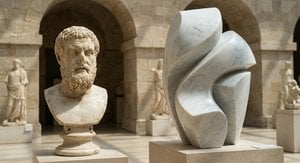
The Enduring Allure of Marble in Art History: From Classical Sculpture to Modern Abstraction
Explore the captivating history of marble sculpture from ancient Greece to modern art. Discover renowned artists like Canova & Michelangelo, carving techniques, and investment insights at ArtsDot.