

 Voorvertoning
 Verstuur
 Delen
Delen
 Details bekijken
 Gids
Gids

 Download
 Vergelijkbare items
 Röntgenonderzoek
 Diavoorstelling
 Vraag & antwoord
 Statistieken
green stockings

 Lees meer
Giclée / Kunstafdrukken
Giclée- of canvasafdruk van museumkwaliteit met een snelle productie en flexibele afwerkingsmogelijkheden. ( Bestel handgeschilderde reproductie Schakel over naar digitale afbeeldingen)




P118B €10

P118H €10

P118W €10

P438Z €10

P508JH €12

P508YH €12

P805H €10

P805Z €10

P919BZ €10

P919G €10

P919XJ €10

P959ZH €10

P968JZ €12

W106C €8

W218G €10

W218JH €8

W218Y €10

W307PJ €10

W316G €10

W316PJ €8

W316Y €10

W398PJ €8

W4111J €10

W500HY €15

W500JH €15

W692G €12

W849H €8

W940BG €15

W953PJ €8




Kies uit onze vooraf ingestelde maten die overeenkomen met de originele verhoudingen van het kunstwerk.

Voer de gewenste breedte en hoogte in, passend bij uw lijst of muur. Een afdruk kan alleen worden ingekort en nooit groter worden gemaakt dan het origineel; een formaat met andere verhoudingen zal daarom een deel van de afbeelding verliezen. Wij sturen u een digitaal mockup ter goedkeuring voordat we tot drukwerk overgaan. De afbeelding op deze pagina toont niet de werkelijke uitsnede — dit is alleen te zien op het mockup.
Wereldwijde levering () binnen 2 weken in plaats van de standaard 4/5 weken. (11 november)

Gratis wereldwijde expressverzending

Hoogwaardig linnen canvas

Volledige verzendverzekering

Garantie op terugbetaling van invoerrechten

Garantie op exacte kleurweergave

Retourbeleid van 100 dagen (alleen bij defecten)

100% Geld-terug-garantie

Korting bij meerdere afnames
 De optie voor glas is alleen beschikbaar bij een formaat kleiner dan 110 cm.

green stockings
Giclée / Kunstafdrukken
Afmetingen reproductie
-


Eindtotaal
€ 56
A Portrait of Torment: Egon Schiele’s “Green Stockings”
Egon Schiele's "Green Stockings," painted in 1914, isn’t merely a depiction of a woman in a white dress and vibrant green stockings; it’s a raw, unflinching exploration of the human psyche – a window into the artist’s own turbulent inner world. This oil on canvas work, now residing within the Leopold Museum in Vienna, exemplifies the core tenets of Expressionism, utilizing bold color, distorted forms, and an intensely emotional palette to convey a sense of profound unease and vulnerability. Schiele, born in Tulln an der Donau, Austria, in 1890 – a region steeped in artistic tradition yet shadowed by personal tragedy – channeled his experiences into every brushstroke, creating images that resonate with a haunting intensity.
The painting immediately draws the eye to the striking contrast of the woman’s white dress against the assertive green of her stockings. This deliberate juxtaposition isn't simply decorative; it speaks to a complex interplay of innocence and transgression, restraint and suppressed desire. Schiele’s technique is characterized by rapid, almost frantic brushstrokes, particularly evident in the rendering of the figure’s body. The lines are not smooth or idealized, but rather jagged and fragmented, mirroring the emotional turmoil he sought to capture. He employed a technique known as “pointillism” – applying small dots of color – which contributes to the painting's shimmering quality and adds to its overall sense of movement and instability. Notice how the background is deliberately muted, almost dissolving into a hazy gray, further emphasizing the central figure and intensifying her isolation.
Decoding the Symbolism
“Green Stockings” is deeply rooted in Schiele’s personal anxieties and his fascination with mortality, themes that permeated much of his oeuvre. The green itself carries significant symbolic weight – often associated with envy, jealousy, or even illicit passion. The stockings themselves can be interpreted as a symbol of vulnerability, exposing the figure's legs and hinting at a potential for exposure or danger. The woman’s averted gaze, directed slightly off-camera, adds another layer of intrigue. She isn’t inviting connection; she’s guarding herself, projecting an aura of guardedness and perhaps even fear. Schiele frequently explored themes of sexuality and the human condition in his work, often depicting figures in states of heightened emotional intensity or physical vulnerability – a direct reflection of his own struggles with illness and loss.
Expressionism and its Roots
“Green Stockings” firmly places Schiele within the context of Expressionism, a movement that rejected traditional artistic conventions in favor of subjective experience. Artists like Edvard Munch and Vincent van Gogh had paved the way for this shift, prioritizing emotional truth over realistic representation. Schiele’s work aligns with this ethos by distorting form and color to express inner feelings rather than simply mirroring external reality. The painting's raw energy and psychological depth are hallmarks of Expressionism – a movement that sought to capture the anxieties and uncertainties of modern life. It is important to note Schiele's unique approach, often described as “self-expressionism,” where he used his art as a means of confronting his own demons.
A Timeless Masterpiece: Reproduction Possibilities
Owning a reproduction of "Green Stockings" offers more than just an aesthetic addition to your space; it’s an opportunity to connect with one of the most compelling and emotionally resonant works of the 20th century. ArtsDot.com meticulously recreates this masterpiece using skilled artisans and high-quality materials, ensuring a museum-worthy finish that captures every nuance of Schiele's original vision. Whether you’re an art enthusiast, a collector seeking to expand your collection, or simply someone drawn to the painting’s haunting beauty, a handmade oil painting reproduction provides a tangible link to this pivotal work of Expressionist art. Explore the related works and artist biographies on ArtsDot.com for a deeper understanding of Egon Schiele's legacy.
- Explore Related Works: Discover other captivating pieces by Egon Schiele on ArtsDot.com – Link to all Schiele reproductions
- Learn More About the Artist: Delve into the life and artistic journey of Egon Schiele through detailed biographies available on ArtsDot.com – Link to Schiele artist page
Veelgestelde vragen
Waar kan ik een print van "green stockings" door Egon Schiele kopen?
Een print van "green stockings" door Egon Schiele kan rechtstreeks worden besteld op de Fine Art Print-pagina: een fine art print op katoenen canvas of archiefwaardig canvaspapier.
Welke sfeer brengt "green stockings" in een ruimte?
Met zijn Dramatic karakter is "green stockings" een aanrader voor de Living Room.
Hoe licht is "green stockings" in zijn geheel?
Wat betreft de waargenomen helderheid is "green stockings" door Egon Schiele brilliant.
Vergelijkbare kunstwerken


Biografie kunstenaar
Het leven van Egon Schiele
Tulln, in Neder-Oostenrijk, vormt het decor voor het begin van het leven van Egon Schiele. Geboren op 12 juni 1890, betreedt hij een wereld die wordt gedefinieerd door de rigide structuren van het Oostenrijk-Hongaarse Rijk. Zijn vader, Adolf Schiele, beheert het lokale station als stationschef voor de Oostenrijkse Federale Spoorwegen. Zijn moeder, Marie, is bekend onder haar meisjesnaam, Soukup. Binnen het gezin groeit Egon op naast zijn drie zussen: Elvira, Melanie en Gertrude.
De stabiliteit van dit huiselijke leven raakt al vroeg geknakt. De schaduw van ziekte trekt door het huishouden en laat een blijvende indruk achter in de psyche van de jonge kunstenaar. Deze persoonlijke ontwrichtingen gaan niet simpelweg voorbij; ze nestelen zich in het merg van zijn toekomstige werk. Hij beweegt zich door de wereld met een gevoeligheid voor sterfelijkheid die uiteindelijk zijn plek in het Oostenrijkse Expressionisme zal bepalen. Zijn bestaan wordt een strijd om interne spanning te vertalen naar het oppervlak van het canvas.
Zijn pad leidt hem naar het centrum van een veranderend Europees landschap. Hij navigeert door de spanning tussen traditionele academische verwachtingen en een ontluikende behoefte aan rauwe, psychologische waarheid. Het leven van Egon Schiele is een aaneenschakeling van intense, vaak ongemakkelijke confrontaties met de menselijke conditie. Hij streeft er niet naar de wereld af te beelden zoals zij aan het oog verschijnt, maar zoals zij trilt binnen het zenuwstelsel.
Het Vroege Leven, Familie en Vorming
De stabiliteit van de jeugd van Egon Schiele versplintert in 1904. Zijn vader, Adolf Schiele, een stationschef, bezwijkt aan syfilis. Deze ziekte, opgelopen tijdens een huwelijksreis in Triëst, laat de familie in armoede achter en tekent de psyche van de jonge kunstenaar met de schaduw van de mentale verwarring en woede van zijn vader. Egon groeit op naast zijn drie zussen, Elvira, Melanie en Gertrude, onder het voogdijschap van zijn oom, Leopold Czihaczek. Zelfs in deze turbulente jaren blijft een fascinatie voor treinen bestaan, een motief dat later in zijn werk naar de oppervlakte zal komen.
Zijn formele opleiding begint onder de begeleiding van tutor Ludwig Karl Strauch. In 1906 verhuist Egon Schiele naar Wenen om te studeren aan de Akademie der bildenden Künste. De sfeer is rigide. Hij raakt steeds meer in conflict met het ultra-conservatieve onderwijs van professor Christian Griepenkerl. De wrijving wordt onhoudbaar. Na drie jaar waarin hij zich door deze strikte academische tradities heeft genavigeerd, verlaat Egon Schiele de Academie volledig om een onafhankelijk pad te banen.
Er vindt een verschuiving plaats wanneer hij Gustav Klimt ontmoet. De gevestigde kunstenaar wordt een mentor, die de jonge schilder van modellen voorziet en hem introduceert in de kringen van de Wiener Secession. Deze connectie markeert de overgang van een student die tegen de traditie vecht naar een centrale figuur in de opkomende avant-garde.
Artistieke Ontwikkeling in Wenen
Wenen vormt het epicentrum van de creatieve frictie van Egon Schiele. Terwijl hij zich door de artistieke kringen van de stad beweegt, ontmoet hij uiteindelijk Gustav Klimt, een ontmoeting die een cruciale wending in zijn levensloop markeert. Hoewel hij de invloed van zijn mentor in zich opneemt, beperkt Egon Schiele zich niet tot het louter reproduceren van de decoratieve patronen van de Secession. In plaats daarvan begint hij juist de ornamentiek weg te strippen, op zoek naar een meer visceraal en rauwe waarheid. Tegen 1909 daagt hij de gevestigde orde actief uit door medeoprichter te worden van de Neues Wiener Kunstgruppe en de Neukunstgruppe; bewegingen die zijn definitieve breuk met de traditie symboliseren.
Zijn aanwezigheid in de stad wordt gekenmerkt door een rusteloze beweging tussen de stedelijke centra en de stillere buitenwijken. Zijn werk verspreidt zich over Wenen, Krems, Klosterneuburg, Neulengbach en Praag. Deze geografische spreiding weerspiegelt een psychologische expansie; zijn kunst beweegt zich weg van de formele beperkingen van zijn vroege opleiding naar een ongefilterde, onbeschermde verkenning van het menselijk bestaan. De spanning van zijn tijd is tastbaar aanwezig in zijn evoluerende schetsen en composities.
- Portret van Leopold Czihaczek, 1907
- Portret van de kunstcriticus Arthur Roessler, 1910
- Compositie met drie mannelijke naakten, 1910
Techniek en Expressionistische Stijl
De lijn vormt de primaire motor van de visie van Egon Schiele. Het is niet louter een contour die een vorm omlijnt; de lijn trilt van een nerveuze, rusteloze energie. Hij hanteert expressieve lijnen om psychologische spanning in kaart te brengen, wat vaak resulteert in verwrongen poses en gedraaide lichaamshoudingen. De figuren lijken verlengd, hun ledematen uitgerekt tot voorbij natuurlijke proporties om een gevoel van onbehagen over te brengen. Dit is geen streven naar anatomische perfectie, maar een poging om de innerlijke staat van het subject bloot te leggen. De huidtinten ogen vaak mager of ziekelijk van kleur, wat het gevoel van fragiliteit en fysieke kwetsbaarheid benadrukt.
Zijn technische benadering varieert per medium, maar de intensiteit blijft onveranderd. In zijn aquarellen maakt hij gebruik van losse kleurvlakken om diepte en sfeer te creëren, waarbij hij vaak grote delen van het papier onbeschilderd laat om het gevoel van isolatie te versterken. Bij het werken met olieverf op canvas draagt de penseelvoering dezelfde hoekige urgentie in zich als zijn tekeningen. Buiten het tweedimensionale vlak verkende hij de vorm ook door middel van sculptuur, waarbij hij met klei en gips de zwaarte van de menselijke aanwezigheid probeerde te vangen.
Belangrijke werken en thematiek
Het canvas transformeert bij Egon Schiele tot een plek van psychologische opgravingen. Met een onwankelbare eerlijkheid confronteert hij de zware aanwezigheid van de dood, seksualiteit, angst en isolatie. In 1915 creëert hij Death and the Maiden, een werk waarin de onvermijdelijkheid van sterfelijkheid versmelt met eros. De figuren bevinden zich in een staat van voortdurende spanning, een weerspiegeling van de innerlijke strijd die zijn visie definieert. Hij keert vaak terug naar de menselijke vorm om deze onzichtbare gemoedstoestanden in kaart te brengen, waarbij hij het lichaam gebruikt als een vat voor de complexiteit van het bestaan.
Zelfportrettering dient als een terugkerende methode voor introspectie. Hij streeft er niet naar om een gepolijst beeld te presenteren, maar juist een kwetsbaar een; vaak afgebeeld in verwrongen of uitgeputte houdingen. In Self-Portrait with Physalis hanteert hij de Physalis-plant als een terugkerend motief. De plant, met zijn delicate en papierachtige omhulsel, symboliseert vergankelijkheid en de broosheid van het leven. Dit botanische element verankert zijn obsessie met verval en de vluchtige aard van het menselijk tekort.
Ook zijn intieme verbindingen vinden hun weg naar zijn composities. In 1915 schildert hij Portrait of Edith Schiele, waarbij hij zijn echtgenote vastlegt op een wijze die zijn specifieke expressieve taal weerspiegelt. Zijn onderwerpen zijn zelden statisch; ze pulseren met een nerveuze energie die de verschuivende sociale en psychologische landschappen van die tijd weerspiegelt. De volgende werken vormen cruciale momenten in zijn verkenning van deze thema's:
- Death and the Maiden (1915)
- Self-Portrait with Physalis
- Portrait of Edith Schiele (1915)
Latere jaren en de dood
Het landschap van het leven van Egon Schiele ondergaat een ingrijpende verschuiving naarmate de Eerste Wereldoorlog naderbij komt. Hij trouwt met Edith Harms, een verbintenis die een belangrijke persoonlijke overgang markeert. De stabiliteit van het huwelijk wordt echter snel verstoord door de eisen van het conflict. Hij wordt opgeroepen voor militaire dienst, een periode waarin hij wordt meegezogen in de chaos van de oorlog.
Het einde komt met een plotselinge, biologische wreedheid. In 1918 raast de Spaanse grieppandemie door Wenen. Het virus eist het leven van Egon Schiele op de leeftijd van 28 jaar. Hij sterft op 31 oktober 1918. Zijn overlijden vindt plaats kort na de dood van zijn echtgenote, Edith, die bezweek aan dezelfde ziekte. Het leven van de kunstenaar eindigt abrupt, maar laat een oeuvre achter dat de spanning van een wereld in verval perfect heeft vastgelegd.
Nalatenschap en Artistieke Invloed
Egon Schiele verrijst uit het begin van de twintigste eeuw als een vooraanstaande figuur binnen het Oostenrijkse expressionisme. Zijn breuk met het decoratieve goud van de Secessionistische beweging, ten gunste van een meer visceraal en psychologische verkenning van de menselijke vorm, veranderde de koers van de figuratieve schilderkunst fundamenteel. Hij stripte de oppervlakte weg om het zenuwstelsel in kaart te brengen, waarbij hij grillige, rusteloze lijnen gebruikte om de trillingen van angst en verlangen te vangen. Deze focus op het innerlijke landschap, in plaats van op geïdealiseerde schoonheid, vestigde zijn reputatie als een van de belangrijkste figuratieve schilders van zijn tijd.
De impact van zijn werk reikt veel verder dan de grenzen van Wenen. Latere generaties kunstenaars vonden een precedent in zijn radicale eerlijkheid, in het bijzonder zij die zich aangetrokken voelen tot de donkere, complexere lagen van de menselijke psyche. Zijn vermogen om persoonlijk trauma en existentiële spanning te vertalen naar een universele beeldtaal garandeert zijn blijvende aanwezigheid in het discours van de moderne kunst. Vandaag de dag maken zijn schilderijen deel uit van de belangrijkste museumcollecties wereldwijd, bewaard gebleven als essentiële getuigenissen van de psychologische verschuivingen van zijn tijd.
- Self-Portrait with Physalis
- Couple Embracing
- Field Landscape (Kreuzberg near Krumau)
- Death and the Maiden
Waar u zijn werken vandaag de dag kunt bewonderen
De enorme impact van het oeuvre van Egon Schiele is nergens zo tastbaar als in Wenen. Het Leopold Museum herbergt een indrukwekkende concentratie van zijn werk, waar de rauwe energie van zijn schetsen en schilderijen bewaard is gebleven. Niet ver daarvandaan, in de Österreichische Galerie Belvedere, vindt men significante doeken, waaronder het meesterwerk Death and the Maiden (1915). De institutionele rijkdom van de stad blijft zijn nalatenschap koesteren via het Kunsthistorisches Museum en de Albertina, die beide essentiële werken uit zijn oeuvre in hun collectie hebben opgenomen.
Buiten de Oostenrijkse hoofdstad biedt het Egon Schiele Art Centrum in Český Krumlov, Tsjechië, een gewijd podium aan zijn kunstenaarschap. Dit museum brengt zijn artistieke evolutie in kaart via een permanente collectie die zowel aquarellen als inkttekeningen omvat. In deze setting, die volledig in het teken staat van de ontwikkeling van zijn expressieve stijl, kunnen bezoekers de unieke, nerveuze intensiteit van zijn lijnvoering van dichtbij ervaren.
- Death and the Maiden (1915)
- Self-Portrait with Physalis
- Couple Embracing
- The Family

Egon Schiele
1890 - 1918 , Oostenrijk
Belangrijkste feiten
- Artistic Movement Or Style: Oostenrijks Expressionisme
- Artists Or Movements Influenced By This Artist: ['Oostenrijks Expressionisme']
- Artists Who Influenced This Artist: ['Gustav Klimt']
- Date Of Birth: 1890
- Date Of Death: 1918
- Full Name: Egon Schiele
- Nationality: Oostenrijker
- Notable Artworks:
- Zelfportret met Physalis
- Omhelzend paar
- Landschap (Kreuzberg nabij Krumau)
- De Dood en het Meisje
- Place Of Birth: Wenen, Kroatië
Gerelateerde artikelen

Egon Schiele's Top 25 Meesterwerken: Kunstprints voor een Unieke Woonstijl
Ontdek de 25 meest iconische werken van Egon Schiele! Duik diep in zijn expressionistische wereld vol intense portretten en emotionele kracht. Vind museumkwaliteit reproducties & unieke wanddecoratie op ArtsDot.com. Exploreer de collectie online!
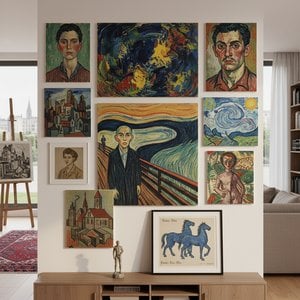
Top 10 Expressionistische Meesterwerken: Kunst die Échte Emotie Spreekt | ArtsDot.nl
Ontdek de 10 meest iconische Expressionistische meesterwerken! Van Munch's 'De Schreeuw' tot Kandinsky's abstractie. Leer over de kunstenaars, technieken & emoties achter deze beweging. Museumkwaliteit reproducties op ArtsDot.com.

Egon Schiele: Expressionism, Anxiety & the Modern Condition – A Comprehensive Exploration
Explore the emotionally charged world of Egon Schiele (1890-1918). Discover his Expressionist masterpieces, psychological themes, and lasting impact on modern art. A comprehensive guide for collectors & enthusiasts.

Verdant Visions: Exploring the Symbolism & Aesthetic Impact of Green in Art History
Explore the rich history & symbolism of green in art! Discover iconic paintings, techniques, and how to bring verdant harmony into your home with ArtsDot's expert guide.

Top 10 Meesterwerken gedomineerd door 'Chrome Groen': Kunst voor uw interieur
Ontdek de top 10 beroemde schilderijen gedomineerd door 'Chrome Groen'! Van Monet tot Van Gogh, reis mee door kunstgeschiedenis en bewonder meesterwerken. Vind uw perfecte reproductie op ArtsDot.com.


