


Het werk volgt uw keuzes: , .
Beschrijving verzamelobject
Edward Hopper’s ‘Sun in an Empty Room’ captures poignant solitude with masterful light & shadow—a quintessential depiction of modern American life, exploring isolation and quiet contemplation.
 Lees meer
Biografie kunstenaar
Meester van het Amerikaans realisme, hij verving eenzaamheid in Nighthawks. Ontdek zijn iconische werken en het licht en schaduw vandaag nog.
Handgemaakte olieverfreproductie
Met de hand geschilderd in olieverf op canvas in uw gewenste maat en lijst, op bestelling gemaakt door onze kunstenaars. ( Schakel over naar print Schakel over naar digitale afbeeldingen)
Dit kunstwerk is auteursrechtelijk beschermd
De kunstwerken die op deze pagina worden weergegeven, zijn beschermd door de auteursrechtwetgeving, wat betekent dat het ons wettelijk niet is toegestaan om identieke reproducties te maken of te verkopen. Deze bescherming wordt gehandhaafd onder internationale overeenkomsten zoals de Conventie van Bern en door nationale wetgeving, waaronder de bepalingen van de Amerikaanse auteurswet - Titel 17. Alle rechten voorbehouden. Reproduceren of distribueren van afbeeldingen is niet toegestaan zonder uitdrukkelijke schriftelijke toestemming van WahooArt.com en de rechthebbenden.
Als een respectvol en legaal alternatief bieden wij op maat gemaakte, handgeschilderde kunstwerken aan die geïnspireerd zijn op het origineel. Onze bekwame en professionele kunstenaars bestuderen zorgvuldig de stijl, sfeer en artistieke essentie van het origineel om een nieuw, uniek werk te creëren dat dezelfde emotie oproept – terwijl het een op zichzelf staande, originele creatie blijft.
Deze methode voldoet volledig aan de auteursrechtwetgeving, omdat het niet gaat om het kopiëren of dupliceren van het beschermde kunstwerk. In plaats daarvan is er sprake van een creatieve herinterpretatie — een nieuw schilderij dat door het origineel wordt geïnspireerd, maar er niet identiek aan is.
Meer over dit schilderij
 Voorvertoning
 Verstuur
 Delen
Delen
 Details bekijken
 Gids
Gids

 Download
 Vergelijkbare items
 Röntgenonderzoek
 Diavoorstelling
 Vraag & antwoord
 Statistieken
Bestel uw schilderij in vier eenvoudige stappen
Neem de tijd. U kunt elk antwoord nog wijzigen; de prijs in uw besteloverzicht wordt direct aangepast aan elke keuze.
1 Stap één van de vier
Welke maat wilt u kiezen?
Deze formaten behouden de proporties van het originele schilderij. De tekening laat uw keuze zien op een muur, boven een bank van twee meter.
Of geef uw eigen afmetingen op
Kies uit onze vooraf ingestelde maten die overeenkomen met de originele verhoudingen van het kunstwerk.

Voer de breedte en hoogte in die u nodig heeft, passend bij uw lijst of uw muur. Omdat dit handgeschilderd is, kan de kunstenaar bij een afmeting met een andere beeldverhouding iets meer rondom het schilderij schilderen of juist iets meer weglaten — u kiest zelf. Wij sturen u een digitaal mockup ter goedkeuring voordat het schilderwerk begint. De afbeelding die op deze pagina wordt getoond, is niet het uiteindelijke resultaat — alleen de mockup geeft dit weer.
2 Stap twee van vier
Hoe moet het worden geleverd: gerold, opgespannen of ingelijst?
De onderstaande prijzen zijn voor de maat die u in stap één heeft gekozen.
Kies de randen van het canvas
Kies uw lijst

Wit €1

Vervagende randen €1

Doorlopende rand €1

P118B €10

P118H €10

P118W €10

P438Z €10

P508JH €12

P508YH €12

P805H €10

P805Z €10

P919BZ €10

P919G €10

P919XJ €10

P959ZH €10

P968JZ €12

W106C €8

W218G €10

W218JH €8

W218Y €10

W307PJ €10

W316G €10

W316PJ €8

W316Y €10

W398PJ €8

W4111J €10

W500HY €15

W500JH €15

W692G €12

W849H €8

W940BG €15

W953PJ €8

H24-GOLD €30

H24-SILVER €30

H36-GOLD €45

H36-SILVER €45
Ingelijst
Lijstrand: . Totale afmetingen inclusief lijst: .
3 Stap drie van vier
Wilt u dat er iets aan het schilderij wordt aangepast?
De meeste mensen antwoorden nee. Omdat elk schilderij met de hand wordt gemaakt, kan onze kunstenaar het ook voor u aanpassen.
Na de bestelling zal het team van ArtsDot.com per e-mail contact opnemen met de klant voor instructies en een mockup-voorbeeld verstrekken
4 Stap vier van vier
Enkele afwerkingsopties
Ze zijn allemaal optioneel. De reeds geselecteerde antwoorden brengen geen extra kosten met zich mee.
Wie is de kunstenaar?
Wereldwijde levering () binnen 3 tot 4 weken in plaats van de standaard 5 weken. (11 november). Zonder concessies aan de kwaliteit.
Een naambordje, zoals in een museum?
Details van de gegraveerde bronzen plaat
This elegant plaque features the artist's name and the title of the artwork, finely engraved for a timeless presentation.
It is made from bronze with a refined, elegant finish. The text is precisely laser-engraved for a sharp and permanent result. Measuring 9x2 cm, the plaque is compact yet easy to read. It's built to be durable and scratch-resistant, offering a professional, museum-quality look. Mounting is simple thanks to the included adhesive backing.
Details transparante acrylplaat
The plaque includes essential engraved details such as the artist's name, the title of the artwork, the date it was created, the type of media used-like oil on canvas or watercolor-a brief description of the piece, and a QR code that links to the complete artwork information.
It is crafted from clear acrylic, offering a sleek, modern appearance. The text is UV-engraved in black to ensure strong visual contrast. With a size of 10x15 cm, it ensures optimal readability. It comes equipped with two metal hooks for secure wall mounting. The plaque is designed to be weather-resistant, making it suitable for various environments, and it includes interactive features that work seamlessly with smartphone scanning.
Details zwarte acrylplaat
This elegant plaque includes engraved information such as the artist's name, the title of the artwork, the date it was created, the type of media used (like oil on canvas or watercolor), a short description of the artwork, and a QR code for quick access to more information.
The plaque itself is made from refined black acrylic with a premium finish. The text is laser-engraved in white for high contrast and readability. Its size is 10x15 cm, designed to be easy to read. It comes with two metal hooks for professional mounting. The design is sleek and fits any interior style. It is also weather-resistant and durable, with built-in digital integration for mobile compatibility.
Een beschermende vernis?
Wanneer heeft u het nodig?
✓ Controleren en bestellen
Uw schilderij, zoals u het heeft besteld

sun empty room
Druktechniek
Afmetingen reproductie
-

Geselecteerde topkunstenaars
Meer detail, verfijning en extra productietijd
-

Lijst voor reproductie
-
-
Voor kunstwerken of reproducties die aan één zijde groter zijn dan 105 cm (ongeveer 41 inch), wordt de lijst als een losse set verzonden. Deze methode garandeert een veilige levering en voorkomt schade tijdens het transport.
Professionele montage vereist - dit is geen doe-het-zelfproduct.
De set moet worden gemonteerd en het canvas moet worden gespannen door een ervaren professionele lijstenmaker, met gebruik van houtlijm (niet inbegrepen), een doekspanter en klemmen om de sponningen recht te houden terwijl de lijm droogt. Onjuiste montage of een ongelijkmatige spanning op het canvas kan het kunstwerk permanent beschadigen en wordt niet gedekt door onze garantie.
 Voor kunstwerken of reproducties die aan één zijde groter zijn dan 105 cm (ongeveer 41 inch), wordt de lijst als een losse set verzonden. Deze methode garandeert een veilige levering en voorkomt schade tijdens het transport.
Alle massief houten onderdelen zijn inbegrepen, nauwkeurig op maat gesneden voor montage.
Te monteren met de meegeleverde schroeven, plus houtlijm voor de hoekverbindingen, die niet wordt meegeleverd en door uw lijstenmaker moet worden aangeschaft.
Professioneel gereedschap is vereist en niet inbegrepen: een spanner voor canvas en klemmen om de latten recht te houden terwijl de lijm droogt.
Belangrijk:
De hoekverbindingen vereisen houtlijm, de latten moeten met lijmklemmen worden vastgehouden tot de lijm volledig is opgedroogd, en het spannen van het canvas op het samengestelde frame vereist een doekspanter. Geen van deze artikelen is inbegrepen in de set. Wij adviseren u om een ervaren professionele lijstenmaker te raadplegen voordat u deze maat bestelt.

Naamplaatje
-
-

Beschermende vernislaag
Glanzende vernis (versterkt de kleuren en biedt bescherming tegen licht en vocht)
-

Mijn kunstwerk aanpassen
Voorbeelden van aanpassingen: vervang het gezicht door een eigen foto; voeg een huisdier toe (bijv. vervang de kat door een hond); verwerk een verborgen boodschap in de achtergrond; wijzig het landschap of andere elementen op de achtergrond.
-

Spoedlevering
Wereldwijde levering () binnen 3 tot 4 weken in plaats van de standaard 5 weken. (11 november). Geen concessies aan de kwaliteit.
-
Spoedlevering
Wereldwijde levering naar binnen 5 weken. (18 november).
Inbegrepen
Eindtotaal
€ 235
De optie voor glas is alleen beschikbaar bij een formaat kleiner dan 110 cm.
Inbegrepen bij elke bestelling
- Gratis wereldwijde expressverzending
- Hoogwaardig linnen canvas
- Volledige verzendverzekering
- Garantie op terugbetaling van invoerrechten
- Garantie op exacte kleurweergave
- Retourbeleid van 100 dagen (alleen bij defecten)
- 100% Geld-terug-garantie
- Korting bij meerdere afnames


Edward Hopper’s Solitary Light: Unpacking “Sun in an Empty Room”
Edward Hopper's "Sun in an Empty Room," painted in 1963, isn’t merely a depiction of a vacant room; it’s a distilled essence of modern American isolation and the quiet contemplation that often underlies our daily lives. Created during his late period at his Cape Cod studio, this painting—a deceptively simple composition—holds within it layers of psychological depth and masterful use of light, solidifying its place as one of Hopper's most enduringly poignant works. It’s a scene stripped bare, yet brimming with unspoken narratives, inviting the viewer to project their own experiences onto its stark geometry.
Hopper, famously reticent about interpreting his art, often suggested that his paintings simultaneously held unintended, unconscious ideas alongside deliberate expressions of his personal vision. Critics and scholars have long debated the painting’s meaning, with interpretations ranging from a meditation on loneliness to a reflection on the transient nature of domesticity. However, at its core, “Sun in an Empty Room” speaks powerfully to the human condition—the feeling of being present yet detached, observing life without fully participating.
The Language of Light and Shadow
Hopper’s genius lay not just in his ability to capture a scene but in his manipulation of light. In “Sun in an Empty Room,” sunlight streams through a window on the right side of the room, casting long, dramatic shadows across the walls and floor. This isn't a warm, inviting illumination; it’s a cool, almost clinical light that emphasizes the emptiness and stillness of the space. The trapezoidal shape of the light itself is particularly striking—a geometric element within an otherwise realistic scene, subtly disrupting our perception and drawing attention to the painting’s formal structure.
Notice how Hopper uses shadow to define form. The shadows aren't simply dark patches; they are carefully rendered, creating a sense of volume and depth. This technique, combined with his precise observation of light and its effects, is characteristic of Hopper’s mature style—a deliberate rejection of Impressionistic brushwork in favor of a more controlled, almost photographic realism. The leaves visible through the window further contribute to this interplay of light and shadow, grounding the scene in a tangible reality while simultaneously hinting at an outside world beyond the room's confines.
A Room Full of Unspoken Stories
Despite its apparent simplicity, “Sun in an Empty Room” is rich with symbolic potential. The two doors—one visible, one implied—suggest possibilities and transitions, yet also reinforce the sense of isolation. The room itself feels like a stage set for a play that will never begin. There’s no furniture, no personal belongings, nothing to suggest the identity or history of its occupant. This deliberate lack of detail forces us to confront our own assumptions about what constitutes a “home” and what it means to be alone.
The painting's creation coincided with Hopper’s late period, a time when he was increasingly interested in exploring themes of solitude and the human condition. He had previously considered representing a scene with no observer—a radical concept at the time—and this idea clearly informed his approach to “Sun in an Empty Room.” The absence of a figure isn't simply a technical choice; it’s a profound statement about the nature of perception and the experience of being alone.
Reproductions & Interior Design Inspiration
ArtsDot offers meticulously crafted, hand-painted reproductions of “Sun in an Empty Room” that capture the essence of Hopper's masterpiece. Whether you’re an art collector seeking a piece of American history or an interior designer looking for a statement artwork to evoke a sense of quiet contemplation, our reproductions provide a stunning and authentic representation of this iconic painting.
The subtle gradations of light and shadow, the precise rendering of form, and the evocative atmosphere of “Sun in an Empty Room” are all faithfully reproduced in our high-quality prints. Consider how this piece could complement a minimalist interior space, or add a touch of melancholic beauty to a more traditional setting. Explore our range of sizes and framing options to find the perfect reproduction for your home or office – a timeless reminder of Hopper’s profound insights into the human experience.
Veelgestelde vragen
Hoe verzadigd is het kleurenpalet van "sun empty room"?
"sun empty room" door Edward Hopper heeft een Clear Color Presence verzadiging.
Hoe harmonieus is het kleurgebruik in "sun empty room" door Edward Hopper?
"sun empty room" door Edward Hopper vertoont een Unified Palette kleurharmonie.
Welke kleuren overheersen in "sun empty room" door Edward Hopper?
De kleuridentiteit van "sun empty room" door Edward Hopper: een Dark palet, gedomineerd door Espresso (#533e10).
Vergelijkbare kunstwerken


Edward Hopper
1931 - 1967, Verenigde Staten van Amerika
Biografie kunstenaar
De Stilte van het Amerikaanse Landschap
Edward Hopper werd geboren in Upper Nyack, Verenigde Staten van Amerika. Zijn vroege jaren werden doorgebracht met het observeren van de wereld met een onvermoeibare blik, een gewoonte die begon met kindertekeningen die met uiterste precisie gedateerd en gesigneerd waren. Hoewel zijn ouders een pragmatisch pad in de commerciële illustratie voorstelden, bleef zijn focus gericht op de schone kunsten. Hij studeerde aan de New York School of Art onder William Merritt Chase en Robert Henri. Deze jaren gaven hem de technische vaardigheid die nodig was om de wereld onverbloemd en eerlijk af te beelden. Hij zocht niet naar de vluchtige penseelstreken van de impressionisten die hij in Parijs ontmoette. In plaats daarvan ontwikkelde hij een manier van kijken die de stilte van een moment verkiest boven de beweging van een menigte.
Zijn werk concentreert zich vaak op het alledaagse. Hij keek naar huizen, diners, kantoren en hotelkamers. Hij stripte onnodige details weg om de onderliggende emotionele waarheid van een scène te vinden. In House by the Railroad (1925) onthult een eenvoudige compositie een gevoel van mysterie en isolement. Hij gebruikte licht en schaduw niet louter om een kamer te beschrijven, maar om een stemming te creëren. De precieze weergave van een schaduw op een muur of de manier waarop het licht een raam raakt, werd zijn methode om de psychologische staat van zijn onderwerpen te communiceren.
Licht en het Stedelijk Interieur
De manier waarop licht een ruimte binnendringt, is een centrale personage in zijn schilderijen. In Nighthawks (1942) snijdt het harde tl-licht van een nachtelijke diner door de duisternis van een verlaten stedelijke straat. De figuren binnen zijn fysiek dicht bij elkaar, maar lijken verloren in hun eigen gedachten, losgekoppeld van elkaar. Dit gevoel van anonimiteit in een drukke stad werd een terugkerend thema. Hij legde de spanning vast van het alleen zijn op een openbare plek, een gevoel dat resoneert in werken als Automat en Office in a Small City. Hij was gefascineerd door de manier waarop kunstlicht interageert met de natuurlijke duisternis van de nacht.
Zijn vrouw, Josephine Nivison Hopper, was een constante aanwezigheid. Zij was een medekunstenaar en diende vaak als zijn model. Haar aanwezigheid is voelbaar in de karakterisering van vele van zijn vrouwelijke figuren. Samen leefden zij een bescheiden leven en brachten vaak de zomers door in New England, wat een grote invloed had op de landschappen die hij schilderde. Zijn afbeeldingen van het Amerikaanse landschap, zowel landelijk als stedelijk, benadrukken vaak een zekere soberheid of leegte. Of het nu gaat om een tankstation langs de weg in Gas (1940) of een stille kamer in een hotel, het onderwerp is altijd de kruising tussen een fysieke plek en een private, innerlijke ervaring.
Een Erfenis van Observatie
De invloed van Hopper strekt zich uit tot in de visuele taal van film en literatuur. Zijn vermogen om een gevoel van psychologische spanning te creëren door middel van compositie is opgemerkt door velen die de manier bestuderen waarop verhalen door beelden worden verteld. Zijn schilderijen zijn te vinden in grote musea wereldwijd, in collecties zoals het Whitney Museum of American Art en het Museum of Fine Arts in Boston. Hij streefde niet naar grote historische epossen. Hij vond zijn onderwerp in de stille hoeken van het dagelijks leven, waarbij hij een eenvoudig raam of een voorbijganger transformeerde tot een studie van de menselijke conditie. Zijn werk blijft een studie van de stilte die tussen mensen bestaat.


Gerelateerde artikelen
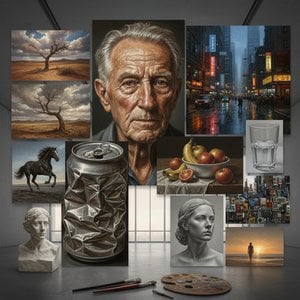
Top 10 Meesterwerken van het Hedendaags Realisme | ArtsDot.com
Ontdek de 10 meesterwerken van het Hedendaags Realisme! Leer over Lucian Freud, Gerhard Richter & Chuck Close. Vind museumkwaliteit kunst reproducties en inspiratie voor uw interieurdecoratie op ArtsDot.com.

Top 10 Meesterwerken van het Amerikaans Realisme | Kunst & Decoratie
Ontdek de 10 meest iconische meesterwerken van het Amerikaans Realisme! Van Edward Hopper tot Andrew Wyeth, leer over de kunstenaars en hun tijdloze schilderijen. Vind museumkwaliteit reproducties & decoratie op ArtsDot.com.

Edward Hopper's Top 25 Meesterwerken: Kunst, Verhalen & Sfeer voor je Interieur
Ontdek de top 25 meesterwerken van Edward Hopper! Duik in de wereld van Amerikaans realisme, iconische diners & verstilde hotelkamers. Kunst kopen? Vind hoogwaardige reproducties & interieurinspiratie op ArtsDot.com.