


The picture follows your choices: , .
Beschrijving verzamelobject
 Lees meer
Biografie kunstenaar
Ontdek Edvard Munch (1863-1944), de meester van angst en emotie! Bekijk 'The Scream' & zijn iconische kunstwerken vol melancholie, liefde & psychologische diepgang.
Handgemaakte olieverfreproductie
Met de hand geschilderd in olieverf op canvas in uw gewenste maat en lijst, op bestelling gemaakt door onze kunstenaars. ( Schakel over naar print Schakel over naar digitale afbeeldingen)
More about this painting
 Voorvertoning
 Verstuur
 Delen
Delen
 Details bekijken
 Gids
Gids

 Download
 Vergelijkbare items
 Röntgenonderzoek
 Diavoorstelling
 Q&A
Q&A Statistieken
Order your painting in four simple steps
Take your time. You can change any answer; the price in your order card follows each choice.
1 Step one of four
Which size would you like?
These sizes keep the proportions of the original painting. The drawing shows your choice on a wall, above a two-metre sofa.
Or give your own measurements
Kies uit onze vooraf ingestelde maten die overeenkomen met de originele verhoudingen van het kunstwerk.

Voer de breedte en hoogte in die u nodig heeft, passend bij uw lijst of uw muur. Omdat dit handgeschilderd is, kan de kunstenaar bij een afmeting met een andere beeldverhouding iets meer rondom het schilderij schilderen of juist iets meer weglaten — u kiest zelf. Wij sturen u een digitaal mockup ter goedkeuring voordat het schilderwerk begint. De afbeelding die op deze pagina wordt getoond, is niet het uiteindelijke resultaat — alleen de mockup geeft dit weer.
2 Step two of four
How should it be prepared: rolled, stretched or framed?
The prices below are for the size you chose in step one.
Choose the edges of the stretched canvas
Choose your frame

White €1

Blurside €1

Extended €1

P118B €10

P118H €10

P118W €10

P438Z €10

P508JH €12

P508YH €12

P805H €10

P805Z €10

P919BZ €10

P919G €10

P919XJ €10

P959ZH €10

P968JZ €12

W106C €8

W218G €10

W218JH €8

W218Y €10

W307PJ €10

W316G €10

W316PJ €8

W316Y €10

W398PJ €8

W4111J €10

W500HY €15

W500JH €15

W692G €12

W849H €8

W940BG €15

W953PJ €8

H24-GOLD €30

H24-SILVER €30

H36-GOLD €45

H36-SILVER €45
Ingelijst
Moulding: . Overall size with the frame: .
3 Step three of four
Would you like anything changed in the painting?
Most people answer no. Because each painting is made by hand, our artist can also adapt it for you.
After order, ArtsDot.com team will email client for instructions and provide a mockup preview
4 Step four of four
A few finishing options
All of them are optional. The answers already selected cost nothing extra.
Who paints it?
Wereldwijde levering () binnen 3 tot 4 weken in plaats van de standaard 5 weken. (31 oktober). Zonder concessies aan de kwaliteit.
A nameplate, as in a museum?
Details van de gegraveerde bronzen plaat
This elegant plaque features the artist's name and the title of the artwork, finely engraved for a timeless presentation.
It is made from bronze with a refined, elegant finish. The text is precisely laser-engraved for a sharp and permanent result. Measuring 9x2 cm, the plaque is compact yet easy to read. It's built to be durable and scratch-resistant, offering a professional, museum-quality look. Mounting is simple thanks to the included adhesive backing.
Details transparante acrylplaat
The plaque includes essential engraved details such as the artist's name, the title of the artwork, the date it was created, the type of media used-like oil on canvas or watercolor-a brief description of the piece, and a QR code that links to the complete artwork information.
It is crafted from clear acrylic, offering a sleek, modern appearance. The text is UV-engraved in black to ensure strong visual contrast. With a size of 10x15 cm, it ensures optimal readability. It comes equipped with two metal hooks for secure wall mounting. The plaque is designed to be weather-resistant, making it suitable for various environments, and it includes interactive features that work seamlessly with smartphone scanning.
Details zwarte acrylplaat
This elegant plaque includes engraved information such as the artist's name, the title of the artwork, the date it was created, the type of media used (like oil on canvas or watercolor), a short description of the artwork, and a QR code for quick access to more information.
The plaque itself is made from refined black acrylic with a premium finish. The text is laser-engraved in white for high contrast and readability. Its size is 10x15 cm, designed to be easy to read. It comes with two metal hooks for professional mounting. The design is sleek and fits any interior style. It is also weather-resistant and durable, with built-in digital integration for mobile compatibility.
A protective varnish?
When do you need it?
✓ Check and order
Your painting, as you ordered it

untitled (1392)
Druktechniek
Afmetingen reproductie
-

Geselecteerde topkunstenaars
Meer detail, verfijning en extra productietijd
-

Lijst voor reproductie
-
-
Voor kunstwerken of reproducties die aan één zijde groter zijn dan 105 cm (ongeveer 41 inch), wordt de lijst als een losse set verzonden. Deze methode garandeert een veilige levering en voorkomt schade tijdens het transport.
Professionele montage vereist - dit is geen doe-het-zelfproduct.
De set moet worden gemonteerd en het canvas moet worden gespannen door een ervaren professionele lijstenmaker, met gebruik van houtlijm (niet inbegrepen), een doekspanter en klemmen om de sponningen recht te houden terwijl de lijm droogt. Onjuiste montage of een ongelijkmatige spanning op het canvas kan het kunstwerk permanent beschadigen en wordt niet gedekt door onze garantie.
 Voor kunstwerken of reproducties die aan één zijde groter zijn dan 105 cm (ongeveer 41 inch), wordt de lijst als een losse set verzonden. Deze methode garandeert een veilige levering en voorkomt schade tijdens het transport.
Alle massief houten onderdelen zijn inbegrepen, nauwkeurig op maat gesneden voor montage.
Te monteren met de meegeleverde schroeven, plus houtlijm voor de hoekverbindingen, die niet wordt meegeleverd en door uw lijstenmaker moet worden aangeschaft.
Professioneel gereedschap is vereist en niet inbegrepen: een spanner voor canvas en klemmen om de latten recht te houden terwijl de lijm droogt.
Belangrijk:
De hoekverbindingen vereisen houtlijm, de latten moeten met lijmklemmen worden vastgehouden tot de lijm volledig is opgedroogd, en het spannen van het canvas op het samengestelde frame vereist een doekspanter. Geen van deze artikelen is inbegrepen in de set. Wij adviseren u om een ervaren professionele lijstenmaker te raadplegen voordat u deze maat bestelt.

Naamplaatje
-
-

Beschermende vernislaag
Glanzende vernis (versterkt de kleuren en biedt bescherming tegen licht en vocht)
-

Mijn kunstwerk aanpassen
Voorbeelden van aanpassingen: vervang het gezicht door een eigen foto; voeg een huisdier toe (bijv. vervang de kat door een hond); verwerk een verborgen boodschap in de achtergrond; wijzig het landschap of andere elementen op de achtergrond.
-

Spoedlevering
Wereldwijde levering () binnen 3 tot 4 weken in plaats van de standaard 5 weken. (31 oktober). Geen concessies aan de kwaliteit.
-
Spoedlevering
Wereldwijde levering naar binnen 5 weken. (7 november).
Inbegrepen
Eindtotaal
€ 234
De optie voor glas is alleen beschikbaar bij een formaat kleiner dan 110 cm.
Included with every order
- Gratis wereldwijde expressverzending
- Hoogwaardig linnen canvas
- Volledige verzendverzekering
- Garantie op terugbetaling van invoerrechten
- Garantie op exacte kleurweergave
- Retourbeleid van 100 dagen (alleen bij defecten)
- 100% Geld-terug-garantie
- Korting bij meerdere afnames


A Portrait of Unease: Decoding Edvard Munch’s Untitled (1392)
The painting, tentatively titled “Untitled (1392),” presents a striking depiction of a woman bathed in muted hues—primarily dark browns and blues—against a backdrop that whispers of impending twilight. Captured by Edvard Munch, arguably the father of Expressionism, this artwork transcends mere representation; it delves into the depths of psychological emotion, mirroring the artist’s own turbulent inner life and resonating powerfully with viewers today. The image itself depicts a woman seated calmly, gazing directly at the viewer—a posture that immediately establishes an unsettling intimacy, inviting contemplation on vulnerability and unspoken anxieties. Her dark dress contrasts sharply with the pale skin tone of her face, emphasizing her presence as a focal point amidst the somber surroundings.- Style: Munch’s signature Expressionist style is evident in every brushstroke. Rejecting Impressionistic objectivity, he prioritized conveying inner feelings rather than capturing external appearances. This approach aligns perfectly with the burgeoning anxieties of the early 20th century – a period marked by societal upheaval and personal crises.
- Technique: Munch employed oil paints on canvas, utilizing a layering technique that builds up texture and depth. The artist’s deliberate blending creates an atmospheric haze, enhancing the sense of isolation and melancholy inherent in the scene. Notice particularly how he captures the subtle nuances of light—a single source emanating from above—which casts elongated shadows and contributes to the painting's dramatic mood.
Veelgestelde vragen
Wat is de luminantie van "untitled (1392)" door Edvard Munch?
"untitled (1392)" door Edvard Munch heeft een luminantie van Dark. Luminantie beschrijft hoeveel licht de kleuren lijken te reflecteren.
Hoe intens zijn de kleuren in "untitled (1392)" door Edvard Munch?
De kleurintensiteit van "untitled (1392)" is Monochromatic. Intensiteit geeft aan hoe krachtig de kleuren overkomen.
Welke afdrukinstellingen worden aanbevolen voor "untitled (1392)" door Edvard Munch?
Voor een afdruk van "untitled (1392)" door Edvard Munch wordt een formaat van Large aanbevolen in Portrait oriëntatie.
Vergelijkbare kunstwerken


Edvard Munch
1863 - 1944, Noorwegen
Biografie kunstenaar
Een Leven in Schaduw: De Wereld van Edvard Munch
Edvard Munch, geboren in 1863 te Ådalsbruk in Noorwegen, was een kunstenaar wiens werk synoniem werd met de angsten en emotionele onrust van het moderne tijdperk. Zijn leven, diep getekend door verlies en een allesdoordringende melancholie, vormde de bron van zijn expressieve kunst. Al vroeg in zijn jeugd, overschaduwd door de vroege dood van zijn moeder en zus – beiden ten prooi gevallen aan tuberculose – ontwikkelde Munch een spookachtige preoccupatie met sterfelijkheid, ziekte en de fragiliteit van het menselijk bestaan. Deze ervaringen waren niet slechts biografische details; ze werden de kern van zijn artistieke visie, die een onophoudelijke verkenning van het innerlijke landschap van angst, verdriet en hunkering aanwakkerde. De strenge religieuze overtuigingen van zijn vader en zijn eigen worstelingen met psychische aandoeningen droegen verder bij aan een gevoel van dreiging dat Munch’s wereld doordrong, waardoor niet alleen zijn persoonlijke leven maar ook de symbolische taal van zijn schilderijen werd gevormd. Hij portretteerde geen scènes; hij externaliseerde een interne staat en vertaalde psychologische nood in visuele vorm.
De Ontstaansgeschiedenis van Expressie: Invloeden en Artistieke Ontwikkeling
Munch’s artistieke reis begon met formele training aan de Koninklijke School voor Kunst en Design in Kristiania (Oslo), maar het was zijn ontmoeting met boheemse kringen en de nihilistische filosofie van Hans Jæger die zijn creatieve vuur echt aanwakkerde. Jæger moedigde Munch aan om conventionele academische stijlen te verlaten en zich in plaats daarvan onder te dompelen in de diepten van zijn eigen subjectieve ervaring, een concept dat hij “zielsschilderen” noemde. Deze cruciale verschuiving markeerde het begin van Munch’s kenmerkende stijl – gekenmerkt door rauwe emotie, vervormde vormen en een afwijzing van naturalistische weergave. Zijn reizen naar Parijs in de jaren 1890 brachten hem in contact met de opkomende post-impressionistische beweging, waar hij invloeden absorbeerde van kunstenaars als Paul Gauguin, Vincent van Gogh en Henri de Toulouse-Lautrec. Het gedurfde kleurgebruik, expressieve penseelstreken en psychologische intensiteit van deze meesters resoneerden diep met Munch’s eigen artistieke neigingen. Hij imiteerde hun technieken niet; hij synthetiseerde ze tot iets unieks – een visuele taal die in staat was om de meest diepe en verontrustende menselijke emoties over te brengen. Zijn tijd in Berlijn bleek ook cruciaal, waardoor hij in contact kwam met toneelschrijver August Strindberg, wiens verkenning van psychologische thema’s Munch’s artistieke onderzoek verder aanwakkerde.
Iconische Visioenen: Belangrijke Werken en Hun Symbolische Betekenis
Munch’s oeuvre wordt bevolkt door beelden die diep in het collectieve bewustzijn zijn gegrift. De Schreeuw, misschien wel zijn meest iconische werk, overstijgt zijn status als schilderij om een universeel symbool van existentieel angst te worden. Het wervelende, vurige landschap en het contornerende gezicht van de figuur belichamen een oergevoel tegen de onverschilligheid van het universum. Madonna, een controversieel en diep persoonlijk stuk, onderzoekt thema’s als seksualiteit, moederschap en sterfelijkheid met verontrustende openhartigheid. Terugkerende motieven zoals Het Zieke Kind – geïnspireerd door het verlies van zijn zus Sophie – dienen als ontroerende herinneringen aan Munch’s jeugdtrauma en de alomtegenwoordige schaduw van de dood. Melancholie I & II, krachtige afbeeldingen van diepe droefheid en isolatie, onthullen een kwetsbaarheid die zowel persoonlijk als universeel herkenbaar is. Deze werken zijn niet simpelweg representaties van de externe realiteit; ze zijn vensters naar de ziel van de kunstenaar, die kijkers een compromisloze blik bieden op de donkerste hoeken van het menselijk psyche. Munch streefde er niet naar om mooie beelden te creëren; hij zocht naar waarheid – zelfs als die waarheid pijnlijk en verontrustend was.
Een Blijvende Erfenis: Historische Betekenis en Voortdurende Invloed
Edvard Munch’s bijdrage aan de moderne kunst is onmeetbaar. Hij staat als een sleutelfiguur in de ontwikkeling van het expressionisme, die baanbaande weg voor kunstenaars die subjectieve emotie boven objectieve weergave stelden. Zijn compromisloze verkenning van universele menselijke ervaringen – liefde, verlies, angst en dood – blijft tot op de dag van vandaag resoneren met publiek, waardoor zijn plaats als een van de meest invloedrijke en duurzame figuren in de kunstgeschiedenis wordt verstevigd. Zijn werk heeft generaties kunstenaars diepgaand beïnvloed, bewegingen zoals het Duitse expressionisme en daarbuiten beïnvloedend. Hij durfde de donkerdere aspecten van de menselijke conditie te confronteren, waarbij hij conventionele opvattingen over schoonheid en artistieke representatie uitdaagde. Zelfs na het bereiken van roem en erkenning – culminerend in de oprichting van het Munch Museum in Oslo – bleef zijn persoonlijke leven turbulent, gekenmerkt door periodes van psychische instabiliteit en isolatie. Toch bleef hij creëren, waardoor een oeuvre achterbleef dat blijft provoceren, uitdagen en inspireren. Munch’s erfenis gaat niet alleen over de schilderijen zelf; het gaat om de moed om de complexiteit van het menselijk bestaan te confronteren en die ervaringen in kunst te vertalen die spreken tot de diepste delen van ons wezen.


Gerelateerde artikelen
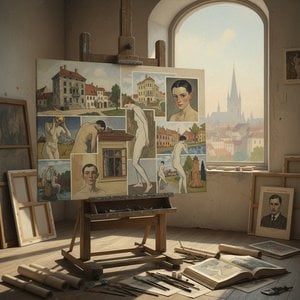
Egon Schiele's Top 25 Meesterwerken: Kunstprints voor een Unieke Woonstijl
Ontdek de 25 meest iconische werken van Egon Schiele! Duik diep in zijn expressionistische wereld vol intense portretten en emotionele kracht. Vind museumkwaliteit reproducties & unieke wanddecoratie op ArtsDot.com. Exploreer de collectie online!

Top 10 Expressionistische Meesterwerken: Kunst die Échte Emotie Spreekt | ArtsDot.nl
Ontdek de 10 meest iconische Expressionistische meesterwerken! Van Munch's 'De Schreeuw' tot Kandinsky's abstractie. Leer over de kunstenaars, technieken & emoties achter deze beweging. Museumkwaliteit reproducties op ArtsDot.com.

Unveiling Inner Worlds: Exploring Psychological Depth in 20th & 21st Century Art
Explore the profound psychological themes within 20th & 21st-century art. Discover Expressionism, Surrealism & more – and learn how to collect impactful pieces with confidence. Expert insights for discerning collectors.