


 Bekijk op ware grootte
 Verstuur
 Delen
Delen
 Details bekijken
 Gids voor studentenkunstwerken

 Download
 Vergelijkbare items
 Röntgenonderzoek
 Diavoorstelling
 Statistieken
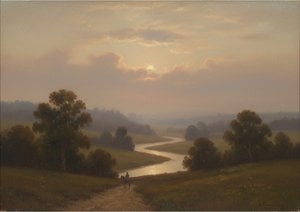
Moonlight
 Oil On Canvas
- WallArt
- Tonalist Landscape
 1887
1887 36.0 x 56.0 cm
 Metropolitan Museum of Art
 Lees meer
Giclée / Kunstafdrukken
Giclée- of canvasafdruk van museumkwaliteit met een snelle productie en flexibele afwerkingsmogelijkheden. ( Koop handgeschilderd kunstwerk Schakel over naar digitale afbeeldingen)




P118B €10

P118H €10

P118W €10

P438Z €10

P508JH €12

P508YH €12

P805H €10

P805Z €10

P919BZ €10

P919G €10

P919XJ €10

P959ZH €10

P968JZ €12

W106C €8

W218G €10

W218JH €8

W218Y €10

W307PJ €10

W316G €10

W316PJ €8

W316Y €10

W398PJ €8

W4111J €10

W500HY €15

W500JH €15

W692G €12

W849H €8

W940BG €15

W953PJ €8




Kies uit onze vooraf ingestelde maten die overeenkomen met de originele verhoudingen van het kunstwerk.

Voer de breedte en de hoogte in die u nodig heeft, passend bij uw lijst of uw muur. Een afdruk kan alleen worden ingekort, nooit groter worden gemaakt dan het origineel, waardoor een formaat met een andere verhouding een deel van de afbeelding verliest. Wij sturen u een digitaal mockup ter goedkeuring voordat we iets drukken. De afbeelding op deze pagina toont niet de werkelijke uitsnede — dit is alleen te zien op het mockup.
Wereldwijde levering () binnen 2 weken in plaats van de standaard 4/5 weken. (23 oktober)

Gratis wereldwijde expressverzending

Hoogwaardig linnen canvas

Volledige verzendverzekering

Garantie op terugbetaling van invoerrechten

Garantie op exacte kleurweergave

Retourbeleid van 100 dagen (alleen bij defecten)

100% Geld-terug-garantie

Korting bij meerdere afnames
 De optie voor glas is alleen beschikbaar bij een formaat kleiner dan 110 cm.

Moonlight
Giclée / Kunstafdrukken
Formaat reproductie
-


Totaalprijs
€ 55
Moonlight: A Study in Tranquil Luminosity
Dwight William Tryon’s “Moonlight,” painted in 1887, isn't merely a depiction of a rural landscape; it’s an immersion into a profound sense of quietude and the evocative power of light. Born in Hartford, Connecticut, during a period when American art was grappling with its own identity, Tryon emerged from a childhood deeply rooted in the rhythms of rural life – a formative experience that would profoundly shape his artistic vision. He eschewed the prevailing trends of the time, choosing instead to embrace the principles of tonalism, a style characterized by subdued colors and atmospheric effects, prioritizing mood and emotion over precise representation. This decision led him away from the bright palettes and detailed renderings favored by many of his contemporaries, establishing “Moonlight” as a cornerstone of his distinctive oeuvre. The painting captures a serene nighttime scene – rolling hills bathed in the soft glow of the moon, punctuated by scattered trees and hinting at a distant farmhouse nestled within the landscape. It’s a scene that invites contemplation, a moment suspended between darkness and light, reality and dream.The Language of Tone: Technique and Composition
Tryon's mastery lies not in meticulous detail but in his skillful manipulation of tone – the subtle variations in value that create depth, form, and atmosphere. He achieves this through loose, expressive brushstrokes, layering washes of gray and white to build up the forms of the hills and trees. Notice how the darker tones recede into the distance, creating a convincing illusion of space and atmospheric perspective. The composition is deliberately horizontal, emphasizing the breadth of the landscape and drawing the eye across the scene. A carefully considered break in the treeline directs the viewer’s gaze towards the luminous center, where the moon hangs suspended in the sky. This strategic arrangement guides the viewer's eye through the painting, fostering a sense of peaceful exploration. The use of impasto – thick application of paint – adds textural interest to the foreground, grounding the scene and anchoring it within the viewer’s perception.Symbolism and the Nocturne
The symbolism embedded within “Moonlight” is rich and layered. Moonlight itself has long been associated with mystery, introspection, and tranquility—qualities Tryon expertly captures in this work. The muted palette reinforces these associations, creating a mood of quiet contemplation. The distant farmhouse suggests a sense of rural simplicity and connection to the land, while the scattered trees evoke a feeling of solitude and isolation. The painting’s overall effect is one of profound stillness – a moment frozen in time, inviting the viewer to step into its serene embrace. It's not simply a representation of a landscape; it’s an evocation of a state of being. The choice of a nighttime scene further amplifies this symbolism, suggesting a realm beyond the everyday, where thoughts and emotions can freely roam.Historical Context: Tonalism and American Identity
“Moonlight” emerged during a pivotal moment in American art history – the rise of tonalism in the late 19th century. Influenced by the Barbizon School painters of France, American tonalists sought to capture the essence of nature through subtle color gradations and atmospheric effects, rejecting the academic emphasis on realism and detailed representation. Tryon’s work exemplifies this movement perfectly, demonstrating a deep understanding of light and shadow and a commitment to expressing mood and emotion rather than simply depicting visual reality. His decision to focus on American landscapes—particularly those imbued with the quiet beauty of rural life—contributed to the development of a distinctly American artistic voice. The painting reflects a desire to capture the spirit of the nation, rooted in its connection to the land and its appreciation for simple pleasures.A Legacy of Tranquility: Reproductions and Interior Design
Today, “Moonlight” stands as a testament to Tryon’s artistic vision—a timeless masterpiece that continues to resonate with viewers across generations. High-quality reproductions capture the painting's subtle nuances and atmospheric depth, making it an ideal addition to any home or office space. The painting’s calming palette and evocative imagery create a sense of serenity and tranquility, transforming any room into a haven of peace. Consider incorporating “Moonlight” into your interior design scheme—perhaps above a fireplace or in a study—to infuse your surroundings with its quiet beauty and timeless appeal. Its enduring power lies not just in its aesthetic qualities but also in its ability to transport the viewer to a place of profound stillness and contemplation.Vragen & Antwoorden
Welke onderliggende kleur loopt er door "Moonlight" door Dwight William Tryon?
Een Green to Violet Spectrum tint loopt door "Moonlight" door Dwight William Tryon.
Hoe verbindt "Moonlight" door Dwight William Tryon Tonalist Landscape met het geboorteland van de kunstenaar?
Het Tonalist Landscape-werk "Moonlight" werd gemaakt door een kunstenaar die werd geboren in Verenigde Staten van Amerika.
Waar kan ik het originele werk "Moonlight" door Dwight William Tryon bewonderen?
"Moonlight" door Dwight William Tryon is te zien in Metropolitan Museum of Art, New York, United States of America. De vermelding van het museum heeft betrekking op het originele werk, niet op reproducties.
Gerelateerde kunstwerken


Biografie van de kunstenaar
Early Life and Artistic Beginnings
Dwight William Tryon’s story begins in the quiet beauty of Hartford, Connecticut, in 1849. Born to Anson Tryon, a builder and contractor, and Delia Roberts Tryon, his early life was shaped by both the practicalities of family business and the profound influence of nature. A poignant event marked his childhood – the untimely death of his father, an experience that instilled within him a deep sense of loss and perhaps, a heightened appreciation for the transient beauty of the world. Consequently, he spent much of his formative years on his grandparents’ farm in East Hartford, immersing himself in the rhythms of rural life, observing the changing seasons, and developing a keen eye for detail. This connection to the land would become the bedrock of his artistic vision, informing every brushstroke and shaping his distinctive style. Initially, Tryon's artistic pursuits were largely self-directed. He discovered a passion for drawing while working as a clerk in a local bookstore, where he eagerly devoured instructional manuals and honed his skills through diligent practice. It was here that he began to translate the landscapes surrounding him onto paper – the weathered barns, the winding riverbanks, and the ever-changing sky. His early works were characterized by a straightforward realism, capturing the essence of everyday scenes with remarkable accuracy. A pivotal moment arrived in 1870 when he sold his first painting, marking the beginning of his journey as an artist. Subsequent local exhibitions garnered attention, hinting at a talent that was poised to blossom into something truly exceptional. In 1873, he achieved a significant milestone by gaining acceptance into the prestigious National Academy of Design in New York City, providing him with formal training and access to a wider artistic community.European Influences and the Shaping of a Style
Driven by an ambition to refine his technique and broaden his artistic horizons, Tryon embarked on a transformative journey to Europe in 1876. He sought out instruction from some of the most influential artists of the time, immersing himself in the vibrant artistic currents flowing through France. He studied under Jacquesson de la Chevreuse at the École des Beaux-Arts in Paris, absorbing the principles of academic painting and learning to master the technical skills required for creating compelling compositions. However, Tryon’s artistic path soon diverged from the rigid conventions of traditional art academies. He actively sought guidance from luminaries like Charles-François Daubigny, Henri Harpignies, and Jean Baptiste-Antoine Guillemet, absorbing their techniques and philosophies. Initially, Tryon's style leaned towards Luminism – a movement characterized by its emphasis on atmospheric effects, the subtle interplay of light and shadow, and the creation of an ethereal quality in his paintings. Yet, he soon found himself drawn to the principles of the Barbizon School—a revolutionary movement that prioritized direct observation of nature, eschewed idealized forms, and favored a more subdued palette. The Barbizon artists sought to capture the essence of the French countryside with honesty and immediacy, rejecting the grand scale and theatricality of earlier artistic traditions. Surrounded by the burgeoning Impressionist movement in France – with its focus on capturing fleeting moments of light and color – Tryon remained steadfastly committed to the Barbizon aesthetic, finding greater resonance in its contemplative mood and realistic depiction of the natural world. The influence of James McNeill Whistler was particularly profound; his tonalist style—emphasizing harmonious arrangements of color and subtle gradations of tone—left an indelible mark on Tryon’s artistic development.Mature Style and Atmospheric Landscapes
By the late 1880s, Dwight William Tryon had fully realized his iconic style – a signature approach that would define his legacy as a leading American Tonalist. His canvases often feature a distinctive composition: a grouping or broken row of trees positioned in the middle distance, acting as a visual bridge between a luminous sky above and a foreground marsh or pasture below. These scenes are frequently imbued with autumnal hues, evoking a sense of tranquility and melancholy. Tryon’s masterful use of color—often muted and delicate—created an atmosphere of quiet contemplation, inviting viewers to lose themselves in the beauty of the natural world. Beyond landscapes, Tryon also excelled at seascapes, utilizing pastel to capture the expansive beauty of water, sky, and beach under varying weather conditions. His paintings were not merely representations of scenes; they were carefully constructed evocations of mood and atmosphere. *Salt-Marsh, December*, which garnered first prize at the Tennessee Centennial Exposition in 1897, stands as a prime example of this skill, showcasing his talent for capturing the serene beauty of the natural world.Patronage, Recognition, and Lasting Legacy
The trajectory of Tryon’s career was significantly enhanced by his relationship with Charles Lang Freer, a discerning collector who became his most important patron. Freer acquired dozens of Tryon's works and even collaborated with the artist on interior design projects for his Detroit home. This generous support allowed Tryon to fully dedicate himself to his art, and many of these paintings now reside in the esteemed Freer Gallery of Art as part of the Smithsonian Institution. Further recognition came in 1908 when he received the Carnegie Prize at the Carnegie Exhibition, solidifying his position among the leading artists of his time. Throughout his career, Tryon was an active member of several prestigious art organizations, including the Society of American Artists, the American Watercolor Society, and the National Institute of Arts and Letters (now the American Academy of Arts and Letters). In 1887 he established a summer home in South Dartmouth, Massachusetts, which served as his primary residence for the remainder of his life. He also dedicated himself to education, teaching painting and drawing at Smith College from 1886 to 1923, where he founded the Tryon Gallery of Art. Dwight William Tryon passed away in 1925, leaving behind a rich artistic legacy defined by his contribution to American Tonalism and his exceptional ability to capture atmospheric landscapes and seascapes with delicate color and refined feeling. His works continue to be celebrated and are held in prominent collections such as the Smithsonian American Art Museum and the Freer Gallery of Art, ensuring that his vision endures for generations to come.
Dwight William Tryon
1849 - 1925 , Verenigde Staten van Amerika
Snelle feiten
- Artistic Movement Or Style: Tonalisme, Barbizon
- Artists Or Movements Influenced By This Artist: ['Impressionisme']
- Artists Who Influenced This Artist:
- Daubigny
- Whistler
- Harpignies
- Date Of Birth: 13 aug 1849
- Date Of Death: 1 juli 1925
- Full Name: Dwight William Tryon
- Nationality: Amerikaans
- Notable Artworks:
- Salt-Marsh
- Spring
- Haystacks
- Place Of Birth: Hartford, USA
Gerelateerde artikelen

John Constable's Top 25 Meesterwerken: Landschappen die de Ziel Raaken | ArtsDot
Ontdek de 25 mooiste schilderijen van John Constable, meester van de Engelse Romantiek. Van idyllische landschappen tot iconische Hay Wain – bewonder zijn techniek en emotie. Museumkwaliteit reproducties & decoratie op ArtsDot.com.

Grant Wood & American Regionalism: Identity, Myth & the Rural Landscape
Explore the world of Grant Wood & American Regionalism with ArtsDot. Discover the symbolism behind 'American Gothic', recurring themes, and the movement's lasting impact on art history. High-quality reproductions available.

Evocations of Place: A Historical Journey Through Landscape Art
Explore the rich history of landscape art with ArtsDot. Discover renowned artists, movements like Impressionism & Romanticism, and expert guidance for collecting timeless pieces. Find your perfect serene escape today!
Atmospheric Visions: Exploring Tonalism in American Painting
Explore the captivating world of American Tonalism! Discover its history, key artists like Whistler & Inness, techniques, and lasting influence on art. Expert insights for collectors & enthusiasts.

Cultivating Visions: A Historical Journey Through Rural Landscapes in Art
Explore the rich history of rural landscape painting with ArtsDot. Discover Impressionist masterpieces, key artists & movements. Find your perfect serene artwork and bring nature's beauty home.