

 Verstuur
 Delen
Delen
 Details bekijken
 Gids
Gids

 Download
 Vergelijkbare items
 Diavoorstelling
 Vraag & antwoord
 Statistieken
Prophet Jeremiah


 Lees meer
Giclée / Kunstafdrukken
Giclée- of canvasafdruk van museumkwaliteit met een snelle productie en flexibele afwerkingsmogelijkheden. ( Bestel handgeschilderde reproductie Schakel over naar digitale afbeeldingen)




































Kies uit onze vooraf ingestelde maten die overeenkomen met de originele verhoudingen van het kunstwerk.

Voer de gewenste breedte en hoogte in, passend bij uw lijst of muur. Een afdruk kan alleen worden ingekort en nooit groter worden gemaakt dan het origineel; een formaat met andere verhoudingen zal daarom een deel van de afbeelding verliezen. Wij sturen u een digitaal mockup ter goedkeuring voordat we tot drukwerk overgaan. De afbeelding op deze pagina toont niet de werkelijke uitsnede — dit is alleen te zien op het mockup.
Wereldwijde levering () binnen 2 weken in plaats van de standaard 4/5 weken. (9 november)

Gratis wereldwijde expressverzending

Hoogwaardig linnen canvas

Volledige verzendverzekering

Garantie op terugbetaling van invoerrechten

Garantie op exacte kleurweergave

Retourbeleid van 100 dagen (alleen bij defecten)

100% Geld-terug-garantie

Korting bij meerdere afnames
 De optie voor glas is alleen beschikbaar bij een formaat kleiner dan 110 cm.

Prophet Jeremiah
Giclée / Kunstafdrukken
Afmetingen reproductie
-


Eindtotaal
€ 56
The Weight of Prophecy: Contemplating Donatello's Jeremiah
To stand before Donatello’s Prophet Jeremiah is to encounter not merely carved stone, but the very weight of human contemplation. This marble masterpiece transports us into a moment suspended between divine revelation and profound personal sorrow. The figure commands attention through its palpable sense of introspection; his posture speaks volumes without uttering a single word. Donatello, a titan of the early Renaissance, masterfully captures the transition from classical idealism to raw, deeply felt human emotion. Observe the drapery—it does not simply hang; it seems to fall with the weary grace of someone who has borne too much truth. The interplay between the flowing, organic curves of Jeremiah’s robes and the rigid geometry of the surrounding architectural niche creates a visual tension that mirrors the struggle between divine mandate and mortal frailty.
Renaissance Naturalism and Emotional Depth
The genius of this work lies in its unflinching commitment to naturalism. Donatello eschews idealized perfection for something far more resonant: authentic feeling. Jeremiah’s downcast gaze, though captured in cold marble, suggests a soul burdened by foresight—the melancholy inherent in knowing what sorrow awaits humanity. This emotional resonance is characteristic of the Florentine Renaissance spirit, which sought to infuse classical forms with contemporary psychological depth. The artist was not content merely to replicate the human form; he aimed to excavate the inner life. For those who appreciate art that speaks directly to the complexities of the human condition, this sculpture offers an unparalleled study in pathos and dignity.
Materiality and Technique: Marble as Narrative
The choice of marble itself contributes profoundly to the artwork's narrative power. The photograph reveals a breathtaking study in tonal variation—a monochromatic symphony of grays that allow the subtle textures of the stone to become visible. One can almost feel the cool, slightly rough surface under one’s fingertips. Donatello’s technique here is nothing short of revolutionary; he carved not just outward from the block, but seemed to reveal the spirit trapped within it. The contrast between the polished smoothness suggested in some areas and the matte texture of the drapery folds demonstrates a virtuosity that speaks to decades of study in classical sculpture, yet always pushing beyond established boundaries.
A Touch for the Modern Collector
Bringing the solemnity of Jeremiah into a contemporary space is an act of curatorial poetry. Whether placed against a stark modern wall or nestled within richly paneled interiors, this piece anchors a room with intellectual gravity. It serves as a silent meditation point, inviting viewers to pause their hurried lives and consider themes of fate, wisdom, and endurance. Owning a reproduction of Prophet Jeremiah is acquiring more than just an object; it is adopting a conversation starter—a tangible link to the profound artistic awakening that defined the dawn of the Renaissance.
Veelgestelde vragen
Wat voor soort kunstwerk is "Prophet Jeremiah"?
In de catalogus is "Prophet Jeremiah" door Donatello geclassificeerd als Sculpture. Deze categorie helpt bij het vinden van vergelijkbare werken.
Op welke leeftijd maakte Donatello "Prophet Jeremiah"?
Donatello maakte "Prophet Jeremiah" op 37-jarige leeftijd. De kunstenaar werd geboren in 1386 en het werk dateert uit 1423.
Toont "Prophet Jeremiah" sterke licht-donkercontrasten?
Het contrastniveau van "Prophet Jeremiah" door Donatello is Statement.
Vergelijkbare kunstwerken


Biografie kunstenaar
Early Life and Artistic Beginnings
Donatello di Niccolò di Betto Bardi, universally known as Donatello, emerged from the bustling heart of Florence in 1386 – a city that would indelibly shape his artistic vision. His origins were modest; born into a family involved in wool trading, a profession that afforded them a respectable, though not opulent, place within Florentine society. While details about his early childhood remain somewhat elusive, it’s believed he received his initial training as an apprentice stonemason, absorbing the fundamental techniques of carving and shaping stone – skills crucial for any aspiring sculptor. This foundational period likely exposed him to the architectural grandeur of the Duomo (Florence Cathedral), a project that dominated Florentine life and provided countless opportunities for young artisans to hone their craft. Donatello’s early influences were deeply rooted in the prevailing Gothic style, yet he demonstrated an innate ability to transcend its limitations, hinting at the revolutionary approach that would define his mature work.The Influence of Ghiberti and the Dawn of a New Style
Around 1400, Donatello entered the workshop of Lorenzo Ghiberti, a master sculptor renowned for his intricate bronze doors destined for the Baptistery in Florence. This association proved pivotal to Donatello’s development. Ghiberti's style, characterized by its elegant lines and classical allusions, provided a crucial framework for Donatello’s early explorations. However, Donatello quickly distinguished himself through an unprecedented focus on human emotion and realism – a departure from the stylized figures prevalent in contemporary sculpture. He wasn’t merely replicating forms; he was striving to capture the essence of human experience, imbuing his creations with a palpable sense of life. This nascent desire for psychological depth would become a hallmark of his distinctive style. The period spent under Ghiberti also exposed Donatello to the principles of perspective and composition, laying the groundwork for his later innovations in spatial representation.Key Works and Revolutionary Techniques
Donatello’s artistic trajectory truly took flight with several groundbreaking works that cemented his reputation as a visionary artist. Perhaps most famously, his “David” (circa 1404-1407) stands as a watershed moment in sculpture history. Unlike previous depictions of the biblical hero, Donatello's David is not depicted as a triumphant warrior but rather as a youthful, vulnerable figure – a young man contemplating his destiny. This portrayal broke with centuries of tradition and established a new standard for nude male sculpture, demonstrating an unprecedented level of anatomical accuracy and psychological insight. His “Sacrifice of Isaac” (1423-1427), created for the Campanile of Santa Maria del Fiore, further showcased his mastery of relief carving, employing a technique known as *schiacciato* – essentially flattening the sculpted figures onto a shallow panel to create an illusion of depth. This innovative approach allowed him to achieve remarkable realism and dramatic intensity within a limited space. The “St. Louis of Toulouse” (1432-1438), a monumental bronze sculpture commissioned for the Medici family, exemplifies his ability to fuse classical ideals with Christian iconography, creating a figure that is both imposing and profoundly human.A Style Defined by Expressiveness and Classical Echoes
Donatello’s artistic style evolved through distinct phases, each reflecting his growing confidence and experimentation. Initially, his work was heavily influenced by the Gothic tradition, but he quickly moved towards a more expressive and dynamic approach. His figures are characterized by their powerful musculature, dramatic poses, and intense emotionality – qualities that set him apart from his contemporaries. Crucially, Donatello’s art was deeply informed by the rediscovery of classical antiquity. He meticulously studied ancient Roman sculptures, absorbing their principles of proportion, anatomy, and composition. However, he didn't simply imitate these models; instead, he skillfully integrated classical elements into his own unique style, creating a synthesis that is both innovative and profoundly resonant with the spirit of the Renaissance. His work wasn’t immediately embraced by all quarters – some critics found his innovations unsettling, while others questioned his adherence to traditional religious iconography. Yet, Donatello's bold vision ultimately prevailed, establishing him as one of the most influential sculptors in the history of Western art.Legacy and Enduring Influence
Donatello’s legacy extends far beyond his individual masterpieces. He profoundly shaped the course of Renaissance sculpture, inspiring generations of artists with his technical virtuosity, psychological insight, and unwavering commitment to realism. His emphasis on human emotion and anatomical accuracy paved the way for subsequent sculptors, including Michelangelo Buonarroti and Leonardo da Vinci. Donatello’s influence can be seen in countless works of art throughout Europe, from the grand monuments of Rome to the intimate devotional sculptures of Northern Europe. Even today, his sculptures continue to captivate viewers with their power, beauty, and enduring relevance. The Premi David di Donatello, awarded annually to celebrate excellence in Italian cinema, stand as a testament to his lasting impact on culture – a fitting tribute to the artist who dared to redefine the possibilities of sculpture.
Donatello
1386 - 1466 , Italië
Belangrijkste feiten
- Artistic Movement Or Style: Vroege Renaissance
- Artists Or Movements Influenced By This Artist: ['Italiaanse Renaissance']
- Artists Who Influenced This Artist: ['Romeinse beeldhouwers']
- Date Of Birth: c. 1386
- Date Of Death: 1466
- Full Name: Donato di Niccolò
- Nationality: Italiaans
- Notable Artworks:
- David
- St. Louis
- Sacrificie Isaac
- Place Of Birth: Florence, Italië
Gerelateerde artikelen

The Enduring Form: Exploring Themes & Techniques in Sculpture Across Historical Periods
Explore the rich history of sculpture from ancient masterpieces to contemporary innovations. Discover key techniques, influential artists & investment potential for discerning art collectors.

Top 10 Legendarische Bronzen Meesterwerken die de Kunst Veranderden | ArtsDot
Ontdek de 10 meest legendarische bronzen meesterwerken die de kunstgeschiedenis veranderden! Van Rodin tot Michelangelo, leer over techniek & betekenis. Museumkwaliteit reproducties voor uw interieur op ArtsDot.com. Exploreer de collectie online!

Top 10 Bronzen Beeldhouwwerken die de Kunst Voorgoed Veranderden | ArtsDot
Ontdek de 10 meest legendarische bronzen beeldhouwwerken die kunstgeschiedenis schreven! Van Rodin tot Michelangelo, leer over hun meesterwerken & technieken. Vind museumkwaliteit reproducties en inspiratie voor uw interieur op ArtsDot.com.

The Enduring Form: Sculpture Across History, Technique & Emotional Resonance
Explore the rich history of sculpture with ArtsDot. Discover key techniques, influential artists & investment potential for discerning collectors. Expert insights into valuing and collecting timeless masterpieces.
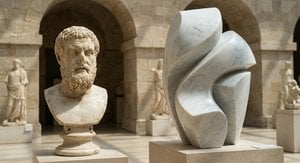
The Enduring Allure of Marble in Art History: From Classical Sculpture to Modern Abstraction
Explore the captivating history of marble sculpture from ancient Greece to modern art. Discover renowned artists like Canova & Michelangelo, carving techniques, and investment insights at ArtsDot.
