

- 30.0 x 26.0 cm


Het werk volgt uw keuzes: , .
Beschrijving verzamelobject
Explore 'The Christ Child' by Desiderio da Settignano – a stunning 1460 marble bust embodying Neoclassical elegance & youthful innocence. A rare glimpse into Renaissance sculpture.
 Lees meer
Biografie kunstenaar
Desiderio da Settignano (1430-1464) was een cruciale Renaissance-beeldhouwer, bekend om zijn prachtige marmeren reliëfs en bustes. Beïnvloed door Donatello & Rossellino, creëerde hij meesterwerken zoals het Marsuppini-graf.
Handgemaakte olieverfreproductie
Met de hand geschilderd in olieverf op canvas in uw gewenste maat en lijst, op bestelling gemaakt door onze kunstenaars. ( Schakel over naar print Schakel over naar digitale afbeeldingen)
Meer over dit schilderij
 Verstuur
 Delen
Delen
 Details bekijken
 Gids
Gids

 Download
 Vergelijkbare items
 Diavoorstelling
 Vraag & antwoord
 Statistieken
Bestel uw schilderij in vier eenvoudige stappen
Neem de tijd. U kunt elk antwoord nog wijzigen; de prijs in uw besteloverzicht wordt direct aangepast aan elke keuze.
1 Stap één van de vier
Welke maat wilt u kiezen?
Deze formaten behouden de proporties van het originele schilderij. De tekening laat uw keuze zien op een muur, boven een bank van twee meter.
Of geef uw eigen afmetingen op
Kies uit onze vooraf ingestelde maten die overeenkomen met de originele verhoudingen van het kunstwerk.

Voer de breedte en hoogte in die u nodig heeft, passend bij uw lijst of uw muur. Omdat dit handgeschilderd is, kan de kunstenaar bij een afmeting met een andere beeldverhouding iets meer rondom het schilderij schilderen of juist iets meer weglaten — u kiest zelf. Wij sturen u een digitaal mockup ter goedkeuring voordat het schilderwerk begint. De afbeelding die op deze pagina wordt getoond, is niet het uiteindelijke resultaat — alleen de mockup geeft dit weer.
2 Stap twee van vier
Hoe moet het worden geleverd: gerold, opgespannen of ingelijst?
De onderstaande prijzen zijn voor de maat die u in stap één heeft gekozen.
Kies de randen van het canvas
Kies uw lijst

Wit €1

Vervagende randen €1

Doorlopende rand €1

P118B €10

P118H €10

P118W €10

P438Z €10

P508JH €12

P508YH €12

P805H €10

P805Z €10

P919BZ €10

P919G €10

P919XJ €10

P959ZH €10

P968JZ €12

W106C €8

W218G €10

W218JH €8

W218Y €10

W307PJ €10

W316G €10

W316PJ €8

W316Y €10

W398PJ €8

W4111J €10

W500HY €15

W500JH €15

W692G €12

W849H €8

W940BG €15

W953PJ €8

H24-GOLD €30

H24-SILVER €30

H36-GOLD €45

H36-SILVER €45
Ingelijst
Lijstrand: . Totale afmetingen inclusief lijst: .
3 Stap drie van vier
Wilt u dat er iets aan het schilderij wordt aangepast?
De meeste mensen antwoorden nee. Omdat elk schilderij met de hand wordt gemaakt, kan onze kunstenaar het ook voor u aanpassen.
Na de bestelling zal het team van ArtsDot.com per e-mail contact opnemen met de klant voor instructies en een mockup-voorbeeld verstrekken
4 Stap vier van vier
Enkele afwerkingsopties
Ze zijn allemaal optioneel. De reeds geselecteerde antwoorden brengen geen extra kosten met zich mee.
Wie is de kunstenaar?
Wereldwijde levering () binnen 3 tot 4 weken in plaats van de standaard 5 weken. (4 november). Zonder concessies aan de kwaliteit.
Een naambordje, zoals in een museum?
Details van de gegraveerde bronzen plaat
This elegant plaque features the artist's name and the title of the artwork, finely engraved for a timeless presentation.
It is made from bronze with a refined, elegant finish. The text is precisely laser-engraved for a sharp and permanent result. Measuring 9x2 cm, the plaque is compact yet easy to read. It's built to be durable and scratch-resistant, offering a professional, museum-quality look. Mounting is simple thanks to the included adhesive backing.
Details transparante acrylplaat
The plaque includes essential engraved details such as the artist's name, the title of the artwork, the date it was created, the type of media used-like oil on canvas or watercolor-a brief description of the piece, and a QR code that links to the complete artwork information.
It is crafted from clear acrylic, offering a sleek, modern appearance. The text is UV-engraved in black to ensure strong visual contrast. With a size of 10x15 cm, it ensures optimal readability. It comes equipped with two metal hooks for secure wall mounting. The plaque is designed to be weather-resistant, making it suitable for various environments, and it includes interactive features that work seamlessly with smartphone scanning.
Details zwarte acrylplaat
This elegant plaque includes engraved information such as the artist's name, the title of the artwork, the date it was created, the type of media used (like oil on canvas or watercolor), a short description of the artwork, and a QR code for quick access to more information.
The plaque itself is made from refined black acrylic with a premium finish. The text is laser-engraved in white for high contrast and readability. Its size is 10x15 cm, designed to be easy to read. It comes with two metal hooks for professional mounting. The design is sleek and fits any interior style. It is also weather-resistant and durable, with built-in digital integration for mobile compatibility.
Een beschermende vernis?
Wanneer heeft u het nodig?
✓ Controleren en bestellen
Uw schilderij, zoals u het heeft besteld

The Christ Child (.)
Druktechniek
Afmetingen reproductie
-

Geselecteerde topkunstenaars
Meer detail, verfijning en extra productietijd
-

Lijst voor reproductie
-
-
Voor kunstwerken of reproducties die aan één zijde groter zijn dan 105 cm (ongeveer 41 inch), wordt de lijst als een losse set verzonden. Deze methode garandeert een veilige levering en voorkomt schade tijdens het transport.
Professionele montage vereist - dit is geen doe-het-zelfproduct.
De set moet worden gemonteerd en het canvas moet worden gespannen door een ervaren professionele lijstenmaker, met gebruik van houtlijm (niet inbegrepen), een doekspanter en klemmen om de sponningen recht te houden terwijl de lijm droogt. Onjuiste montage of een ongelijkmatige spanning op het canvas kan het kunstwerk permanent beschadigen en wordt niet gedekt door onze garantie.
 Voor kunstwerken of reproducties die aan één zijde groter zijn dan 105 cm (ongeveer 41 inch), wordt de lijst als een losse set verzonden. Deze methode garandeert een veilige levering en voorkomt schade tijdens het transport.
Alle massief houten onderdelen zijn inbegrepen, nauwkeurig op maat gesneden voor montage.
Te monteren met de meegeleverde schroeven, plus houtlijm voor de hoekverbindingen, die niet wordt meegeleverd en door uw lijstenmaker moet worden aangeschaft.
Professioneel gereedschap is vereist en niet inbegrepen: een spanner voor canvas en klemmen om de latten recht te houden terwijl de lijm droogt.
Belangrijk:
De hoekverbindingen vereisen houtlijm, de latten moeten met lijmklemmen worden vastgehouden tot de lijm volledig is opgedroogd, en het spannen van het canvas op het samengestelde frame vereist een doekspanter. Geen van deze artikelen is inbegrepen in de set. Wij adviseren u om een ervaren professionele lijstenmaker te raadplegen voordat u deze maat bestelt.

Naamplaatje
-
-

Beschermende vernislaag
Glanzende vernis (versterkt de kleuren en biedt bescherming tegen licht en vocht)
-

Mijn kunstwerk aanpassen
Voorbeelden van aanpassingen: vervang het gezicht door een eigen foto; voeg een huisdier toe (bijv. vervang de kat door een hond); verwerk een verborgen boodschap in de achtergrond; wijzig het landschap of andere elementen op de achtergrond.
-

Spoedlevering
Wereldwijde levering () binnen 3 tot 4 weken in plaats van de standaard 5 weken. (4 november). Geen concessies aan de kwaliteit.
-
Spoedlevering
Wereldwijde levering naar binnen 5 weken. (11 november).
Inbegrepen
Eindtotaal
€ 235
De optie voor glas is alleen beschikbaar bij een formaat kleiner dan 110 cm.
Inbegrepen bij elke bestelling
- Gratis wereldwijde expressverzending
- Hoogwaardig linnen canvas
- Volledige verzendverzekering
- Garantie op terugbetaling van invoerrechten
- Garantie op exacte kleurweergave
- Retourbeleid van 100 dagen (alleen bij defecten)
- 100% Geld-terug-garantie
- Korting bij meerdere afnames


A Marble Echo of Innocence: Desiderio da Settignano’s ‘The Christ Child’
Within the hushed reverence of a Florentine chapel, or perhaps now adorning a discerning collector's home, resides “The Christ Child” by Desiderio da Settignano – a sculpture that transcends mere representation to embody the very essence of nascent divinity. Crafted in the luminous embrace of white marble around 1460, this intimate portrait captures a moment suspended between earthly vulnerability and celestial grace. More than just a depiction of infancy, it’s a distillation of Neoclassical ideals, a testament to the burgeoning artistic spirit of Renaissance Florence, and an invitation to contemplate themes of purity, faith, and the profound beauty of childhood.
The sculpture's power lies not in dramatic gesture or elaborate detail, but rather in its quiet contemplation. The young boy’s head and upper torso are presented with a remarkable degree of realism – the smooth curve of his cheekbone, the delicate slope of his brow, the subtle suggestion of eyelashes all rendered with meticulous precision. Desiderio masterfully employs subtractive sculpting, patiently removing marble to reveal the form beneath, creating a surface that is both polished and subtly textured, hinting at the cool, tactile nature of the stone itself. The composition is strikingly frontal, drawing the viewer into an immediate and deeply personal connection with this miniature figure – a deliberate choice that emphasizes his vulnerability and innocence.
The Legacy of Rossellino: A Florentine Masterclass
To fully appreciate “The Christ Child,” it’s crucial to understand the artistic lineage from which it springs. Desiderio da Settignano was apprenticed to Bernardo and Antonio Rossellino, two giants of Florentine sculpture who were instrumental in shaping the direction of Renaissance art. The Rossellini workshop served as a crucible for innovation, blending classical influences with emerging humanist ideals. Desiderio’s style reflects this training – particularly his debt to Donatello, evident in his skillful use of low relief and his ability to imbue even seemingly simple forms with a sense of dynamism and life. However, Desiderio departs from his master's more dramatic tendencies, favoring a greater restraint and an almost meditative quality in his work.
The sculpture’s placement within the Oratory of San Francesco dei Vanchettoni offers further context. Originally intended to adorn a side chapel, it was part of a larger ensemble – alongside another bust depicting Saint John the Baptist – creating a harmonious dialogue between these two figures representing the beginning and end of Christ's earthly life. This deliberate pairing speaks to the broader theological themes at play: innocence versus experience, vulnerability versus strength, and the promise of redemption.
Symbolism in Stone: A Tapestry of Meaning
Beyond its technical brilliance, “The Christ Child” is rich with symbolic resonance. The choice of marble itself – a material prized for its purity and luminosity – underscores the sculpture’s spiritual significance. The youthful appearance of the figure evokes associations with innocence, vulnerability, and divine grace. The frontal pose invites viewers to contemplate the child's gaze, suggesting an openness to faith and a profound connection to the divine. Furthermore, the sculpture’s placement within a religious context elevates it beyond mere portraiture, transforming it into a powerful symbol of hope, salvation, and the enduring promise of Christian belief.
The stark contrast between the pale marble and the deep black background further amplifies the sculpture's impact. This dramatic juxtaposition isolates the figure, drawing attention to its delicate features and emphasizing its ethereal quality. It’s a masterful use of color and composition that speaks volumes about the artist’s skill and his understanding of how to evoke emotion through visual means.
A Timeless Masterpiece: Reproduction & Beyond
Reproductions of “The Christ Child” offer a remarkable opportunity to bring this exquisite work of art into homes and spaces around the world. Carefully crafted reproductions capture the sculpture’s nuanced details, texture, and luminous quality, allowing viewers to appreciate its beauty and symbolism even without possessing the original. Whether displayed as a centerpiece in a study or incorporated into a larger collection, this timeless masterpiece continues to inspire contemplation and evoke a sense of wonder.
Veelgestelde vragen
Hoe wordt het kleurenpalet van "The Christ Child (.)" door Desiderio Da Settignano beschreven?
"The Christ Child (.)" door Desiderio Da Settignano maakt gebruik van een Earthy kleurenpalet. Dit palet vat het algemene kleurkarakter van het werk samen.
Is "The Christ Child (.)" vrij van auteursrecht?
Wat betreft het auteursrecht valt "The Christ Child (.)" onder bevindt zich in het publiek domein - de auteursrechten zijn verlopen.
Hoe verzadigd is het kleurenpalet van "The Christ Child (.)"?
De kleuren van "The Christ Child (.)" door Desiderio Da Settignano hebben een Muted verzadiging. Verzadiging beschrijft hoe levendig of gedempt de kleuren zijn.
Vergelijkbare kunstwerken


Desiderio Da Settignano
1430 - 1464, Italië
Biografie kunstenaar
Desiderio da Settignano: Een beeldhouwer gevormd door de Florentijnse traditie
Desiderio da Settignano (ca. 1430 – 1464) staat als een levend bewijs voor de dynamiek van de renaissancebeeldhouwkunst, in het bijzonder binnen het bruisende artistieke milieu van Florence. Geboren in Settignano, genesteld op de hellingen met uitzicht over het Comomeer, kwam hij voort uit een familie die diep geworteld was in de steenhouwerij en het vakmanschap—een afstamming die zijn artistieke traject op diepgaande wijze heeft gevormd. Hoewel biografische details schaars blijven, wijst de wetenschappelijke consensus op een opleiding die voornamelijk plaatsvond in de werkplaats van Bernardo Rossellino en Antonio Rossellino, waardoor hij stevig werd verankerd in het epicentrum van de Florentijnse artistieke vernieuwing. Zijn inschrijving bij de arte dei maestri di pietra e legname, het Florentijnse gilde van steen- en houtbewerkers, in 1453 verstevigde zijn band met deze invloedrijke instelling en signaleerde zijn toewijding aan het beheersen van de technieken van sculpturale excellentie.Vroege invloeden en artistieke stijl
De artistieke stijl van Desiderio draagt de onmiskenbare sporen van de pioniersrol van Donatello in de beeldhouwkunst—met name zijn meesterlijke gebruik van het laagreliëf. Deze stilistische keuze weerspiegelt een bredere trend naar naturalisme en expressieve details die in die periode gangbaar waren, waarbij tactiel realisme werd verkiezen boven geïdealiseerde grandeur. Desiderio was echter niet louter een imitator van zijn voorganger; hij bezat een aangeboren gevoeligheid voor vorm en compositie die hem onderscheidde als een onafhankelijk kunstenaar. Zijn werken getuigen van een minutieuze aandacht voor de textuur van het oppervlak en subtiele nuances in de expressie—kwaliteiten die duiden op een diepgaand begrip van sculpturale principes.Opmerkelijke opdrachten en meesterwerken
De carrière van Desiderio kreeg aanzienlijke vaart door prestigieuze opdrachten, met name het monumentale graf van Carlo Marsuppini voor de Basilica di Santa Croce. Dit ambitieuze project toonde zijn vermogen om stilistische precedenten te synthetiseren—waarbij hij inspiratie putte uit Bernardo Rossellino's eerdere graf van Leonardo Bruni—tot een samenhangend en emotioneel resonant kunstwerk. Het ontwerp van het graf weerspiegelde doelbewust de aanpak van Rossellino, met de nadruk op een verhoogde triomfboog die een sarcofaag en een effigie omvatte, waarmee hij de nalatenschap van zijn mentor eerde en tegelijkertijd het monument voor Marsuppini naar nieuwe hoogten van artistieke verfijning tilde.Het graf van Carlo Marsuppini: Een synthese van traditie
Misschien wel Desiderio's meest blijvende prestatie ligt in zijn meesterlijke herinterpretatie van Rossellino's grafontwerp. Erkennend hoe belangrijk precedenten waren, nam hij het fundamentele compositieschema over—de triomfboog en de sarcofaag—maar voorzag hij dit van een uitgesproken expressieve kwaliteit. Met grote vaardigheid plaatste hij staande kinderen aan weerszijden van de sarcofaag, versierd met weelderige guirlandes die van een rijk gedecoreerde kandelaar naar beneden vielen, wat een bewuste ode was aan de artistieke visie van Rossellino. Deze zorgvuldige overweging van stilistische invloeden onderstreept Desiderio's intellectuele betrokkenheid bij de kunstgeschiedenis van de renaissance en zijn toewijding aan het handhaven van artistieke standaarden.Nalatenschap en historische betekenis
De relatief korte maar impactvolle carrière van Desiderio da Settignano verzekerde hem een plaats als een sleutelfiguur in de Florentijnse beeldhouwkunst. Zijn werk belichaamt de humanistische geest van de renaissance, waarbij menselijke waardigheid en emotionele diepgang even zwaar wegen als technische virtuositeit. Hoewel hij werd overschaduwd door grotere tijdgenoten zoals Michelangelo en Leonardo da Vinci, blijven Desiderio's bijdragen aan de beeldende kunst—met name zijn innovatieve benadering van grafontwerp en zijn onwankbare toewijding aan het beheersen van traditionele technieken—bewondering en wetenschappelijke studie inspireren. Zijn nalatenschap schuilt niet enkel in individuele kunstwerken, maar ook in de overdracht van artistieke principes die het verloop van de renaissancebeeldhouwkunst hebben bepaald.

Gerelateerde artikelen
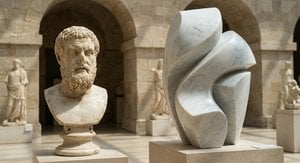
The Enduring Allure of Marble in Art History: From Classical Sculpture to Modern Abstraction
Explore the captivating history of marble sculpture from ancient Greece to modern art. Discover renowned artists like Canova & Michelangelo, carving techniques, and investment insights at ArtsDot.

Leonardo da Vinci's Top 25 Meesterwerken: Kunst voor uw Interieur | ArtsDot
Ontdek de 25 meest iconische meesterwerken van Leonardo da Vinci! Van de Mona Lisa tot De Laatste Avondmaal, leer over zijn techniek & geschiedenis. Museumkwaliteit kunstprints voor uw interieur op ArtsDot.com

The Enduring Form: Sculpture Across History, Technique & Emotional Resonance
Explore the rich history of sculpture with ArtsDot. Discover key techniques, influential artists & investment potential for discerning collectors. Expert insights into valuing and collecting timeless masterpieces.