

 Voorvertoning
 Verstuur
 Delen
Delen
 Details bekijken
 Gids
Gids

 Download
 Vergelijkbare items
 Röntgenonderzoek
 Diavoorstelling
 Vraag & antwoord
 Statistieken
Jan Both

- 14.0 x 12.0 cm


 Lees meer
Giclée / Kunstafdrukken
Giclée- of canvasafdruk van museumkwaliteit met een snelle productie en flexibele afwerkingsmogelijkheden. ( Bestel handgeschilderde reproductie Schakel over naar digitale afbeeldingen)




P118B €10

P118H €10

P118W €10

P438Z €10

P508JH €12

P508YH €12

P805H €10

P805Z €10

P919BZ €10

P919G €10

P919XJ €10

P959ZH €10

P968JZ €12

W106C €8

W218G €10

W218JH €8

W218Y €10

W307PJ €10

W316G €10

W316PJ €8

W316Y €10

W398PJ €8

W4111J €10

W500HY €15

W500JH €15

W692G €12

W849H €8

W940BG €15

W953PJ €8




Kies uit onze vooraf ingestelde maten die overeenkomen met de originele verhoudingen van het kunstwerk.

Voer de gewenste breedte en hoogte in, passend bij uw lijst of muur. Een afdruk kan alleen worden ingekort en nooit groter worden gemaakt dan het origineel; een formaat met andere verhoudingen zal daarom een deel van de afbeelding verliezen. Wij sturen u een digitaal mockup ter goedkeuring voordat we tot drukwerk overgaan. De afbeelding op deze pagina toont niet de werkelijke uitsnede — dit is alleen te zien op het mockup.
Wereldwijde levering () binnen 2 weken in plaats van de standaard 4/5 weken. (6 november)

Gratis wereldwijde expressverzending

Hoogwaardig linnen canvas

Volledige verzendverzekering

Garantie op terugbetaling van invoerrechten

Garantie op exacte kleurweergave

Retourbeleid van 100 dagen (alleen bij defecten)

100% Geld-terug-garantie

Korting bij meerdere afnames
 De optie voor glas is alleen beschikbaar bij een formaat kleiner dan 110 cm.

Jan Both
Giclée / Kunstafdrukken
Afmetingen reproductie
-


Eindtotaal
€ 56
Jan Both: A Master of Atmospheric Landscape
Cornelis van Poelenburgh’s “A Landscape with the Judgement of Paris,” painted circa 1645-50, stands as a testament to the burgeoning artistic fervor of the Dutch Golden Age. Executed by Jan Both and Cornelis van Poelenburgh, this captivating landscape captures a serene hillside vista bathed in soft light—a scene imbued with profound symbolic resonance that speaks volumes about humanist ideals prevalent during its creation.
- Subject Matter: The painting depicts a tranquil mountainous terrain dominated by rolling hills and distant peaks. At the center of the composition is a small group of figures engaged in the mythological Judgment of Paris, symbolizing beauty, wisdom, and strength – elements considered crucial for moral virtue during the Renaissance.
- Style & Technique: Both artists employed meticulous oil on copper technique, renowned for its luminosity and durability. The artist’s masterful brushstrokes create a palpable sense of atmosphere, capturing subtle gradations of color and texture that evoke the feeling of a crisp winter day. Van Poelenburgh's signature style is characterized by idealized landscapes reminiscent of Roman villas—a deliberate homage to classical art and philosophy.
- Historical Context: Produced during the reign of William III, “A Landscape with the Judgement of Paris” reflects the broader artistic trends of its time. The Dutch Republic experienced a period of unprecedented prosperity and cultural achievement, fueled by maritime trade and intellectual curiosity. Artists like Both and van Poelenburgh sought to elevate the human spirit through depictions of sublime beauty—a response to the philosophical debates surrounding God’s relationship with humanity.
- Symbolism: The positioning of the figures amidst the landscape serves as a powerful metaphor for moral contemplation. The judges represent the pursuit of virtue, while the hillside symbolizes stability and serenity – ideals that underpinned humanist thought and artistic expression.
The painting’s emotional impact is undeniable—it invites viewers to pause and contemplate the grandeur of nature alongside the complexities of human judgment. Its delicate palette and masterful execution exemplify the highest standards of Dutch landscape painting, securing its place as a cornerstone of Baroque art history. Reproductions offer an exceptional opportunity to appreciate this iconic artwork's beauty and intellectual depth.
- Further Exploration: Interested in delving deeper into Jan Both’s oeuvre? Explore his other celebrated landscapes at Museum Smidt Van Gelder, where you can admire masterpieces alongside fellow Dutch Masters like Goyen and Moretti.
- Comparative Inspiration: Consider examining “Winter Landscape” by Denis van Alsloot (Art UK) for insights into the stylistic nuances of Dutch landscape painting during this era.
- Related Artwork: Admire “The Adoration of the Magi” by Bartholomeus Breenbergh (Art UK) to appreciate a similar exploration of mythological themes within a landscape setting.
Veelgestelde vragen
Zijn de kleuren van "Jan Both" krachtig of juist zacht?
De kleurintensiteit van "Jan Both" is Monochromatic. Intensiteit geeft aan hoe krachtig de kleuren overkomen.
Wat wordt er afgebeeld in "Jan Both" door Cornelis Van Poelenburgh?
De thema's die aanwezig zijn in "Jan Both" door Cornelis Van Poelenburgh omvatten landscape, roman mythology, religious scene, dutch painting, classical composition, figures, atmospheric perspective. Samen vatten zij de onderwerpen van het kunstwerk samen.
Hoe verhoudt "Jan Both" zich tot de terugkerende thema's van Cornelis Van Poelenburgh?
De terugkerende thema's van Cornelis Van Poelenburgh omvatten roman idealism, biblical narrative, landscape harmony, dutch tradition, artist’s reputation; "Jan Both" richt zich op landscape, roman mythology, religious scene, dutch painting, classical composition, figures, atmospheric perspective.
Vergelijkbare kunstwerken


Biografie kunstenaar
vroege jaren en opleiding
Cornelis van Poelenburgh, een vooraanstaande Nederlandse landschapsschilder, werd in 1594 geboren in Utrecht, Nederland. Zijn artistieke reis begon onder de meesterlijke begeleiding van Abraham Bloemaert, een kunstenaar van grote reputatie in die tijd. Deze fundamentele opleiding vormde de onmisbare basis voor het latere succes en de verfijnde techniek van Van Poelenburgh.artistieke carrière en invloeden
De reizen van Van Poelenburgh naar Rome in de vroege 17e eeuw lieten een diepe indruk achter op zijn oeuvre, waardoor hij uitgroeide tot een leidende vertegenrende van de eerste generatie Nederlandse landschapsschilders die actief waren in Italië. Zijn fijnmazige, kleinschalige schilderijen, waarin vaak geïtalieniseerde landschappen versmelten met kleine figuren die bijbelse of mythologische scènes tot leven brengen, getuigen van een volstrekt unieke stijl. Opmerkelijke werken:- Satyrs spying on nymphs (na 1627), een karakteristiek voorbeeld van het werk van Van Poelenburgh, waarin archaïsche landschappen worden gecombineerd met figuren die baden. (Bekijk op ArtsDot)
- Council of the gods (ca. 1630), een schilderij dat de geïdealiseerde heuvelachtige landschappen en Romeins-geïnspireerde godinnen van Van Poelenburgh toont, tegenwoordig ondergebracht in het Mauritshuis (Den Haag, Nederland). (Bekijk op ArtsDot)
erfenis en latere leven
Het werk van Van Poelenburgh werd met groot respect bekeken door zijn tijdgenoten, waaronder de groothertog van Toscane en de Nederlandse stadhouder. Uiteindelijk keerde hij terug naar Utrecht, waar hij in 1667 overleed, slechts enkele jaren na zijn voormalige leermeester Abraham Bloemaert. Kernpunten:- Geboren in Utrecht, Nederland in 1594
- Opleiding onder Abraham Bloemaert
- Sterk beïnvloed door zijn verblijf in Rome
- Bekend om kleinschalige Italiaanse landschappen met figuren
- Overleden in Utrecht in 1667 Bekijk de kunstwerken van Cornelis van Poelenburgh op ArtsDot Lees meer over Cornelis van Poelenburgh op Wikipedia

Cornelis Van Poelenburgh
1594 - 1667 , Nederland
Belangrijkste feiten
- Artistic Movement Or Style: Nederlands landschap, Romanate
- Artists Or Movements Influenced By This Artist: ['Claude Lorraine']
- Artists Who Influenced This Artist: ['Abraham Bloemaert']
- Date Of Birth: 1594, Utrecht, Nederland
- Date Of Death: 1667, Utrecht, Nederland
- Full Name: Cornelis van Poelenburgh
- Nationality: Nederlands
- Notable Artworks:
- Satyrs die nimfen bespioneren
- Raad van de goden
- Place Of Birth: Utrecht, Nederland
Gerelateerde artikelen

Jan van Goyen: Master of Dutch Landscape & Atmospheric Perspective
Discover Jan van Goyen, the master of Dutch landscape painting. Explore his subtle technique, atmospheric realism & lasting influence on art history. Learn about this 17th-century pioneer at ArtsDot.
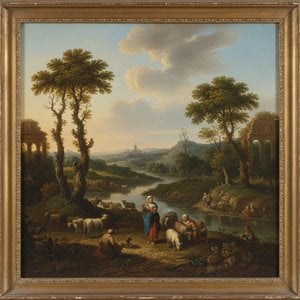
Nicolaes Berchem: Dutch Golden Age Pastoralism & the Evolution of Landscape Painting
Explore the captivating world of Nicolaes Berchem, a leading Dutch Golden Age painter. Discover his idyllic landscapes, masterful technique & lasting influence on art history. Learn more at ArtsDot.

Golden Light & Dutch Skies: Bringing the Magic of Dutch Golden Age Landscapes into Your Home
Transform your home with the breathtaking light of Dutch Golden Age landscapes. Discover how hand-painted oil reproductions of masterworks like Ruisdael and Vermeer bring timeless elegance, atmosphere, and soulful texture to modern interiors. Elevate your space with museum-quality art.
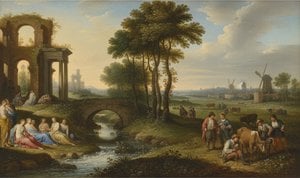
Cornelis van Poelenburch: Bridging Mannerism & the Dutch Baroque Landscape
Discover Cornelis van Poelenburch, a pivotal Dutch Baroque landscape painter bridging Mannerism & Italianate styles. Explore his life, key works, and lasting influence on 17th-century art with ArtsDot.

Jacob van Ruisdael: Master of Dutch Landscape & the Evocation of National Identity
Explore the life & work of Jacob van Ruisdael, the preeminent Dutch landscape painter. Discover his technical brilliance, symbolic depth, and lasting influence on art history. Learn about collecting Ruisdael's masterpieces.