


 Bekijk op ware grootte
 Verstuur
 Delen
Delen
 Details bekijken
 Gids voor studentenkunstwerken

 Download
 Vergelijkbare items
 Röntgenonderzoek
 Diavoorstelling
 Statistieken
Crucifix
 Tempera On Panel
- WallArt
- Italian Renaissance
 1268
1268- Late Medieval
 336.0 x 267.0 cm
 San Domenico
 Lees meer
Handgemaakte olieverfreproductie
Met de hand geschilderd in olieverf op canvas in uw gewenste maat en lijst, op bestelling gemaakt door onze kunstenaars. ( Schakel over naar print Schakel over naar digitale afbeeldingen)




P118B €10

P118H €10

P118W €10

P438Z €10

P508JH €12

P508YH €12

P805H €10

P805Z €10

P919BZ €10

P919G €10

P919XJ €10

P959ZH €10

P968JZ €12

W106C €8

W218G €10

W218JH €8

W218Y €10

W307PJ €10

W316G €10

W316PJ €8

W316Y €10

W398PJ €8

W4111J €10

W500HY €15

W500JH €15

W692G €12

W849H €8

W940BG €15

W953PJ €8




Kies uit onze vooraf ingestelde maten die overeenkomen met de originele verhoudingen van het kunstwerk.

Voer de breedte en de hoogte in die u nodig heeft, passend bij uw lijst of uw muur. Dit is handgeschilderd, dus bij een afmeting met een andere vormverhouding kan de kunstenaar iets meer rondom het schilderij schilderen of juist iets meer weglaten — u kiest zelf. Wij sturen u een digitaal mockup ter goedkeuring voordat het schilderwerk begint. De afbeelding die op deze pagina wordt getoond, is niet het uiteindelijke resultaat — alleen de mockup geeft dit weer.
Na de bestelling zal het team van ArtsDot.com per e-mail contact opnemen met de klant voor instructies en een mockup-voorbeeld sturen.
Wereldwijde levering () binnen 3 tot 4 weken in plaats van de standaard 5 weken. (23 oktober). Zonder concessies aan de kwaliteit.

Gratis wereldwijde expressverzending

Hoogwaardig linnen canvas

Volledige verzendverzekering

Garantie op terugbetaling van invoerrechten

Garantie op exacte kleurweergave

Retourbeleid van 100 dagen (alleen bij defecten)

100% Geld-terug-garantie

Korting bij meerdere afnames
 De optie voor glas is alleen beschikbaar bij een formaat kleiner dan 110 cm.

Crucifix
Reproductiemethode
Formaat reproductie
-


Totaalprijs
€ 231
A Bridge Between Byzantium and Renaissance Brilliance
In the heart of Italian art history, Giovanni Cimabue stands as a monumental figure, a master who skillfully navigated the artistic currents flowing from the rigid grandeur of the Byzantine Empire toward the burgeoning innovations of the early Renaissance. His Crucifix is not merely a religious icon; it is a profound testament to a period of transformative change. Painted with an unwavering determination that earned him the nickname “bull-ed,” Cimabue dared to subtly challenge established conventions, laying the essential groundwork for the humanistic ideals that would later be championed by masters like Giotto. This work embodies a deliberate shift in sensibility, moving away from the stylized, flattened iconography of the past toward a more naturalistic and emotionally resonant representation of the divine.
The composition is dominated by the central figure of Christ, whose presence is both physically imposing and deeply moving. Through a masterful blend of Byzantine influence and emerging realism, Cimabue employs tempera paint on wood to achieve a remarkable luminosity. The technique involves the careful layering of translucent glazes, a hallmark of the Byzantine tradition, which allows light to dance across the surface, lending a celestial quality to the scene. While the gilding and the monumental scale of the cross link the piece to sacred tradition, the expressive musculature and the fluid drapery of the figures suggest a newfound commitment to anatomical fidelity and volume.
Symbolism and the Emotional Landscape
Beyond its technical brilliance, the Crucifix serves as a powerful vessel for spiritual narrative. Flanked by the poignant figures of Mary and John, the painting captures the profound sorrow of the crucifixion with an unprecedented sense of pathos. The artist’s attention to detail is particularly striking in the intricate designs adorning the central beam of the cross; these patterns reflect Byzantine decorative motifs but are executed with a dynamic textural richness that signals the dawn of Renaissance principles. Above the scene, a starry sky serves as a backdrop, evoking biblical narratives of divine providence and enveloping the tragedy in a sense of cosmic significance.
For the discerning collector or interior designer, a museum-quality reproduction of this masterpiece offers more than just decoration; it provides an opportunity to invite a piece of history into a contemporary space. The work’s ability to evoke both awe and introspection makes it a captivating focal point for any curated collection. It remains an enduring symbol of faith and artistic courage, capturing a pivotal moment when art began to reflect the depth of human emotion and the beauty of the natural world. To possess such a piece is to hold a window into the very moment Western art began its journey toward the light of the Renaissance.
Vragen & Antwoorden
Wie is de maker van "Crucifix" en bij welke stroming hoort dit werk?
Achter "Crucifix" staan Cimabue en de Italian Renaissance-stroming.
Kan ik "Crucifix" door Cimabue bekijken voordat ik bestel?
Om een reproductie van "Crucifix" door Cimabue te bekijken, opent u de Voorvertoning pagina van het kunstwerk.
Hoe past "Crucifix" binnen de thema's en stijl van Cimabue?
"Crucifix" behoort tot het Italian Renaissance-werk van Cimabue, waarvan de bekende thema's onder meer byzantine tradition, artistic innovation, faithful representation, spiritual depth, religious narrative, medieval beliefs, florence legacy, cimabue's vision omvatten.
Gerelateerde kunstwerken


Biografie van de kunstenaar
Giovanni Cimabue: De Pionier van de Italiaanse Schilderkunst
Giovanni Cimabue, geboren als Cenni di Pepo rond 1240 in Florence, staat als een monumentale figuur centraal – een brug tussen de gevestigde artistieke tradities van het Byzantijnse rijk en de opkomende innovaties die de Italiaanse Renaissance zouden definiëren. Zijn leven, hoewel gedeeltelijk verduisterd door de tijd en romantische beschrijvingen – vooral die van Giorgio Vasari eeuwen later – markeert een onmiskenbaar keerpunt in de westerse kunstgeschiedenis. Cimabue was niet alleen een schilder; hij was een moedige innovator die op subtiele wijze uitdagingen bracht aan artistieke conventies, de weg vrijmaakend voor de revolutionaire veranderingen die snel over Italië zouden woelen. Zelfs zijn bijnaam, vermoedelijk betekenis "olifantenkop," hint naar een sterke wil en wellicht een rebelse geest – kwaliteiten die duidelijk aanwezig waren in zijn bereidheid om met vorm en expressie te experimenteren. Hij vertegenwoordigt een cruciale moment waar kunst begon te verschuiven van puur devotionele beelden naar iets meer menselijk en emotioneel resonerend.Vroege Invloeden en Artistieke Ontwikkeling
In eerste instantie werd Cimabue ondergedompeld in de Italo-Byzantijnse stijl die doorlopend in Florence floreren, waarbij zijn vroege werk nauwkeurig aan gevestigde esthetische principes hield. Geplateerde figuren bekleed met glinsterend goud, symbolische representaties van ruimte en een diepe focus op religieuze iconografie kenmerkten deze stijl. Toch begon al vroeg een opkomende drang naar naturalisme te ontstaan. Hij was niet tevreden om bestaande vormen simpelweg te reproduceren; hij streefde ernaar zijn schilderijen met een groter gevoel van leven en emotionele diepgang in te prenten. De precieze aard van zijn vroege training blijft echter betwistbaar, maar het is waarschijnlijk dat hij zijn vaardigheden verfijnde binnen Florentijnse ateliers, de technieken en invloeden van die tijd op zich nam terwijl hij tegelijkertijd zijn eigen unieke artistieke stem ontwikkelde. De Byzantijnse stijl, gekenmerkt door haar formaliteit en spirituele focus, bood hem een solide basis, maar Cimabue begon subtiel te experimenteren met elementen die de komende Renaissance zouden voorspellen – meer aandacht voor volume, expressievere gezichtskenmerken en een beginnend begrip van ruimtelijke relaties. Dit was geen plotselinge afscheid van traditie, maar eerder een geleidelijke evolutie, een delicate balans tussen het eren van het verleden en het omarmen van nieuwe mogelijkheden.Belangrijke Werken en Artistieke Innovaties
Cimabue’s nalatenschap is verankerd in een reeks adembenemende werken die zijn evoluerende stijl laten zien. De *Maestà* (Louvre), oorspronkelijk gemaakt voor de kerk van San Francesco in Pisa, staat als een van zijn meest beroemde meesterwerken. Deze monumentale altarpal staan centraal en toont zijn beheersing van compositie en het gebruik van kleur, terwijl hij tegelijkertijd subtiel afwijkt van rigide Byzantijnse conventies. De figuren, hoewel nog steeds een zekere mate van formaliteit vertonen, tonen een nieuwe sensatie van volume en aanwezigheid. Het *Crucifixie* (San Domenico, Arezzo), daterend uit ongeveer 1270, is bijzonder significant als een vroege demonstratie van zijn afwijking van strikte Byzantijnse normen. Hier zijn de proporties realistischer en het emotionele gewicht van de scène is voelbaar – een schril contrast met de vaak-ver afstandelijke representaties die in eerdere religieuze kunst te vinden zijn. Verder bewijst Cimabue’s innovatieve geest zich in werken zoals de *Flagellation of Christ* (Frick Collection), die over het algemeen toegeschreven wordt aan zijn werkplaats. Deze complexe compositie toont een evoluerend begrip van perspectief en ruimtelijke relaties, wat wijst op een groeiende interesse in het creëren van meer meeslepende en geloofwaardige scènes. Zijn bijdragen waren niet beperkt tot panel schilderijen; Cimabue excelleerde ook als mozaïk kunstenaar, waarbij hij aanzienlijke bijdragen leverde aan de decoratie van de Baptistery in Florence – hoewel deze mozaïeken helaas zijn aangetast door veroudering.Een Cruciale Leraar: Giotto en verder
Misschien is Cimabue’s meest blijvende nalatenschap te vinden in zijn rol als leraar van Giotto di Bondone. Hoewel historische verslaggeving varieert over de exacte aard van hun relatie, wordt algemeen aanvaard dat Giotto cruciale training onder Cimabue’s begeleiding ontving. Ondanks dat historici vaak Giotto hebben overschaduwd in de opkomst van zijn beroemde pupil, hebben moderne kunsthistorici Cimabue’s eigen waarde erkend door de kwaliteit van zijn schilderijen en mozaïeken. Het was Cimabue die, na alles, de visie legde voor decoratieve christelijke kunst om verder te gaan dan iconen en een aardse, meer mensgerichte element aan devotionele altaren en fresco’s toe te voegen. Zijn bereidheid om met vorm, proportie en expressie te experimenteren heeft de weg geopend voor de innovaties van de Renaissance, waardoor hij als een cruciale overgangsfiguur in de geschiedenis van de westerse kunst wordt beschouwd.Historische Betekenis
Cimabue stierf in 1302 in Pisa, waarbij hij een oeuvre achterliet dat nog steeds fascineert en inspireert. Ondanks zijn significante bijdragen blijven details over zijn latere leven schaars. Echter, zijn artistieke nalatenschap resoneren krachtig door de werken van zijn studenten en de evolutie van Italiaanse kunst. Hij vertegenwoordigt een cruciale stap in de ontwikkeling van westerse schilderkunst, waarbij hij zich afkeerde van de gestileerde conventies van het Byzantijnse tijdperk en een meer menselijke en emotionele benadering omarmde. Zijn schilderijen zijn niet alleen historische artefacten; ze zijn ook vensters op een cruciale moment in de kunstgeschiedenis – een tijd waarin kunstenaars bereid waren om gevestigde normen te betwisten en nieuwe mogelijkheden te verkennen. Hij was een pionier, een visionair die het moedig vond om grenzen te verleggen en nieuwe horizonnen te verkennen.
Cimabue
1240 - 1302 , Italië
Snelle feiten
- Artistic Movement Or Style: Byzantijns & Renaissance
- Artists Or Movements Influenced By This Artist: ['Giotto di Bondone']
- Artists Who Influenced This Artist:
- Giunta Pisano
- Coppo di Marcovaldo
- Date Of Birth: c. 1240
- Date Of Death: 1302
- Full Name: Giovanni Cimabue
- Nationality: Italiaans
- Notable Artworks:
- Maestà
- Crucifixie
- Verschrikking Christi
- Place Of Birth: Florence, Italië
Gerelateerde artikelen
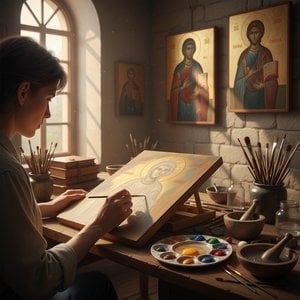
Illuminating Surfaces: A Comprehensive Exploration of Tempera on Panel Painting Techniques & Historical Significance
Explore the rich history & techniques of tempera painting! Discover Renaissance masters like Botticelli & Fra Angelico, conservation insights, and the enduring legacy of this captivating art form. Learn more now!

The Allure of Gold in Art History: Symbolism, Technique & Cultural Significance
Explore the rich history of gold in art! Discover symbolism, techniques & cultural significance from ancient civilizations to Klimt's masterpieces. Expert insights for collectors at ArtsDot.

Top 10 Schilderijen met Gouden Accent: Kunstgeschiedenis voor uw Interieur
Ontdek de pracht van 10 beroemde schilderijen met gouden accenten! Van iconische renaissance tot barok meesterwerken. Leer over kunstenaars als Giotto & Klimt en vind museumkwaliteit reproducties voor uw interieur op ArtsDot.com.

Illuminating History: A Comprehensive Exploration of Tempera Painting Techniques & Artistic Legacy
Explore the rich history & techniques of tempera painting! Discover Renaissance masters like Botticelli & Fra Angelico, conservation insights, and the enduring legacy of this captivating art form.

Golden Glow: How to Use Metallic Gold Artworks to Elevate Your Home Decor with Timeless Luxury
Discover how to elevate your home with the timeless elegance of metallic gold artworks. From sculptural metal pieces to gilded oil paintings, learn expert interior design tips for integrating luxurious gold accents into your space with sophistication and grace.

