


 Print kopen Koop afbeelding in hoge resolutie
 Verstuur
 Delen
Delen
 Details
 Toevoegen aan favorieten

 Download
 Vergelijkbare werken
 X-Ray
X-Ray
 Diavoorstelling
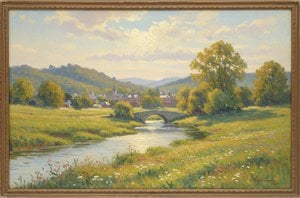
The Towpath
 Oil On Canvas
- WallArt
- Futurist & Cubist
 1912
1912 77.0 x 56.0 cm
 Het Ashmolean Museum van Kunst en Oudheden
Handgemaakte olieverfreproductie
Met de hand geschilderd in olieverf op canvas in uw gewenste maat en lijst, op bestelling gemaakt door onze kunstenaars.




P118B $10

P118H $10

P118W $10

P438Z $10

P508JH $12

P508YH $12

P805H $10

P805Z $10

P919BZ $10

P919G $10

P919XJ $10

P959ZH $10

P968JZ $12

W106C $8

W218G $10

W218JH $8

W218Y $10

W307PJ $10

W316G $10

W316PJ $8

W316Y $10

W398PJ $8

W4111J $10

W500HY $15

W500JH $15

W692G $12

W849H $8

W940BG $15

W953PJ $8




 Lees meer over
Kies uit onze vooraf ingestelde maten die overeenkomen met de originele verhoudingen van het kunstwerk.

U kunt uw eigen afmetingen invoeren om in een specifieke lijst of ruimte te passen. Als de door u gekozen maat niet overeenkomt met de verhoudingen van het originele beeld, zullen we het kunstwerk bijsnijden of het schilderij uitbreiden met extra handgeschilderde elementen. Een digitale mockup wordt ter goedkeuring naar u verzonden voordat de productie begint.
Houd er rekening mee dat de preview op het scherm niet de werkelijke uitsnede of uitbreiding weergeeft. Alleen de mockup toont de uiteindelijke compositie nauwkeurig.
Hoewel aangepaste afmetingen mogelijk zijn, raden we aan een maat uit de vooraf gedefinieerde lijst te selecteren om de originele verhoudingen te behouden.
Na de bestelling zal het team van ArtsDot.com per e-mail contact opnemen voor instructies en een mockup-voorbeeld sturen.
Wereldwijde levering () binnen 3/4 weken in plaats van de standaard 5 weken. (1 juli). Geen concessies aan de kwaliteit.

Gratis wereldwijde expressverzending

Hoogwaardig linnen canvas

Volledige verzendverzekering

Garantie op terugbetaling van invoerrechten

Garantie op exacte kleurweergave

60 dagen retourbeleid (alleen bij defecten)

100% Geld-terug-garantie

Korting bij meerdere afnames
 De optie voor glas is alleen beschikbaar bij een formaat kleiner dan 110 cm.

The Towpath
Techniek reproductie
Afmetingen reproductie
-


Eindtotaal
-
Beschrijving kunstwerk
A Moment Frozen in Rain – Christopher Richard Wynne Nevinson’s “The Towpath”
Christopher Richard Wynne Nevinson's "The Towpath," painted in 1912, isn’t merely a depiction of an urban scene; it’s a carefully constructed mood piece, steeped in the anxieties and nascent futurism of its time. The painting immediately draws the viewer into a world of muted tones – grays, blues, and browns dominate, creating an atmosphere of quiet melancholy that speaks to the isolation inherent within industrial landscapes. It's a scene both familiar and subtly unsettling, capturing a fleeting moment of human presence against the backdrop of imposing, almost monolithic, architecture.
Nevinson, a key figure in British art during the early 20th century, was deeply influenced by movements like Futurism and Cubism. This is evident not just in the painting’s fractured perspective – lines converge and recede in a way that suggests movement and dynamism – but also in his deliberate use of color and form. The rigid geometry of the buildings contrasts sharply with the more organic shapes of the figures, hinting at a tension between the human desire for connection and the impersonal nature of modern urban life. The painting’s genesis lies within Nevinson's experiences during World War I, reflecting a growing disillusionment with traditional notions of heroism and progress.
Composition and Technique – A Dance of Lines and Light
The composition is remarkably balanced, albeit subtly off-center. The couple, positioned near the foreground bridge, anchors the scene while drawing the eye towards the distant buildings. Nevinson masterfully employs atmospheric perspective; the background structures fade into a hazy distance, creating a sense of depth and scale that emphasizes the vastness of the urban environment. The artist’s brushwork is loose and expressive, contributing to the painting's overall impressionistic quality. Notice how he uses short, broken strokes to capture the texture of the buildings and the shimmering effect of rain on the water – a technique that imbues the scene with a palpable sense of movement.
The use of color is particularly noteworthy. Rather than relying on bright hues, Nevinson employs a restrained palette of cool tones, reinforcing the painting’s somber mood. The subtle variations within these shades create visual interest without disrupting the overall atmosphere. He skillfully utilizes light – or rather, the lack thereof – to further enhance the sense of gloom and isolation. The diffused lighting suggests an overcast day, casting long shadows and blurring outlines, adding to the painting's dreamlike quality.
Symbolism and Emotional Resonance – A Portrait of Modernity
“The Towpath” is rich in symbolic meaning. Rain, a recurring motif in Nevinson’s work, often represents sadness, loss, or uncertainty. The industrial architecture serves as a potent symbol of modernity—a world characterized by speed, efficiency, and detachment. The couple, seemingly lost within this vast urban landscape, embodies the human struggle to find connection and meaning amidst the impersonal forces of progress. Their proximity suggests a yearning for intimacy in a world increasingly defined by anonymity.
There’s an undeniable emotional weight to the painting. It's not simply a depiction of a rainy day; it’s a meditation on loneliness, alienation, and the challenges of navigating a rapidly changing world. The muted colors and somber atmosphere evoke a sense of quiet melancholy, inviting viewers to contemplate their own experiences within the context of modern urban life. The painting’s enduring appeal lies in its ability to capture a universal human emotion—the feeling of being adrift in a vast and indifferent universe.
Historical Context – A Futurist Vision
Painted in 1912, “The Towpath” reflects the artistic ferment of the early 20th century. Nevinson was deeply involved with the burgeoning movement of Futurism, which celebrated speed, technology, and dynamism. While he ultimately distanced himself from the more radical aspects of this movement, its influence is clearly visible in his use of fragmented forms, distorted perspectives, and a focus on capturing fleeting moments of motion. The painting can be seen as a precursor to later movements such as Cubism, which similarly challenged traditional notions of representation.
Furthermore, the work aligns with Nevinson’s broader engagement with social issues. His father was a prominent war correspondent, and his mother an active member of the suffrage movement. This upbringing instilled in him a keen awareness of the challenges facing British society at the turn of the century – including industrialization, urbanization, and social inequality. “The Towpath” can be interpreted as a subtle critique of these trends, capturing the human cost of progress.
Vergelijkbare kunstwerken


Biografie van de kunstenaar
Early Life and Artistic Awakening
Christopher Richard Wynne Nevinson, known as C.R.W. Nevinson or simply Richard Nevinson, emerged onto the British art scene at a moment of profound societal shift. Born in 1889 in Hampstead, London, his upbringing was steeped in intellectual and progressive ideals. His father, Henry Nevinson, was a renowned war correspondent and journalist, while his mother, Margaret Nevinson, dedicated herself to the burgeoning suffrage movement as a writer and activist. This environment instilled in young Richard a keen awareness of social issues and a spirit of independent thought that would permeate his artistic vision. Though initially struggling to find direction, he eventually enrolled at the Slade School of Art in 1909, studying under Henry Tonks alongside future luminaries like Stanley Spencer and Mark Gertler. While Tonks encouraged traditional techniques, Nevinson found himself drawn towards more radical currents, seeking a visual language that could capture the dynamism of the modern world. Early influences included the work of Augustus John, but it was his encounter with the Italian Futurists and Wyndham Lewis that truly ignited his artistic trajectory.Embracing Modernity: Futurism, Vorticism, and the Brink of War
Nevinson’s artistic development took a decisive turn when he befriended Filippo Marinetti, the charismatic leader of the Italian Futurist movement. Captivated by Futurism's celebration of speed, technology, and the energy of urban life, Nevinson began to incorporate its principles into his own work. He briefly aligned himself with Wyndham Lewis’s Rebel Art Centre, a hub for avant-garde experimentation in London. However, this association was short-lived. A fundamental disagreement over artistic direction led to a rift between Nevinson and Lewis, resulting in Nevinson's exclusion from the Vorticist movement—a distinctly British offshoot of Futurism founded by Lewis himself. Despite this falling out, Nevinson continued to explore Futurist ideas, even co-authoring a manifesto for English Futurism alongside Marinetti. His early paintings reflected these influences, depicting scenes of modern London – bustling streets, railway stations, and the nascent Underground system – with fragmented forms and dynamic compositions. These works weren’t merely representations of place; they were attempts to convey the *feeling* of modernity—its exhilarating pace and relentless energy. Alongside his exploration of Futurist aesthetics, Nevinson maintained close ties with artists like Mark Gertler and Dora Carrington, sharing a brief period of artistic kinship rooted in Neo-Primitivism before diverging onto their individual paths.The Horrors of War and the Rise of a War Artist
The outbreak of World War I irrevocably altered Nevinson’s artistic focus. Initially joining the Friends' Ambulance Unit, he witnessed firsthand the brutal realities of war while tending to wounded French and British soldiers. Illness forced his return to Britain, but he soon volunteered with the Royal Army Medical Corps. He used these experiences as the subject matter for a series of powerful paintings which combined Futurist and Cubist aesthetics. Bleak, outspoken and often angry, his work from 1915–16 stands as powerful testaments to the devastation of modern warfare. Utilizing fragmented forms and jarring perspectives, Nevinson conveyed not just the physical destruction but also the psychological trauma inflicted by mechanized conflict. His paintings like *La Mitrailleuse* (The Machine Gunner) exemplify this approach—a bold rejection of Impressionistic idealism in favor of confronting the grim truth of the battlefield. Critics lauded his daring vision, recognizing it as “the most authoritative and concentrated utterance on the war in the history of painting.” He was appointed an official war artist in 1917, furthering his exploration of expressive abstraction.Post-War Years: Travels, Turmoil, and Legacy
Following the cessation of hostilities, Nevinson embarked on a journey to America, where he captured the energy and scale of New York City in canvases brimming with vibrant color and dynamic composition. However, his reputation suffered a significant blow as accusations of exaggeration and embellishment tarnished his image—fueled by personal struggles and exacerbated by Lewis’s scathing critique. Despite these challenges, Nevinson remained committed to painting landscapes and portraits, reflecting a quieter aesthetic than his wartime output. He published *Paint and Prejudice* in 1937, documenting his life experiences with unflinching honesty, yet marred by inaccuracies and inconsistencies. Though he achieved Associate Membership of the Royal Academy in 1939, Nevinson’s final years were marked by debilitating depression—a consequence of confronting the profound disillusionment that followed the Second World War. Christopher Richard Wynne Nevinson died in London in October 1946, leaving behind a legacy as one of Britain's foremost war artists and a pivotal figure in the development of avant-garde art. His enduring influence stems from his courageous embrace of Futurism’s radical vision—a testament to his artistic conviction and unwavering dedication to portraying the complexities of modern life.
Christopher Richard Wynne Nevinson
1889 - 1946 , Verenigd Koninkrijk
Belangrijkste feiten
- Artistic Movement Or Style: Futurisme en Cubisme
- Artists Or Movements Influenced By This Artist: ['Avant-garde kunst in Groot Brittannië']
- Artists Who Influenced This Artist:
- Augustus John
- F.T. Marinetti
- Wyndham Lewis
- Date Of Birth: 1889
- Date Of Death: 1946
- Full Name: Christopher Richard Wynne Nevinson
- Nationality: Britannisch
- Notable Artworks:
- La Mitrailleuse
- Over de Linies
- Zilver Rivier
- Place Of Birth: Hampstead, UK
Gerelateerde artikelen

Franz Bischoff: Bridging Tonalism & Impressionism in California Landscape Painting
Explore the captivating art of Franz Bischoff, a pivotal figure bridging Tonalism & California Impressionism. Discover his stunning landscapes, floral works, and lasting legacy with ArtsDot.


Ferdinand Guillaumin: Impressionism’s Lyrical Landscapes & the French Countryside
Explore the captivating landscapes of Ferdinand Guillaumin, a key figure in Impressionism. Discover his vibrant color palettes, symbolic style & lasting legacy with ArtsDot.

Ernest Lawson: A Pioneer of American Impressionism & His Vision of the Rural Landscape
Explore the life & art of Ernest Lawson, a pivotal figure in American Impressionism. Discover his evocative landscapes, influences, and lasting legacy with ArtsDot.

Concrete Visions: Exploring the Urban Landscape in Painting – From Realism to Contemporary Art
Explore the evolution of cityscape painting from Realism to contemporary art with ArtsDot. Discover key artists & invest in timeless urban visions. Expert guidance, museum-quality reproductions.
Henry Marvell Carr: A Study in American Impressionism's Evolving Landscape of Light and Form
Explore the captivating work of Henry Marvell Carr, a pivotal figure in American Impressionism. Discover his evocative realism, war art, and cultural depictions – a journey through light, form, and legacy.



