

 Voorvertoning
 Verstuur
 Delen
Delen
 Details bekijken

 Download
 Vergelijkbare items
 Röntgenonderzoek
 Diavoorstelling
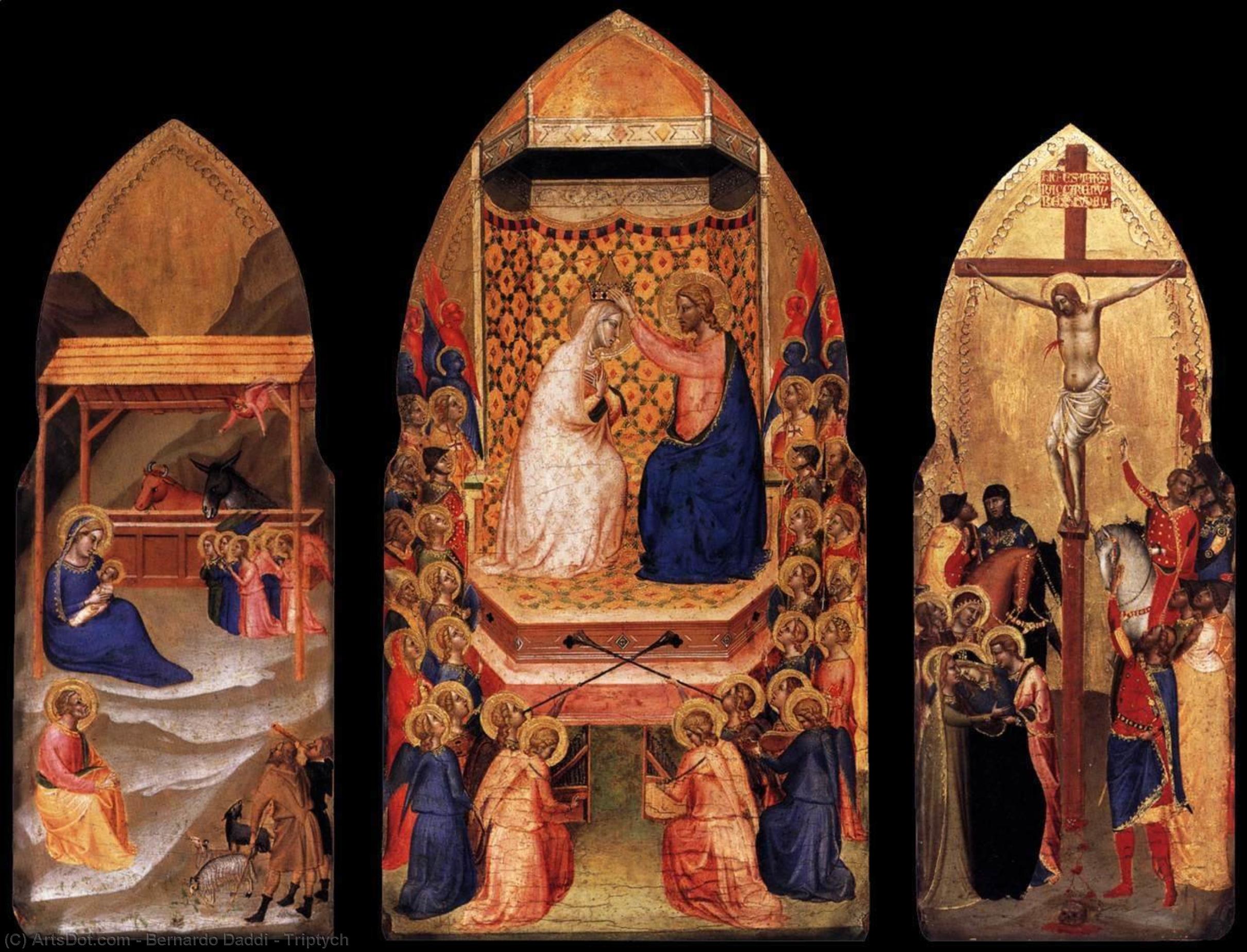
Triptych
 Acrylic On Canvas
- WallArt
- Italian Renaissance
 1338
1338 42.0 x 22.0 cm
 Staatliche Museen zu Berlin
 Lees meer
Handgemaakte olieverfreproductie
Met de hand geschilderd in olieverf op canvas in uw gewenste maat en lijst, op bestelling gemaakt door onze kunstenaars. ( Bestel print Koop afbeelding)




P118B $10

P118H $10

P118W $10

P438Z $10

P508JH $12

P508YH $12

P805H $10

P805Z $10

P919BZ $10

P919G $10

P919XJ $10

P959ZH $10

P968JZ $12

W106C $8

W218G $10

W218JH $8

W218Y $10

W307PJ $10

W316G $10

W316PJ $8

W316Y $10

W398PJ $8

W4111J $10

W500HY $15

W500JH $15

W692G $12

W849H $8

W940BG $15

W953PJ $8




Kies uit onze vooraf ingestelde maten die overeenkomen met de originele verhoudingen van het kunstwerk.

U kunt uw eigen afmetingen invoeren om in een specifieke lijst of ruimte te passen. Als de door u gekozen maat niet overeenkomt met de verhoudingen van het originele beeld, zullen we het kunstwerk bijsnijden of het schilderij uitbreiden met extra handgeschilderde elementen. Een digitale mockup wordt ter goedkeuring naar u verzonden voordat de productie begint.
Houd er rekening mee dat de preview op het scherm niet de werkelijke uitsnede of uitbreiding weergeeft. Alleen de mockup toont de uiteindelijke compositie nauwkeurig.
Hoewel aangepaste afmetingen mogelijk zijn, raden we aan een maat uit de vooraf gedefinieerde lijst te selecteren om de originele verhoudingen te behouden.
Na de bestelling zal het team van ArtsDot.com per e-mail contact opnemen met de klant voor instructies en een mockup-voorbeeld sturen.
Wereldwijde levering () binnen 3 tot 4 weken in plaats van de standaard 5 weken. (16 augustus). Zonder concessies aan de kwaliteit.

Gratis wereldwijde expressverzending

Hoogwaardig linnen canvas

Volledige verzendverzekering

Garantie op terugbetaling van invoerrechten

Garantie op exacte kleurweergave

Retourbeleid van 60 dagen (alleen bij defecten)

100% Geld-terug-garantie

Korting bij meerdere afnames
 De optie voor glas is alleen beschikbaar bij een formaat kleiner dan 110 cm.

Triptych
Druktechniek
Afmetingen reproductie
-


Eindtotaal
$ 263
Beschrijving kunstwerk
Bernardo Daddi: Bridging Gothic and Renaissance in Florence
Bernardo Daddi, born around 1290 in Florence and passing away in 1348, stands as a pivotal figure in the transition from the late Gothic to the burgeoning Italian Renaissance. He wasn’t a revolutionary iconoclast shattering established conventions overnight, but rather a master craftsman who subtly yet profoundly shifted the artistic landscape of his time, particularly within the vibrant city of Florence. Often described as “the leading painter” of Florence during his generation, Daddi's legacy lies not in radical departures, but in a measured evolution—a careful refinement of existing techniques and a dedication to realism that marked a crucial step toward the humanist ideals of the Renaissance. His influence extended far beyond mere stylistic preference; he fostered an environment where innovation flourished while honoring tradition, shaping the artistic sensibilities of his era and cementing his place as one of Florence’s most celebrated artists. Early Life and Artistic Roots Daddi’s precise birthdate remains shrouded in some mystery, though records indicate he was first mentioned in 1312. He began his artistic journey under the tutelage of Giotto di Bondone, who is credited with introducing a more naturalist style, expression and sense of volume into Italian painting—a departure from the stylized forms prevalent in preceding Gothic art. This formative influence instilled in Daddi a profound appreciation for observation and detail, shaping his approach to portraying human figures and landscapes alike. He honed his skills within Giotto’s workshop alongside Lorenzo Monaco and Simone Martini, absorbing their stylistic sensibilities and mastering the techniques of tempera on panel—a medium favored by Florentine artists during this period. The Triptych: A Synthesis of Tradition and Innovation This magnificent triptych, completed in 1338, exemplifies Daddi’s masterful synthesis of Gothic and Renaissance aesthetics. Commissioned for a private chapel, it represents the life of Mary—a subject deeply resonant with religious symbolism—and showcases Daddi's unparalleled ability to convey emotion and spiritual contemplation. The central panel depicts Mary enthroned amidst saints, bathed in luminous gold leaf – a technique borrowed from Byzantine iconography but adapted with Florentine precision. Delicate drapery folds and subtle shading imbue the figures with palpable volume and realism, reflecting Daddi’s commitment to humanist principles championed by artists like Brunelleschi and Donatello. The surrounding panels depict Mary as a young woman being crowned by angels—a scene imbued with serene beauty and conveying the Virgin's divine grace—and culminates in an image of Mary giving birth to Jesus—a depiction marked by tenderness and conveying the profound miracle at the heart of Christian faith. A Workshop of Excellence: Shaping Florentine Artistic Culture Daddi’s workshop was renowned for its prolific output of small devotional tabernacles – exquisitely crafted shrines designed to house relics and inspire piety. These works stand as testament to Daddi's pedagogical influence, nurturing a cohort of talented artists who would go on to contribute significantly to the artistic achievements of Florence during the Renaissance. His meticulous attention to detail, combined with his unwavering dedication to capturing the essence of human emotion—a hallmark of humanist art—established him as a cornerstone of Florentine artistic culture and ensured that his legacy endured for centuries to come. Symbolism and Emotional Impact The triptych’s pervasive use of gold leaf serves not merely as decorative embellishment but symbolizes divine illumination and holiness, reflecting the spiritual aspirations of its patrons. The carefully orchestrated composition—characterized by balanced symmetry and harmonious color palettes—creates a contemplative atmosphere that invites viewers to engage in profound reflection on themes of motherhood, faith, and redemption. Bernardo Daddi’s masterpiece transcends mere visual representation; it communicates an enduring message of compassion, grace, and spiritual transcendence – qualities that continue to resonate with audiences today.Vergelijkbare kunstwerken


Biografie van de kunstenaar
Bernardo Daddi: De brug tussen Gotiek en Renaissance in Florence
Bernardo Daddi, geboren in Florence rond 1290 en overleden in 1348, staat als een spilfiguur in de overgang van de late Gotiek naar de ontluikende Italiaanse Renaissance. Hij was geen revolutionaire iconoclast die bestaande conventies van de ene op de andere dag aan diggelen sloeg, maar eerder een meester-ambachtsman die het artistieke landschap van zijn tijd subtiel doch diepgaand veranderde, met name binnen de levendige stad Florence. Vaak omschreven als de “leidende schilder” van Florence tijdens zijn generatie, ligt Daddi's nalatenschap niet in radicale breuken, maar in een gemeten evolutie—een zorgvuldige verfijning van bestaande technieken en een toewijding aan het realisme die een cruciale stap vormde richting de humanistische idealen van de Renaissance.Vroege jaren en artistieke wortels
Daddi's exacte geboortedatum blijft gehuld in mysterie, hoewel verslagen aangeven dat hij voor het eerst werd vermeld in 1312. Het wordt algemeen aangenomen dat zijn artistieke reis begon onder de begeleiding van Giotto di Bondone, een van de meest invloedrijke kunstenaars van die tijd. Giotto's nadruk op naturalisme en emotionele expressie heeft Daddi's vroege stijl ongetwijfeld gevormd. Zijn eerste werken tonen een duidelijke verbinding met de volgelingen van Giotto—meesters zoals de “Meester van Santa Cecilia” en andere Florentijnse schilders uit het eerste kwartier van de 14e eeuw—wat een directe lijn van artistieke invloed weerspiegelt. Deze vroege stukken tonen een stilistische trouw aan, waarbij technieken uit de Gotische traditie werden gebruikt terwijl ze al hintten naar het opkomende realisme dat zijn latere carrière zou definiëren. De minutieuze details en levendige kleuren die kenmerkend zijn voor deze periode suggereren een sterke basis in gevestigde praktijken, maar ook een ontluikende gevoeligheid voor de weergave van de menselijke vorm en emotie.Een stijl gedefinieerd door realisme en draagbare altaarstukken
Daddi's artistieke stijl vertegenwoordigt een significante afwijking van de gestileerde, vaak zeer symbolische beeldtaal die in de Gotische kunst gangbaar was. Hij streefde naar een nauwkeurigere en geloofwaardigere weergave van de werkelijkheid—een kernprincipe van de Renaissance. Deze verschuiving is bijzonder zichtbaar in zijn kleinschalige werken, waarin hij texturen, draperieën en gezichtsuitdrukkingen met opmerkelijke precisie weergaf. Cruciaal was Daddi's sleutelrol bij het populariseren van het formaat van het draagbare altaarstuk. Deze composities met meerdere panelen, ontworpen om in kerken en kapellen te worden tentoongesteld, maakten een grotere narratieve complexiteit en visuele rijkdom mogelijk dan traditionele muurschilderingen. Daddi's latere stijl, beïnvloed door Maso di Banco, vertoont een verhoogde verfijning—een subtiele elegantie die een zekere academische precisie verbergt. Deze versmelting van lyrische schoonheid en technische vaardigheid is wat zijn werk onderscheidt en zijn positie als vooraanstaand Florentijnse schilder bezegelde.Opmerkelijke werken en museumcollecties
Het artistieke oeuvre van Bernardo Daddi heeft een onuitwisbare indruk achtergelaten in de collecties van enkele van 's werelds meest prestigieuze musea. De Uffizi Gallery in Florence herbergt een belangrijk triptiek uit 1328, dat een boeiend kijkje biedt in zijn compositietechnieken en verhalende kracht. Eveneord merkwaardig is het “Martyrium van de Heilige Stefanus” in de Pinacoteca Vaticana—een predella bestaande uit acht panelen, geschilderd rond 1345. Naast deze iconische stukken is Daddi's invloed te zien in talrijke werken verspreid over instellingen zoals de National Gallery of Art en het Walters Art Museum. Zijn “Processiekruis”, bijvoorbeeld, illustreert zijn vermogen om beweging en detail vast te leggen binnen een relatief klein formaat. Het Courtauld Institute of Art bezit verschillende panelen van de "Kroning van de Maagd", die zijn meesterschap in het afbeelden van religieuze figuren en hun omgeving tonen.Invloeden en blijvende nalatenschap
Daddi's artistieke ontwikkeling was niet uitsluitend geworteld in de leer van Giotto; hij werd ook beïnvloed door de Sienese kunst van Lorenzetti, wiens nadruk op burgerlijke deugd en naturalistische representatie resoneerde met Daddi's eigen esthetische gevoel. Zijn laatste bekende werk dateert uit 1347, en helaas overleed hij kort daarna. Ondanks een zekere “academische en mechanische hardheid” die door sommige critici wordt opgemerkt—een kenmerk dat wellicht voortkwam uit de productiviteit van zijn atelier—zorgden Daddi's lyrische elegantie en technische vaardigheid voor een blijvende nalatenschap. Hij overbrugde de kloof tussen het Gotische verleden en de prille Renaissance, vormde de visuele taal van Florence en liet een oeuvre na dat kijkers tot op de dag van vandaag blijft fascineren. Zijn bijdragen aan de ontwikkeling van draagbare altaarstukken en zijn toewijding aan een realistische weergave legden de basis voor toekomstige generaties Italiaanse kunstenaars.Nuttige bronnen
- Loggia del Bigallo, Florence:
Ontdek 14e-eeuwse kunst en historische artefacten van de Compagnia del Bigallo, inclusief werken van Arnoldi & Daddi. Een uniek Florentijns juweeltje! - Bernardo Daddi - Getty Museum:
Verken de collectie van het J. Paul Getty Museum in het Getty Center en de Getty Villa. - Bernardo Daddi - Wikipedia:
Ontdek meer over zijn leven, werk en invloeden op Wikipedia.

Bernardo Daddi
1290 - 1348 , Italië
Belangrijkste feiten
- Artistic Movement Or Style: Vroege Renaissance
- Artists Or Movements Influenced By This Artist: ['Maso di Banco']
- Artists Who Influenced This Artist: ['Giotto']
- Date Of Birth: 1290
- Date Of Death: 1348
- Full Name: Bernardo Daddi
- Nationality: Italiaans
- Notable Artworks:
- Madonna met Kind
- Martelaarschap van de Heilige Stefanus
- Ognissanti Triptiek
- Place Of Birth: Florence, Italië
Gerelateerde artikelen

High Medieval Art: 10 Masterpieces That Shaped an Era | ArtsDot
Journey through High Medieval Art! Explore 10 iconic masterpieces – from Giotto's frescoes to stunning Gothic cathedrals. Discover the stories behind these timeless paintings, sculptures & illuminated manuscripts. Find museum-quality art reproductions at ArtsDot.com.

Top 25 Meesterwerken: Een Reis door de Galleria degli Uffizi, Florence | ArtsDot
Ontdek de top 25 meesterwerken van de Galleria degli Uffizi, Florence! Reis door de Renaissance met Botticelli, Leonardo da Vinci & Michelangelo. Kunst reproducties van museumkwaliteit voor uw interieur. Explore the full collection on ArtsDot.com.

Late Medieval Masterpieces: 10 Artworks That Defined an Era | ArtsDot
Journey through 10 defining Late Medieval masterpieces – from Giotto's frescoes to Jan van Eyck’s realism. Explore the stories, techniques & vibrant colors of Gothic art. Find museum-quality reproductions and elevate your home decor with ArtsDot.com! Discover all masterpieces on ArtsDot.com

Giotto di Bondone's 25 Meesterwerken: Renaissance Kunst voor uw Interieur | ArtsDot
Ontdek de 25 meesterwerken van Giotto di Bondone, pionier van de Renaissance. Verlies u in zijn fresco's & religieuze kunst. Museumkwaliteit reproducties voor uw interieur op ArtsDot.com.
Civic Virtue and Artistic Rivalry: Patronage and Innovation in the Italian Renaissance Republics, 1400–1600
Explore the Italian Renaissance! Discover how competitive patronage & humanist ideals fueled artistic innovation in republics like Florence & Venice. Expert insights for art lovers and collectors.

