

 Voorvertoning
 Verstuur
 Delen
Delen
 Details bekijken
 Gids
Gids

 Download
 Vergelijkbare items
 Röntgenonderzoek
 Diavoorstelling
 Vraag & antwoord
 Statistieken
Armchair

- 68.0 x 68.0 cm


 Lees meer
De kunstwerken die op deze pagina worden weergegeven, zijn beschermd door de auteursrechtwetgeving, wat betekent dat het ons wettelijk niet is toegestaan om identieke reproducties te maken of te verkopen. Deze bescherming wordt gehandhaafd onder internationale overeenkomsten zoals de Conventie van Bern en door nationale wetgeving, waaronder de bepalingen van de Amerikaanse auteurswet - Titel 17. Alle rechten voorbehouden. Reproduceren of distribueren van afbeeldingen is niet toegestaan zonder uitdrukkelijke schriftelijke toestemming van WahooArt.com en de rechthebbenden.
Deze methode voldoet volledig aan de auteursrechtwetgeving, omdat het niet gaat om het kopiëren of dupliceren van het beschermde kunstwerk. In plaats daarvan is er sprake van een creatieve herinterpretatie — een nieuw schilderij dat door het origineel wordt geïnspireerd, maar er niet identiek aan is.
Giclée / Kunstafdrukken
Giclée- of canvasafdruk van museumkwaliteit met een snelle productie en flexibele afwerkingsmogelijkheden. ( Bestel handgeschilderde reproductie Schakel over naar digitale afbeeldingen)




P118B €10

P118H €10

P118W €10

P438Z €10

P508JH €12

P508YH €12

P805H €10

P805Z €10

P919BZ €10

P919G €10

P919XJ €10

P959ZH €10

P968JZ €12

W106C €8

W218G €10

W218JH €8

W218Y €10

W307PJ €10

W316G €10

W316PJ €8

W316Y €10

W398PJ €8

W4111J €10

W500HY €15

W500JH €15

W692G €12

W849H €8

W940BG €15

W953PJ €8




Kies uit onze vooraf ingestelde maten die overeenkomen met de originele verhoudingen van het kunstwerk.

Voer de gewenste breedte en hoogte in, passend bij uw lijst of muur. Een afdruk kan alleen worden ingekort en nooit groter worden gemaakt dan het origineel; een formaat met andere verhoudingen zal daarom een deel van de afbeelding verliezen. Wij sturen u een digitaal mockup ter goedkeuring voordat we tot drukwerk overgaan. De afbeelding op deze pagina toont niet de werkelijke uitsnede — dit is alleen te zien op het mockup.
Wereldwijde levering () binnen 2 weken in plaats van de standaard 4/5 weken. (5 november)

Gratis wereldwijde expressverzending

Hoogwaardig linnen canvas

Volledige verzendverzekering

Garantie op terugbetaling van invoerrechten

Garantie op exacte kleurweergave

Retourbeleid van 100 dagen (alleen bij defecten)

100% Geld-terug-garantie

Korting bij meerdere afnames
 De optie voor glas is alleen beschikbaar bij een formaat kleiner dan 110 cm.

Armchair
Giclée / Kunstafdrukken
Afmetingen reproductie
-


Eindtotaal
€ 56
A Testament to Functional Modernism: Bernardo Bernardi’s “Armchair”
Bernardo Bernardi's "Armchair," meticulously reproduced here in a generous 68 x 68 cm format, represents more than just a piece of furniture; it embodies a pivotal moment in Croatian design history and the burgeoning ideals of functional modernism. Crafted in 1961 for the “Moša Pijade” Workers’ University – now the Open University – this chair was conceived by Bernardi himself, reflecting his deep commitment to accessible design and the transformative potential of tertiary education. The work speaks volumes about a period defined by social reform, architectural innovation, and a conscious effort to reshape public spaces with thoughtful, utilitarian forms.
- Architectural Roots: Designed by R. Nikšić and N. Kučan, the chair’s form is intrinsically linked to the university's ethos – a space intended for intellectual exploration and social engagement.
- Bernardi’s Vision: Bernardi, a leading figure in Croatian architecture and furniture design, championed standardization and quality production, collaborating extensively with factories like TVIN in Virovitica.
- Contextual Significance: The creation of this armchair occurred during a period of significant social and political change in Yugoslavia, reflecting the nation’s ambition to modernize its education system and foster a more egalitarian society.
Form and Materiality – A Study in Austerity
The chair's aesthetic is strikingly austere, dominated by clean lines and a deliberately unadorned form. The primary material—black leather—conveys an immediate sense of sophistication and durability, while the wooden frame provides a grounding element, anchoring the piece to its functional purpose. Bernardi’s design eschews superfluous ornamentation in favor of pure geometric shapes, aligning with the principles of modernism that prioritized clarity and simplicity. The bowl-like silhouette, reminiscent of a shell or perhaps even a stylized echo of classical forms, introduces an unexpected layer of visual interest – a subtle nod to enduring artistic traditions within a decidedly contemporary context.
- Leather’s Significance: Black leather was a popular choice for high-end furniture in the mid-20th century, signifying status and durability.
- Wood as Foundation: The use of wood speaks to the craftsmanship and quality associated with traditional furniture making, blending seamlessly with the modern aesthetic.
- Geometric Harmony: The chair’s form is a testament to Bernardi's mastery of geometric principles, creating a visually balanced and harmonious composition.
Symbolism and Emotional Impact
Beyond its purely functional role, “Armchair” carries a subtle symbolic weight. As the piece was designed for an institution dedicated to learning and social progress, it can be interpreted as representing comfort, contemplation, and the potential for intellectual growth. The chair’s starkness invites introspection, encouraging viewers to consider their own place within the broader context of knowledge and society. The presence of two additional chairs in the photograph further emphasizes this theme – a collective space designed for dialogue and shared experience.
- Representation of Progress: The chair embodies the optimism and forward-thinking spirit of the 1960s, reflecting a desire to create a better future through education and design.
- Intimate Space: The armchair evokes feelings of comfort, relaxation, and personal reflection – qualities highly valued in modern interior design.
A Collector’s Piece – Reproduction Quality
This meticulously hand-painted reproduction captures the essence of Bernardi's original design with exceptional detail and fidelity. Utilizing archival quality materials and employing skilled artisans, ArtsDot.com ensures that this artwork faithfully replicates the chair’s form, texture, and color palette. It is a perfect addition to any collection of modern design or a statement piece for contemporary interiors.
Veelgestelde vragen
Zijn de kleuren van "Armchair" door Bernardo Bernardi verzadigd of gedempt?
Het kleurenpalet van "Armchair" heeft een verzadiging van Muted.
Welke afmeting en oriëntatie worden aanbevolen voor een print van "Armchair" door Bernardo Bernardi?
Formaat Medium, Square oriëntatie: dit is de aanbevolen printinstelling voor "Armchair" door Bernardo Bernardi.
Wat stelt "Armchair" voor?
De onderwerpen van "Armchair" zijn furniture design, croatia, bernardi, interior decor, workers university, leather chair, modern style.
Vergelijkbare kunstwerken


Biografie kunstenaar
The Luminous World of Roberto Bernardi
Born in 1974 in the historic Italian town of Todi, Roberto Bernardi has emerged as a profound voice within the photorealist movement. His journey into the heart of visual precision began much earlier than his formal career, with his first artistic explorations dating back to the early 80s. After moving to Rome in 1993 following his high school graduation, Bernardi immersed himself in the delicate art of restoration, working at the church of San Francesco a Ripa. This intimate encounter with the preservation of beauty and the meticulous care required for historical artifacts undoubtedly laid the foundation for his later mastery of detail. By 1994, he transitioned into a full-time painter, moving away from initial forays into landscapes and portraits to embrace a contemporary still life that would define his legacy.
Bernardi’s work is a breathtaking meditation on the extraordinary hidden within the ordinary. As a master of photorealism, he possesses a singular ability to capture the exquisite beauty of everyday life through a sophisticated play of reflections and transparencies. His canvases often feature mundane objects—plates, glasses, kitchen appliances, dishwashers, and even colorful candies or lollipops—reimagined as subjects of intense light and complex optical phenomena. Through his brush, a simple glass becomes a vessel for light, and a kitchen surface transforms into a mirror of the surrounding world, inviting the viewer to rediscover the magic in the mundane.
Artistic Evolution and Collaborative Spirit
The development of Bernardi's style is marked by an increasing fascination with how light interacts with various surfaces. His technique allows for a startlingly realistic depiction of textures, from the cold sheen of metal to the translucent glow of sugar. This pursuit of precision was further enriched by his meeting in 1999 with Raphaella Spence, also a photorealist artist and his frequent collaborative partner. Together, they have occasionally ventured beyond the intimate scale of still life to create large-scale series representing expansive social scenes, such as the vibrant energy of crowds at football stadiums, adding a communal dimension to his otherwise quiet, contemplative subject matter.
His professional trajectory has been characterized by significant international recognition and prestigious commissions. From working on pieces for the Cutler Collection in Beijing to being commissioned by the Italian multinational Eni, Bernardi's reach extends far beyond the borders of Italy. His work has been showcased in renowned institutions across the globe, including:
- The Museum of Arts and Crafts
- Musei Capitolini, Rome
- Fort Wayne Museum of Art, USA
- New Britain Museum of American Art, USA
- Museum Frieder Burda, Germany
- Opera Gallery, Singapore
- Museo Thyssen-Bornemisza, Spain
Through this vast exhibition history, Bernardi has solidified his place in the contemporary art landscape. His ability to bridge the gap between the hyper-real and the poetic ensures that his paintings are not merely technical exercises in mimicry, but emotional invitations to pause and observe the shimmering, often overlooked wonders of our daily existence.

Bernardo Bernardi
1974 - , Italy
Belangrijkste feiten
- Full Name: Roberto Bernardi
- Notable Artworks:
- Armchair
- L'Edicola
- Place Of Birth: Todi, Italy
- Date Of Birth: 1974
Gerelateerde artikelen

Katsushika Hokusai's 25 Meesterwerken: Japanse Kunst voor uw Interieur | ArtsDot
Ontdek de 25 meesterwerken van Katsushika Hokusai, de Japanse Ukiyo-e kunstenaar! Reis door zijn iconische prints zoals 'The Great Wave' en Mount Fuji. Vind museumkwaliteit reproducties & inspiratie voor uw interieur op ArtsDot.com.

Top 25 Meesterwerken: Kunstcollectie Museum of Fine Arts, Boston | ArtsDot.nl
Ontdek de top 25 kunstwerken van het Museum of Fine Arts, Boston! Van Monet tot Rembrandt – verhalen achter iconische schilderijen, technieken & kleuren. Vind museumkwaliteit reproducties en interieurinspiratie op ArtsDot.com.
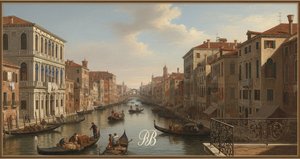
Bernardo Bellotto: Canaletto's Nephew & Master of Veduta Painting – A Comprehensive Exploration
Explore the life & art of Bernardo Bellotto, Canaletto’s nephew and a master of veduta painting. Discover his stunning cityscapes of Dresden & Warsaw, artistic techniques, and lasting legacy. Expert insights for collectors.

Top 10 Meesterwerken van de Geometrische Abstractie | ArtsDot.nl
Ontdek de 10 meest invloedrijke meesterwerken van de geometrische abstractie! Van Mondriaan tot Malevich, leer over kunstenaars, technieken & kleuren. Museumkwaliteit reproducties op ArtsDot.com – voor een unieke interieurstijl.

Piet Mondrian: Deconstructing Reality – A Study of Neo-Plasticism & Universal Harmony
Explore the revolutionary art of Piet Mondrian and the principles of Neo-Plasticism. Discover De Stijl's influence, iconic compositions like 'Composition with Red, Yellow and Blue,' and Mondrian’s lasting legacy on modern design.