


 Voorvertoning
 Verstuur
 Delen
Delen
 Details bekijken

 Download
 Vergelijkbare items
 Röntgenonderzoek
 Diavoorstelling
 Statistieken
Liefde Triomfeert Over Alles
 Olieverf op canvas
- Wanddecoratie
- Baroque Neoclassicism
 1809
1809 179.0 x 205.0 cm
 Metropolitan Museum of Art
 Lees meer
Handgemaakte olieverfreproductie
Met de hand geschilderd in olieverf op canvas in uw gewenste maat en lijst, op bestelling gemaakt door onze kunstenaars. ( Schakel over naar print Schakel over naar digitale afbeelding)




P118B $10

P118H $10

P118W $10

P438Z $10

P508JH $12

P508YH $12

P805H $10

P805Z $10

P919BZ $10

P919G $10

P919XJ $10

P959ZH $10

P968JZ $12

W106C $8

W218G $10

W218JH $8

W218Y $10

W307PJ $10

W316G $10

W316PJ $8

W316Y $10

W398PJ $8

W4111J $10

W500HY $15

W500JH $15

W692G $12

W849H $8

W940BG $15

W953PJ $8




Kies uit onze vooraf ingestelde maten die overeenkomen met de originele verhoudingen van het kunstwerk.

U kunt uw eigen afmetingen invoeren om in een specifieke lijst of ruimte te passen. Als de door u gekozen maat niet overeenkomt met de verhoudingen van het originele beeld, zullen we het kunstwerk bijsnijden of het schilderij uitbreiden met extra handgeschilderde elementen. Een digitale mockup wordt ter goedkeuring naar u verzonden voordat de productie begint.
Houd er rekening mee dat de preview op het scherm niet de werkelijke uitsnede of uitbreiding weergeeft. Alleen de mockup toont de uiteindelijke compositie nauwkeurig.
Hoewel aangepaste afmetingen mogelijk zijn, raden we aan een maat uit de vooraf gedefinieerde lijst te selecteren om de originele verhoudingen te behouden.
Na de bestelling zal het team van ArtsDot.com per e-mail contact opnemen met de klant voor instructies en een mockup-voorbeeld sturen.
Wereldwijde levering () binnen 3 tot 4 weken in plaats van de standaard 5 weken. (18 september). Zonder concessies aan de kwaliteit.

Gratis wereldwijde expressverzending

Hoogwaardig linnen canvas

Volledige verzendverzekering

Garantie op terugbetaling van invoerrechten

Garantie op exacte kleurweergave

Retourbeleid van 100 dagen (alleen bij defecten)

100% Geld-terug-garantie

Korting bij meerdere afnames
 De optie voor glas is alleen beschikbaar bij een formaat kleiner dan 110 cm.

Liefde Triomfeert Over Alles
Druktechniek
Afmetingen reproductie
-


Eindtotaal
$ 313
De Triumph van de Liefde: Een Allegorie van Benjamin West
Benjamin West’s “Omnia Vincit Amor,” of The Power of Love in the Three Elements, is more than just a painting; it's a profound meditation on love’s enduring strength and its dominion over all earthly concerns. Completed in 1809, this monumental work transcends mere representation, plunging the viewer into a dynamic allegory steeped in classical mythology and imbued with a distinctly American sensibility. West, a pioneering figure who bridged the artistic worlds of Europe and America, masterfully employs Neoclassical techniques to convey a narrative brimming with symbolic weight and dramatic intensity.
The scene unfolds on a rugged, almost primordial foreground – a deliberate choice that immediately establishes a sense of raw power and untamed nature. A colossal lion dominates this space, its presence not merely decorative but a potent symbol of courage, strength, and earthly dominion. Above this primal foundation rises the celestial realm, dominated by Diana, the goddess of victory, bestowing a laurel wreath upon an unseen figure – a representation of triumph itself. The composition is carefully orchestrated to guide the eye through a complex web of interconnected elements, each contributing to the overarching theme of love’s ultimate supremacy.
De Symboliek van de Drie Elementen
West meticulously integrates the four classical elements into his allegorical design. To the left stands Venus, the goddess of love, radiating an aura of maternal grace as she embraces her son, Amor – a miniature embodiment of Cupid, armed with his characteristic bow and arrows. This trio immediately establishes the central theme: love’s generative force. Below Venus, we encounter a hippocampus, representing the element Water, symbolizing fluidity, emotion, and intuition. A lion, as previously mentioned, embodies Earth—stability, grounding, and material existence. Crucially, however, the painting doesn't explicitly depict Fire; instead, it is subtly suggested through the radiant glow emanating from Venus herself, the winged Amorettes (little Loves) flitting around her, and most powerfully, in Hymen’s blazing torch – a beacon of marriage and union.
Techniek en Stijl: Een Neoclassieke Visie
The painting's execution is a testament to West’s skill as a painter. He employs dramatic chiaroscuro lighting, creating a powerful contrast between light and shadow that intensifies the emotional impact of the scene. Bold lines, particularly those defining Hymen’s torch and the figures’ gestures, add to the sense of dynamism and movement. The artist skillfully utilizes geometric shapes – triangles for Diana's armor, circles for the laurel wreath – contributing to a structured yet visually engaging composition. The layering of paint and meticulous rendering of textures—noticeable in the lion’s fur and the drapery of Diana’s garments—lend a remarkable sense of depth and materiality to the work.
Een Amerikaanse Identiteit en Historische Context
“Omnia Vincit Amor” is not simply a revival of classical themes; it reflects West's unique position as an American artist deeply influenced by European traditions. His early self-education, learning techniques from Native Americans before formal training, instilled in him a distinctive perspective – one that valued both artistic rigor and a connection to the natural world. West’s involvement in the founding of the Royal Academy in London further underscores his pivotal role in shaping the art landscape of his time. This painting, completed shortly after the Treaty of Paris, reflects a burgeoning sense of national identity within the United States, subtly asserting American values alongside established European artistic conventions. It's a powerful statement on love’s enduring influence, rendered with the confidence and vision of a true pioneer.
Vergelijkbare kunstwerken


Biografie van de kunstenaar
A Pioneer Bridging Worlds: The Life and Legacy of Benjamin West
Born in 1738 amidst the burgeoning landscape of colonial Pennsylvania, Benjamin West emerged as a pivotal figure in the transatlantic art world, a painter who skillfully navigated the currents of Neoclassicism and Romanticism while forging a uniquely American artistic identity. His story is one of remarkable self-education, unwavering ambition, and an extraordinary ability to connect with both aristocratic patrons and revolutionary ideals. From humble beginnings—his father an innkeeper in Springfield—West’s innate talent was nurtured by early exposure to the arts, reportedly learning rudimentary techniques from Native Americans before receiving any formal training. This unconventional start instilled within him a spirit of innovation that would characterize his entire career. He quickly established himself as a sought-after portraitist in Philadelphia and New York, but a thirst for deeper artistic knowledge propelled him towards Europe in 1760, embarking on a journey that would irrevocably alter the course of American art.From Italy to London: Forging a Path to Recognition
West’s arrival in Italy marked a turning point. Immersing himself in the artistic heartland of Europe, he studied the masters—Titian, Raphael—and engaged with contemporary Neoclassical thinkers like Anton Rafael Mengs and Angelica Kauffman. This period was crucial in shaping his aesthetic sensibilities, instilling within him an appreciation for classical form and historical narrative. He spent years meticulously copying works by these giants, absorbing their techniques and developing a profound understanding of composition and color theory. However, it was London that ultimately became his adopted home and artistic center. Arriving in 1763, West swiftly ascended the ranks of the British art scene, captivating audiences with his ambitious canvases and securing the patronage of King George III. This royal endorsement not only provided financial stability but also cemented his position as a leading figure within the establishment. A defining moment came with his election to the Royal Academy in 1769, an institution he would later preside over as President from 1792 until his death. His influence extended beyond his own artistic production; West became a champion for American artists seeking training abroad, offering guidance and support to generations of aspiring painters like Allston, Copley, and Morse.Revolutionizing Historical Painting: Technique and Controversy
West’s impact on the art world wasn't merely about achieving technical mastery; it was about challenging conventions. He dared to reimagine historical painting, moving away from rigid adherence to classical precedent and embracing a more contemporary sensibility. The Death of General Wolfe (1770), arguably his most famous work, exemplifies this revolutionary approach. By depicting the fallen general surrounded by figures in *contemporary* military attire rather than traditional Roman garb, West sparked considerable debate. Critics questioned the historical accuracy, but audiences were captivated by the immediacy and emotional resonance of the scene. It was a bold move, a departure from the idealized depictions prevalent at the time, and it signaled a shift towards greater realism and narrative power in history painting, influencing countless artists who followed. His style evolved over time, incorporating elements of Romanticism into his later works, yet always retaining a commitment to ambitious composition and detailed execution. Other notable pieces like Thetis Bringing the Armor to Achilles, The Three Sisters, The Fright of Astyanax, and The Cave of Despair demonstrate his versatility and mastery across a range of mythological and historical themes. The meticulous detail in his brushwork, combined with dramatic lighting and carefully rendered figures, created works that were both visually stunning and emotionally engaging.A Lasting Legacy: Shaping Artistic Identity
Benjamin West’s legacy extends far beyond the canvases he created. He fundamentally altered the landscape of American art, establishing history painting as a viable genre for American artists and fostering a sense of national artistic identity. His presidency of the Royal Academy solidified his influence on British art, promoting innovation and supporting emerging talent.- He championed a more accessible and emotionally engaging style of historical representation.
- His studio became a haven for American artists seeking training in Europe.
- He bridged the gap between Neoclassical ideals and the burgeoning Romantic movement.
Personal Life and Connections
Beyond his artistic achievements, West’s life was marked by significant personal connections. He maintained close friendships with prominent figures in both American and British society, including Benjamin Franklin, whose portrait he painted, and members of the Royal Family. His marriage to Elizabeth Shewell, an American woman he had met in Philadelphia, further cemented his ties to his homeland. West’s home became a gathering place for artists, intellectuals, and diplomats, fostering a vibrant cultural exchange. He was known for his generosity and hospitality, offering support and encouragement to aspiring artists and contributing significantly to the intellectual life of London. His influence extended beyond the art world, shaping perceptions of American identity and promoting transatlantic understanding.
Benjamin West
1738 - 1820 , Verenigde Staten van Amerika
Belangrijkste feiten
- Artistic Movement Or Style: Neoklassiek, Romantisch
- Artists Or Movements Influenced By This Artist:
- Allston
- Copley
- Morse
- Artists Who Influenced This Artist:
- Titian
- Raphael
- Mengs
- Date Of Birth: 1738-10-10
- Date Of Death: 1820-03-11
- Full Name: Benjamin West
- Nationality: Amerikaans
- Notable Artworks:
- De dood van Wolfe
- Thetis
- Drie zusters
- Place Of Birth: Springfield, USA
Gerelateerde artikelen
Top 10 Neoclassicistische Meesterwerken: Kunstgeschiedenis voor uw Interieur
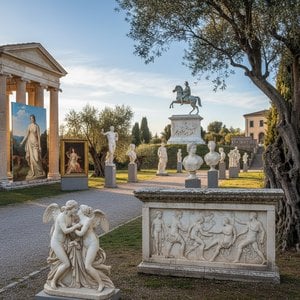
Ontdek de top 10 neoclassicistische meesterwerken! Leer over David, Ingres & Canova en hun tijdloze kunst. Vind museumkwaliteit reproducties voor een elegante inrichting op ArtsDot.com. Exploreer de collectie online!

Benjamin Haughton: Victorian Genre Painting & Social Commentary
Explore the captivating world of Benjamin Haughton, Victorian genre painter. Discover his realistic depictions of daily life, social commentary, and enduring artistic legacy. Shop high-quality reproductions at ArtsDot.

Charles Marion Russell: Capturing the American West Through a Romantic Lens
Explore the captivating world of Charles Marion Russell, 'the cowboy artist.' Discover his life, iconic paintings, advocacy for Native Americans, and investment potential. A guide for discerning art collectors.

The Revival of Antiquity: Exploring Neoclassical Art's Ideals & Enduring Legacy
Explore the revival of classical ideals in Neoclassical art! Discover Jacques-Louis David & the movement's impact on painting, sculpture & architecture. Expert insights & high-quality reproductions at ArtsDot.

Benjamin West: Transatlantic Ambition & Shaping American Art
Explore the life & legacy of Benjamin West, pioneering American artist and Royal Academy president. Discover his Neoclassical masterpieces, transatlantic influence, and lasting impact on art history. Learn more at ArtsDot.


