

 Voorvertoning
 Verstuur
 Delen
Delen
 Details bekijken
 Gids
Gids

 Download
 Vergelijkbare items
 Röntgenonderzoek
 Diavoorstelling
 Q&A
Q&A Statistieken
The Baptism

- 122.0 x 150.0 cm


 Lees meer
De kunstwerken die op deze pagina worden weergegeven, zijn beschermd door de auteursrechtwetgeving, wat betekent dat het ons wettelijk niet is toegestaan om identieke reproducties te maken of te verkopen. Deze bescherming wordt gehandhaafd onder internationale overeenkomsten zoals de Conventie van Bern en door nationale wetgeving, waaronder de bepalingen van de Amerikaanse auteurswet - Titel 17. Alle rechten voorbehouden. Reproduceren of distribueren van afbeeldingen is niet toegestaan zonder uitdrukkelijke schriftelijke toestemming van WahooArt.com en de rechthebbenden.
Deze methode voldoet volledig aan de auteursrechtwetgeving, omdat het niet gaat om het kopiëren of dupliceren van het beschermde kunstwerk. In plaats daarvan is er sprake van een creatieve herinterpretatie — een nieuw schilderij dat door het origineel wordt geïnspireerd, maar er niet identiek aan is.
Giclée / Kunstafdrukken
Giclée- of canvasafdruk van museumkwaliteit met een snelle productie en flexibele afwerkingsmogelijkheden. ( Bestel handgeschilderde reproductie Schakel over naar digitale afbeeldingen)




P118B €10

P118H €10

P118W €10

P438Z €10

P508JH €12

P508YH €12

P805H €10

P805Z €10

P919BZ €10

P919G €10

P919XJ €10

P959ZH €10

P968JZ €12

W106C €8

W218G €10

W218JH €8

W218Y €10

W307PJ €10

W316G €10

W316PJ €8

W316Y €10

W398PJ €8

W4111J €10

W500HY €15

W500JH €15

W692G €12

W849H €8

W940BG €15

W953PJ €8




Kies uit onze vooraf ingestelde maten die overeenkomen met de originele verhoudingen van het kunstwerk.

Voer de gewenste breedte en hoogte in, passend bij uw lijst of muur. Een afdruk kan alleen worden ingekort en nooit groter worden gemaakt dan het origineel; een formaat met andere verhoudingen zal daarom een deel van de afbeelding verliezen. Wij sturen u een digitaal mockup ter goedkeuring voordat we tot drukwerk overgaan. De afbeelding op deze pagina toont niet de werkelijke uitsnede — dit is alleen te zien op het mockup.
Wereldwijde levering () binnen 2 weken in plaats van de standaard 4/5 weken. (3 november)

Gratis wereldwijde expressverzending

Hoogwaardig linnen canvas

Volledige verzendverzekering

Garantie op terugbetaling van invoerrechten

Garantie op exacte kleurweergave

Retourbeleid van 100 dagen (alleen bij defecten)

100% Geld-terug-garantie

Korting bij meerdere afnames
 De optie voor glas is alleen beschikbaar bij een formaat kleiner dan 110 cm.

The Baptism
Giclée / Kunstafdrukken
Afmetingen reproductie
-


Eindtotaal
€ 56
A Moment Frozen in Time
In The Baptism, Antonio Donghi achieves something truly extraordinary: he captures a fragment of middle-class life and suspends it in a state of eternal, quietude. The painting presents a family scene featuring three central figures, where a man in a suit and tie and a woman cradling a baby are set within a space that feels simultaneously real and profoundly abstract. There is a haunting quality to the composition; the individuals appear almost as immobile wax statues on a podium, their expressions neutral and strangely detached from the joyous occasion they are celebrating. This sense of emotional distance creates a tension between the sacred nature of the ritual and the stoic, almost frozen presence of the participants, as if they are waiting for a ritual photograph that will never quite capture their true essence.
< p>The atmosphere is charged with an unreal lack of familiarity, driven by an adamant painting style and a fixed, absorbed light that illuminates the scene with surgical precision. Donghi’s mastery lies in his ability to use light not just to reveal form, but to create a sense of mystery. The figures are set in a minimal environment that strips away the distractions of the modern world, leaving only the essential elements of the event. This deliberate reduction of detail allows the viewer to focus on the subtle interplay of texture and shadow, making the painting feel less like a mere depiction of an event and more like a dreamlike meditation on existence itself.The Artistry of Neoclassical Precision
Technically, The Baptism is a triumph of the Neoclassical movement, showcasing Donghi’s refined ability to marry meticulous detail with a powerful, structured composition. His attention to the clothing of the subjects—a skill perhaps inherited from his father, a fabric dealer—serves a deeper purpose than mere ornamentation; it functions as a way to socially characterize the roles of those portrayed. Every fold in the fabric and every sharp line in the attire contributes to the painting's sense of social order and permanence. The spatial clarity is remarkable, with each element occupying its place with absolute certainty, reminiscent of the architectural stability found in the works of Renaissance masters like Piero della Francesca.
For the discerning collector or interior designer, this work offers a unique aesthetic value. It possesses a Magical Realism that avoids the chaotic energy of much modern art, offering instead a sense of profound, meditative calm. The painting’s ability to evoke both the mundane and the monumental makes it a captivating centerpiece for any sophisticated space. Whether one is drawn to its smooth, polished surfaces or its enigmatic, quiet dignity, The Baptism stands as a testament to the power of stillness. It invites the observer to pause, to look closely, and to find beauty in the silent resonance of a single, captured moment.
Veelgestelde vragen
Uit welke periode stamt "The Baptism"?
"The Baptism" behoort tot de Modern-periode.
Hoe brengt "The Baptism" licht en donker in evenwicht?
De helderheid van "The Baptism" door Antonio Donghi is vastgelegd op shadow, met een luminantie van Dark.
Hoe groot is het contrast in "The Baptism" door Antonio Donghi?
Het contrastniveau van "The Baptism" door Antonio Donghi is Balanced.
Vergelijkbare kunstwerken


Biografie kunstenaar
Antonio Donghi: The Quiet Master of Neoclassicism
Antonio Donghi (March 16, 1897 – July 16, 1963) was an Italian painter who achieved renown for his meticulous depictions of everyday life and landscapes rendered in a distinctly neoclassical style. Born in Rome, he embarked on a formative artistic journey at the Instituto di Belle Arti before serving during World War I, experiences that profoundly shaped his worldview and artistic sensibilities. Donghi’s distinctive approach—characterized by serene compositions, precise spatial representation, and an understated elegance—established him as one of Italy's foremost figures within the neoclassical movement that flourished in the 1920s.Early Life and Artistic Training
Donghi’s formal education began at the Instituto di Belle Arti in Rome where he honed his skills in drawing and painting under influential instructors. This foundational training instilled a disciplined technique and an appreciation for classical ideals—traits that would permeate throughout his oeuvre. He diligently studied the works of masters like Piero della Francesca and Henri Rousseau, absorbing inspiration from their masterful use of form and color. These formative years cultivated a sensitivity to visual harmony and compositional balance that would become hallmarks of his later artistic endeavors.The Neoclassical Movement and Artistic Style
Donghi’s artistic career gained momentum during the neoclassical movement, which sought to revive the grandeur and clarity of antiquity while retaining a modern sensibility. Critics noted striking parallels between Donghi's paintings and those of Seurat, praising his ability to capture subtle nuances of emotion and atmosphere—a characteristic that distinguished him from many of his contemporaries. Donghi’s technique was remarkably consistent: he favored meticulous brushwork, achieving remarkable spatial depth and tonal gradation. His subjects often revolved around scenes of rural life – laundresses, circus performers, musicians – depicted with a quiet dignity and understated realism. Notably, Donghi's still lifes—particularly those featuring vases of flowers—were imbued with the serene symmetry of naive art, reflecting his fascination with simplicity and natural beauty. He skillfully blended classical principles with contemporary observation, creating images that resonated with both timeless elegance and palpable human presence.Recognition and Awards
Donghi’s artistic talent garnered considerable acclaim during his lifetime. He secured First Prize at an International Exhibit held at Carnegie Institute in Pittsburgh in 1927, cementing his reputation as a significant contributor to the Italian art scene. This recognition propelled him into the spotlight of European avant-garde circles and solidified his position within the burgeoning magic realism trend championed by Franz Roh. Donghi’s unwavering dedication to artistic excellence ensured that he remained active throughout his career, consistently exhibiting his work and engaging with fellow artists.Later Years and Legacy
Donghi's artistic focus shifted towards landscapes in his later years, where he continued to explore linear patterns and tonal harmonies—techniques honed during his initial training. Although Donghi’s prominence waned somewhat after World War II, he persevered in pursuing his craft until his death in Rome in 1963. His paintings reside primarily in Italian collections, notably the Museo di Roma, where they serve as enduring reminders of a masterful artist who captured the essence of both tradition and modernity. Donghi’s legacy resides in his ability to convey profound emotion through restrained visual language—a testament to the power of quiet contemplation and unwavering artistic conviction. Explore Antonio Donghi's page at ArtsDot to learn more about his life and work.
Antonio Donghi
1897 - 1963 , Italie
Belangrijkste feiten
- Artistic Movement Or Style: Neoclassicisme
- Artists Or Movements Influenced By This Artist: ['Naive Art']
- Artists Who Influenced This Artist:
- Henri Rousseau
- Georges Seurat
- Date Of Birth: March 16, 1897
- Date Of Death: July 16, 1963
- Full Name: Antonio Donghi
- Nationality: Italiaans
- Notable Artworks:
- De Baptisten
- Een vrouw in een café
- Place Of Birth: Rome, Italy
Gerelateerde artikelen

The Enduring Legacy of Family Portraiture: A Historical & Artistic Exploration
Explore the rich history of family portraiture with ArtsDot. Discover artistic styles, symbolism & collecting insights. Commission a custom oil painting or appraise your existing artwork today!

Raphael's Meesterwerken: 25 Iconische Kunstwerken voor uw Interieur | ArtsDot
Ontdek de 25 meest iconische meesterwerken van Raphael! Duik in de Renaissance kunst, bewonder zijn portretten & religieuze schilderijen. Hoogwaardige reproducties voor uw interieur op ArtsDot.com.
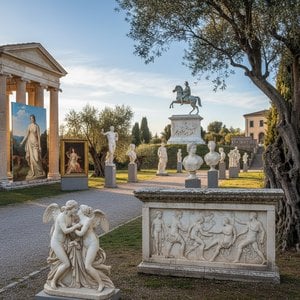
Top 10 Neoclassicistische Meesterwerken: Kunstgeschiedenis voor uw Interieur
Ontdek de top 10 neoclassicistische meesterwerken! Leer over David, Ingres & Canova en hun tijdloze kunst. Vind museumkwaliteit reproducties voor een elegante inrichting op ArtsDot.com. Exploreer de collectie online!

Claude Monet's Top 25 Meesterwerken: Kleur, Licht & Impressionisme | ArtsDot
Ontdek de 25 meest iconische werken van Claude Monet! Duik in de wereld van impressionisme, kleur en licht. Van Waterlelies tot Zonsopgang – bekijk de meesterwerken & vind perfecte kunst voor jouw interieur op ArtsDot.com.

Van Kinderkamer tot Familieverhalen: Gepersonaliseerde Portretten als Chroniek van Generaties
Laat een uniek familieportret schilderen door professionele kunstenaars. Bewaar uw dierbare herinneringen voor altijd met een gepersonaliseerd meesterwerk. Vraag nu een offerte aan!