

 Voorvertoning
 Verstuur
 Delen
Delen
 Details bekijken
 Gids
Gids

 Download
 Vergelijkbare items
 Röntgenonderzoek
 Diavoorstelling
 Q&A
Q&A Statistieken
Intersections N° 6

 Lees meer
De kunstwerken die op deze pagina worden weergegeven, zijn beschermd door de auteursrechtwetgeving, wat betekent dat het ons wettelijk niet is toegestaan om identieke reproducties te maken of te verkopen. Deze bescherming wordt gehandhaafd onder internationale overeenkomsten zoals de Conventie van Bern en door nationale wetgeving, waaronder de bepalingen van de Amerikaanse auteurswet - Titel 17. Alle rechten voorbehouden. Reproduceren of distribueren van afbeeldingen is niet toegestaan zonder uitdrukkelijke schriftelijke toestemming van WahooArt.com en de rechthebbenden.
Deze methode voldoet volledig aan de auteursrechtwetgeving, omdat het niet gaat om het kopiëren of dupliceren van het beschermde kunstwerk. In plaats daarvan is er sprake van een creatieve herinterpretatie — een nieuw schilderij dat door het origineel wordt geïnspireerd, maar er niet identiek aan is.
Giclée / Kunstafdrukken
Giclée- of canvasafdruk van museumkwaliteit met een snelle productie en flexibele afwerkingsmogelijkheden. ( Bestel handgeschilderde reproductie Schakel over naar digitale afbeeldingen)




































Kies uit onze vooraf ingestelde maten die overeenkomen met de originele verhoudingen van het kunstwerk.

Voer de gewenste breedte en hoogte in, passend bij uw lijst of muur. Een afdruk kan alleen worden ingekort en nooit groter worden gemaakt dan het origineel; een formaat met andere verhoudingen zal daarom een deel van de afbeelding verliezen. Wij sturen u een digitaal mockup ter goedkeuring voordat we tot drukwerk overgaan. De afbeelding op deze pagina toont niet de werkelijke uitsnede — dit is alleen te zien op het mockup.
Wereldwijde levering () binnen 2 weken in plaats van de standaard 4/5 weken. (2 november)

Gratis wereldwijde expressverzending

Hoogwaardig linnen canvas

Volledige verzendverzekering

Garantie op terugbetaling van invoerrechten

Garantie op exacte kleurweergave

Retourbeleid van 100 dagen (alleen bij defecten)

100% Geld-terug-garantie

Korting bij meerdere afnames
 De optie voor glas is alleen beschikbaar bij een formaat kleiner dan 110 cm.

Intersections N° 6
Giclée / Kunstafdrukken
Afmetingen reproductie
-


Eindtotaal
€ 56
Vergelijkbare kunstwerken


Biografie kunstenaar
Early Life and Artistic Awakening
Alberto Magnelli, born in Florence on July 1st, 1888, emerged as a pivotal figure in the evolution of abstract art, though his path to pure abstraction was anything but direct. Unlike many artists formally trained within established academies, Magnelli was largely self-taught. His initial artistic spark ignited during a family vacation in the Tuscan Apennines in 1907, accompanying an antiques dealer and painter—a formative experience that set him on a lifelong creative trajectory. By 1909, remarkably quickly, he had gained enough recognition to exhibit at the prestigious Venice Biennale, signaling his early promise within the Italian art world. These initial works were characterized by a vibrant Fauvist sensibility, revealing a fascination with bold color and expressive brushwork. However, Magnelli’s artistic spirit was restless; he soon sought broader horizons, embarking on journeys that would fundamentally reshape his aesthetic vision.Parisian Encounters and Early Abstraction
The year 1914 proved transformative as Magnelli made his first sojourn to Paris, a city then pulsating with avant-garde energy. It was here, amidst the burgeoning Cubist movement, that he forged crucial connections with leading figures like Apollinaire, Picasso, Gris, and Léger. These encounters profoundly impacted his artistic development, prompting him to experiment with simplified forms and flattened perspectives. He began developing an “elliptical form of figurative painting,” as described by scholars, a style that gradually distilled into abstraction through a process of deliberate reduction. This period saw the emergence of *Explosions lyriques* (Lyric Explosions) in 1918, works demonstrating a dynamic interplay between constructive figuration and nascent abstract elements. Yet, Magnelli remained an independent voice, resisting complete assimilation into any single school or ideology.A Period of Reflection and Return to Abstraction
The outbreak of World War I prompted Magnelli’s return to Italy, leading to a surprising shift in his artistic focus. He temporarily moved away from abstraction, exploring more traditional landscapes and figurative compositions—albeit rendered with an abstracted sensibility. This period represented a moment of reflection, a departure from the radical experimentation of his Parisian years. However, this detour proved temporary. In the early 1930s, a visit to the marble quarries of Carrara reignited his passion for abstraction. The immense blocks of stone inspired the *Pierres éclatées* (Shattered Stones) series, marking a crucial turning point in his artistic journey and laying the foundation for his mature style. In October 1931, Magnelli definitively settled in Paris, embracing the city as his permanent creative base.Concrete Art and Lasting Legacy
From 1937 onward, Magnelli’s work irrevocably embraced abstraction, solidifying his position as a pioneer of Concrete art—an artistic movement focused on pure geometric forms and non-representational compositions. His canvases became arenas for the interplay of elegant shapes, balanced color palettes, and dynamic spatial relationships. He skillfully combined subjective form with rigorous discipline, creating works that were both visually compelling and intellectually stimulating. During the challenging years of World War II, Magnelli continued to create, finding solace in his art despite limited resources. This period saw him explore collage and *ardoises* (slate paintings), innovative techniques born out of necessity. After the war, he actively participated in exhibitions like Salon des Réalités Nouvelles, championing a vision of abstract art that prioritized imagination and dynamism. Alberto Magnelli passed away in 1971, leaving behind a rich body of work that continues to inspire artists and captivate audiences with its timeless elegance and enduring power. His legacy lies not only in his pioneering role within Concrete art but also in his unwavering commitment to artistic independence and the pursuit of pure visual expression.
Alberto Magnelli
1888 - 1971 , Italy
Belangrijkste feiten
- Full Name: Josef Albers
- Nationality: German-American
- Date Of Birth: 1888
- Date Of Death: 1971
- Place Of Birth: Florence, Italy
- Notable Artworks:
- Homage to the Square
- Yellow Hexagons
- Artistic Movement Or Style: Abstract painting, Color theory
- Artists Who Influenced This Artist:
- Paul Klee
- Wassily Kandinsky
- Artists Or Movements Influenced By This Artist:
- Color Field painting
- Bauhaus movement
Gerelateerde artikelen

Beyond Form & Color: Geometric Abstraction's Enduring Legacy in Art History
Explore the captivating world of geometric abstraction! Discover its origins, key artists like Malevich & Mondrian, and why this movement remains highly valued by art collectors today. Expert insights at ArtsDot.

Beyond Form & Color: Geometric Abstraction's Evolution in 20th/21st Century Art
Explore the evolution of geometric abstraction from Cubism to contemporary art. Discover key artists like Malevich & Mondrian, investment insights, and expert collecting advice at ArtsDot.
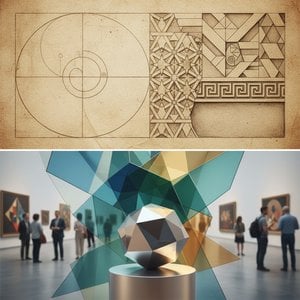
Geometric Design in Art: A Historical Survey & Contemporary Appeal for Collectors
Explore the enduring legacy of geometric abstraction! Discover key artists, historical movements & investment insights for discerning art collectors. Expert guidance from ArtsDot.

Top 10 Meesterwerken van de Geometrische Abstractie | ArtsDot.nl
Ontdek de 10 meest invloedrijke meesterwerken van de geometrische abstractie! Van Mondriaan tot Malevich, leer over kunstenaars, technieken & kleuren. Museumkwaliteit reproducties op ArtsDot.com – voor een unieke interieurstijl.

Beyond Form & Function: A History of Geometric Art's Enduring Appeal
Explore the captivating history of geometric abstraction, from its revolutionary origins to contemporary masters. Expert insights for art collectors & investors. Discover key artists and build your collection with ArtsDot.