
- Home

- Op canvas afdrukken
- Alberto Giacometti
- Flower in Danger
 Bestel schilderij Koop afbeelding in hoge resolutie
 Verstuur
 Delen
Delen
 Details
 Toevoegen aan favorieten

 Download
 Vergelijkbare werken
 X-Ray
X-Ray
 Diavoorstelling
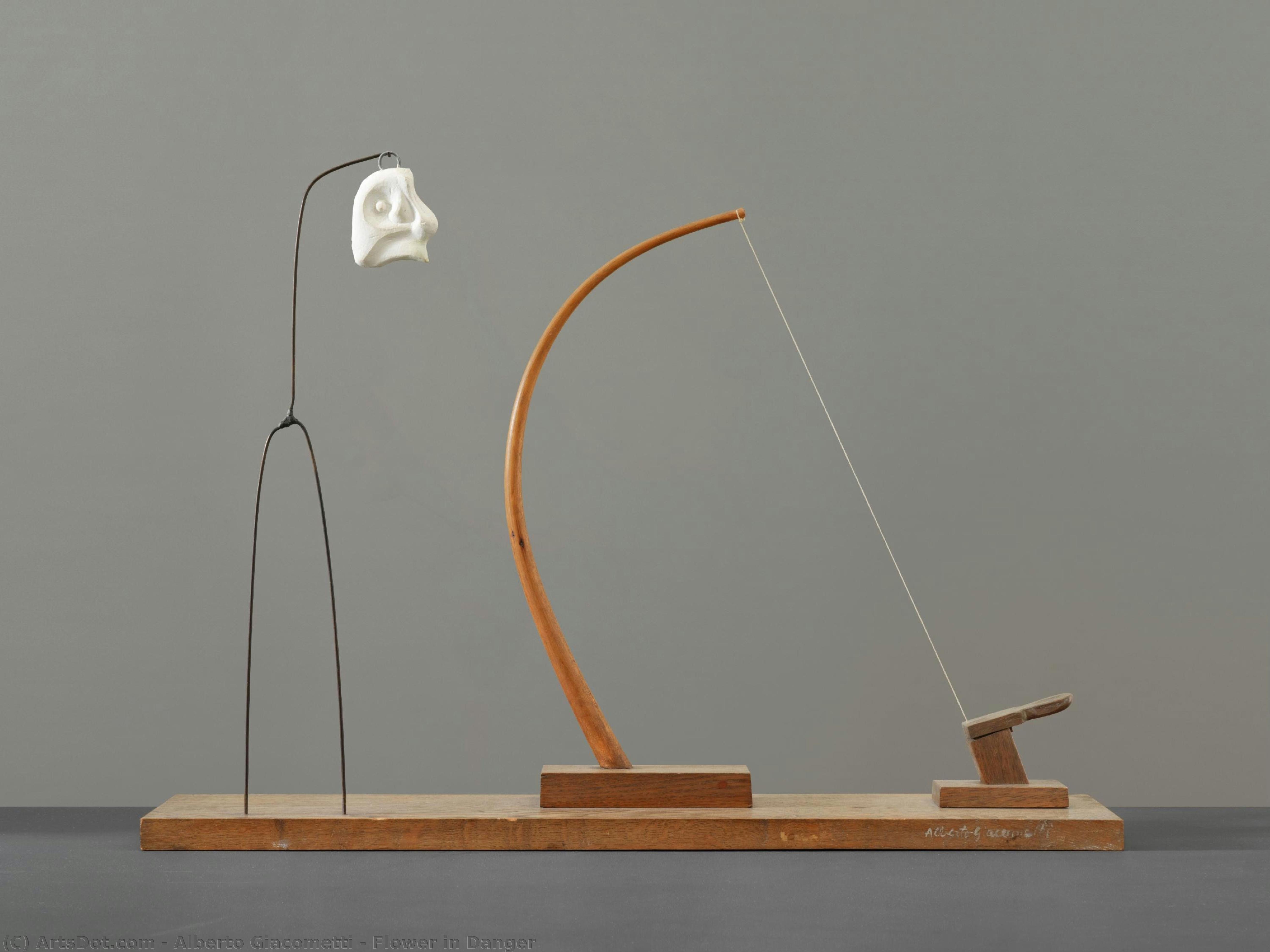
Flower in Danger
 Mixed Materials
- Sculpture
- Surrealism
 1932
1932 56.0 x 78.0 cm
 Kunsthaus Zürich
Giclée / Kunstafdruk
Giclée- of canvasafdruk van museumkwaliteit met snelle productie en flexibele afwerkingsopties.
 Lees meer over



































Kies uit onze vooraf ingestelde maten die overeenkomen met de originele verhoudingen van het kunstwerk.

U kunt uw eigen afmetingen opgeven om in een specifieke lijst of ruimte te passen. Als de door u gekozen maat niet overeenkomt met de proporties van het originele kunstwerk, zullen wij de afbeelding bijsnijden of uitbreiden met een gespiegelde of effen rand. Een digitaal mockup wordt ter goedkeuring naar u verzonden voordat de productie begint.
Houd er rekening mee dat de preview op het scherm de werkelijke bijsneding of uitbreiding niet weergeeft. Alleen de mockup toont de uiteindelijke compositie nauwkeurig.
Hoewel aangepaste maten beschikbaar zijn, raden wij aan een afmeting uit de vooraf bepaalde lijst te kiezen om de originele proporties te behouden.
Wereldwijde levering () binnen 2 weken in plaats van de standaard 4/5 weken. (1 juli)

Gratis wereldwijde expressverzending

Hoogwaardig linnen canvas

Volledige verzendverzekering

Garantie op terugbetaling van invoerrechten

Garantie op exacte kleurweergave

60 dagen retourbeleid (alleen bij defecten)

100% Geld-terug-garantie

Korting bij meerdere afnames
 De optie voor glas is alleen beschikbaar bij een formaat kleiner dan 110 cm.

Flower in Danger
Giclée / Kunstafdruk
Afmetingen reproductie
-


Eindtotaal
-
Beschrijving verzamelobject
Alberto Giacometti’s “Flower in Danger”: A Silent Plea for Preservation
The sculpture "Flower in Danger," created by Alberto Giacometti in 1932, stands as a poignant emblem of existentialist art and a testament to the artist's masterful manipulation of form and space. Executed in wood, plaster, wire, and string – materials chosen deliberately to convey fragility and vulnerability – it’s more than just an aesthetically pleasing object; it’s a visual meditation on themes of mortality and the urgent need for safeguarding beauty amidst encroaching threats. Giacometti's distinctive style, characterized by elongated figures that seem to defy gravity, immediately establishes itself as a departure from traditional sculptural conventions. This deliberate distortion isn’t merely stylistic flourish; it serves as a powerful metaphor for confronting anxieties about existence and grappling with the precariousness of life itself.- Material Composition: The sculpture utilizes wood as its primary structural element, providing stability while simultaneously highlighting its inherent vulnerability. Plaster reinforces this fragility, creating an impression of delicate balance—a visual representation of the flower’s fragile state. Wire and string are interwoven throughout the piece, adding textural complexity and subtly suggesting connections between disparate elements.
- Technique: Giacometti employed a subtractive sculpting technique, meticulously carving away material to reveal the underlying form. This painstaking process underscores the artist's commitment to capturing essence rather than replicating surface detail—a hallmark of Surrealist art’s exploration of subconscious imagery and emotional resonance.
Emotional Impact
“Flower in Danger” evokes a profound sense of melancholy and contemplation—a reminder of the ephemeral nature of existence and the importance of cherishing moments of beauty. Its stark simplicity compels viewers to confront uncomfortable truths about vulnerability and loss, prompting reflection on our role in protecting the natural world and safeguarding artistic legacies for future generations. The sculpture’s enduring power resides not merely in its formal qualities but also in its ability to resonate with audiences on an emotional level—a testament to Giacometti's profound understanding of the human condition.Vergelijkbare kunstwerken


Biografie van de kunstenaar
A Life Sculpted by Existential Echoes
Alberto Giacometti, a name synonymous with the hauntingly elongated figures that define much of 20th-century sculpture, was born in 1901 amidst the breathtaking landscapes of Borgonovo, Switzerland. This alpine setting, nestled near the Italian border, instilled within him an early appreciation for form and space – qualities that would profoundly shape his artistic vision. He wasn’t simply entering a world of art; he was *born* into it. His father, Giovanni Giacometti, was a respected Post-Impressionist painter, and this familial immersion provided both encouragement and a foundation upon which young Alberto could build. The echoes of the Reformation resonated within his lineage too, as his family descended from Protestant refugees who had sought sanctuary from persecution, perhaps contributing to a lifelong exploration of isolation and the human condition. His brothers, Diego – himself a sculptor – and Bruno, an architect, further cemented art’s central role in their lives, creating a dynamic creative atmosphere that fostered experimentation and mutual influence.From Cubism to the Void: A Shifting Artistic Landscape
Giacometti's formal artistic journey began at the Geneva School of Fine Arts, but it was his move to Paris in 1922 that truly ignited his creative fire. He entered the studio of Antoine Bourdelle, a former associate of Rodin, absorbing classical techniques while simultaneously being swept up by the avant-garde currents swirling through the city. The early years were marked by an exploration of Cubism, dismantling and reassembling forms in a manner reflective of the era’s intellectual ferment. However, Giacometti wasn't content to merely mimic; he sought his own voice, moving towards a more personal style that focused intently on the human figure. This period saw him gravitating toward Surrealism, creating works imbued with dreamlike imagery and psychological depth, associating with luminaries like Miró, Ernst, and Picasso. Yet, even within this movement, Giacometti felt constrained. He ultimately rejected its purely subconscious approach, yearning for a more rigorous analysis of figurative composition – a desire to understand the essence of being through form. The late 1930s witnessed a dramatic shift in scale; he began producing incredibly small sculptures, often no larger than seven centimeters tall. These diminutive figures weren’t simply miniature representations but rather expressions of distance, both physical and emotional, reflecting a sense of detachment and loss that permeated his worldview.The Post-War Silhouette: Fragility and the Human Condition
The devastation of World War II profoundly impacted Giacometti's work. Taking refuge in Switzerland during the conflict, he continued to sculpt, but it was after the war that he achieved his most iconic style – the tall, attenuated figures for which he is celebrated today. These weren’t portraits in the traditional sense; they were distillations of human presence, stripped down to their essential forms. Rough surfaces and elongated limbs conveyed a profound sense of fragility and isolation, mirroring the existential anxieties of the post-war era. They seem perpetually on the verge of dissolving into nothingness, embodying the precariousness of existence. These sculptures weren’t merely *of* people; they were explorations of what it meant to *be* human in a world grappling with trauma and uncertainty. The space surrounding these figures is as crucial as the forms themselves – an imaginary yet tangible realm that speaks to our own sense of alienation and longing. Simultaneously, Giacometti's painting gained prominence, mirroring the themes of isolation and attenuation found in his sculptures through almost monochromatic depictions of the human form.Influences and Artistic Evolution
Giacometti’s formative years were shaped by a deep engagement with Impressionism and Post-Impressionism, notably Rembrandt van Rijn and Auguste Renoir, whose mastery of light and emotion served as an early inspiration. Bourdelle's guidance instilled in him a disciplined approach to sculpture, emphasizing anatomical accuracy alongside expressive gesture. The Surrealists—particularly Miró and Ernst—challenged Giacometti’s intellectual framework, prompting him to reconsider the role of subconsciousness in artistic creation. He actively sought connections with fellow artists like Picasso and Calder, fostering dialogue and debate about artistic ideals. His stylistic trajectory moved from Cubism's fragmentation to Surrealism's dreamlike distortions before settling into his distinctive elongated figures—a deliberate rejection of representational conventions that prioritized psychological depth over visual realism.Major Achievements and Recognition
Giacometti’s sculptural output spanned decades, producing masterpieces such as *The City Square*, *Reclining Woman Who Dreams*, and *Standing Figure*. His monumental sculptures for the Chase Manhattan Bank Building in New York—a project he ultimately abandoned due to dissatisfaction with its environment—remain a testament to his uncompromising artistic vision. He received the Grand Prize for Sculpture at the Venice Biennale in 1962, cementing his reputation as one of the foremost sculptors of his time and securing his place within the canon of modern art. His legacy continues to inspire artists worldwide, demonstrating the enduring power of art to grapple with fundamental questions about human existence and perception.
Alberto Giacometti
1901 - 1966 , Zwitserland
Belangrijkste feiten
- Artistic Movement Or Style: Existentialisme en Surrealisme
- Artists Or Movements Influenced By This Artist:
- Miró
- Ernst
- Artists Who Influenced This Artist:
- Antoine Bourdelle
- Rodin
- Date Of Birth: 1901
- Date Of Death: 1966
- Full Name: Alberto Giacometti
- Nationality: Zwitserse kunstenaar
- Notable Artworks:
- De Stadskwartier
- Liggende vrouw die droomt
- Place Of Birth: Borgonovo, Zwitserland
Gerelateerde artikelen

Giovanni Giacometti: Sculpting Existentialism – A Study of Form, Space, and the Human Condition
Explore the profound artistic journey of Giovanni Giacometti, father to Alberto. Discover his unique transition from Surrealism to Existentialist sculpture and painting – a compelling study for elite collectors and art enthusiasts.


H.R. Giger's Biomechanical Visions: Surrealism, Technology & Existential Dread
Explore the haunting biomechanical world of H.R. Giger, creator of Alien. Discover his surrealist masterpieces, existential themes & lasting impact on art and culture. A guide for collectors.

The Gritty Muse: Industrial Vibe as Defining Aesthetic in Modern Artwork
Explore the captivating world of industrial aesthetics in modern art. Discover key movements, influential artists & collecting insights at ArtsDot.com – your source for museum-quality reproductions and expert art guidance.
The Enduring Allure of Marble in Art History: From Classical Sculpture to Modern Abstraction
Explore the captivating history of marble sculpture from ancient Greece to modern art. Discover renowned artists like Canova & Michelangelo, carving techniques, and investment insights at ArtsDot.

The Eloquent Body: A Historical & Artistic Exploration of Figures in Painting & Sculpture
Explore the rich history of figure painting & sculpture! Discover classical masterpieces, modern interpretations, and expert insights for art lovers & collectors. ArtsDot offers museum-quality reproductions.

