


 Voorvertoning
 Verstuur
 Delen
Delen
 Details bekijken

 Download
 Vergelijkbare items
 Röntgenonderzoek
 Diavoorstelling
 Statistieken
Sukkaa kutova tyttö


 Lees meer
Giclée / Kunstafdrukken
Giclée- of canvasafdruk van museumkwaliteit met een snelle productie en flexibele afwerkingsmogelijkheden. ( Bestel handgeschilderde reproductie Schakel over naar digitale afbeelding)




P118B $10

P118H $10

P118W $10

P438Z $10

P508JH $12

P508YH $12

P805H $10

P805Z $10

P919BZ $10

P919G $10

P919XJ $10

P959ZH $10

P968JZ $12

W106C $8

W218G $10

W218JH $8

W218Y $10

W307PJ $10

W316G $10

W316PJ $8

W316Y $10

W398PJ $8

W4111J $10

W500HY $15

W500JH $15

W692G $12

W849H $8

W940BG $15

W953PJ $8




Kies uit onze vooraf ingestelde maten die overeenkomen met de originele verhoudingen van het kunstwerk.

U kunt uw eigen afmetingen opgeven om in een specifieke lijst of ruimte te passen. Als de door u gekozen maat niet overeenkomt met de proporties van het originele kunstwerk, zullen wij de afbeelding bijsnijden of uitbreiden met een gespiegelde of effen rand. Een digitaal mockup wordt ter goedkeuring naar u verzonden voordat de productie begint.
Houd er rekening mee dat de preview op het scherm de werkelijke bijsneding of uitbreiding niet weergeeft. Alleen de mockup toont de uiteindelijke compositie nauwkeurig.
Hoewel aangepaste maten beschikbaar zijn, raden wij aan een afmeting uit de vooraf bepaalde lijst te kiezen om de originele proporties te behouden.
Wereldwijde levering () binnen 2 weken in plaats van de standaard 4/5 weken. (10 september)

Gratis wereldwijde expressverzending

Hoogwaardig linnen canvas

Volledige verzendverzekering

Garantie op terugbetaling van invoerrechten

Garantie op exacte kleurweergave

Retourbeleid van 100 dagen (alleen bij defecten)

100% Geld-terug-garantie

Korting bij meerdere afnames
 De optie voor glas is alleen beschikbaar bij een formaat kleiner dan 110 cm.

Sukkaa kutova tyttö
Giclée / Kunstafdrukken
Afmetingen reproductie
-


Eindtotaal
$ 63
Albert Edelfelt’s “Sukkaa kutova tyttö”: A Portrait of Rural Finland
“Sukkaa kutova tyttö” – "Girl Knitting a Sock" – is more than just a depiction of a young girl; it's a poignant window into the heart of 19th-century Finnish rural life, masterfully rendered by Albert Edelfelt. Painted in 1878, this work exemplifies Edelfelt’s pivotal shift away from grand historical narratives towards a deeply personal and naturalistic style that would ultimately define his legacy as Finland's greatest artist. The scene unfolds within the tranquil embrace of a Finnish forest, a setting meticulously observed and imbued with a quiet dignity.
The central figure, a young girl absorbed in her task of knitting a sock, dominates the composition. Her posture is relaxed yet attentive, her expression thoughtful – a subtle blend of concentration and perhaps a touch of melancholy. The artist’s skill lies not just in capturing her physical likeness but also in conveying an intangible sense of character, hinting at the hardships and quiet resilience inherent in rural existence. The presence of several other figures, subtly placed within the background, adds to the scene's realism, suggesting a bustling household or perhaps a communal gathering – a vital element of Finnish village life.
Realism and the Rise of National Identity
Edelfelt’s artistic journey was profoundly shaped by his time in Antwerp and Paris. Initially trained in the academic tradition of history painting under Jean-Léon Gerome, he quickly recognized the limitations of this style when applied to Finnish subjects. His move towards realism began with a desire to authentically portray the lives of his countrymen – a crucial step in fostering a sense of national identity during a period of increasing political and cultural awareness within Finland.
The painting’s setting, a dense Finnish forest, is not merely a backdrop; it's an integral part of the narrative. The trees, rendered with meticulous detail, evoke a sense of timelessness and connection to the land – a theme that would become increasingly important in Finnish art and literature during this era. This focus on the natural world reflects Edelfelt’s commitment to representing Finland’s unique landscape and culture to the wider world.
Technique and Composition
"Sukkaa kutova tyttö" showcases Edelfelt's mastery of oil painting techniques. The brushwork is smooth yet textured, creating a palpable sense of depth and atmosphere. He employs subtle gradations of light and shadow to model the figures and their surroundings, lending them a remarkable three-dimensionality. The composition itself is carefully balanced, with the girl occupying the central space while the surrounding elements – the trees, the rock, and the other figures – contribute to a harmonious whole.
Notice the use of color; muted greens, browns, and blues dominate the palette, reflecting the natural tones of the Finnish forest. These colors are not merely descriptive; they evoke a sense of tranquility and serenity, reinforcing the painting’s overall mood. The artist's attention to detail – from the texture of the girl’s dress to the individual strands of yarn – is remarkable, demonstrating his dedication to capturing the nuances of everyday life.
Symbolism and Emotional Impact
Beyond its realistic depiction of rural Finland, “Sukkaa kutova tyttö” carries a subtle symbolic weight. The act of knitting itself represents hard work, domesticity, and the continuation of tradition – values deeply rooted in Finnish culture. The girl’s contemplative expression suggests a connection to something larger than herself, perhaps a sense of responsibility or a yearning for a better future.
Edelfelt's ability to evoke such profound emotions through seemingly simple subject matter is a testament to his artistic genius. “Sukkaa kutova tyttö” remains a powerful and enduring image of Finland – a celebration of its people, its landscape, and its cultural heritage. A hand-painted reproduction offers an unparalleled opportunity to experience the beauty and emotional depth of this iconic work firsthand.
Vergelijkbare kunstwerken


![Pas Mèche [nothing Doing] — Jules Bastien-lepage, Naturalist Painting](/media/artworks/images-thumb/01/c8/01c885499ff56bb2e6383eef008f6c1b.jpg)


Biografie van de kunstenaar
Early Life and Education
Albert Gustaf Aristides Edelfelt, a towering figure in Finnish art history, was born on July 21st, 1854, in Porvoo, Finland—a city steeped in Swedish heritage. His parents, Carl Albert Edelfelt, a respected civil servant, and Alexandra Edelfelt (née Brandt), were both fluent in Swedish, reflecting the broader cultural landscape of their time. From a young age, Edelfelt demonstrated an undeniable fascination with artistic pursuits, propelling him to enroll at the Drawing School of the Finnish Art Society in 1869. This formative experience laid the groundwork for his lifelong dedication to mastering the visual arts.Artistic Journey
Edelfelt’s artistic trajectory unfolded across several prestigious institutions, each contributing to his refined skillset and broadening his understanding of artistic expression: Antwerp Academy of Art (1873-74) provided him with invaluable training in history painting—a genre favored by luminaries like Jean-Léon Gérôme. Subsequently, École nationale des beaux-arts in Paris (1874-78), under the guidance of Gérôme himself, solidified his grasp on technique and fostered a deeper appreciation for Impressionistic influences. A brief foray into Saint Petersburg (1881-82) exposed him to the vibrant artistic currents circulating within Russia’s cultural capital, enriching his perspective and expanding his repertoire.Rise to Prominence and Notable Works
Edelfelt's ascent to artistic acclaim commenced with a resounding victory at the Paris Universal Exposition of 1889—where he secured a gold medal for his monumental canvas depicting “The Battle of Slivo Pole.” This achievement catapulted him into international recognition, establishing him as one of Finland’s foremost artists. Among his most celebrated creations are: * “Portrait of Louis Pasteur,” commissioned by the Pasteur Institute in Paris, earning him the Legion of Honor—a testament to Edelfelt's ability to capture intellectual brilliance and human compassion. * “Young Woman in Her Boudoir,” a masterful depiction of feminine grace and intimacy, showcasing Edelfelt’s meticulous attention to detail and nuanced tonal palette. * “Under the Birches,” arguably his most iconic work—a breathtaking landscape infused with melancholic beauty and symbolic resonance—capturing the essence of Finnish wilderness and conveying profound emotional depth.Legacy and Impact
Albert Edelfelt stands as a pivotal figure in the genesis of Finnish realism, profoundly influencing subsequent generations of artists. His unwavering commitment to portraying life truthfully resonated deeply with contemporaries like Akseli Gallen-Kallela and Gunnar Berndtson—whom he mentored during their formative years in Paris—helping them achieve breakthroughs on an international stage. Edelfelt’s enduring legacy continues to inspire admiration for his artistic vision and his contribution to the cultural heritage of Finland.Museum Collections and Commemoration
Edelfelt's artworks are proudly displayed in numerous museums across Europe, notably Ateneum Museum in Helsinki—where visitors can immerse themselves in the splendor of his masterpieces. To honor Edelfelt’s remarkable life and artistic accomplishments, a €100 commemorative coin was issued in 2004—celebrating the centenary of his birth. This enduring symbol serves as a poignant reminder of his indelible mark on Finnish art history.
Albert Edelfelt
1854 - 1905 , Finland
Belangrijkste feiten
- Artistic Movement Or Style: Realisme
- Artists Or Movements Influenced By This Artist: ['Akseli Gallen-Kallela']
- Artists Who Influenced This Artist: ['Jean-Léon Gérôme']
- Date Of Birth: 21 juli 1854
- Date Of Death: 18 augustus 1905
- Full Name: Albert Gustaf Aristides Edelfelt
- Nationality: Finnish
- Notable Artworks:
- Portret van Louis Pasteur
- Jonge vrouw in haar boudoir
- Onder de berken
- Place Of Birth: Porvoo, Finland
Gerelateerde artikelen

Top 10 Meesterwerken Olieverf die de Kunst voorgoed Veranderden | ArtsDot.nl
Ontdek de 10 meest legendarische olieverf meesterwerken die kunstgeschiedenis schreven! Van Van Gogh tot Rembrandt, leer over iconische technieken & emotionele impact. Vind museumkwaliteit reproducties en woondecoratie inspiratie op ArtsDot.com.
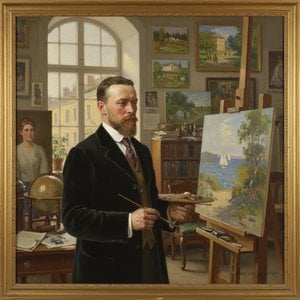
Albert Edelfelt: A Pioneer of Finnish Realism & International Impressionist Circles
Explore the life & work of Albert Edelfelt, a pioneering Finnish Realist painter who bridged Impressionism & national identity. Discover his masterpieces and lasting influence on art history.

De Blijvende Erfenis van Olieverf op Doek: Techniek, Geschiedenis en Hedendaagse Praktijk
Ontdek de rijke geschiedenis en technieken van olieverfschilderen. Van Renaissance meesterwerken tot moderne toepassingen, leer over pigmenten, glazuur en conservering.

The Enduring Legacy of Oil on Canvas: Technique, History & Aesthetic Impact
Explore the rich history & techniques of oil painting – from Renaissance masters to Impressionism. Discover pigments, layering methods, and why this timeless medium endures. Expert insights for artists & art enthusiasts.

Oil on Canvas: A Historical & Technical Exploration of a Timeless Artistic Medium
Explore the rich history & enduring techniques of oil painting on canvas. Discover the science behind its longevity, conservation practices, and contemporary relevance. Expert insights for art enthusiasts.
