


 Bekijk op ware grootte
 Verstuur
 Delen
Delen
 Details bekijken
 Gids
Gids

 Download
 Vergelijkbare items
 Röntgenonderzoek
 Diavoorstelling
 Statistieken
Boys Playing on the Shore
 Oil On Canvas
- WallArt
- Realism
 1884
1884 107.0 x 90.0 cm
 Ateneum Art Museum
 Lees meer
Handgemaakte olieverfreproductie
Met de hand geschilderd in olieverf op canvas in uw gewenste maat en lijst, op bestelling gemaakt door onze kunstenaars. ( Schakel over naar print Schakel over naar digitale afbeeldingen)




P118B $10

P118H $10

P118W $10

P438Z $10

P508JH $12

P508YH $12

P805H $10

P805Z $10

P919BZ $10

P919G $10

P919XJ $10

P959ZH $10

P968JZ $12

W106C $8

W218G $10

W218JH $8

W218Y $10

W307PJ $10

W316G $10

W316PJ $8

W316Y $10

W398PJ $8

W4111J $10

W500HY $15

W500JH $15

W692G $12

W849H $8

W940BG $15

W953PJ $8




Kies uit onze vooraf ingestelde maten die overeenkomen met de originele verhoudingen van het kunstwerk.

U kunt uw eigen afmetingen invoeren om in een specifieke lijst of ruimte te passen. Als de door u gekozen maat niet overeenkomt met de verhoudingen van het originele beeld, zullen we het kunstwerk bijsnijden of het schilderij uitbreiden met extra handgeschilderde elementen. Een digitale mockup wordt ter goedkeuring naar u verzonden voordat de productie begint.
Houd er rekening mee dat de preview op het scherm niet de werkelijke uitsnede of uitbreiding weergeeft. Alleen de mockup toont de uiteindelijke compositie nauwkeurig.
Hoewel aangepaste afmetingen mogelijk zijn, raden we aan een maat uit de vooraf gedefinieerde lijst te selecteren om de originele verhoudingen te behouden.
Na de bestelling zal het team van ArtsDot.com per e-mail contact opnemen met de klant voor instructies en een mockup-voorbeeld sturen.
Wereldwijde levering () binnen 3 tot 4 weken in plaats van de standaard 5 weken. (22 september). Zonder concessies aan de kwaliteit.

Gratis wereldwijde expressverzending

Hoogwaardig linnen canvas

Volledige verzendverzekering

Garantie op terugbetaling van invoerrechten

Garantie op exacte kleurweergave

Retourbeleid van 100 dagen (alleen bij defecten)

100% Geld-terug-garantie

Korting bij meerdere afnames
 De optie voor glas is alleen beschikbaar bij een formaat kleiner dan 110 cm.

Boys Playing on the Shore
Reproductiemethode
Formaat reproductie
-


Totaalprijs
$ 313
A Moment of Finnish Childhood: Albert Edelfelt’s “Boys Playing on the Shore”
Albert Edelfelt's "Boys Playing on the Shore," painted in 1884, isn’t merely a depiction of children at play; it’s a poignant distillation of Finnish summer days and the enduring innocence of youth. This oil painting, housed within the walls of Helsinki’s Ateneum art museum, captures a fleeting moment of carefree joy against the backdrop of a serene lakeside scene. More than just a pretty picture, “Boys Playing on the Shore” offers a glimpse into Edelfelt's artistic philosophy and his deep connection to the Finnish landscape.
The painting centers around three young boys engaged in a spirited game near the water’s edge. Their activity – constructing a rudimentary boat from driftwood – speaks volumes about their youthful imagination and resourcefulness. The figures are rendered with remarkable realism, yet imbued with an almost dreamlike quality. Edelfelt masterfully employs light and shadow to create depth and atmosphere, drawing the viewer into this intimate tableau. Notice how the sunlight glints off the water, illuminating the boys’ faces and highlighting the textures of their clothing and the rough bark of the shoreline rocks.
A Masterclass in Realism and Impressionistic Technique
Edelfelt's artistic journey led him through various movements, but he consistently blended academic precision with a sensitivity to light and atmosphere. “Boys Playing on the Shore” exemplifies this approach. The painting showcases his meticulous brushwork – each stroke carefully considered to capture the nuances of texture and form. He utilizes a muted color palette dominated by earthy tones—ochres, browns, greens, and blues—reflecting the natural hues of the Finnish landscape. However, he subtly incorporates brighter highlights to draw attention to key elements, such as the boys’ faces and the shimmering water.
The composition itself is carefully balanced, guiding the eye from the foreground figures towards the distant boats on the lake. This use of perspective creates a sense of depth and distance, anchoring the scene within its natural environment. Edelfelt's training in history painting is evident in his attention to detail and his ability to convey a sense of realism, yet he skillfully adapts these techniques to capture the immediacy and spontaneity of everyday life.
Historical Context and Finnish Identity
Painted during a period of growing national consciousness in Finland, “Boys Playing on the Shore” resonates with themes of Finnish identity and connection to the land. Edelfelt’s work often explored scenes of rural life and celebrated the beauty of the Finnish landscape – a subject he felt deeply connected to. Following his time in Paris, where he initially focused on historical painting, Edelfelt returned to Finland and began to embrace the Impressionistic style, capturing the essence of Finnish nature with remarkable accuracy and sensitivity.
The choice of a simple, everyday activity—building a boat—is significant. It represents a rejection of grand narratives and an appreciation for the beauty found in ordinary moments. This focus on accessible subjects and relatable experiences aligns with Edelfelt’s broader artistic vision, which sought to portray the lives and landscapes of his countrymen.
Symbolism and Emotional Resonance
Beyond its technical brilliance, “Boys Playing on the Shore” carries a powerful emotional resonance. The painting evokes feelings of nostalgia, innocence, and joy—a longing for simpler times. The boys’ unburdened play suggests a freedom from adult concerns, offering a momentary escape into a world of imagination and delight. It's a scene that speaks to the universal experience of childhood and the enduring power of memory.
Reproductions of this captivating artwork can bring a touch of Finnish charm and timeless beauty to any interior space. Whether displayed in a living room, study, or gallery, “Boys Playing on the Shore” serves as a reminder of the simple pleasures of life and the importance of cherishing those precious moments of childhood joy.
Gerelateerde kunstwerken


Biografie van de kunstenaar
Early Life and Education
Albert Gustaf Aristides Edelfelt, a towering figure in Finnish art history, was born on July 21st, 1854, in Porvoo, Finland—a city steeped in Swedish heritage. His parents, Carl Albert Edelfelt, a respected civil servant, and Alexandra Edelfelt (née Brandt), were both fluent in Swedish, reflecting the broader cultural landscape of their time. From a young age, Edelfelt demonstrated an undeniable fascination with artistic pursuits, propelling him to enroll at the Drawing School of the Finnish Art Society in 1869. This formative experience laid the groundwork for his lifelong dedication to mastering the visual arts.Artistic Journey
Edelfelt’s artistic trajectory unfolded across several prestigious institutions, each contributing to his refined skillset and broadening his understanding of artistic expression: Antwerp Academy of Art (1873-74) provided him with invaluable training in history painting—a genre favored by luminaries like Jean-Léon Gérôme. Subsequently, École nationale des beaux-arts in Paris (1874-78), under the guidance of Gérôme himself, solidified his grasp on technique and fostered a deeper appreciation for Impressionistic influences. A brief foray into Saint Petersburg (1881-82) exposed him to the vibrant artistic currents circulating within Russia’s cultural capital, enriching his perspective and expanding his repertoire.Rise to Prominence and Notable Works
Edelfelt's ascent to artistic acclaim commenced with a resounding victory at the Paris Universal Exposition of 1889—where he secured a gold medal for his monumental canvas depicting “The Battle of Slivo Pole.” This achievement catapulted him into international recognition, establishing him as one of Finland’s foremost artists. Among his most celebrated creations are: * “Portrait of Louis Pasteur,” commissioned by the Pasteur Institute in Paris, earning him the Legion of Honor—a testament to Edelfelt's ability to capture intellectual brilliance and human compassion. * “Young Woman in Her Boudoir,” a masterful depiction of feminine grace and intimacy, showcasing Edelfelt’s meticulous attention to detail and nuanced tonal palette. * “Under the Birches,” arguably his most iconic work—a breathtaking landscape infused with melancholic beauty and symbolic resonance—capturing the essence of Finnish wilderness and conveying profound emotional depth.Legacy and Impact
Albert Edelfelt stands as a pivotal figure in the genesis of Finnish realism, profoundly influencing subsequent generations of artists. His unwavering commitment to portraying life truthfully resonated deeply with contemporaries like Akseli Gallen-Kallela and Gunnar Berndtson—whom he mentored during their formative years in Paris—helping them achieve breakthroughs on an international stage. Edelfelt’s enduring legacy continues to inspire admiration for his artistic vision and his contribution to the cultural heritage of Finland.Museum Collections and Commemoration
Edelfelt's artworks are proudly displayed in numerous museums across Europe, notably Ateneum Museum in Helsinki—where visitors can immerse themselves in the splendor of his masterpieces. To honor Edelfelt’s remarkable life and artistic accomplishments, a €100 commemorative coin was issued in 2004—celebrating the centenary of his birth. This enduring symbol serves as a poignant reminder of his indelible mark on Finnish art history.
Albert Edelfelt
1854 - 1905 , Finland
Snelle feiten
- Artistic Movement Or Style: Realisme
- Artists Or Movements Influenced By This Artist: ['Akseli Gallen-Kallela']
- Artists Who Influenced This Artist: ['Jean-Léon Gérôme']
- Date Of Birth: 21 juli 1854
- Date Of Death: 18 augustus 1905
- Full Name: Albert Gustaf Aristides Edelfelt
- Nationality: Finnish
- Notable Artworks:
- Portret van Louis Pasteur
- Jonge vrouw in haar boudoir
- Onder de berken
- Place Of Birth: Porvoo, Finland
Gerelateerde artikelen

The Enduring Legacy of Oil on Canvas: Technique, History & Aesthetic Impact
Explore the rich history & techniques of oil painting – from Renaissance masters to Impressionism. Discover pigments, layering methods, and why this timeless medium endures. Expert insights for artists & art enthusiasts.

The Enduring Power of Painting: A Historical & Contemporary Exploration of Form and Emotion
Explore the rich history & enduring techniques of oil painting with ArtsDot. Discover masterpieces, learn about art collecting, and find authentic handmade reproductions crafted by skilled artists.

De Blijvende Erfenis van Olieverf op Doek: Techniek, Geschiedenis en Hedendaagse Praktijk
Ontdek de rijke geschiedenis en technieken van olieverfschilderen. Van Renaissance meesterwerken tot moderne toepassingen, leer over pigmenten, glazuur en conservering.

Oil on Canvas: A Historical & Technical Exploration of a Timeless Artistic Medium
Explore the rich history & enduring techniques of oil painting on canvas. Discover the science behind its longevity, conservation practices, and contemporary relevance. Expert insights for art enthusiasts.
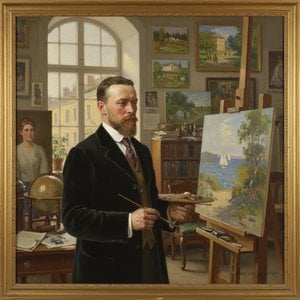
Albert Edelfelt: A Pioneer of Finnish Realism & International Impressionist Circles
Explore the life & work of Albert Edelfelt, a pioneering Finnish Realist painter who bridged Impressionism & national identity. Discover his masterpieces and lasting influence on art history.
