The Poet Painter of Yangzhou: The Soul of Zheng Xie
Zheng Xie, known to history by the evocative art name Banqiao, remains one of the most singular and spirited figures of the Qing dynasty. His life was a profound journey from the depths of poverty in Xinghua County to the heights of intellectual and artistic renown. While he successfully navigated the rigorous imperial examination system to serve as a magistrate in Shandong, his heart never truly belonged to the rigid corridors of bureaucracy. Zheng Xie’s character was defined by an unyielding moral compass; he famously chose to resign his official position rather than compromise his integrity or succumb to the sycophancy required by senior officials. This act of defiance, sparked by criticism over his efforts to provide shelter for the poor, transformed him from a civil servant into a legendary member of the Eight Eccentrics of Yangzhou, a group of intellectuals who sought to shatter conventional artistic norms in favor of raw, individual expression.
The transition from officialdom to full-time artistic pursuit allowed Zheng Xie to cultivate a vision deeply rooted in the rhythms of the natural world. His work was never merely decorative; it was an extension of his literary and philosophical soul. As a poet and scholar, he infused his paintings with a humanist sensibility that celebrated the resilience of life. He became masterfully renowned for his depictions of bamboo, orchids, and stones—subjects that served as potent metaphors for the virtues he held dear. To Zheng Xie, the bamboo was not just a plant but a symbol of strength and uprightness in the face of adversity, while the delicate orchid represented a refined, noble spirit that thrives even in solitude. Through his brush, these natural elements became vessels for profound moral and social commentary.
A Revolution of Brush and Ink
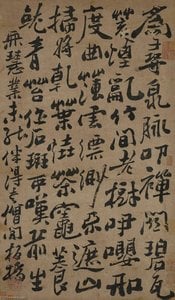
What truly distinguishes Zheng Xie’s legacy is the seamless, almost inseparable bond between his calligraphy and his painting. He did not merely draw nature; he wrote it into existence. By developing a unique technique where the fluid, rhythmic strokes of his orchid drawings informed his calligraphic hand, he created a new aesthetic language. This innovation bridged the gap between text and image, allowing the energy of Qi—the vital life force—to flow uninterrupted from a written poem into the stem of a bamboo stalk. His style was characterized by bold, expressive brushwork that favored spontaneity and emotional truth over the meticulous, polished perfection sought by the imperial court.
Even during brief periods when he returned to official service, such as his appointment as an official calligrapher and painter for the Qianlong Emperor in 1748, Zheng Xie maintained his distinctive, independent spirit. His fascination with the ordinary and the natural led him to write about common people and simple landscapes with a sincerity that resonated far beyond the elite circles of Yangzhou. His artistic development was a continuous dialogue between his observations of the physical world and his internal reflections on society and morality. Through this synthesis, he achieved a level of historical significance that transcends mere technique, leaving behind a body of work that continues to inspire awe for its vitality, its technical brilliance, and its unwavering commitment to the authentic human experience.
问答环节
Kiek Zheng Xie kūrinių galima peržiūrėti?
Kataloge, esančiame Visi kūriniai puslapio, galite peržiūrėti 10 kūriniai kūrinius, autoriaus: Zheng Xie.
Kur galima rasti suskirstytus pagal raktažodžius Zheng Xie kūrybos darbus?
Norėdami rasti Zheng Xie kūrybos darbus konkrečia tema, naudokitite šio paveikslautojo Pagrįsta raktažodžiais puslapį, kuriame kūriniai sugrupuoti pagal raktažodžius.
Kaip Zheng Xie karjera skirstoma į laikotarpius?
Chronologinė Zheng Xie kūrybos apžvalga galima rasti puslapio Chronika, kuriame kūriniai pateikiami pagal jų kūrimo tvarką, skirstant į skyrius.
Ar galiu ieškoti Zheng Xie kūrybos pagal spalvų spektrą?
Puslapio Spektro indeksas kūriniai Zheng Xie yra sugrupuoti pagal spalvą.
Kaip galiu stebėti Zheng Xie kūrybą metmet metams?
Daugelis Zheng Xie kūrinių pateikiamų puslapio Kūrybos laiko linija sąraše rodomi chronologine tvarka, metus po metų.
Ar yra galima apsilankyti 3D virtualiame Zheng Xie kūrybos muzieje?
Galima apsilankyti virtualiai: Zheng Xie puslapyje 3D muziejus kūriniai pristatomi trimensione galerijoje.
Kokie kiti pseudonimai arba alternatyvūs vardai priklauso Zheng Xie?
Zheng Xie taip pat žinomas (a) pavadinimais Zheng Banqiao.
Kur galiu pamatyti Zheng Xie kūrybos spalvų profilį?
Darbų spalvų profilis rodomas Zheng Xie puslapio Paletės genoma skiltyje.