
A Poet of Color: The Enchanting World of Kuem Dong-won
Kuem Dong-won, a contemporary South Korean artist, quietly cultivates a world brimming with delicate beauty and profound emotional resonance through his paper artworks. While biographical details remain somewhat elusive—a testament to the artist’s focus on the work itself rather than personal fanfare—his art speaks volumes. Born in South Korea, Kuem has emerged as a distinctive voice within the Korean art landscape, celebrated for pieces like ‘Spring in Jung-neung,’ which encapsulates his signature blend of traditional aesthetics and modern sensibility. He doesn't simply depict nature; he distills its essence, transforming landscapes into poetic meditations on memory, longing, and the ephemeral quality of existence.
Early Influences and Artistic Development
Kuem’s artistic journey is deeply rooted in a reverence for the natural world. His paintings often feature humble subjects—thatch-roofed huts, nameless wildflowers, quiet forests—reflecting an intimate connection to the Korean countryside. This affinity likely stems from a childhood spent immersed in its landscapes, fostering a keen observation of subtle shifts in light and color. While specific formal training remains undocumented, his work reveals a profound understanding of traditional Korean art principles, particularly those found in *minhwa* (folk painting) and calligraphy. The delicate brushwork, restrained palette, and emphasis on symbolic representation echo these historical influences. However, Kuem doesn’t merely replicate tradition; he reimagines it through a contemporary lens. His use of paper as a primary medium—a material deeply ingrained in Korean culture yet often relegated to preparatory sketches—is itself a significant departure. He elevates the humble sheet into a canvas for intricate compositions that possess both fragility and strength.
The Language of Color and Form
Central to Kuem’s artistic practice is his masterful command of color. He describes color as “an art language,” a means of recreating inner worlds through new visual forms. His palette, though often muted, is remarkably nuanced, employing subtle gradations and harmonious combinations to evoke specific moods and emotions. In ‘Spring in Jung-neung,’ for example, the soft blues and blacks used to depict the moon create an atmosphere of quiet contemplation, while the vibrant blossoms suggest a burgeoning sense of hope and renewal. Kuem’s compositions are characterized by simplicity and clarity. He often employs clean lines and flattened perspectives, reminiscent of traditional Korean screens. Yet, within this minimalist framework, he achieves remarkable depth and complexity. His works aren't about meticulous realism; they are about capturing the *feeling* of a place or moment—the essence of spring, the solitude of a forest, the warmth of a childhood memory.
Themes of Memory, Nature, and Inner Space
Kuem’s art consistently explores themes of memory, nature, and inner space. His landscapes aren't simply representations of external reality; they are reflections of his own emotional landscape. The recurring motif of cottages, as seen in ‘Spring in Jung-neung,’ is particularly telling. He explains that these structures represent a sense of longing for home—a feeling intensified by his time spent abroad. The moon, another frequent subject, symbolizes introspection and the passage of time. Kuem’s work invites viewers to slow down, to contemplate the beauty of the everyday, and to connect with their own inner worlds. He creates spaces that are both familiar and dreamlike, evoking a sense of nostalgia and quiet wonder.
Historical Significance and Contemporary Relevance
Kuem Dong-won occupies a unique position within contemporary Korean art. While many artists embrace bold experimentation and conceptual complexity, Kuem remains committed to a more contemplative and intuitive approach. His work represents a subtle yet powerful resistance to the pressures of globalization and commercialization. He champions traditional materials and techniques while simultaneously pushing their boundaries, demonstrating that innovation doesn’t necessarily require radical departures from the past. In an increasingly fast-paced world, Kuem’s art offers a welcome respite—a space for quiet reflection, emotional connection, and appreciation of beauty in its simplest forms. His legacy lies not in grand gestures or provocative statements, but in the enduring power of his delicate, poetic visions to touch the hearts and minds of viewers.
Journey through the radical world of Kazimir Malevich. Explore 25 iconic Suprematist masterpieces, from Black Square to White on White. Discover the stories behind these geometric icons and find museum-quality art reproductions for your space. Explore the full collection online at ArtsDot.com.
Explore global art & culture! Discover immersive museum experiences, virtual tours, hidden histories & expert insights. Plan your journey with our handbook.
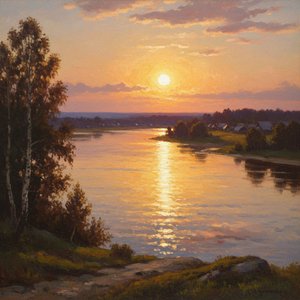
Explore the captivating world of Arkhip Kuindzhi, a master of light and Romantic realism in Imperial Russia. Discover his iconic landscapes, artistic techniques, and lasting legacy with ArtsDot.
Koks yra aukščiausiai reitinguojamas Kuem, Dong-Won paveikslas platformoje ArtsDot.com?
Spring in Jung-neung
Kokie kiti Kuem, Dong-Won vardai yra žinomi?
Dong-Won Kuem
Kas yra Kuem, Dong-Won?
A Poet of Color: The Enchanting World of Kuem Dong-won
Kuem Dong-won, a contemporary South Korean artist, quietly cultivates a world brimming with delicate beauty and profound emotional resonance through his paper artworks. While biographical details remain somewhat elusive—a testament to the artist’s focus on the work itself rather than personal fanfare—his art speaks volumes. Born in South Korea, Kuem has emerged as a distinctive voice within the Korean art landscape, celebrated for pieces li
Ar Kuem, Dong-Won kūriniai vis dar yra saugomi autorinės teisės?
Taip, šio autoriaus darbai yra saugomi autorinės teisės.
Kaip galiu stebėti Kuem, Dong-Won kūrybos eigą metmet metams?