Henry Alexander Ogden: Pioneer of American Military Illustration
Henry Alexander Ogden (1856 – 1936) stands as a singular figure in the annals of American art history, primarily recognized for his meticulous and evocative depictions of US Army uniforms and landscapes from the late 19th century. While not widely celebrated outside specialist circles, Ogden’s contribution to capturing the spirit of the era—particularly its military ethos—remains significant, offering valuable insight into the visual culture of a formative period in American history.- Early Life and Education: Born in Philadelphia, Pennsylvania, Ogden pursued formal artistic training at Pratt Institute in Brooklyn, New York, honing his skills in watercolor painting and drawing. His exposure to European art traditions—particularly Impressionism—would profoundly shape his aesthetic sensibilities.
- Military Service and Artistic Inspiration: Ogden enlisted in the United States Army shortly after graduating from Pratt, embarking on a distinguished military career spanning several decades. This experience served as an unparalleled catalyst for his artistic endeavors, providing him with firsthand observation of soldier life, uniforms, and the vast American wilderness.
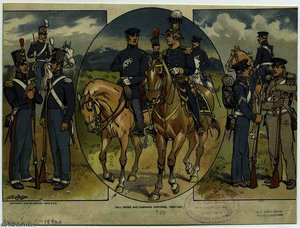
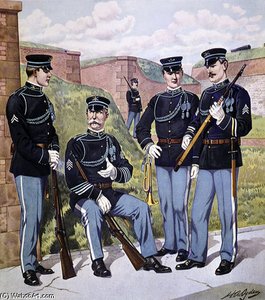
- Notable Works: Ogden’s portfolio includes numerous watercolor paintings depicting US Army officers and enlisted men in various uniforms—from frock coats to cavalry attire—often set against expansive vistas of the American frontier. Particularly noteworthy are his depictions of soldiers stationed at Fort Yellowstone and Fort Dodge, capturing the rugged beauty of Montana and Iowa respectively. These works exemplify his ability to convey not only visual accuracy but also a palpable sense of place and mood.
- Technique and Style: Ogden’s technique involved layering thin washes of watercolor pigment onto textured paper—often prepared with gesso—to achieve luminous tonal gradations. He meticulously rendered fabrics, textures, and facial expressions, demonstrating an unwavering commitment to realism while simultaneously imbuing his paintings with a contemplative spirit.
问答环节
Ar galiu peržiūrėti Henry Alexander Ogden darbus pagal medžiagą?
Henry Alexander Ogden darbus pagal technikas galima peržiūrėti puslapio Visi mediai skiltyje.
Kuriame mieste ir šalyje gimė Henry Alexander Ogden?
Henry Alexander Ogden gimė Philadelphia, United States of America šalyje.
Kaip Henry Alexander Ogden karjera skirstoma į laikotarpius?
Chronologinė Henry Alexander Ogden kūrybos apžvalga galima rasti puslapio Chronika, kuriame kūriniai pateikiami pagal jų kūrimo tvarką, skirstant į skyrius.