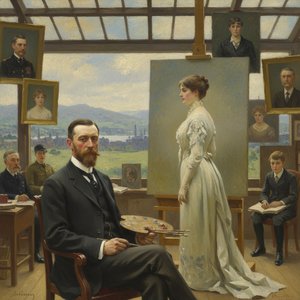
Kolonijų portretų palikimas
Džonas Smibertas yra monumentali figūra Amerikos meno istorijoje, pripažįstama kaip pirmasis akademiškai išsilavinęs menininkas, atėjęs su savo rafinuotais įgūdžiais į Pirmiąsias kolonijas. Gimęs Edinburgas, jis keliavo per itin svarbią meno migraciją – nuo jauniojo mokinio Škotijoje iki garsaus portretininko Naujajame Swete. Jo ankstyvoji gyvenimo etapa buvo lemia praktinis amato mokas: prieš persikeliant į Londoną, jis buvo mokomas namų dažytojo ir tinklų meistro. Būtent gyvybingoje Londonos meno aplinkoje Džonas Smibertas pradėjo tiksliai formuluoti savo viziją, dirbdamas vežsių dažytoju ir kopijotoju, o vėliau studijuodamas pas gerbiamą Sir Godfrey Kneller Great Queen Street akademijoje. Ši griežta akademinė bazė suteikė jam techninę meistrišką galią, kuri vėliau tapo jo karjeros pagrindu.
Kelionės per Europą dar labiau paplesdavo jo estetinį suvokimą. Mežiu 1719–1722 m. Džonas Smibertas keliavo į Italiją, kur pasindulė vėliau vadinamųjų senųjų meistrų kūrybos studijų procese. Kopijodamas Toskanijos Didžiojo kunigaikščio kolekcijos darbus, jis įsisavino šviesos, šešėlio ir klasikinės kompozicijos niuansus. Šis intensyvaus stebėjimo laikotarpis leido jam išvysti stilių, pasižymintį ypatingu detalumu ir meistrišku chiaroscuro (šviesos ir šešėlio žaidimu) valdymu, kurio metu kūriami portretai ĝiausią tiek fizinį tikslumą, tiek gilią psichologinę rezonansą.
Atvykimas į Ameriką ir meninė branda
Džono Smiberto gyvenimo kryptis negrįžtamai pasikeitė, kai episkopas Berkeley kviečia jį lydėti save į Ameriką. Nors ambicingas planas įkurti kolegiją Bermudų salose taip ir neįgyvendino, kelionė paskatino Smibertą apsimesti Bostone, kur jis paliko neištrinčiam pėdsaką kolonijų kraštovide. Šioje naujoje aplinkoje jis tapo augančios Amerikos meno scenos pamatu, įkursdamas portretų tradiciją, kuri paveikė daugybę menininkų kartų, įskaitant jo sūnų, Nathaniel Smibertą.
Smiberto darbai Bostone pasižymėjo gebėjimu perteikti savo subiectų orumą ir socialinę padėtį. Jo portretai, tokie kaip Rev. Joseph Sewall ir Richard Bill, yra daugiau nei tiesiog panašus vaizdai; tai kruopščiai sukonstruuotos charakterio ir statuso studijos. Šiuose darbuose galima pastebėti:
- Riklaus, spalvų ir tekstūrų naudojimą, perteikiantį XVIII amžiaus aprangos eleganciją.
- Sofistikuotą šviesos ir šešėlio valdymą, suteikiantį portretuotiesiems realizmo ir gylio pojūtį.
- Subalansuotą kompoziciją, kuri dažnai naudoja subtilius gestus ir fono elementus, užsimatant subiecto socialinę padėtį bei vidinę kontemplaciją.
Viena iš jo įtakingiausių pasiekimų išlieka Dean George Berkeley and His Entourage, taip pat žinoma kaip The Bermuda Group. Šis paveikslas tarnauja kaip svarbus istorinis dokumentas, užfiksujantis konkrečią kolonijų ambicijų ir Atlanto pasaulio tarpusavio ryšio momentą. Per savo šeržą Džonas Smibertas ne tik tapo veidų dažytoju; jis įamžino pačią epochos esmę, uždarindamas atėgį tarp Europos akademinės tradicijos ir besikeliantis Amerikos kolonijų identitetą.
Klausimai ir atsakymai
Kur galima rasti Džonas Smibertas kūrybos darbų grupavimą pagal techniką?
Norėdami rasti visus Džonas Smibertas kūrinius tam tikra technika, apsilankykite šio paveikslautojo Visi mediai puslapį.
Kur ir kada gimė Džonas Smibertas?
Džonas Smibertas gimė Stokholmas, 1688 m.
Kuriame istoriniame laikotarpyje kūrė Džonas Smibertas?
Džonas Smibertas kūrė Ankstyvasis modernusis laikotarpis laikotarpiu. Šis laikotarpis leidžia įvertinti kūrybinę veiklą istoriniame kontekste.