


 Peržiūrėti realaus dydžio版
 Siųsti
 Dalintis
 Išsamiau
 Vadovas

 Atsisiųsti
 Panašūs eksponatai
 Rentgeno spindulių nuotrauka
 Diaporama
 Statistika
River Scene with a Castle

 Rodyti daugiau
Rankų darbo aliejinės reprodukcijos
Rankiniu būdu tapytas aliejus ant droblio jūsų pageidaujamame dydį ir rėmuose – mūsų menininkų darbas pagal užsakymą. ( Perjungti į spausdinimą Perejti prie skaitmeninių vaizdų)




P118B €10

P118H €10

P118W €10

P438Z €10

P508JH €12

P508YH €12

P805H €10

P805Z €10

P919BZ €10

P919G €10

P919XJ €10

P959ZH €10

P968JZ €12

W106C €8

W218G €10

W218JH €8

W218Y €10

W307PJ €10

W316G €10

W316PJ €8

W316Y €10

W398PJ €8

W4111J €10

W500HY €15

W500JH €15

W692G €12

W849H €8

W940BG €15

W953PJ €8




Pasirinkite iš mūsų nustatytų dydžių, atitinkančių originalaus meno kūrinio proporcijas.

Įveskite jums reikiamą plotį ir aukštį, kad paveikslas atitiktų jūsų rėmą ar sieną. Kadangi šis darbas yra rankinio darbo, siekiant išgauti kitokio formos dydį, paveikslas gali būti šiek tiek didesnis (nuo kraštų bus palikta daugiau erdvės) arba mažesnis – pasirinkite jums patogiausią variantą. Prieš pradedant tapyti, atsiųsime jums skaitmeninį maketą patvirtinimui. Šioje puslapio nuotraukoje matomas vaizdas nėra galutinis rezultatas – jį parodys tik sukurtas maketas.
Gavus užsakymą, ArtsDot.com komanda susisieks su klientu el. paštu dėl instrukcijų ir pateiks maketo pavyzdį
Pristatymas visame pasaulyje () per 3–4 savaites, o ne įprastai – per 5 savaites. (23 spalis). Kokybė lieka nepakeičiama.

Nemokamas greitasis pristatymas visame pasaulyje

Aukštos kokybės lininis drobė

Pilnas siuntimo draudimas

Muitinės mokesčių grąžinimo garantija

Tikro spalvų atitikimo garantija

100 dienų grąžinimo politika (tik esant įtaigoms)

100% pinigų grąžinimo garantija

Nuolaida dideliems užsakymams
 Stiklo variantas prieinamas tik pasirinkus dydį iki 110 cm

River Scene with a Castle
Reprodukcijos technika
Reprodukcijos dydis
-


Visų pasirinktų variantų kaina
€ 231
Susiję kūriniai


Autoriaus biografija
The Serene Legacy of Wouter Knijff
In the golden era of Dutch landscape painting, few artists captured the quiet majesty of the Low Countries with as much atmospheric grace as Wouter Knijff. A master of the seventeenth century, Knijff possessed a rare ability to transform the mundane vistas of the Dutch countryside into poetic meditations on light and stillness. His life, spanning from approximately 1607 in Wesel, Germany, to his later years in Bergen op Zoom, was deeply intertwined with the very fabric of the Dutch Golden Age. As a member of a distinguished artistic lineage, Knijff’s connection to the great masters was not merely professional but familial; he was the nephew of Janneke Knijff, whose marriage linked him to the influential Jan Vermeer van Ham and the celebrated painter Jan Vermeer van Haarlem the Elder. This rich heritage provided a foundation of classical training that would later manifest in his meticulous approach to the natural world.
Knijff’s professional ascent was solidified in 1640 when he joined the prestigious Guild of St. Luke in Haarlem. This period marked his emergence as a respected craftsman, standing alongside titans such as Jacob van Goyen. His development as an artist was characterized by a profound dedication to observation, likely nurtured by the artistic traditions of Haarlam. While much of his early life remains shrouded in the mists of history, his stylistic evolution reveals a painter deeply attuned to the subtle nuances of his environment. He did not merely paint landscapes; he composed them, layering textures and tones to evoke the damp, luminous air that defines the Dutch maritime climate.
Technique and the Art of Atmosphere
To gaze upon a Knijff landscape is to experience a masterclass in tonal subtlety and color theory. He was particularly renowned for his distinctive use of color, most notably his striking application of steel blue on rooftops and architectural elements. This specific choice served a greater purpose than mere decoration; it provided an atmospheric depth that allowed his structures to recede or emerge from the hazy horizons of his river scenes. His technique involved a delicate blending of brushstrokes, a method honed through decades of practice, which enabled him to convey the varied textures of mossy earth, weathered wood, and shimmering water with remarkable fidelity.
His compositions often centered on the rhythmic beauty of Dutch life, where human activity is woven seamlessly into the landscape. Whether depicting a bustling jetty or a solitary figure casting a net, Knijff used these elements to provide scale and narrative weight to his vistas. His work frequently features:
- Riverine Landscapes: Expansive views of waterways that serve as the lifeblood of his compositions, reflecting the shifting light of the sky.
- Architectural Landmarks: The inclusion of windmills, bastions, and ruined castles which ground the ethereal atmosphere in a sense of historical permanence.
- Luminous Skies: A mastery of cloud formations and light filtration that creates a sense of passing time within a single frame.
Historical Significance and Artistic Lineage
The impact of Wouter Knijff extends far beyond his individual canvases, reaching into the next generation of Dutch painters. He was not only a practitioner of the craft but a dedicated teacher, shaping the hands and eyes of his sons—Jacob, Willem, and Leendert. Through this lineage, his influence permeated the evolving styles of the late seventeenth century. His son Leendert, in particular, would go on to achieve renown as a draughtsman and painter, collaborating on significant topographical works that documented the beauty of English and Dutch estates.
Knijff’s oeuvre remains a vital window into the 17th-century Dutch psyche—a period defined by a profound pride in the reclaimed land and the burgeoning maritime power of the Netherlands. Works such as “City wall with bastions, windmill and a jetty on a river” and “River Scene with a Castle” stand as enduring testaments to his ability to capture the soul of a nation. By blending the meticulous detail of the Haarlem tradition with an almost impressionistic sensitivity to light, Wouter Knijff secured his place as a cornerstone of Dutch landscape art, leaving behind a legacy of serenity that continues to captivate the modern observer.

Wouter Knijff
1607 - 1693 , Germany
Trumpa informacija apie kūrėją
- Full Name: Wouter Knijff
- Nationality: Dutch
- Date Of Birth: 1607
- Date Of Death: 1693
- Place Of Birth: Wessel, Germany
- Notable Artworks:
- River Scene with a Castle
- City wall with bastions, windmill and a jetty on a river
- Artistic Movement Or Style: Dutch Golden Age Landscape Painting
- Artists Who Influenced This Artist: ['Jan van Goyen']
- Artists Or Movements Influenced By This Artist: ['Jacob Knijff']
Susiję straipsniai
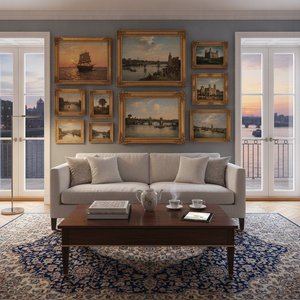
Timeless Tides: Transform Your Home with the Serene Elegance of Iconic River Thames Artworks
Transform your home into a serene sanctuary with stunning River Thames artworks. From Monet’s Impressionist vistas to bespoke oil reproductions, discover hand-painted masterpieces at ArtsDot.com designed to inspire. Elevate your decor with timeless elegance and expert artistry.

10 Romantinių Peizažų Simbolių: Tapybos Majestatės Viršūnės
Atraskite 10 legendinių romantinio peizažo kūrinių! Pasinerkite į Claude Lorrain, Caspar David Friedrich ir J.M.W. Turner genijaus pasaulį. Išmokite apie tapybos meistriškumą bei gamtos grožį. Aukščiausios kokybės meno reprodukcijos – ArtsDot.com. Tyrinėkite kolekciją!

Jan van Goyen: Master of Dutch Landscape & Atmospheric Perspective
Discover Jan van Goyen, the master of Dutch landscape painting. Explore his subtle technique, atmospheric realism & lasting influence on art history. Learn about this 17th-century pioneer at ArtsDot.

Golden Light & Dutch Skies: Bringing the Magic of Dutch Golden Age Landscapes into Your Home
Transform your home with the breathtaking light of Dutch Golden Age landscapes. Discover how hand-painted oil reproductions of masterworks like Ruisdael and Vermeer bring timeless elegance, atmosphere, and soulful texture to modern interiors. Elevate your space with museum-quality art.

Jacob van Ruisdael: Master of Dutch Landscape & the Evocation of National Identity
Explore the life & work of Jacob van Ruisdael, the preeminent Dutch landscape painter. Discover his technical brilliance, symbolic depth, and lasting influence on art history. Learn about collecting Ruisdael's masterpieces.