


Vaizdas atitinka jūsų pasirinkimus: , .
Kolekcinio objekto aprašas
William Hogarth’s iconic lithograph portrays a lively midnight conversation amidst opulent furnishings—a masterful depiction of social satire and human interaction from the Georgian era. Explore this captivating artwork and bring Hogarth's timeless vision into your home.
 Skaityti daugiau
Autoriaus biografija
Modernios moralinės tematikos pionierius, kūrėjas „A Rake's Progress“. Atraskite jo aštrias satiras ir graviūras jau šiandien.
Rankų darbo aliejinės reprodukcijos
Rankiniu būdu tapytas aliejus ant droblio jūsų pageidaujamame dydį ir rėmuose – tai mūsų menininkų pagal užsakymą sukurtas darbas. ( Perjungti į spausdinamus版作品 Perejti prie skaitmeninių vaizdų)
Daugiau informacijos apie šį paveikslą
 Peržiūrėti realaus dydžio版
 Pasidalinti
 Dalintis
 Išsamiau
 Vadovas

 Atsisiųsti
 Panašūs eksponatai
 Rentgeno spindulių nuotrauka
 Automatinė diorama
 问答
问答 Statistika
Užsisakykite savo paveislinį keturiuose paprastuose žingsniuose
Neskubėkite. Galite pakeisti bet kurį atsakymą; kaina jūsų užsakymo kortelėje keičiasi po kiekvieno pasirinkimo.
1 Pirmas iš keturių žymių
Kokio dydžio norėtumėte?
Šie dydžiai išlaiko originalaus paveikslėlio proporcijas. Piešinyje matomas jūsų pasirinkimas ant sienos, virš dvimetrinio sofos.
Arba nurodykite savo matmenis
Pasirinkite iš mūsų nustatytų dydžių, atitinkančių originalaus meno kūrinio proporcijas.

Įveskite jums reikiamą plotį ir aukštį, kad paveikslas atitiktų jūsų rėmą ar sieną. Kadangi šis darbas yra rankinio darbo, siekiant išgauti kitokios formos dydį, paveikslas gali būti šiek tiek didesnis (nuo kraštų bus palikta daugiau erdvės) arba mažesnis – pasirinkite jums patogiausią variantą. Prieš pradedant tapyti, atsiųsime jums skaitmeninį maketą patvirtinimui. Šioje puslapio nuotraukoje matomas vaizdas nėra galutinis rezultatas – jį parodys tik sukurtas maketas.
2 Antras iš keturių žingsnių
Kaip turėtų būti paruoštas: surolluotas, įtemptas ar įdėtas į rėmą?
Žemiau pateiktos kainos galioja pasirinktam pirmame žingsnyje dydžiui.
Pasirinkite ištempto drobės kraštus
Pasirinkite rėmelį

Baltas apasutojimas €1

Išblėstantis šonas €1

Išplėstinis €1

P118B €10

P118H €10

P118W €10

P438Z €10

P508JH €12

P508YH €12

P805H €10

P805Z €10

P919BZ €10

P919G €10

P919XJ €10

P959ZH €10

P968JZ €12

W106C €8

W218G €10

W218JH €8

W218Y €10

W307PJ €10

W316G €10

W316PJ €8

W316Y €10

W398PJ €8

W4111J €10

W500HY €15

W500JH €15

W692G €12

W849H €8

W940BG €15

W953PJ €8

H24-GOLD €30

H24-SILVER €30

H36-GOLD €45

H36-SILVER €45
Įrėmintas
Rėmo apvadas: . Bendras dydis su rėmu: .
3 Trečias iš keturių žingsnių
Ar norėtumėte paveisale kažką pakeisti?
Dauguma žmonių atsako ne. Kadangi kiekvienas paveikslas yra sukuriamas rankomis, mūsų suregistis taip pat gali jį pritaikyti jums.
Gavus užsakymą, ArtsDot.com komanda susisieks su klientu el. paštu dėl nurodymų ir pateiks preliminarią maketą.
4 Ketvirtas iš keturių žymių
Keletas apdailos variantų
Visi jie yra neprivalomi. Jau pasirinkti atsakymai nieko papildomo nekainuoja.
Kas tai piešia?
Pristatymas visame pasaulyje () per 3–4 savaites, o ne įprastai – per 5 savaites. (11 lapkritis). Kokybė lieka nepakeičiama.
Pavadinimo plokštelė, kaip muziejuje?
Išgraviruotos bronzinės plokštelės detalės
This elegant plaque features the artist's name and the title of the artwork, finely engraved for a timeless presentation.
It is made from bronze with a refined, elegant finish. The text is precisely laser-engraved for a sharp and permanent result. Measuring 9x2 cm, the plaque is compact yet easy to read. It's built to be durable and scratch-resistant, offering a professional, museum-quality look. Mounting is simple thanks to the included adhesive backing.
Skaidrios akrilo plokštelės informacija
The plaque includes essential engraved details such as the artist's name, the title of the artwork, the date it was created, the type of media used-like oil on canvas or watercolor-a brief description of the piece, and a QR code that links to the complete artwork information.
It is crafted from clear acrylic, offering a sleek, modern appearance. The text is UV-engraved in black to ensure strong visual contrast. With a size of 10x15 cm, it ensures optimal readability. It comes equipped with two metal hooks for secure wall mounting. The plaque is designed to be weather-resistant, making it suitable for various environments, and it includes interactive features that work seamlessly with smartphone scanning.
Juodos akrilo plokštelės informacija
This elegant plaque includes engraved information such as the artist's name, the title of the artwork, the date it was created, the type of media used (like oil on canvas or watercolor), a short description of the artwork, and a QR code for quick access to more information.
The plaque itself is made from refined black acrylic with a premium finish. The text is laser-engraved in white for high contrast and readability. Its size is 10x15 cm, designed to be easy to read. It comes with two metal hooks for professional mounting. The design is sleek and fits any interior style. It is also weather-resistant and durable, with built-in digital integration for mobile compatibility.
Apsauginis lakas?
Kada jums reikia?
✓ Patikrinti ir užsakyti
Jūsų paveikslas, tiksliai taip, kaip užsakėte

A Midnight Modern Conversation
Reprodukcijos technika
Reprodukcijos matmenys
-

Aukščiausios klasės meistras
Daugiau detalių, meistriškumo ir papildomo gamybos laiko
-

Reprodukcijos rėmėjimo parinktys
-
-
Dėl meno kūrinių ar reprodukcijų, kurių bet kuri pusė yra didesnė nei 105 cm (apie 41 inch), rėmas bus siunčiamas kaip išskaidytas surinkimo rinkinys. Šis metodas užtikrina saugų pristatymą ir apsaugo nuo transportavimo metu galimos žalos.
Reikalingas profesionalus surinkimas – tai nėra „pasidaryk pats“ (DIY) produktas.
Rinkinys turi būti surinktas, o drobė išplėsta naudojant patyrį profesionalų rėmininką, medžio klijus (nėra įtraukti į rinkinį), drobės plėšimo kleslę bei presas, kad rėmo rėžiai išliktų tiesūs, kol klijai išdžiūvus. Netinkamas surinkimas arba netolydus drobės įtampa gali negrįžtamai sugadinti meno kūrinį, todėl šie atvejai nėra užtraukiami mūsų garantijos.
 Dėl meno kūrinių ar reprodukcijų, kurių bet kuri pusė yra didesnė nei 105 cm (apie 41 inch), rėmas bus siunčiamas kaip išskaidytas surinkimo rinkinys. Šis metodas užtikrina saugų pristatymą ir apsaugo nuo transportavimo metu galimos žalos.
Į komplektą įeina visi vientisos medienos elementai, tiksliai išpjauti pagal dydį.
Surmontinama naudojant pridėtus varžtus bei papildomai reikalingą medžio kliją kampų jungtims, kuris nėra pridėtas ir turi būti parinktas rėmininkui.
Reikalingi profesionalūs įrankiai, kurie nėra įtraukti į rinkinį: drobės kėlimo plytelės (stiprintuvai) ir klemiai, laikantys rėmo strygius tiesiu kampu, kol džiūsta lipas.
Svarbu:
Kampų jungtims reikalingi medžio klijai, barams reikia laikyti naudojant presas, kol klijai visiškai išdžiūvės, o surinktam rėmui įtempiamai privilgti būtinos drobės įtempimo plytযুক্ত. Šios priemonės į rinkinį neįtrauktos. Prieš užsakydami šio dydžio rinkinį, rekomenduojame pasimalkoti patyrusiu rėmų meistru.

Pavadinimo lentelė
-
-

Apsauginis lakas
Blizgus lakas (ryškina spalvas, saugo nuo šviesos ir drėgmės)
-

Personalizuoti kūrinį
Ką galima pakeisti (pavyzdžiui): pakeisti veidą klientui skirta nuotrauka; pridėti augintinį (pvz., katę pakeisti šuniu); įtraukti paslėptą žinutę fone; pakeisti fono kraštovaizdį ar elementus.
-

Skubiai
Pristatymas visame pasaulyje () per 3–4 savaites, o ne įprastai – per 5 savaites. (11 lapkritis). Kokybė lieka nepakeičiama.
-
Skubus pristatymas
Pristatymas visame pasaulyje () per 5 weeks. (18 lapkritis).
Įskaičiuota
Bendroji kaina
€ 235
Stiklo variantas prieinamas tik pasirinkus dydį iki 110 cm
Pridedama prie kiekvieno užsakymo
- Nemokamas greitasis pristatymas visame pasaulyje
- Aukštos kokybės lininis drobė
- Pilnas siuntimo draudimas
- Muitinės mokesčių grąžinimo garantija
- Tikro spalvų atitikimo garantija
- 100 dienų grąžinimo politika (tik esant įtaigoms)
- 100% pinigų grąžinimo garantija
- Nuolaida dideliems užsakymams


A Window into Georgian Society: Examining Hogarth’s “A Midnight Modern Conversation”
William Hogarth's "A Midnight Modern Conversation," a lithograph reproduction of his original painting, transcends mere depiction; it serves as a meticulously crafted snapshot of Georgian London – a society grappling with moral dilemmas and striving for social advancement. Created in 1730-31 during the reign of George II, this artwork isn’t simply about people gathered around a table; it's an astute commentary on the values and anxieties prevalent within the upper echelons of British aristocracy. Hogarth himself was acutely aware of the contradictions inherent in his era, skillfully capturing them through his distinctive visual language.- Subject Matter: The scene portrays a group of men engaged in animated discussion amidst a richly furnished room. Notably absent is any woman – a deliberate omission that underscores the prevailing societal expectation for gentlemen to cultivate intellectual pursuits rather than familial responsibilities.
- Style & Technique: Hogarth’s style is characterized by its realism and theatricality, aligning with the Rococo tradition but firmly rooted in observation of everyday life. The lithograph reproduction faithfully replicates the painterly qualities of the original, utilizing tonal shading to create depth and texture – a technique honed during his apprenticeship as an engraver.
Historical Context: Moral Critique and Societal Shifts
The painting emerged against a backdrop of significant social change. Enlightenment ideals were challenging established hierarchies and advocating for reason over superstition, yet the aristocracy clung to traditional notions of honor and propriety. Hogarth’s intention wasn't merely to record a convivial gathering; he aimed to provoke contemplation about ethical conduct and societal hypocrisy. The inclusion of a dog – often interpreted as representing loyalty and fidelity – subtly reinforces this moral dimension. It serves as a counterpoint to the perceived frivolity of the conversation, suggesting that true virtue lies beyond superficial appearances.Symbolism & Narrative Depth: Decoding the Visual Language
Beyond its surface realism, “A Midnight Modern Conversation” is laden with symbolic significance. The dining table itself symbolizes indulgence and excess – a visual representation of the opulent lifestyle enjoyed by the wealthy elite. However, Hogarth’s gaze isn't solely focused on material possessions; he directs it towards the faces of the men involved in the discussion, inviting viewers to scrutinize their expressions and assess their moral character. The careful positioning of figures contributes to the narrative tension, hinting at unspoken desires and concealed judgments.Emotional Impact & Legacy
Ultimately, Hogarth’s masterpiece resonates with an enduring emotional power. It captures a moment of human connection amidst societal pressures, prompting viewers to confront uncomfortable truths about themselves and their surroundings. The lithograph reproduction allows for appreciation of this original artistic vision without the constraints of its time period. Its ability to provoke thought and inspire discussion ensures that “A Midnight Modern Conversation” continues to captivate audiences centuries later – a testament to Hogarth’s unparalleled skill in portraying the complexities of human experience and cementing his place as one of Britain's most influential artists.Klausimai ir atsakymai
Kas sukūrė „A Midnight Modern Conversation“?
Kūrinį „A Midnight Modern Conversation“ sukūrė Viljamas Hogartas. Darbas katalogizuojamas Viljamas Hogartas vardu.
Kaip galiu peržiūrėti „A Midnight Modern Conversation“ – Viljamas Hogartas kaip vaizdų rodyklę?
Kūrinį „A Midnight Modern Conversation“ – Viljamas Hogartas galima peržiūrėti kaip slaidų rulio formatą puslapyje Slaydšou.
Kokio spalvų ryškumo turi „A Midnight Modern Conversation“ – Viljamas Hogartas?
Šiame paveikslėlyje „„A Midnight Modern Conversation“ – Viljamas Hogartas“ spalvų intensyvumas yra Balanced.
panašūs kūriniai


Viljamas Hogartas
1697 - 1764, Jungtinė Karalienija


Susiję straipsniai

Thomas Rowlandson: Satire, Society & the Art of Caricature in Georgian England
Explore the witty world of Thomas Rowlandson, master Georgian caricaturist! Discover his satirical prints & insightful social commentary on 18th-century England. Learn about his life, techniques, and enduring influence.

William Hogarth: Satire, Social Commentary & the Birth of Modern British Art
Explore the satirical world of William Hogarth, pioneering British painter & engraver. Discover his iconic works like *A Rake's Progress* and insightful social commentary on 18th-century London life.
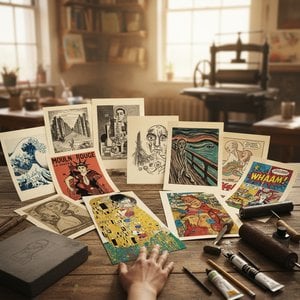
Top 10 Lithographs That Revolutionized Art | ArtsDot
Explore 10 legendary lithographs by Toulouse-Lautrec, Munch & Picasso that redefined art! Discover the stories behind these iconic prints and find museum-quality reproductions for your home decor at ArtsDot.com. Explore the full collection online.