

 Peržiūrėti realaus dydžio版
 Pasidalinti
 Dalintis
 Išsamiau
 Vadovas

 Atsisiųsti
 Panašūs eksponatai
 Rentgeno spindulių nuotrauka
 Automatinė diorama
 问答
问答 Statistika
Musing Girl


 Skaityti daugiau
Giclée / Meno spausdinimas
Muziejų lygio „giclée“ arba drobos spausdinimas: greita gamyba ir lankstios apdailos parinktys. ( Pirkti rankų darbo tapybą Perejti prie skaitmeninių vaizdų)




































Pasirinkite iš mūsų nustatytų dydžių, atitinkančių originalaus meno kūrinio proporcijas.

Įveskite jums reikiamą plotį ir aukštį, kad atvaizdas derėtų prie jūsų rėmo ar sienos. Spausdiną galima tik sumažinti, bet nepadidinti virš originalaus paveikslėlio dydžio, todėl keičiant proporcijas, dalis vaizdo prarandama. Prieš spausdinimą atsiųsime jums skaitmeninį maketą patvirtinimui. Šioje puslapio nuotraukoje matomas pjūvis nėra tikslus – jį rodo tik maketas.
Pristatymas visame pasaulyje () per 2 weeks, o ne įprastas 4/5 savaičių laikotarpis. (8 lapkritis)

Nemokamas greitasis pristatymas visame pasaulyje

Aukštos kokybės lininis drobė

Pilnas siuntimo draudimas

Muitinės mokesčių grąžinimo garantija

Tikro spalvų atitikimo garantija

100 dienų grąžinimo politika (tik esant įtaigoms)

100% pinigų grąžinimo garantija

Nuolaida dideliems užsakymams
 Stiklo variantas prieinamas tik pasirinkus dydį iki 110 cm

Musing Girl
Giclée / Meno spausdinimas
Reprodukcijos matmenys
-


Bendroji kaina
€ 56
panašūs kūriniai


Autoriaus biografija
The Ethereal Vision of Walter Gramatté
Born in the vibrant, yet turbulent, atmosphere of Berlin on January 8th, 1897, Walter Gramatté emerged as a profound voice within the German Expressionist movement. His early life was inextricably linked to the seismic shifts of the early twentieth century, most notably the harrowing experience of World War I. While his physical health often spared him from the front lines of combat, the psychological weight of the era left an indelible mark on his soul. This period of profound disillusionment and existential questioning became the bedrock of his creative language, transforming personal anguish into a visual exploration of the human condition. His journey was one of constant metamorphosis, moving through the shadows of war toward a luminous, mystical understanding of the natural world.
Gramattę’s formal artistic training at the Kunstgewerbeschule Berlin provided him with a rigorous technical foundation, yet his spirit always sought something beyond mere academic precision. He possessed a discerning eye for innovation, finding deep inspiration in the uncompromising realism and stylistic boldness of Max Beckmann. As he matured, Gramatté began to carve out a space that transcended traditional boundaries, establishing his own studio in 1917. This independence allowed him to engage with the avant-garde currents of his time, fostering connections with influential members of the Die Brücke group, such as Erich Heckel and Karl Schmidt-Rottluff. Through these associations, his work began to weave together the raw emotionality of Expressionism with the dreamlike, symbolic depths of Surrealism.
A Mastery of Light and Symbolism
The true essence of Gramatté’s genius lies in his ability to pioneer a style often described as Magical Realism. His oeuvre is characterized by a unique tension between the tangible and the transcendent. Whether working in oil, watercolor, or the intricate lines of an etching, he possessed a singular talent for imbuing ordinary subjects with a sense of the divine or the uncanny. His landscapes are rarely mere depictions of geography; instead, they are ethereal realms bathed in a light that feels both ancient and otherworldly. In his hands, the natural world becomes a mirror for the internal psyche, where botanical specimens and solitary figures serve as vessels for deep-seated psychological truths.
His technical versatility allowed him to explore a vast spectrum of moods through different mediums:
- Etchings and Prints: In works such as Head in Profile (1923), he utilized the stark contrasts of black and white to capture the haunting intensity of the human gaze.
- Watercolors: Pieces like Coloured Ribbons on Twigs demonstrate his ability to balance joy and melancholy, using vibrant hues to evoke a sense of fleeting beauty.
- Oil Paintings: His larger works often tackled more complex themes, blending structured compositions with the fluid, mystical atmosphere that defined his later years in locations like Hiddensee and Barcelona.
Legacy and the Tragic End of a Visionary
Tragically, the trajectory of Gramatté’s brilliant career was cut short by his untimely death in Hamburg on February 9th, 1929, at the age of only thirty-two. His passing marked the loss of an artist who was on the precipice of even greater stylistic synthesis. Despite his brief life, his historical significance remains profound. He stands as a vital bridge between the visceral, often violent energy of German Expressionism and the more contemplative, structured mysteries of Magic Realism.
Today, the works of Walter Gramatté continue to resonate with modern viewers, offering a sanctuary of reflection in an increasingly fragmented world. His ability to find the sacred within the mundane—to see the pulse of life within a landscape or the depth of a soul within a portrait—ensures his place in the pantheon of great twentieth-century masters. His legacy is not merely one of technical skill, but of a profound, enduring courage to look into the heart of existence and find beauty amidst the shadows.

Walter Gramatté
1897 - 1929
Trumpa informacija
- Full Name: Walter Gramatté
- Nationality: German
- Date Of Birth: 1897
- Date Of Death: 1929
- Place Of Birth: Berlin, Germany
- Notable Artworks:
- Head in Profile
- Colour Ribbon on Twigs
- Artistic Movement Or Style: Expressionism
- Artists Who Influenced This Artist: ['Max Beckmann']
- Artists Or Movements Influenced By This Artist: ['Die Brücke']
Susiję straipsniai

The Visceral Turn: Exploring Emotional Intensity in Expressionism
Explore the powerful world of Expressionism with ArtsDot. Discover key artists like Kirchner & Nolde, understand its emotional impact, and learn about this revolutionary art movement's lasting legacy.
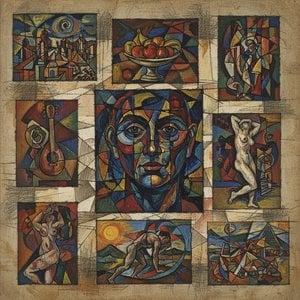
Cubist Expressionism's 10 Defining Masterpieces | Art for Your Home
Explore 10 defining Cubist Expressionism masterpieces by Picasso, Braque & more. Discover the stories behind these bold, geometric paintings and bring museum-quality art to your home with ArtsDot.com. Explore the full collection online.

The Visceral Language of Emotion: Exploring Expressionist Painting's Enduring Legacy
Explore the powerful world of Expressionism with ArtsDot. Discover key artists like Kirchner & Nolde, understand its emotional impact, and learn about this revolutionary art movement's lasting legacy. Handmade oil paintings available.

Beyond Representation: Exploring the Emotional Landscape of Abstract Expressionism
Explore the profound emotional world of Abstract Expressionism with ArtsDot. Discover key artists like Pollock & Rothko, learn about collecting, and find museum-quality reproductions to inspire your space.

The Gritty Muse: Industrial Vibe as Defining Aesthetic in Modern Artwork
Explore the captivating world of industrial aesthetics in modern art. Discover key movements, influential artists & collecting insights at ArtsDot.com – your source for museum-quality reproductions and expert art guidance.