

 Peržiūrėti realaus dydžio版
 Pasidalinti
 Dalintis
 Išsamiau
 Vadovas

 Atsisiųsti
 Panašūs eksponatai
 Rentgeno spindulių nuotrauka
 Automatinė diorama
 问答
问答 Statistika
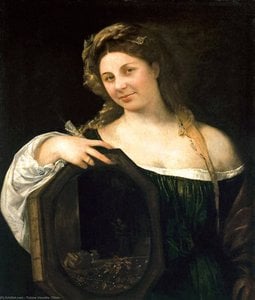
Profane Love (Vanity)


 Skaityti daugiau
Gaukite spausdinimui paruoštą failą, kurio kokybė gerokai viršija internetinę peržiūrą. Kiekvienas mūsų parduodamas skaitmeninis vaizdas yra ištrauktas iš aukštos raiškos pagrindinio failo mūsų duomenų bazėje — paprastai jis siekia nuo 5 000 iki 15 000 pikselių plotio — todėl galite drąsiai spausdinti didelius formatus, apkirpti vaizdą ar reprodukcija užtikrins visas smulkias detales.
Mūsų studijoje nė viena kopija nelieka neapdorota. Skaitmeninio vaizdo ekspertas, lygiu su originaliu paveikslu, patikrina spalvas ir, jei reikia, jas koreguoja, o tada profesionaliais retušavimo įrankiais padidina aiškumą bei detales — visada išlaikydamas ištikimybę autoriaus teptuko traukoms ir stiliui. Rezultatas – vaizdas, kuris atrodo kaip tikras paveikslas, o ne kaip su filtrais apdorotas skenavimas.
Patvirtinate prieš užsakymo pabaigą: mūsų ekspertas per 72 valandas el. laišku atsiųsta vaizdą jūsų peržiūrai. Nepasitenkinate rezultatu? Paprašykite patobulinimų ar pataisymų arba prašykite pinigų grąžinimo, jei kokybė neatitinka jūsų lūkesčių.
Ši kokybė yra patikima leidybos įstaigoms, dizaino studijoms, galerijoms ir spaudos įmonėms.
Skaitmeninis vaizdas
Atsisiųskite didelės raiškos failą asmeniniam naudojimui, spausdinimui ir kūrybiniams projektams. ( Perjungti į spausdinamus版作品 Pirkti rankų darbo tapybą)
Kiekvieną skaitinio vaizdo užsakymą papildė
Profesionalus skaitmeninis vaizdų pristatymas, garantuotas
Pasirinkę ArtsDot.com, jūs ne tik gaunate paveikslėlį – jūs gaunate profesionaliai patobudintą skaitmeninį kūrinį, sukurtą itin tikniai ir užtikrinantį pasitenkinimą. Štai viską, kas automatiškai pritékia jūsų užsakymui:

Greitas pristatymas el. paštu
Jūsų aukštos raiškos skaitmeninis vaizdo failas bus išsiųstas el. paštu per 72 valandas nuo užsakymo – jis bus paruoštas naudoti be jokių papildomų veiksmų.

Dirbtiniu intelektu tobulintas skaitmeninis failas
Jūsų meno kūrinys profesionaliai optimizuojamas naudojant pažangius dirbtinio intelekto įrankius ir rankinį redagavimą, užtikrinant maksimalią detalę, aiškumą ir spalvų tikslumą.

Nemokamas visam laikui pakartotinis siuntimas
Atsitiktinai ištrytikote ar praradote savo failą? Nebijokite – bet kuriuo metu atsiųsime jį jums vėl nemokamai.

Jokio importo mokesčio – niekada
Mėgaukitės savo meno kūrynu be jokių muitinės mokesčių, įkainų ar pristatymo išlaidų – skaitiniai failai visada yra neapmokestinami.

Spalvų tikslumo garantija
Naudodami profesionalią įrangą ir spalvų valdymo sistemas, užtikriname, kad jūsų skaitmeninis vaizdas kuo tiksliau atspindėtų originalias spalvas.

100 dienų patikimumo garantija
Jei nebuvosite patenkinti įsigyto skaitmeninio vaizdo, mes jį tališkai koreguosime arba grąžinsime 100% sumą per 100 dienų – be jokių klausimų.

100% pinigų grąžinimo garantija
Nesitenkinate? Gaukite visą sumokėtą sumą per 100 dienų nuo skaitmeninio failo gavimo – be jokių papildomų klausimų.

Nuolaidos dideliems užsakymams
Pirkti 3 nuotraukas – 10% nuolaida – Pirkti 5 – 15% nuolaida – Pirkti 10 ir daugiau – 20% nuolaida. Puikiai tinka kūrybiniams projektams, galerijoms bei agentūroms.
The Allure of the Unresolved: Titian's Masterpiece
Titian’s Sacred and Profane Love, painted in 1514 during the artist’s formative years, isn’t merely a portrait; it’s an invitation to a profound meditation on desire, mortality, and the very nature of love itself. Commissioned for the wedding celebration of Niccolò Aurelio, a secretary within Venice's powerful Council of Ten, the painting immediately captivated viewers with its arresting composition and enigmatic figures. Yet, beyond the initial visual impact lies a complex web of symbolism that has fueled centuries of debate among art historians – a testament to Titian’s genius and his willingness to challenge conventional representations.
The scene unfolds within a meticulously rendered Roman sarcophagus, transformed into an unexpected water trough. Two women, their identities deliberately obscured, occupy this liminal space, seemingly adrift between the earthly and the divine. One, draped in luxurious fabrics and adorned with jewels, embodies the sensual pleasures of worldly love – a vibrant celebration of beauty and indulgence. Her pose is relaxed, almost languid, suggesting an enjoyment of the present moment. The other woman, starkly nude and holding a torch, represents a more austere form of devotion, perhaps hinting at spiritual purity or even mourning. The contrast between these two figures immediately establishes a tension—a dialogue between earthly desires and higher aspirations.
A Symphony of Color and Technique
Titian’s mastery of color is instantly apparent in Sacred and Profane Love. He employs a rich, velvety palette – deep reds, blues, and greens – that imbues the scene with an almost palpable sense of warmth and luxury. His brushwork is loose and expressive, characteristic of his mature style, yet remarkably controlled, particularly in the rendering of the fabrics and the subtle gradations of light and shadow. The use of *sfumato*, a technique perfected by Titian himself, creates a hazy, atmospheric effect that softens the edges of the figures and blurs the boundaries between reality and illusion.
Technically, the painting demonstrates a shift in Titian’s approach. While earlier works showcased his meticulous detail and precise rendering, here we see a move towards greater spontaneity and emotional intensity. The background landscape—a dramatic vista of mountains, shepherds, and a distant church—is painted with broad, confident strokes, creating a sense of depth and perspective that anchors the figures within their environment. The inclusion of classical motifs – the sarcophagus, the Roman ruins – further reinforces the painting’s connection to Renaissance ideals of beauty, harmony, and intellectual inquiry.
Decoding the Symbols: A Layered Narrative
The symbolism embedded within Sacred and Profane Love is notoriously complex and open to interpretation. The sarcophagus itself—a symbol of death and transition—suggests a contemplation of mortality and the fleeting nature of earthly pleasures. The water flowing from the spout, nourishing a plant, could represent fertility, renewal, or even the cyclical nature of life and death. The cherubic figure swirling the water adds to this sense of mystery, hinting at divine intervention or perhaps simply the playful spirit of youth.
- The Women: Often interpreted as representing different aspects of love – earthly passion versus spiritual devotion.
- The Torch: Symbolizes enlightenment, guidance, and potentially a warning against worldly temptations.
- The Sarcophagus: Represents the passage from life to death, prompting reflection on mortality and legacy.
- The Landscape: A complex tapestry of classical and biblical imagery, suggesting themes of virtue, sin, and redemption.
Interestingly, the painting’s title itself—*Sacred and Profane Love*—is debated. Some scholars believe it reflects the dual nature of love as both a divine gift and a source of earthly desire. Others argue that it simply represents two different types of love – one based on physical attraction and the other on spiritual connection. The painting’s enduring appeal lies in its refusal to offer easy answers, inviting viewers to engage in their own interpretations.
A Timeless Reflection on Human Experience
Sacred and Profane Love remains a profoundly moving work of art, captivating audiences with its beauty, mystery, and emotional depth. It’s more than just a portrait; it's a meditation on the complexities of human experience—a reminder that love takes many forms and that even in moments of pleasure, we are inevitably confronted with the shadow of mortality. Its enduring power lies not only in Titian’s technical brilliance but also in his ability to capture the essence of our deepest desires and anxieties.
Klausimai ir atsakymai
Kokia yra „Profane Love (Vanity)“ tema ir kokią atmosferą ji sukuria?
„Profane Love (Vanity)“ – Tiziano Vecelli sujungia titian, love, venus, cupid, sarcophagus, renaissance, symbolism, vanity ir Romantic atmosferą.
Kada ir kokiais medžiagomis buvo sukurta „Profane Love (Vanity)“?
„Profane Love (Vanity)“ – Tiziano Vecelli technika – Acrylic On Canvas, kūrybinė data – 1514.
Ar galiu peržiūrėti „Profane Love (Vanity)“ – Tiziano Vecelli prieš užsakant?
Norėdami peržiūrėti „Profane Love (Vanity)“ – Tiziano Vecelli reprodukciją, atidarykite kūrinio Peržiūra interjere puslapį.
panašūs kūriniai




Autoriaus biografija
The Painter of Light and Shadow
In the rugged, mountainous reaches of Pieve di Cadore, a boy named Tiziano Vecellio began a life that would eventually reshape the very language of oil on canvas. Born around 1490, he was the son of Gregorio Vecellio, a man of the military, and a woman named Lucia. The family lived in a region where the dramatic peaks of the Venetian Alps cast long, shifting shadows across the land, a landscape that perhaps whispered the secrets of light to a young mind. Recognizing the spark of talent in her sons, the family looked toward the great city of Venice, arranging for young Tiziano and his brother Francesco to enter the workshops of the masters. This move from the quiet mountains to the bustling, salt-scented canals of Venice changed everything.
His early years were spent absorbing the atmosphere of a city that pulsed with trade and color. He first learned his craft under Sebastiano Zuccato, a mosaicist, before moving into the circles of Gentile Bellini and his own brother, Giovanni. Yet, it was his time spent alongside Giorgione that truly defined his path. Together, they worked on the exterior frescoes for the Fondaco dei Tedeschi, a busy trading post for German merchants. In those early days, his brush sought a certain lyricism, a way to capture the air itself through subtle tones and a gentle, poetic touch.
The Evolution of a Venetian Style
As the years passed, the soft, ethereal qualities of his youth gave way to something much more muscular and dramatic. He moved away from the quietude of his early training to embrace a bolder approach to color. His brushwork became a tool of immense power, shifting from smooth, blended surfaces to loose, expressive marks that seemed to pulse with life. He learned to layer thin glazes of pigment upon underpaintings, a technique that allowed him to achieve a luminosity that few could replicate. This was not merely about depicting a subject, but about capturing the weight of velvet, the glow of skin, and the very atmosphere surrounding a figure.
His subjects were as varied as the people who walked the streets of Venice. He became a master of the portrait, capturing the psychological depth of his sitters, from the physical likeness of a man to the hidden character within. His mythological scenes and religious compositions were imbued with a sensuality and a tension that drew viewers in. In works like Venus of Urbino, he redefined how the human form was presented, using color to create a sense of presence that felt almost tactile. He was a man who understood that light does not just fall upon an object; it interacts with it, creating a drama of shadow and brilliance.
A Life of Grandeur and Influence
The fame of Tiziano Vecellio eventually reached the highest courts of Europe. He became a favorite of powerful men, serving as a painter to Emperor Charles V, King Philip II of Spain, and Pope Paul III. This high-level patronage allowed him to work on a monumental scale, creating massive canvases that filled the halls of palaces and the altars of great churches. He possessed a rare diplomatic finesse, adapting his style to suit the tastes of different royal courts while never losing the distinctive voice that made him a titan of his age.
When he passed away in Venice in 1576, he left behind a legacy that would ripple through the centuries. His influence was felt by those who followed, from the heavy brushwork of Rubens to the dramatic light of Rembrandt and the bold strokes of Delacroix. He acted as a bridge between the High Renaissance and the coming Baroque era, proving that color could be just as expressive as line. His paintings remain in the great collections of the world, from the Prado in Madrid to the National Gallery in London, serving as a permanent record of a man who mastered the art of seeing.

Tiziano Vecelli
1490 - 1576 , Venecijos respublika
Trumpa informacija
- Articlinis Stilius Ar Mokslas: Venecijos Renesansas
- Gimimo Data: 1490
- Gimimo Vieta: Pieve di Cadore, Italija
- Mirties Data: 1576
- Mokslas Ar Stilius, Į Kurį Šis Suretas Kantavo Įtaką:
- Peter Paul Rubens
- Rembrandt
- Eugène Delacroix
- Édouard Manet
- Pilnas Vardas: Tiziano Vecellio
- Suretai, Kurie Kantavo Į Šį Suretą Įtaką:
- Sebastiano Zuccato
- Gentile Bellini
- Giovanni Bellini
- Giorgione
- Tautybė: Italijos
- Žinomi Veikaliniai:
- Vyras su kviltiniu ranklapiu
- Marija ir Elžabeta apsilankymas
- Urbino Venera
- Diana ir Akteonas
- Kampestinis koncertas