


 Peržiūrėti realaus dydžio版
 Pasidalinti
 Dalintis
 Išsamiau
 Vadovas

 Atsisiųsti
 Panašūs eksponatai
 Rentgeno spindulių nuotrauka
 Automatinė diorama
 Statistika
Roses
 Impressionism
 31.0 x 46.0 cm
 Skaityti daugiau
Rankų darbo aliejinės reprodukcijos
Rankiniu būdu tapytas aliejus ant droblio jūsų pageidaujamame dydį ir rėmuose – tai mūsų menininkų pagal užsakymą sukurtas darbas. ( Perjungti į spausdinamus版作品 Perejti prie skaitmeninių vaizdų)




P118B €10

P118H €10

P118W €10

P438Z €10

P508JH €12

P508YH €12

P805H €10

P805Z €10

P919BZ €10

P919G €10

P919XJ €10

P959ZH €10

P968JZ €12

W106C €8

W218G €10

W218JH €8

W218Y €10

W307PJ €10

W316G €10

W316PJ €8

W316Y €10

W398PJ €8

W4111J €10

W500HY €15

W500JH €15

W692G €12

W849H €8

W940BG €15

W953PJ €8




Pasirinkite iš mūsų nustatytų dydžių, atitinkančių originalaus meno kūrinio proporcijas.

Įveskite jums reikiamą plotį ir aukštį, kad paveikslas atitiktų jūsų rėmą ar sieną. Kadangi šis darbas yra rankinio darbo, siekiant išgauti kitokios formos dydį, paveikslas gali būti šiek tiek didesnis (nuo kraštų bus palikta daugiau erdvės) arba mažesnis – pasirinkite jums patogiausią variantą. Prieš pradedant tapyti, atsiųsime jums skaitmeninį maketą patvirtinimui. Šioje puslapio nuotraukoje matomas vaizdas nėra galutinis rezultatas – jį parodys tik sukurtas maketas.
Gavus užsakymą, ArtsDot.com komanda susisieks su klientu el. paštu dėl instrukcijų ir pateiks maketo pavyzdį
Pristatymas visame pasaulyje () per 3–4 savaites, o ne įprastai – per 5 savaites. (27 spalis). Kokybė lieka nepakeičiama.

Nemokamas greitasis pristatymas visame pasaulyje

Aukštos kokybės lininis drobė

Pilnas siuntimo draudimas

Muitinės mokesčių grąžinimo garantija

Tikro spalvų atitikimo garantija

100 dienų grąžinimo politika (tik esant įtaigoms)

100% pinigų grąžinimo garantija

Nuolaida dideliems užsakymams
 Stiklo variantas prieinamas tik pasirinkus dydį iki 110 cm

Roses
Reprodukcijos technika
Reprodukcijos matmenys
-


Bendroji kaina
€ 231
panašūs kūriniai


Autoriaus biografija
Thomas Millie Dow: A Scottish Vision of Idyllic Beauty
Thomas Millie Dow (1848-1919) remains a quietly significant figure within the vibrant tapestry of late 19th and early 20th century Scottish art. Often overshadowed by his more flamboyant contemporaries – the Glasgow Boys – Dow possessed a unique artistic voice, characterized by an exquisite sensitivity to light, color, and the serene beauty of the natural world. His paintings aren’t grand pronouncements or dramatic displays; rather, they offer intimate glimpses into landscapes imbued with a profound sense of peace and contemplative stillness, reflecting a deeply personal connection to his native Fife.
Born in Dysart, Fife, in 1848, Dow's early life was shaped by the expectations of a landed family. Educated for a legal career – a path deemed suitable for young men of his standing – he ultimately defied convention and pursued his artistic passions. This decision, fueled by an uncle’s encouragement and a burgeoning love for painting, led him to Paris in 1877, where he enrolled at the École nationale supérieure des Beaux-Arts. His time in France proved formative, exposing him to the techniques of masters like Jean-Léon Gérôme and fostering a refined approach to composition and color. Crucially, his association with fellow students – notably William Stott and Abbott Handerson Thayer – provided a stimulating intellectual and artistic environment, shaping his evolving aesthetic.
The Glasgow Boys and a Distinctive Style
Dow’s arrival in Glasgow coincided with the emergence of what became known as the Glasgow Boys—a group of young artists who challenged the prevailing academic styles of the time. While sharing a commitment to depicting contemporary life and embracing a more accessible style, Dow distinguished himself through his particular focus on landscape. Unlike some of his peers who favored urban scenes or portraits, Dow’s work is overwhelmingly devoted to capturing the subtle nuances of Scotland's countryside – from the rugged coastlines of Fife to the rolling hills of the Highlands.
His paintings are characterized by a remarkable restraint and an almost preternatural ability to capture the fleeting effects of light. He employed a delicate palette, favoring muted greens, blues, and browns, creating atmospheric scenes that evoke a sense of quiet contemplation. Dow’s compositions often feature solitary figures – shepherds, farmers, or simply individuals immersed in nature—adding a human element to his idyllic landscapes. This subtle integration of humanity into the natural world speaks to a deep appreciation for rural life and a yearning for connection with the land.
Key Works and Artistic Development
Several paintings stand out as particularly representative of Dow’s artistic vision. “An Angel with Cymbals amidst Fire” (1898), a dramatic triptych, showcases his ability to evoke powerful emotions through carefully controlled color and composition. The scene, depicting an angel battling flames, is both visually arresting and deeply symbolic, reflecting the tensions between beauty and destruction. “Eve,” another significant work from 1898, exemplifies his Pre-Raphaelite influences, with its rich colors and allegorical themes. “Roses” (1883), a charming depiction of a flower garden, demonstrates his mastery of capturing delicate details and creating an atmosphere of idyllic tranquility.
His time in America, particularly during 1883-1884, proved pivotal. The experience profoundly impacted his artistic sensibilities, leading to a renewed appreciation for the expansive landscapes of the Hudson River Valley. “The Hudson River,” painted during this period, is considered one of his finest works, capturing the shimmering light and atmospheric perspective of the region with remarkable skill.
Legacy and Historical Significance
Despite not achieving widespread fame during his lifetime, Thomas Millie Dow’s work has been increasingly recognized for its quiet beauty and understated elegance. He remains a vital figure in the story of Scottish art, representing a distinct voice within the Glasgow School movement. His paintings offer a poignant reflection on the relationship between humanity and nature—a theme that continues to resonate with viewers today. Dow's legacy lies not in grand pronouncements or dramatic displays, but in the enduring power of his serene landscapes, which invite us to pause, reflect, and appreciate the simple beauty of the natural world.

Thomas Millie Dow
1848 - 1919
Trumpa informacija
- Full Name: Thomas Millie Dow
- Nationality: Scottish
- Date Of Birth: 1848
- Date Of Death: 1919
- Place Of Birth: Dysart, Fife
- Notable Artworks:
- Late Autumn At Barbazon
- The Hudson River
- Ragweed and Crows
- Artistic Movement Or Style: Glasgow Boys
- Artists Who Influenced This Artist:
- William Stott
- Abbott Thayer
- Artists Or Movements Influenced By This Artist:
- John Lavery
- Alexander Roche
Susiję straipsniai
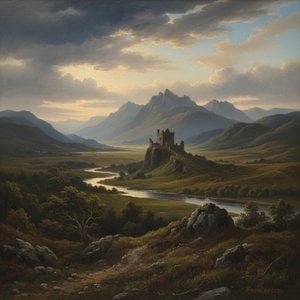
Alexander Nasmyth: Picturing Scotland's Romantic Landscape – Innovation & Identity
Explore the life & art of Alexander Nasmyth, a pivotal figure in Scottish Romantic landscape painting. Discover his iconic works, including portraits of Robert Burns, and learn about his lasting influence on national identity. Fine art reproductions available.

Thomas Barker of Bath: Landscape Painting & Societal Reflection in Early 19th-Century England
Explore the life & work of Thomas Barker of Bath, a key figure in 19th-century English Romanticism. Discover his Parisian success, iconic paintings like 'The Bride of Death', and lasting artistic legacy. Learn more at ArtsDot.

Evocations of Place: A Historical Journey Through Landscape Art
Explore the rich history of landscape art with ArtsDot. Discover renowned artists, movements like Impressionism & Romanticism, and expert guidance for collecting timeless pieces. Find your perfect serene escape today!

10 Romantinių Peizažų Simbolių: Tapybos Majestatės Viršūnės
Atraskite 10 legendinių romantinio peizažo kūrinių! Pasinerkite į Claude Lorrain, Caspar David Friedrich ir J.M.W. Turner genijaus pasaulį. Išmokite apie tapybos meistriškumą bei gamtos grožį. Aukščiausios kokybės meno reprodukcijos – ArtsDot.com. Tyrinėkite kolekciją!

Džono Konsteblio Šedevrai: 25 Išskirtiniai Darbai Jūsų Interjerui | ArtsDot
Atraskite 25 įspūdingiausius Džono Konsteblio paveikslus! Romantizmo meistro gamtos vaizdai, Dedham Vale peizažai ir meno istorijos šedevrai. Meno reprodukcijos jūsų interjerui – ArtsDot.com