

 Peržiūrėti realaus dydžio版
 Pasidalinti
 Dalintis
 Išsamiau
 Vadovas

 Atsisiųsti
 Panašūs eksponatai
 Rentgeno spindulių nuotrauka
 Automatinė diorama
 问答
问答 Statistika
Jungle


 Skaityti daugiau
Šiame puslapyje rodomas meno kūrinys yra saugomas autorių teisių įstatymais, todėl neturime teisės legaliai kurti ar parduoti jo identiškos reprodukcijos. Ši apsauga užtikrinama remiantis tokiais tarptautiniais susitarimais kaip Bernės konvencija ir pagal nacionalines įstatymų nuostatas, įskaitant tas, kurias nurodo JAV autoriškos teisės įstatymas – 17-asis skyrius.
Šis metodas visiškai atitinka autorių teises, nes jame nėra saugomo kūrinio kopijavimo ar dubliavimo. Tai yra kūrybinė reinterpretacija – naujas paveikslas, kurį įkvėpė originalas, tačiau kuris nėra jo identiškas.
Giclée / Meno spausdinimas
Muziejų lygio „giclée“ arba drobos spausdinimas: greita gamyba ir lankstios apdailos parinktys. ( Pirkti rankų darbo tapybą Perejti prie skaitmeninių vaizdų)




P118B €10

P118H €10

P118W €10

P438Z €10

P508JH €12

P508YH €12

P805H €10

P805Z €10

P919BZ €10

P919G €10

P919XJ €10

P959ZH €10

P968JZ €12

W106C €8

W218G €10

W218JH €8

W218Y €10

W307PJ €10

W316G €10

W316PJ €8

W316Y €10

W398PJ €8

W4111J €10

W500HY €15

W500JH €15

W692G €12

W849H €8

W940BG €15

W953PJ €8




Pasirinkite iš mūsų nustatytų dydžių, atitinkančių originalaus meno kūrinio proporcijas.

Įveskite jums reikiamą plotį ir aukštį, kad atvaizdas derėtų prie jūsų rėmo ar sienos. Spausdiną galima tik sumažinti, bet nepadidinti virš originalaus paveikslėlio dydžio, todėl keičiant proporcijas, dalis vaizdo prarandama. Prieš spausdinimą atsiųsime jums skaitmeninį maketą patvirtinimui. Šioje puslapio nuotraukoje matomas pjūvis nėra tikslus – jį rodo tik maketas.
Pristatymas visame pasaulyje () per 2 weeks, o ne įprastas 4/5 savaičių laikotarpis. (7 lapkritis)

Nemokamas greitasis pristatymas visame pasaulyje

Aukštos kokybės lininis drobė

Pilnas siuntimo draudimas

Muitinės mokesčių grąžinimo garantija

Tikro spalvų atitikimo garantija

100 dienų grąžinimo politika (tik esant įtaigoms)

100% pinigų grąžinimo garantija

Nuolaida dideliems užsakymams
 Stiklo variantas prieinamas tik pasirinkus dydį iki 110 cm

Jungle
Giclée / Meno spausdinimas
Reprodukcijos matmenys
-


Bendroji kaina
€ 56
panašūs kūriniai


Autoriaus biografija
The Mystical Vision of Teofil Ociepka
In the quiet corners of Polish art history, few figures possess the enigmatic allure of Teofil Ociepka. Born on April 22, 1891, in Janów Śląski, Poland, Ociepka was far more than a mere painter; he was a seeker, an occultist, and a dedicated theosophist whose brush served as a conduit for the unseen realms. As a self-taught primitivist, his work emerged not from formal academic training, but from a profound, internal necessity to translate spiritual truths onto canvas. His life, which spanned until 1978 in Bydgoszcz, was a continuous journey through the layers of the subconscious and the esoteric, leaving behind a body of work that vibrates with a dreamlike, otherworldly energy.
Ociepka’s artistic development was deeply intertwined with his spiritual pursuits. His fascination with the occult and theosophy provided him with a unique visual vocabulary, one where the boundaries between the physical landscape and the metaphysical plane are perpetually blurred. Unlike many of his contemporaries who sought to capture the external reality of the Polish countryside, Ociepka looked inward. His early life in Poland, marked by a deep immersion in folk traditions and mystical philosophies, allowed him to cultivate a style that felt both ancient and deeply personal. This fusion of folk art simplicity and complex esoteric symbolism created a tension in his work that continues to captivate modern viewers.
A Language of Symbols and Color
The aesthetic power of Ociepka’s paintings lies in their striking, unadorned clarity. His technique was characterized by the use of bold, saturated colors and remarkably flat, simplified forms—a hallmark of the Primitivist movement. However, beneath this deceptive simplicity lies a dense web of meaning. Every stroke and every shape often carries a weight of symbolic significance, reflecting his preoccupation with the hidden forces of the universe. His landscapes and still-life compositions are rarely just depictions of nature; they are sacred spaces populated by motifs that whisper of cosmic order and spiritual mystery.
When observing his most celebrated works, such as "The Garden" or "The Mountain," one is struck by the following elements:
- Bold Color Palettes: The use of vibrant, often non-naturalistic hues to evoke emotional and spiritual states.
- Symbolic Motifs: The integration of esoteric symbols that bridge the gap between the earthly and the divine.
- Flatness of Form: A rejection of traditional perspective in favor of a more direct, iconographic presentation.
- Dreamlike Atmosphere: A sense of stillness and transcendence that invites the viewer into a meditative state.
Legacy and Historical Significance
Teofil Ociepka stands alongside legendary figures like Nikifor and Henri Rousseau as a master of the Primitivist tradition. While his work shares the raw, intuitive quality found in Rousseau’s jungles, Ociepka’s focus on theosophy gives his oeuvre a distinctively spiritual gravity. He did not merely paint what he saw; he painted what he felt to be true in the higher vibrations of existence. His ability to weave the humble aesthetics of Polish folk art into a grander narrative of universal mysticism has secured his place as one of Poland's most fascinating and enduring artistic voices.
Today, the legacy of Ociepka is preserved through collections in prestigious institutions, including the National Museum in Wrocław and the Museum of Folk Architecture in Sanok. His work remains a vital touchstone for anyone interested in the intersection of art, spirituality, and the human psyche. To encounter an Ociepka painting is to step into a realm where the veil between worlds is thin, offering a glimpse into the profound mysteries that the artist spent his entire life attempting to illuminate.

Teofil Ociepka
1891 - 1978 , Poland
Trumpa informacija
- Artistic Movement Or Style: Primitivism
- Full Name: Teofil Ociepka
- Nationality: Polish
- Notable Artworks:
- Living Fire
- Mammoth. Saturn
- Self-Portrait
- Basilisk
- Place Of Birth: Janów Śląski, Poland
- Date Of Birth: 1891
- Date Of Death: 1978
Susiję straipsniai
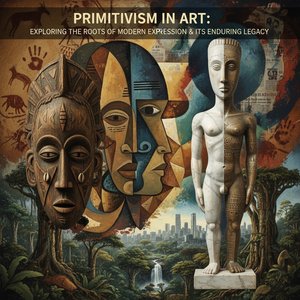
Primitivism in Art: Exploring the Roots of Modern Expression & its Enduring Legacy
Explore the fascinating history of Primitivism in art – its origins, key artists like Gauguin & Picasso, and lasting impact on modern expression. Uncover the complexities of this influential movement with ArtsDot.

Gyvūnų simbolika interjero dizaine: nuo senovės tradicijų iki šiuolaikinio meno interpretacijų
Atraskite gyvūnų simbolikos paslaptis interjero dizaine! Nuo senovės tradicijų iki šiuolaikinio meno interpretacijų – patyrusių ekspertų konsultacijos ir įdomūs faktai. Sukurkite unikalų namų interjerą su ArtsDot.

Jan Matejko: Historical Narrative & National Identity in 19th-Century Polish Painting
Explore the powerful historical paintings of Jan Matejko, Poland's national artist. Discover his iconic works & learn how he shaped Polish identity in the 19th century. High-quality reproductions available.

Stanisław Wyspiański: Symbolism, National Identity & the Polish Secession
Explore the life & work of Stanisław Wyspiański, a pivotal figure in Polish Symbolism and the Young Poland movement. Discover his iconic paintings, dramas, and stained glass designs reflecting national identity & artistic innovation.

Beastly Brushstrokes: A Historical Journey Through Animal Painting & Aesthetic Movements
Explore the rich history of animal painting across cultures & movements. Discover iconic artists, symbolism, collecting trends & expert art consultation at ArtsDot.com.